
India Diwali Travel 2026: 300% Airfare Surge, Gulf Flights & Festive Guide

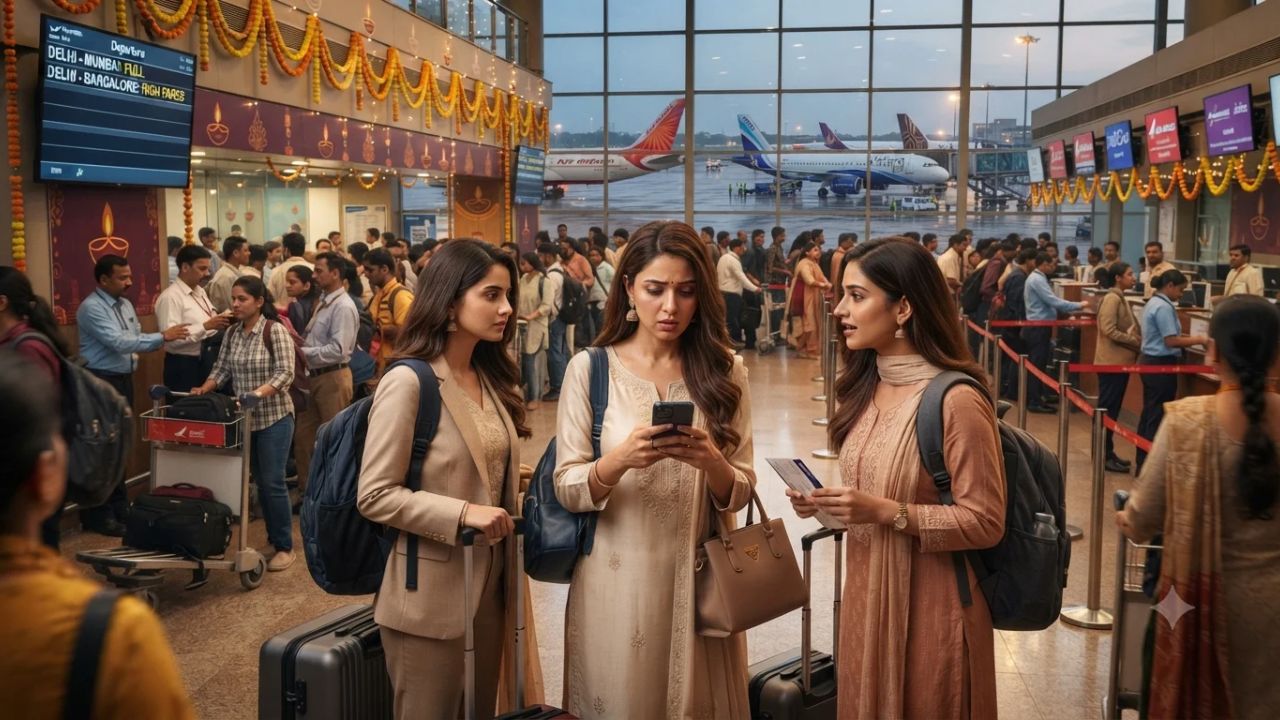
On regional routes like Kolkata to Deoghar, standard economy airfares that typically hover around 2,800 rupees skyrocketed to nearly 12,500 rupees—a staggering 340 percent leap driven by intense seasonal homecoming demand. That domestic price shock mirrors a broader surge across international corridors connecting the United Arab Emirates with major Indian cities, where millions of nonresident Indian professionals and overseas families are confronting ticket prices rising more than three hundred percent ahead of the Diwali festive rush.
The Festival Price Spike: Analyzing Gulf-India Corridors and Regional Air Routes
The annual autumn festival season—spanning Durga Puja and Diwali—represents the single largest period of human movement across South Asia. In 2026, severe seat capacity constraints have collided with mounting operational overheads for commercial airlines regulated under the Directorate General of Civil Aviation.
Compounding passenger demand, jet fuel costs increased significantly in September 2026, when domestic Aviation Turbine Fuel (ATF) prices jumped by 6.28 rupees per liter—a 5.46 percent monthly increase from approximately 115 rupees per liter to 121.28 rupees per liter.
For travelers flying into New Delhi around November 5, international departure hubs across the UAE reveal steep ticket price escalation across all major carriers:
- Dubai to Delhi: Fares start from approximately Dh1,013 on SpiceJet, Dh1,115 on Air India, Dh1,181 on Air India Express, and Dh1,214 on IndiGo.
- Sharjah to Delhi: IndiGo tickets start from Dh1,034, while Air India reaches Dh1,695, Air India Express climbs to Dh1,883, and SpiceJet prices surpass Dh2,064.80.
- Abu Dhabi to Delhi: IndiGo fares begin near Dh1,245, with Air India Express listed from Dh1,243.13 and mainline Air India from Dh1,435.
These price spikes place immense pressure on family travel budgets, turning routine annual visits into major financial expenditures and prompting travelers to seek alternative overland and secondary airport routes.
What Makes Indian Festive Travel Extraordinary: Light, Devotion, and Homecoming Rhythms
Despite intense transit competition, experiencing India during the autumn festive window offers an unforgettable immersion into cultural devotion, artisanal markets, and regional celebration.
In West Bengal, Durga Puja transforms Kolkata into an open-air public art gallery featuring thousands of monumental temporary temple structures (pandals), an intangible cultural heritage recognized under the UNESCO Intangible Cultural Heritage List. Entire neighborhoods celebrate through the night with synchronized dhaak drum rhythms, incense dances (dhunuchi naach), and communal dining (bhog).
As the calendar turns to Diwali—the festival of lights celebrating the victory of light over spiritual darkness—cities across northern and western India illuminate millions of handmade clay oil lamps (diyas). From the ancient river ghats of Varanasi shimmering along the Ganges to the historic walled city bazaars of Jaipur and Old Delhi filled with silver foil-wrapped sweets (mithai) and marigold garlands, the energy reflects centuries of shared hospitality promoted by Incredible India.
Visitor Insider Tips: Beating the Festive Transit Crunch
Navigating India during peak festival weeks requires smart ticketing hacks, rail integration, and flexible itinerary planning.
Flight Booking Tactics and Fare Hacks
- Fly on Diwali Day: The most expensive flight days fall between two and four days prior to the festival when commuters rush home. Flights departing on the afternoon or evening of Diwali day itself frequently experience dramatic fare drops as passenger volume empties out for home rituals.
- Midweek Departure Windows: Opt for Tuesday or Wednesday departures rather than weekend flights, which routinely command a twenty to thirty-five percent premium on high-demand trunk routes like Mumbai–Delhi or Bengaluru–Kolkata.
- Secondary Gateway Routing: If flying from the Gulf to Delhi or Mumbai is cost-prohibitive, check flights into regional international hubs like Ahmedabad, Jaipur, or Lucknow, then connect onward via expressway cabs or express trains.
Utilizing High-Speed Rail Alternatives
- The Vande Bharat Network: On regional routes under six hundred kilometers (such as Delhi to Varanasi, Mumbai to Goa, or Howrah to Puri), booking premium executive or chair-car seats on the semi-high-speed Vande Bharat Express via the Indian Railway Catering and Tourism Corporation (IRCTC) offers reliable point-to-point travel times without airport security queues.
- Tatkal and Premium Tatkal Booking: If regular train quotas are sold out, IRCTC opens emergency Tatkal booking slots at 10:00 AM (for AC classes) and 11:00 AM (for non-AC sleeper) exactly one day prior to train departure. Set up verified IRCTC wallet profiles in advance for rapid checkout.
Festive Market Etiquette and Local Flavors
- Sweets and Gift Etiquette: When visiting Indian homes during Diwali, never arrive empty-handed. Bring a box of regional artisanal sweets such as kaju katli (cashew fudge), motichoor ladoo, or assorted roasted dry fruits from heritage confectioners rather than mass-produced packaged goods.
- Bazaar Bargaining Protocols: In seasonal street markets selling clay diyas and hand-painted earthen pots, patronize small roadside potters (kumhars). Avoid aggressive bargaining with local artisans who rely entirely on festive sales for their annual livelihoods.
Cultural and Environmental Context: Sustainable Celebrations and Eco-Diyas
The massive surge in festive travel and consumer spending brings heightened environmental awareness regarding seasonal air quality and urban waste management. In northern India, meteorological shifts during early November coincide with seasonal crop residue management, making smoke mitigation a pressing civic priority.
In response, major cities have implemented bans on traditional chemical firecrackers, promoting community light displays, laser shows, and green fireworks (PESO-certified). Travelers and residents alike are encouraged to choose traditional unglazed terracotta diyas fueled by cold-pressed mustard oil rather than petroleum-wax tea lights or plastic decorative LED strings.
Supporting traditional terracotta artisans in rural villages across Uttar Pradesh, Bihar, and West Bengal helps preserve ancient ceramic throwing techniques while preventing non-biodegradable waste from accumulating in municipal landfills.
FAQ: Managing Diwali Travel in India 2026
Why did domestic flight prices surge by over 300 percent during the festival season?
Surging passenger homecoming demand combined with a 5.46 percent hike in aviation turbine fuel prices (reaching Rs 121.28 per liter) drove steep airline fare increases.
What is the most cost-effective day to fly during Diwali week?
Departing on the actual day of Diwali or booking Tuesday/Wednesday midweek flights offers significantly lower ticket rates compared to the peak rush three days prior.
How do international airfares from the UAE to Delhi compare ahead of Diwali?
One-way fares from Dubai, Sharjah, and Abu Dhabi to Delhi around November 5 range from Dh1,013 on SpiceJet to over Dh2,064 on select holiday departures.
Can premium trains replace domestic flights on regional Indian routes?
Yes. Semi-high-speed Vande Bharat Express and Shatabdi trains provide punctual, comfortable city-center-to-city-center alternatives on routes under seven hours, avoiding airport congestion.
While festive airfares soar to record heights, the warm glow of earthen lamps and the rich flavors of homecoming make every mile worth the journey.
Related Travel Guides
Disclaimer
This article is for informational and educational purposes only. It does not constitute legal, financial, or professional advice. While we strive to provide accurate and up-to-date information, travel policies, regulations, and conditions change rapidly. Always verify information with official sources before making travel decisions. Nomad Lawyer makes no representations about the accuracy, reliability, completeness, or suitability of the information provided. Readers should consult qualified professionals for advice specific to their circumstances. The views expressed in this article are those of the author and do not necessarily reflect the views of Nomad Lawyer.
Raushan Kumar
Founder & Lead Developer
Full-stack developer with 11+ years of experience and a passionate traveller. Raushan built Nomad Lawyer from the ground up with a vision to create the best travel and law experience on the web.
Learn more about our team →