
India Bullet Train Project Milestone: 100km Piers Completed on Mumbai-Ahmedabad High-Speed Rail 2026
Construction of the Mumbai-Ahmedabad High-Speed Rail corridor reaches a critical milestone with over 100km of piers completed in Maharashtra, paving the way for 2027 operations in Gujarat.
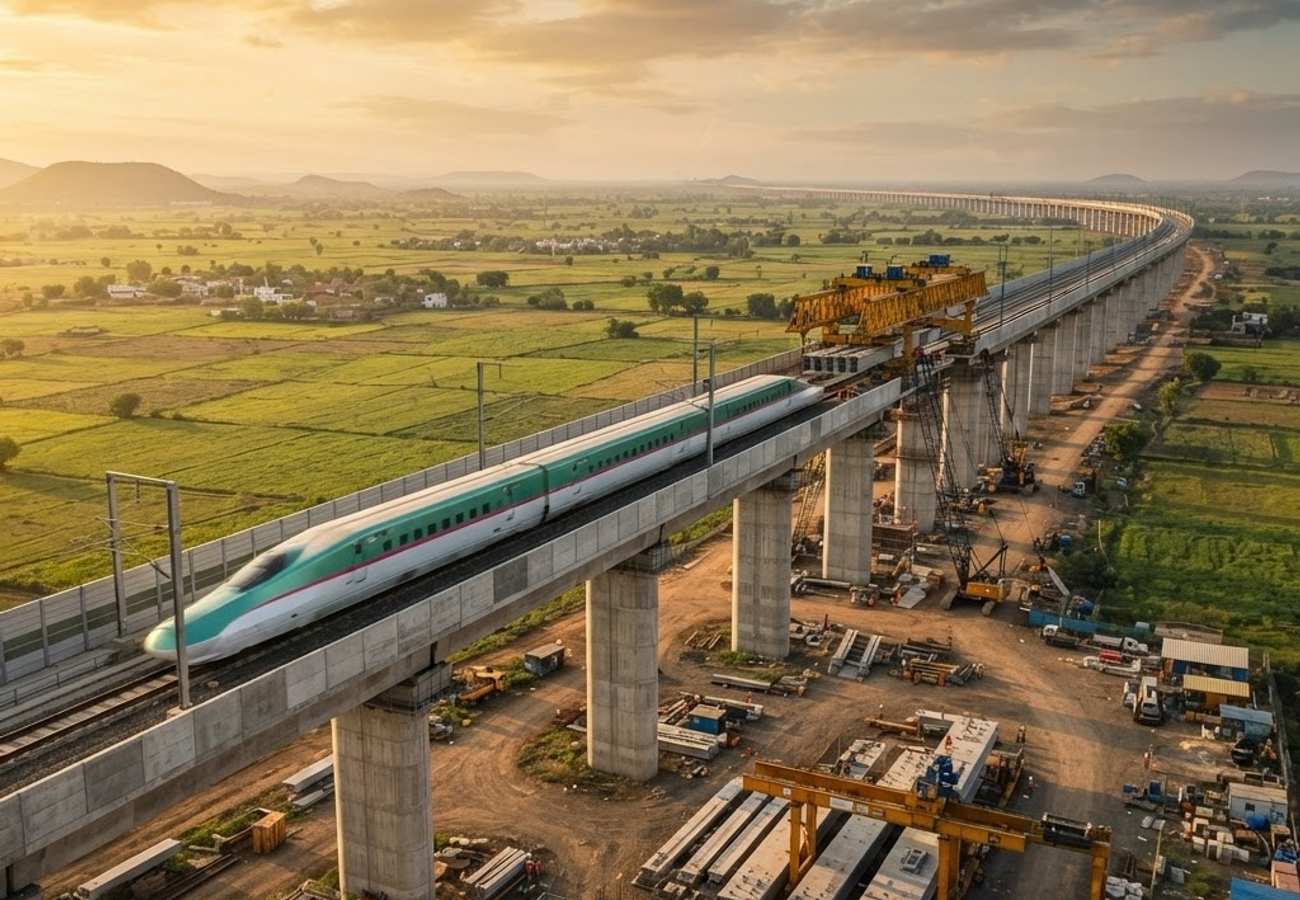
Image generated by AI
The Mumbai-Ahmedabad High-Speed Rail (MAHSR) project has reached a pivotal construction milestone, with over 100 kilometers of piers now completed on the 135.45-kilometer elevated corridor in Maharashtra. This development accelerates the timeline for India's first high-speed rail service, with initial operations scheduled for Gujarat in 2027.
Maharashtra Segment Construction Progress
The National High Speed Rail Corporation Ltd (NHSRCL) has intensified activity on the section stretching from Shilphata in Thane to Zaroli near the Maharashtra-Gujarat border. This segment is critical for connecting the financial hub of Mumbai with the industrial and cultural center of Ahmedabad.
Our analysis of the current infrastructure data shows that the Maharashtra portion is heavily reliant on elevated designs to bypass land acquisition hurdles and minimize urban disruption.
Key Infrastructure Metrics for Maharashtra Section:
- Total Section Length: 135.45 kilometers.
- Pier Construction: Over 100 kilometers completed.
- Viaduct Readiness: Nearly 74 kilometers of piers are prepared for girder installation.
- Total Viaducts and Bridges: 124.027 kilometers.
- Mountain Tunnels: 7 planned (3 breakthroughs already achieved).
- Bridge Infrastructure: 36 bridges and crossings, including 12 steel bridges.
Station Development and Environmental Integration
Three elevated stations are currently under construction in Maharashtra, designed to integrate high-speed transit with local urban ecosystems.
Thane Station: This facility features a concourse approximately 12 meters above ground level. The design specifically incorporates protections for nearby mangrove ecosystems to balance industrial growth with ecological preservation.
Virar and Boisar Stations: These hubs are being developed to enhance regional connectivity, allowing passengers from satellite towns to access the high-speed network without entering the central Mumbai core.
Engineering Specifications: Bridges and Tunnels
The MAHSR corridor requires significant engineering feats to navigate the geography of Maharashtra and Gujarat. Flight and ground tracking systems indicate the scale of these structures:
- Vaitarna River Bridge: 2.32 kilometers (one of the corridor's largest structures).
- Jagani River Bridge: 510 meters.
- Ulhas River Bridge: 460 meters.
To maintain this pace, NHSRCL has deployed 9 operational casting yards, 7 full-span launching gantries, and 8 segmental launching gantries.
Passenger Rights & Advisory: Transitioning to High-Speed Rail
For the affected passenger and future traveler, the introduction of the Bullet Train represents a shift in the legal and operational framework of Indian rail travel. Our analysis of current aviation and rail policies suggests several key considerations for those planning travel between Mumbai and Ahmedabad:
Ticketing and Rebooking Rights Unlike traditional Indian Railways (IR) bookings, high-speed rail typically operates under a premium service model. For the passenger, this means:
- Stricter Cancellation Policies: Expect tiered refund structures similar to airline tickets rather than standard rail fare rules.
- Dynamic Pricing: Fares are likely to fluctuate based on demand, requiring travelers to book well in advance to secure lower rates.
Intermodal Connectivity The elevated nature of the stations (such as Thane) means the "last mile" of the journey will rely on integrated transit. Passengers should verify the availability of shuttle services or ride-sharing hubs at the concourse level to avoid delays.
Compensation Expectations While India does not have a direct equivalent to the EU261/2004 framework for rail, the premium nature of the MAHSR suggests a higher standard of service. Passengers should seek clarity on "Delay Compensation" policies once the official passenger charter is released by NHSRCL.
The shift toward an elevated corridor (124.027 km in Maharashtra alone) is a strategic move to avoid the protracted legal battles over land acquisition that have historically delayed Indian infrastructure projects. By moving the rail line above ground, the project reduces its footprint on agricultural land and urban settlements.
The 2027 Gujarat launch serves as a "proof of concept." If successful, this corridor will provide the technical blueprint for the proposed high-speed networks connecting Delhi-Varanasi and Mumbai-Nagpur, fundamentally altering the logistics of the Indian subcontinent.
The arrival of high-speed rail marks the end of the traditional long-haul journey and the beginning of an era of precision transit in India.
Related Travel Guides
Disclaimer
This article is for informational and educational purposes only. It does not constitute legal, financial, or professional advice. While we strive to provide accurate and up-to-date information, travel policies, regulations, and conditions change rapidly. Always verify information with official sources before making travel decisions. Nomad Lawyer makes no representations about the accuracy, reliability, completeness, or suitability of the information provided. Readers should consult qualified professionals for advice specific to their circumstances. The views expressed in this article are those of the author and do not necessarily reflect the views of Nomad Lawyer.