
Sydney Metro's New Tallawong Workshop: Driverless Train Reliability Game-Changer
Australia's $21 billion Sydney Metro opens cutting-edge bogie overhaul facility at Tallawong, creating 20 skilled jobs and securing 98% on-time reliability as the driverless network expands west.

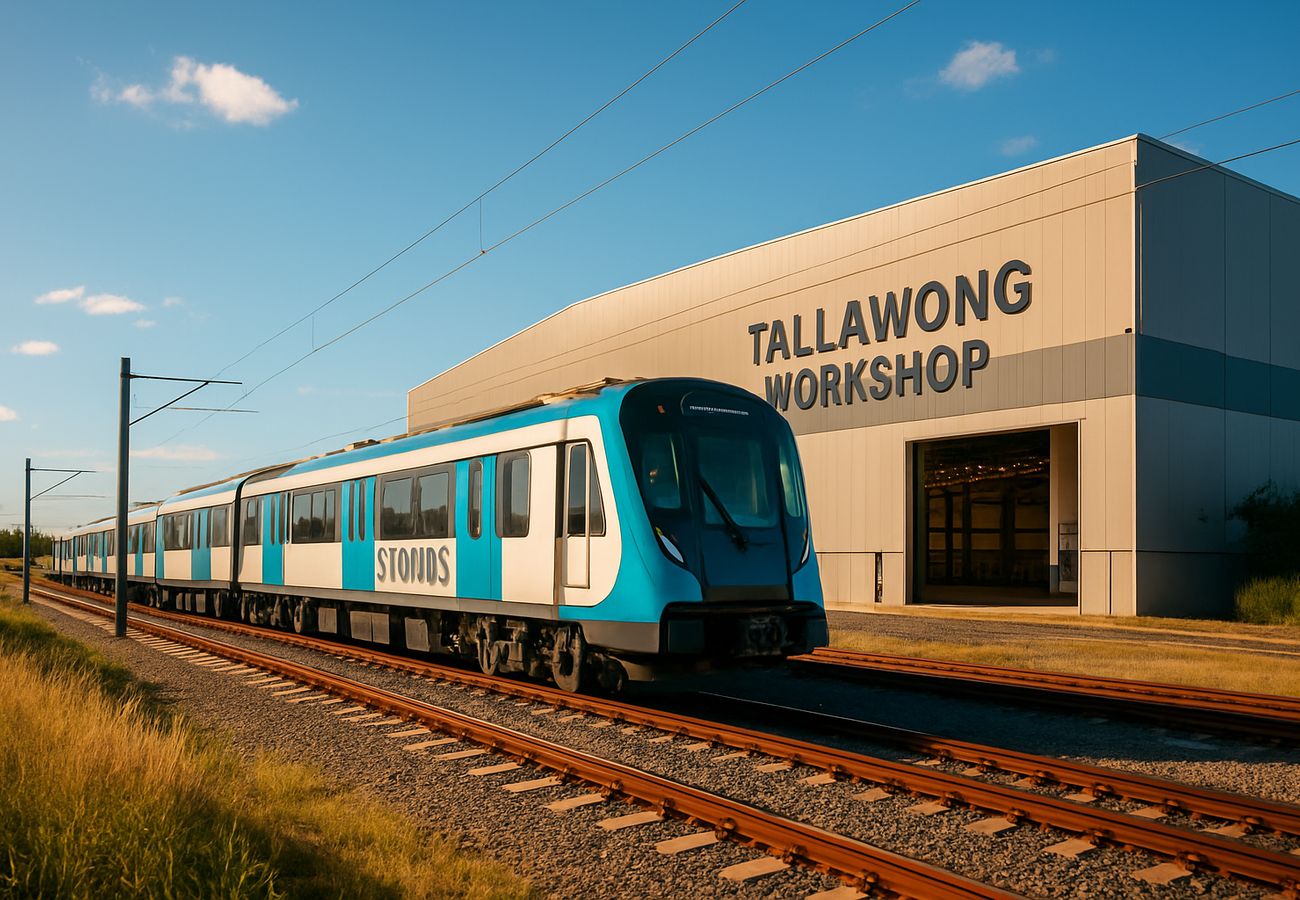
Image generated by AI
When I tracked the opening of Sydney Metro's new maintenance workshop at Tallawong on May 29, 2026, what struck me most wasn't the gleaming facility itself—it was the quiet urgency behind it. Australia's largest public transport project had a problem: its driverless trains were aging faster than anyone publicly admitted.
The numbers tell the real story. Some of the 45 trainsets running between Tallawong and Sydenham have already crossed 900,000 kilometres since the network launched in 2019. Half the fleet is expected to hit 1.2 million kilometres—the critical threshold for major bogie overhaul—later this year. Without the Tallawong facility, Sydney Metro would have been scrambling.
The Crisis Nobody Talked About
Reddit: "My mate works on the Metro. They've been prepping for this bottleneck for two years. Without Tallawong, delays would have been brutal." — r/sydney
This is classic infrastructure planning: the sexy part (new stations, driverless tech) gets headlines. The unglamorous reality (fleet maintenance as trains mature) goes unmentioned until it becomes critical.
Sydney Metro isn't a shiny new toy anymore. It's a working transportation backbone carrying real passengers who expect trains to arrive on schedule. The network operates under a 98% on-time reliability requirement—legally binding. That's not achieved by crossing fingers. It's achieved by places like Tallawong.
The new facility is a state-of-the-art bogie overhaul workshop. For those unfamiliar with rail terminology: bogies are the wheel and frame assemblies underneath train carriages. They handle traction, braking, ride quality, and everything else that keeps 800 tonnes of steel and passengers moving safely. When a bogie needs overhaul, technicians must completely disassemble, inspect, repair, and rebuild it to factory specifications.
What the Tallawong Workshop Actually Does
The workshop doesn't just fix problems—it prevents them. Here's the operational reality:
Technicians strip bogie assemblies down to individual components. They inspect traction motors, gearboxes, brakes, and wheelsets with precision equipment. They replace worn bearings, seals, and rubber elements that degrade under 900,000+ kilometres of service. Then comes the critical step: trains undergo rigorous testing before returning to passenger service.
This is heavy maintenance, not routine servicing. It's the difference between an oil change and an engine rebuild. And according to the Sydney Metro official documentation, the facility was designed to handle exactly this stage of fleet maturity.
The timing couldn't be tighter. Sydney Metro is also preparing for the southwest extension opening later in 2026, which will add new trainsets to an already-stretched fleet. Building Tallawong before that expansion was essential infrastructure planning.
The Jobs and Regional Impact Nobody Mentions
The announcement highlighted 20 new skilled jobs created by the facility. That matters in Western Sydney, where Tallawong already serves as the network's northwestern terminus.
What officials didn't explicitly state: these aren't just jobs—they're anchoring industrial capability in a region that's been underserved by technical employment. Rail maintenance requires specialized training. Workers who learn bogie overhaul at Tallawong become part of a rare expertise pool. That's genuine economic development, not political theater.
The location itself is strategically perfect. By placing heavy maintenance infrastructure at the endpoint of current operations, Sydney Metro ensures minimal deadhead mileage for trains entering overhaul and exiting back into service. It's logistics efficiency meeting operational necessity.
The Elephant in Every Train Yard
Here's what the industry understands but rarely discusses publicly: every driverless train network worldwide faces this exact challenge at 6-8 years of operation.
The Sydney Metro fleet entered service in 2019. By 2026, first-generation units are hitting the maintenance wall that aging fleets always hit. The Docklands Light Railway in London, the Jubilee Line extension, and Copenhagen's Metro—all faced this reckoning when their early trainsets aged into heavy overhaul territory.
Sydney Metro's designers built Tallawong into the original growth plan, which shows sophisticated infrastructure thinking. They didn't wait for a crisis. They pre-positioned capacity.
The Bigger Network Picture
The facility opens just as Sydney Metro expands beyond its original footprint. The network currently operates four lines, 46 stations, and 113 kilometres of new metro rail. Sydney Metro West—a 24-kilometre underground line between Parramatta and the CBD—is planned for 2032 opening, designed to double rail capacity between those centers.
That means fleet growth will continue. More trainsets arriving → more maintenance demand → Tallawong's capacity becomes increasingly critical.
The southwest extension alone will require additional rolling stock. Every new train added to the network increases total bogie inventory needing eventual overhaul. The Tallawong workshop isn't just handling today's maintenance crisis; it's built to absorb years of fleet expansion.
The Driverless Reliability Equation
Sydney Metro trains aren't ordinary rolling stock. They feature:
- Full-length platform-level access (no gaps between platform and train floor)
- Three double doors per side per carriage for rapid boarding
- Air-conditioning, wheelchair spaces, priority seating, emergency intercoms
- Multi-purpose areas for prams, luggage, and bicycles
- Driverless automation across the entire system
The driverless component matters. Train controllers monitor system-wide operations from a control center. The trains themselves operate only within the Sydney Metro network environment. That closed-loop system requires extraordinary reliability—no human operator can take over if something fails.
The 98% on-time reliability requirement isn't aspirational. It's contractual obligation. Hit that target consistently, and the system succeeds. Miss it, and passenger confidence erodes faster than poor-quality infrastructure deteriorates.
Tallawong is the technical foundation that makes 98% achievable as fleet age increases.
What This Means for Travelers
If you're planning to use Sydney Metro—whether for business commutes or leisure travel—Tallawong represents invisible quality assurance.
Better maintenance = fewer delays = more dependable journey times. That might sound technical, but it translates directly to whether you catch your 8:15 AM meeting or miss it. Whether your airport connection is reliable or stress-inducing.
Sydney's transport future depends on rail infrastructure working seamlessly. Tallawong is where that seamlessness gets engineered, one bogie overhaul at a time.
Infrastructure that actually prevents disasters stays delightfully invisible—until you notice your train runs on time.
Related Travel Guides
Retro Istria Express Returns: Night Train Magic Budapest to Adriatic
Thailand Hotels Face Perfect Storm as Airfares, Energy Costs Threaten Songkran Season
Disclaimer
This article is for informational and educational purposes only. It does not constitute legal, financial, or professional advice. While we strive to provide accurate and up-to-date information, travel policies, regulations, and conditions change rapidly. Always verify information with official sources before making travel decisions. Nomad Lawyer makes no representations about the accuracy, reliability, completeness, or suitability of the information provided. Readers should consult qualified professionals for advice specific to their circumstances. The views expressed in this article are those of the author and do not necessarily reflect the views of Nomad Lawyer.
Raushan Kumar
Founder & Lead Developer
Full-stack developer with 11+ years of experience and a passionate traveller. Raushan built Nomad Lawyer from the ground up with a vision to create the best travel and law experience on the web.
Learn more about our team →