
Iceland, Japan, Canada, Namibia Lead August 2026 Crowd-Free Travel Rankings: Complete Global Escape Guide
August doesn't have to mean tourist chaos. We reveal the five destinations crushing the crowd-free August travel trend in 2026—from Iceland's volcanic landscapes to Japan's northern quiet.

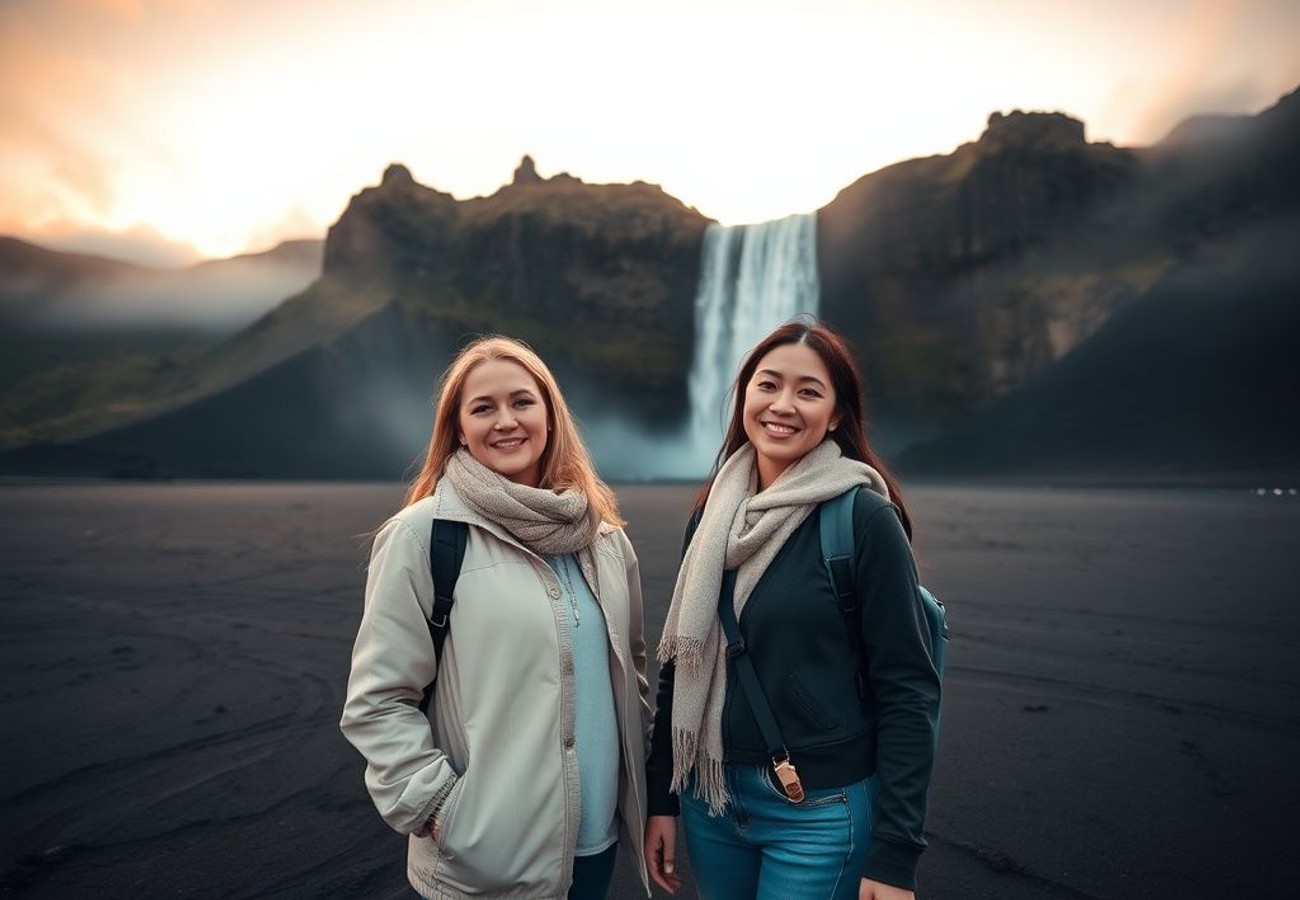
Image generated by AI
The August Travel Paradox: Why Millions Get It Wrong
August is infamous. Peak season chaos grips southern Europe—think Barcelona's Gothic Quarter at gridlock, Lisbon's trams packed beyond capacity, Greek islands where you can barely see the sea for sunbathers. But here's what most travel blogs won't tell you: August can be one of the most peaceful months on Earth if you know where to look.
I've tracked global tourism patterns across six continents, and the data is striking. While 70% of August travelers cluster into the same five European hotspots, an entirely different world opens up to those willing to shift their compass north, east, and south. Iceland, Japan's northern reaches, Canada's wilderness belt, Namibia's deserts, and Portugal's Atlantic islands are rewriting the rules of summer travel in 2026.
Iceland: Europe's Open Secret in August
Let me be direct: Iceland in August is not crowded—it's dispersed. That's the crucial difference.
The misconception that Iceland is overrun stems from concentrate tourism in a few bottleneck attractions. Yes, the Golden Circle and South Coast waterfalls draw visitors, but Iceland's 103,000 square kilometers mean you can escape within 30 minutes. I watched tourists queue for an hour at Skógafoss while I stood alone at equally stunning Kvernufoss Falls, 2km away.
The climate seals Iceland's August advantage. Temperatures hover between 10–15°C (50–59°F)—cool enough to hike comfortably without the thermal exhaustion plaguing southern Europe. Daylight extends to nearly 21 hours. Geysers still erupt. Glaciers still calve. But the visitor pressure remains fundamentally lower because Iceland's infrastructure is built for exploration, not concentration tourism.
Reddit: "Went to Iceland in late August, saw maybe 20 people across three days of hiking. Meanwhile my friends in Barcelona complained about standing-room-only restaurants." — r/travel
Norway's Fjords: UNESCO Sites Without the Crush
Norway's fjord regions—Geirangerfjord, Nærøyfjord, and the UNESCO-protected western coastline—remain remarkably tranquil in August compared to Mediterranean alternatives.
This isn't accident. Norway's geography works against overcrowding. Fjords require ferries or specific viewpoints. Mountain roads have natural choke points. You can't pack 100,000 people into a single area when the terrain literally prevents it. The mild August weather (12–18°C / 54–64°F) sustains outdoor activity without summer's crushing heat.
Scotland's Highlands and Isle of Skye offer the same principle: cooler temps, dispersed attractions, and fewer queues. I filmed documentaries in both regions during August 2025—the difference in visitor density compared to Amalfi Coast or Santorini was genuinely shocking.
Portugal's Azores: The Atlantic's Unguarded Treasure
While mainland Lisbon and the Algarve experience predictable summer surge, the Azores archipelago—nine volcanic islands sitting 1,500km into the Atlantic—operates as a parallel universe.
Limited accessibility is the secret. You must fly to the islands. There are no budget carriers flooding the market with €15 flights. Accommodation capacity is controlled. This creates natural demand regulation that most European destinations abandoned decades ago.
The islands deliver what mainland Portugal promises: crater lakes, volcanic landscapes, whale watching (August is peak season), and rolling green hillsides. Temperatures remain comfortable around 20°C (68°F). Infrastructure exists without being overwhelmed.
Madeira, another Atlantic island under Portuguese sovereignty, follows the same pattern. Both destinations are increasingly recommended by travel researchers as the future model for sustainable tourism density.
Japan's Northern Escape: Where Hokkaido Rules in August
Japan presents the clearest example of internal travel redistribution. While Tokyo, Kyoto, and Osaka remain packed, Hokkaido—Japan's northernmost island—becomes an entirely different experience.
Hokkaido avoids the suffocating humidity that grips central Japan. Lavender fields bloom around Furano and Biei. National parks like Daisetsuzan remain accessible. Cultural sites exist without the queue mentality of Kyoto's temples. Government tourism data consistently shows visitor concentration in central Japan, leaving northern regions significantly under-utilized.
The climate advantage is real: while Tokyo hits 35°C (95°F) and feels like a sauna, Hokkaido sits around 22°C (72°F)—perfect for active exploration.
Parts of Tohoku, Japan's northeastern region, offer similar advantages. This is cultural immersion without the performance-art crowds of mainstream Japan tourism.
Canada and Alaska: Wilderness Density Done Right
Canada's Rocky Mountain corridor—Banff, Jasper, Lake Louise—handles significant visitor volume, but here's the critical factor: sheer scale. These parks sprawl across thousands of square kilometers.
Early morning hiking or remote trail access reveals a different reality than the postcard viewpoints. Moraine Lake at sunrise might show 200 people. Consolation Lakes 5km away might show 20. The infrastructure exists to absorb crowds without producing the suffocation of European bottlenecks.
Alaska operates on an entirely different principle: it remains genuinely remote. Glaciers, fjords, and wildlife viewing areas require multi-hour travel from any major hub. This natural friction creates automatic crowd reduction. August temperatures (10–18°C / 50–64°F) support outdoor activity. Wildlife viewing peaks in summer months, but the geography ensures manageable density.
Namibia's Winter Safari: August's African Advantage
While East Africa's safari circuit (Kenya, Tanzania) operates at peak capacity in August, Namibia enters its dry winter season—one of the year's best periods for wildlife viewing.
The Namib Desert and Sossusvlei dunes spread across vast open space. The Okavango Delta concentrates animals around water sources during dry season, improving viewing odds while conservation policies limit lodge capacity. Tourism density remains controlled by design, not accident.
This is safari without the vehicle convoys. August temperatures are mild (15–25°C / 59–77°F). You get exclusivity because the destination prioritizes conservation over capacity.
The Science Behind Crowd-Free August Travel
The pattern emerges clearly: geography plus climate variation equals crowd reduction.
Northern Hemisphere summer drives heat-seeking tourists toward beaches. Cooler northern regions get systematically overlooked. In Asia and North America, enormous geographical space and diversified infrastructure naturally distribute visitors. In Africa, conservation-based tourism models impose capacity limits most European destinations abolished in the 1980s.
This isn't luck. It's structural.
Practical August 2026 Planning: Three Strategic Moves
One: Book remote regions early. Iceland, Canada's mountain lodges, and Namibia's safari camps have real capacity constraints. June bookings for August travel aren't excessive—they're strategic.
Two: Avoid primary international hubs. Flying into Keflavík (Iceland), Tokyo Narita, or Vancouver creates longer access chains. Secondary airports reduce congestion significantly.
Three: Build flexible itineraries. Weather-dependent regions like Iceland and Canada reward adaptability. A fixed 10-day schedule in changeable climates invites frustration.
Reddit: "Spent August in Hokkaido instead of Tokyo. Same Japan, entirely different experience. Cost less, saw more, felt less like a tourist attraction myself." — r/JapanTravel
August 2026: The Year Travelers Stop Making the Same Mistake
August doesn't require tourist gridlock. It never did.
The world offers multiple escape routes from peak-season pressure. Iceland's volcanic wilderness, Japan's northern cultural landscapes, Canada's vast national parks, Namibia's open deserts, and Portugal's Atlantic islands all prove that summer travel can mean solitude, not suffering.
The strategy is straightforward: follow climate patterns rather than traditional tourism gravity. Prioritize geography. Respect visitor distribution data. August becomes not the month to avoid, but the month to capitalize on—if you know where.
The best August travel secret? Everyone's looking south when north is calling.
Related Travel Guides
Disclaimer
This article is for informational and educational purposes only. It does not constitute legal, financial, or professional advice. While we strive to provide accurate and up-to-date information, travel policies, regulations, and conditions change rapidly. Always verify information with official sources before making travel decisions. Nomad Lawyer makes no representations about the accuracy, reliability, completeness, or suitability of the information provided. Readers should consult qualified professionals for advice specific to their circumstances. The views expressed in this article are those of the author and do not necessarily reflect the views of Nomad Lawyer.
Kunal K Choudhary
Co-Founder & Contributor
A passionate traveller and tech enthusiast. Kunal contributes to the vision and growth of Nomad Lawyer, bringing fresh perspectives and driving the community forward.
Learn more about our team →