
China Halts Fuel Exports: Airlines Weigh Surcharges Ahead of Peak Season
China's March 2026 jet fuel export ban triggers supply concerns across Asia as airlines consider fuel surcharges that could raise ticket prices during peak travel season.

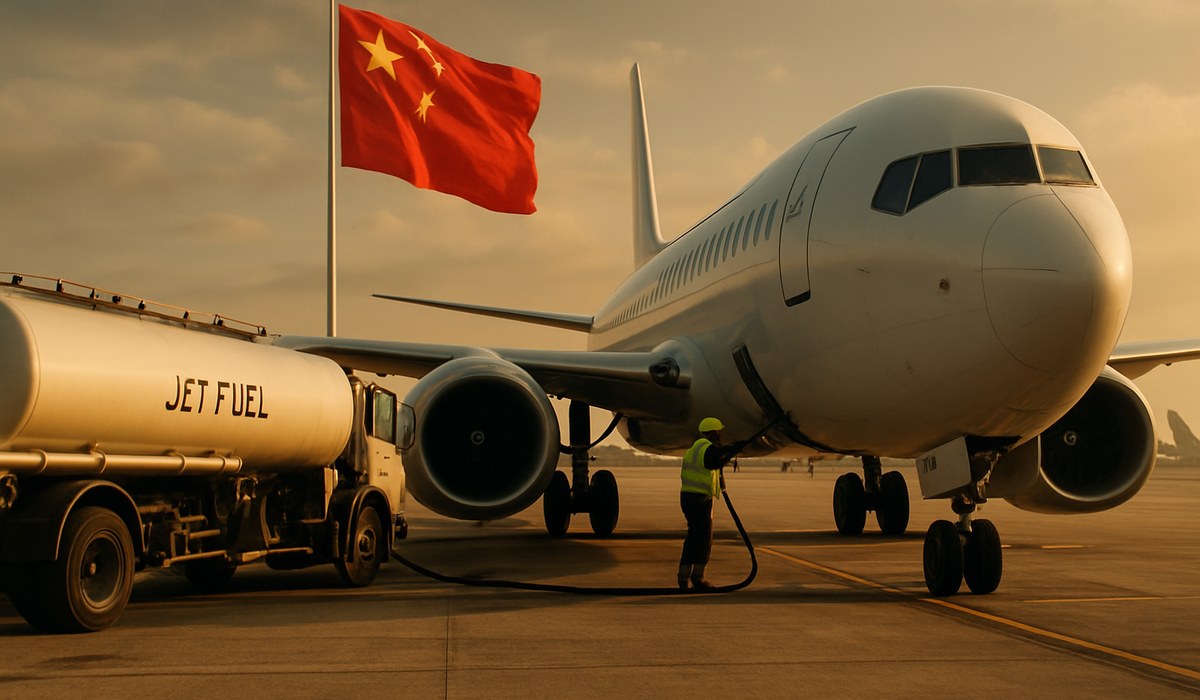
Image generated by AI
China has suspended jet fuel exports in March 2026 as part of a comprehensive refined products ban, sending shockwaves through Asian aviation markets just weeks before the April-October peak travel season. The policy shift, aimed at protecting domestic energy supplies amid elevated global oil prices, now forces Chinese carriers and regional airlines to consider fuel surcharges that could increase ticket costs for millions of travelers across Asia.
China Halts Fuel Exports to Protect Domestic Energy Security
Beijing's directive ordering refiners to suspend most refined fuel exports now extends beyond gasoline and diesel to include aviation fuel shipments. The restrictions took effect in March 2026 following a sharp spike in global oil prices linked to conflicts in the Middle East and disruptions around the Strait of Hormuz. Chinese refiners can only provide limited exemptions for bonded fuel servicing international flights and supplies to Hong Kong and Macau. Jet fuel benchmarks have climbed to their highest levels in nearly two decades, according to global energy market data, placing significant pressure on the world's second-largest aviation market. China imports substantial crude oil volumes while simultaneously exporting refined petroleum products, making this policy reversal particularly significant for regional fuel supply chains.
Vietnamese Airlines Face Flight Reductions Due to Supply Constraints
Vietnam's aviation regulators have warned carriers to prepare for potential domestic flight reductions starting in April 2026 if jet fuel becomes scarce following China's export ban. Vietnamese airports previously sourced considerable aviation fuel volumes from Chinese refiners, and the sudden supply cutoff leaves procurement teams scrambling for alternative suppliers at significantly higher prices. The Vietnam Civil Aviation Authority advised airlines to review schedules and reduce frequencies on less profitable routes if fuel storage levels drop below operational thresholds. This situation mirrors broader Southeast Asian concerns, where Thailand, Indonesia, and the Philippines are renegotiating fuel contracts at premium rates while monitoring airport storage capacity more closely than in previous quarters.
Chinese State Carriers Consider Fuel Surcharges on Domestic Routes
Major Chinese airlines including Air China (CA), China Southern (CZ), and China Eastern (MU) are evaluating new fuel surcharges on both domestic and international routes as operating costs surge. Fuel now represents a significantly higher percentage of airline operating expenses compared to early 2025, with some industry analysts estimating fuel accounts for 35-40% of total costs on long-haul domestic sectors. Chinese carriers have limited fuel hedging positions, leaving them exposed to sudden price swings that can erase profitability on price-sensitive routes within hours. The surcharges would likely apply first to high-demand trunk routes like Beijing Capital International Airport (PEK) to Shanghai Pudong (PVG) and Guangzhou Baiyun (CAN), where passengers have fewer low-cost alternatives and aircraft consume more fuel per journey.
Asian Aviation Markets Enter Emergency Management Mode
Airlines across Asia are implementing emergency cost management protocols as jet fuel prices approach or exceed $190-200 per barrel in regional spot markets. Indian carriers recently introduced per-segment fuel fees ranging from $3-8 depending on flight distance, while Southeast Asian operators are cutting frequencies on marginal routes to preserve cash reserves. The International Air Transport Association projects Asian airlines will collectively spend $18-22 billion more on fuel in 2026 compared to the previous year if current price levels persist through peak season. For Chinese airlines weighing surcharges, historical patterns show regulators typically approve such fees when crude oil benchmarks cross $85-90 per barrel thresholds, though any new charges must balance revenue needs against demand preservation during the critical April-October travel window.
Fuel Price Surge Threatens Peak Season Travel Demand Recovery
The combination of China's export halt and elevated global oil prices creates a potentially damaging feedback loop for Asia's travel recovery just as airlines were counting on robust bookings to repair pandemic-weakened balance sheets. Ticket prices on popular regional routes have already increased 12-18% year-over-year according to fare tracking platforms, and additional fuel surcharges could push total costs 5-10% higher for budget-conscious leisure travelers. Business travel budgets face similar pressure, with corporate travel managers across Asia reporting they've been asked to identify alternative meeting formats or reduce trip frequencies if airfares continue rising. Airlines now confront difficult trade-offs: absorb unsustainable fuel costs and risk financial losses, or pass expenses to passengers and potentially suppress demand during their most profitable months.
| Metric | Data Point |
|---|---|
| China export ban effective date | March 2026 |
| Current jet fuel price range (Asia) | $190-200 per barrel |
| Fuel as % of airline operating costs | 35-40% (2026 estimates) |
| Vietnamese flight reduction risk period | April 2026 onwards |
| Typical Chinese fuel surcharge threshold | Crude oil above $85-90/barrel |
| Year-over-year regional fare increase | 12-18% (March 2026) |
| Additional surcharge impact estimate | 5-10% on total ticket cost |
What This Means for Travelers
-
Book soon for peak season travel: Fare increases and fuel surcharges are likely to be implemented progressively through April and May 2026, making immediate bookings potentially more economical for summer travel.
-
Monitor Southeast Asian routes closely: Flights involving Vietnam, Thailand, and Indonesia face higher risk of schedule changes or cancellations if fuel supply constraints worsen in April-May 2026.
-
Consider flexible tickets: Airlines may adjust schedules or consolidate frequencies on less profitable routes, making refundable or changeable fares more valuable during this volatile period.
-
Check total costs at checkout: Fuel surcharges appear as separate line items from base fares, so compare all-in prices across airlines when booking to avoid surprise fees.
-
Alternative transportation for short routes: On regional routes under 500 miles within China, high-speed rail may offer more price-stable alternatives if aviation fuel surcharges increase significantly.
FAQ
Will China halts fuel exports affect international flights departing Chinese airports? No, the March 2026 export ban includes exemptions for bonded fuel used on international flights. Airlines operating international routes from Beijing PEK, Shanghai PVG, and other Chinese hubs can still refuel for outbound legs, though they may face higher prices as global benchmarks rise. The restrictions primarily affect fuel exports to other countries and purely domestic supply chains.
How much could fuel surcharges increase ticket prices on Chinese domestic routes? Based on historical patterns when China halts fuel exports or prices spike, surcharges typically add $5-15 per segment on domestic flights depending on distance. Long-haul domestic routes like Beijing to Chengdu (CTU) or Shanghai to Urumqi (URC) would see the highest surcharges, potentially increasing total ticket costs by 8-12% for economy class bookings made after implementation.
Which Southeast Asian countries are most affected by China halts fuel exports? Vietnam faces the most immediate impact, with aviation regulators warning of possible flight reductions from April 2026 due to fuel shortages. Thailand, Cambodia, and the Philippines also source aviation fuel from Chinese refiners and are now seeking alternative suppliers at premium prices, though their larger storage reserves provide slightly more cushion than Vietnam's infrastructure.
When will airlines announce new fuel surcharges for peak season 2026? Most major Asian carriers review fuel surcharge policies monthly based on oil price averages. With China's export ban taking effect in March 2026 and elevated prices persisting, airlines are expected to announce any new or increased surcharges between late March and mid-April 2026, typically with 14-30 days advance notice before implementation on new bookings.
Related Travel Guides
Disclaimer
This article is for informational and educational purposes only. It does not constitute legal, financial, or professional advice. While we strive to provide accurate and up-to-date information, travel policies, regulations, and conditions change rapidly. Always verify information with official sources before making travel decisions. Nomad Lawyer makes no representations about the accuracy, reliability, completeness, or suitability of the information provided. Readers should consult qualified professionals for advice specific to their circumstances. The views expressed in this article are those of the author and do not necessarily reflect the views of Nomad Lawyer.
Kunal K Choudhary
Co-Founder & Contributor
A passionate traveller and tech enthusiast. Kunal contributes to the vision and growth of Nomad Lawyer, bringing fresh perspectives and driving the community forward.
Learn more about our team →