
Singapore and Japan Lead Global Shift Toward AI-Driven Smart Tourism and Digital Identity Systems in 2026
Singapore and Japan are spearheading a global transition toward AI-powered travel planning and digital identity verification to streamline international tourism in 2026.

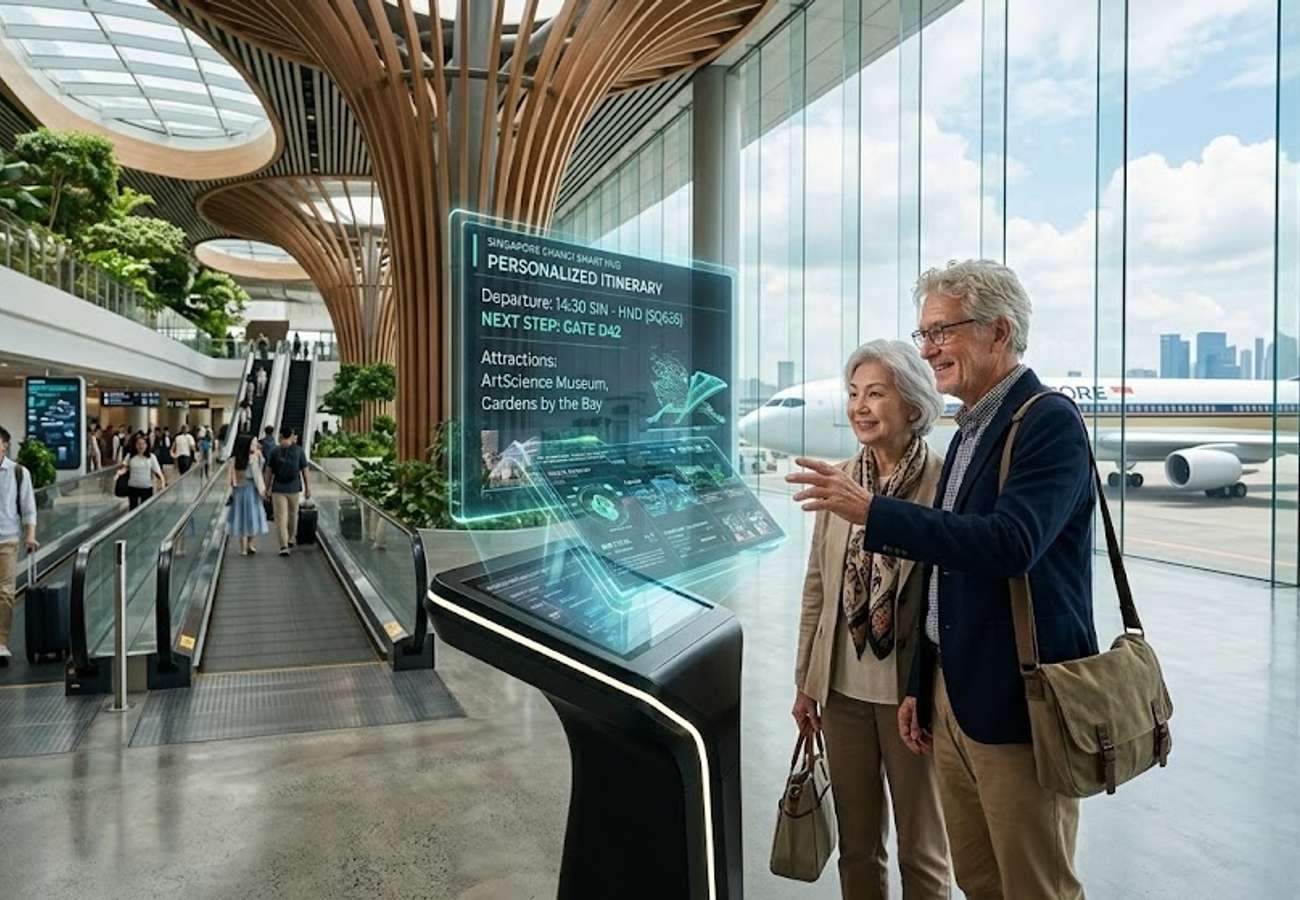
Image generated by AI
[Singapore, July 29, 2026] — Global tourism is undergoing a fundamental transformation as Singapore and Japan align with international technology leaders to integrate artificial intelligence, digital identity frameworks, and smart hospitality systems into the traveler experience. This strategic shift in 2026 marks a transition from traditional tourism services to interconnected digital ecosystems designed to maximize personalization, safety, and operational efficiency.
The current landscape of international travel is being redefined by a race among governments and hospitality conglomerates to implement high-tech solutions. These innovations are not merely additive but are becoming the core infrastructure upon which modern journeys are built, moving away from fragmented booking processes toward a unified, data-driven approach.
AI and Digital Identity Redefining the Traveler Journey
Artificial intelligence has transitioned from a novelty to a primary travel companion. In 2026, AI is actively utilized to curate hyper-personalized itineraries, analyze destination data for visitors, and accelerate the decision-making process for complex trips. Parallel to this, digital identity systems are fundamentally altering the logistics of movement, reducing friction at international borders, airport security checkpoints, and hotel receptions.
Smart tourism platforms now serve as the connective tissue between local attractions, transportation networks, and real-time visitor information. This integration is complemented by the rise of next-generation hospitality, where "intelligent hotels" employ automation and AI to enhance guest comfort and streamline the check-in process.
Industry reports indicate that this acceleration is driven by a shift in consumer expectations. Modern travelers now demand immediate speed, high levels of security, and a degree of personalization that anticipates their needs before they arrive at a destination.
Global Implementation of Smart Tourism Technologies
Different nations are deploying varied strategies to capture the growth of the technology-driven tourism sector. While some focus on urban mobility, others are prioritizing the digitization of cultural heritage or the automation of luxury hospitality.
| Country | Key Technology Initiative | How Technology Helps Travellers Plan Journeys | Travel Protection & Safety Features | Accommodation Technology | Major Impact in 2026 |
|---|---|---|---|---|---|
| Singapore | Smart tourism ecosystem, AI-enabled visitor services, digital hotel verification systems | Uses data-driven platforms to personalise visitor experiences, improve destination discovery and support digital travel services | Digital systems improve identity verification, visitor monitoring and service efficiency | E-Visitor Authentication (EVA) supports digital hotel check-in verification by connecting approved technology providers with tourism systems | Singapore continues positioning itself as one of the world’s most technology-driven travel destinations. |
| Japan | Smart tourism, AI travel assistance, digital visitor services | AI-powered recommendations, digital navigation and personalised destination information help travellers manage complex itineraries | Digital systems support smoother border processes, disaster information access and emergency communication | Hotels increasingly use automated check-in, robotics and multilingual digital services | Japan is combining advanced technology with hospitality traditions to improve visitor convenience. |
| India | AI tourism platforms, digital promotion, online hospitality databases | AI and data analytics are being used to promote destinations, understand visitor behaviour and improve trip discovery | Digital tourist support systems and multilingual assistance improve traveller confidence | Online classification and approval systems help organise accommodation providers through platforms such as NIDHI+ | India is accelerating digital tourism through partnerships, AI adoption and technology-led destination promotion. |
| United Arab Emirates | AI-powered tourism services, smart airports, digital visitor platforms | Travellers benefit from personalised recommendations, digital booking services and connected city experiences | Biometric airport systems, digital identity solutions and smart security improve passenger journeys | Luxury hotels use AI concierge services, automated services and personalised guest management | UAE continues expanding its position as a futuristic tourism hub through connected travel infrastructure |
| South Korea | Smart cities, AI travel assistants, digital tourism platforms | AI translation, navigation apps and personalised travel recommendations help international visitors explore independently | Digital emergency services and connected public infrastructure enhance visitor security | Hotels increasingly use mobile check-in, smart rooms and automated guest services | South Korea is integrating technology into urban tourism experiences |
| China | Digital tourism platforms, AI recommendations, smart attractions | Super apps, digital payments and AI-based travel tools simplify planning and movement | Digital payment ecosystems and smart-city monitoring support safer travel | Smart hotels use automated services, facial recognition systems and AI-based guest management | China remains one of the largest markets for technology-powered tourism experiences |
| United Kingdom | Digital identity development, government digital services, smart travel systems | Digital platforms improve access to travel information and public services | Digital identity systems are designed to improve secure access to services | Hospitality sector increasingly adopts AI booking tools and automated guest communication | The UK is strengthening digital infrastructure supporting domestic and international mobility. |
| Mexico | Tourism chatbots, smart visitor assistance platforms | AI assistants provide travellers with information about attractions, culture, transport and services | Real-time digital support improves visitor confidence during major events | Digital tourism platforms help visitors find services and accommodation information | Mexico introduced AI chatbot services to support international visitors, including during major tourism events. |
| Spain | Smart destination management, AI tourism analytics | Digital platforms analyse visitor flows and recommend experiences based on interests | Technology helps manage crowds and improve destination safety | Hotels widely use digital check-in, smart rooms and personalised guest platforms | Spain is using technology to balance tourism growth with destination management |
| Italy | Digital heritage technology, smart tourism platforms | Digital guides, virtual experiences and AI recommendations support cultural tourism | Digital information systems improve visitor management at heritage locations | Hotels increasingly use contactless services and digital guest engagement | Italy is modernising cultural tourism through technology while protecting heritage |
| Australia | Smart destination technology, digital visitor services | Digital maps, travel apps and personalised recommendations improve trip planning across large distances | Emergency alerts, safety apps and connected infrastructure support travellers | Hotels use mobile booking, digital keys and automated guest services | Australia is improving technology adoption across regional and urban tourism |
| Canada | Digital visitor services, smart mobility solutions | Technology supports itinerary planning, national park information and destination discovery | Emergency communication systems help travellers in remote areas | Accommodation providers increasingly use digital booking and guest management tools | Canada is using technology to improve access to large natural tourism destinations |
| Portugal | Smart tourism destinations, digital visitor engagement | Digital platforms help travellers discover attractions and manage city experiences | Smart-city systems support safer visitor movement | Hotels increasingly adopt AI-powered customer service tools | Portugal is emerging as a European leader in technology-supported tourism experiences |
| Germany | Digital travel infrastructure, AI mobility solutions | Digital rail, mobility and tourism platforms simplify multi-city travel planning | Real-time transport information improves journey reliability | Hotels increasingly use automated services and digital guest communication | Germany is integrating technology into sustainable and efficient travel systems |
| Thailand | Digital tourism platforms and smart destination programmes | Technology supports destination marketing, travel planning and visitor engagement | Digital services help tourists access information and assistance | Hotels increasingly use online booking, AI communication and smart-room technologies | Thailand is using technology to improve visitor experience and competitiveness |
Analyzing the Core Technology Trends of 2026
The shift toward a "Smart Tourism" model is defined by three primary technological pillars:
AI Travel Assistants: These tools have evolved beyond basic chatbots to become comprehensive decision-engines. They can now synthesize real-time data to create dynamic itineraries that adjust based on weather, local events, and individual user preferences, effectively removing the manual labor from trip planning.
Digital Identity Ecosystems: The implementation of secure, digital-first identity verification is drastically reducing wait times. From biometric gates at airports to the E-Visitor Authentication (EVA) systems in Singapore, the goal is a "frictionless" journey where physical passports are supplemented or replaced by encrypted digital tokens.
Smart Accommodations: The hospitality sector is integrating AI at the room level. This includes the use of robotics for housekeeping and concierge services, facial recognition for seamless room access, and AI-driven climate and lighting controls that adapt to guest preferences.
Why This Matters: The Impact on the Modern Traveler
For the average traveler, these developments mean the end of the "logistical headache" typically associated with international trips. The integration of AI and digital identity doesn't just save time; it fundamentally changes the psychology of travel. When the friction of border crossings and hotel check-ins is removed, travelers can focus more on the experience and less on the administration.
From a logistical standpoint, the move toward smart destination management—particularly in countries like Spain and Italy—is a critical step in combating over-tourism. By using AI to analyze visitor flows and recommend alternative attractions in real-time, cities can distribute tourist traffic more evenly, preserving heritage sites while maintaining a high-quality visitor experience.
Furthermore, for the digital nomad and the frequent business traveler, the adoption of these systems in hubs like the UAE and Singapore creates a predictable, high-efficiency environment. The ability to move through a city using a single digital identity and a connected AI assistant reduces the cognitive load of navigating foreign infrastructure.
The era of the static itinerary is over; the age of the living, breathing digital journey has arrived.
Related Travel Guides
Disclaimer
This article is for informational and educational purposes only. It does not constitute legal, financial, or professional advice. While we strive to provide accurate and up-to-date information, travel policies, regulations, and conditions change rapidly. Always verify information with official sources before making travel decisions. Nomad Lawyer makes no representations about the accuracy, reliability, completeness, or suitability of the information provided. Readers should consult qualified professionals for advice specific to their circumstances. The views expressed in this article are those of the author and do not necessarily reflect the views of Nomad Lawyer.
Raushan Kumar
Founder & Lead Developer
Full-stack developer with 11+ years of experience and a passionate traveller. Raushan built Nomad Lawyer from the ground up with a vision to create the best travel and law experience on the web.
Learn more about our team →