
Breaking Airline News: Emirates Deploys Massive Intelligence Shield and Safety Protocols to Rescue Passengers from Geopolitical Travel Chaos
Breaking airline news: Amidst a terrifying era of severe geopolitical conflict and airspace closures, Emirates executes a brilliant tactical defense, launching massive intelligence protocols and rerouting guarantees to rescue travelers from transit chaos.

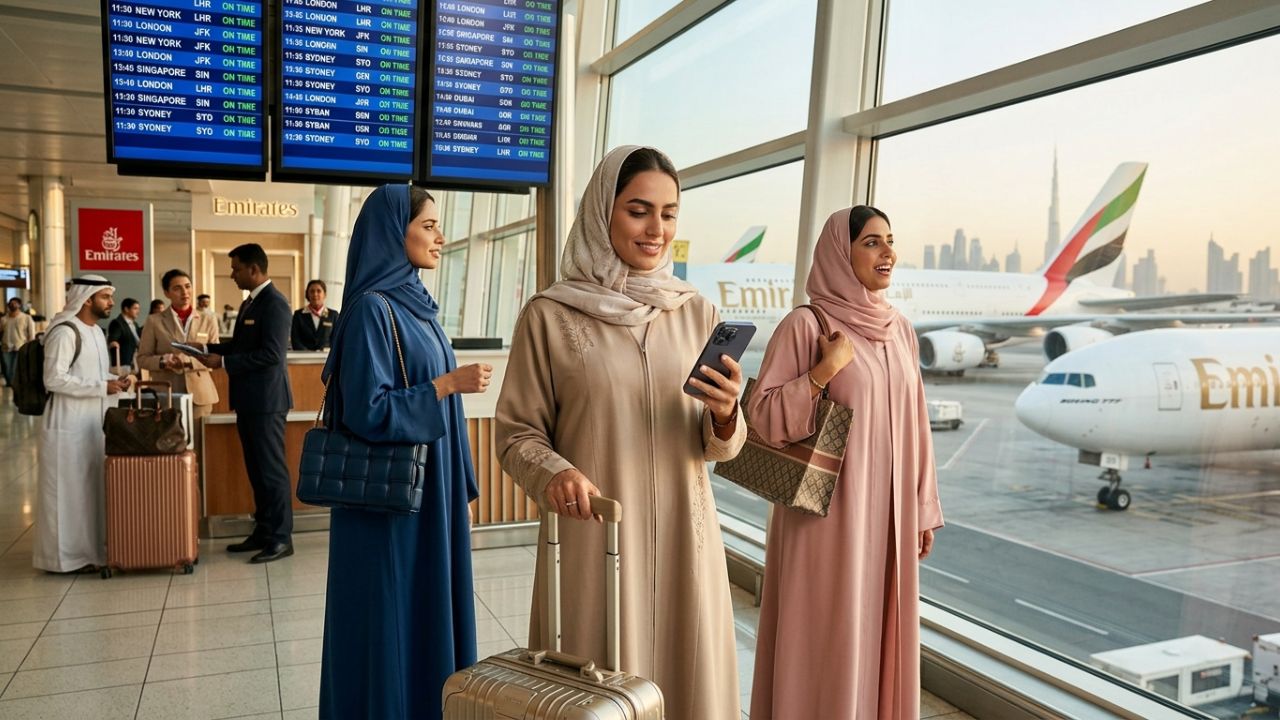
Image representing the intense strategic battle as global aviation authorities desperately deploy massive real-time intelligence networks to combat severe geopolitical friction and bypass paralyzing airspace closures during Middle Eastern conflicts.
Breaking Airline News: Emirates Deploys Massive Intelligence Shield and Safety Protocols to Rescue Passengers from Geopolitical Travel Chaos
As paralyzing geopolitical conflict, terrifying airspace closures, and severe regulatory warnings violently threaten to completely choke the critical Middle Eastern aviation corridors, a massive transit titan has executed a high-stakes infrastructural maneuver. In a desperate bid to physically and psychologically rescue global travelers from the terrifying threat of extreme travel chaos triggered by the ongoing Iran war crisis, UAE-based Emirates Airlines has aggressively launched a massive tactical defense. Officially activating a staggering array of new safety assurances and multi-faceted travel incentives, the state-backed carrier is forcefully rewriting how airlines operate within volatile combat theaters. By aggressively establishing this unified intelligence and logistical defense perimeter out of its primary hub in Dubai, Emirates is directly fighting to prevent the complete collapse of intercontinental passenger mobility. The airline is ensuring that furious corporate travelers and anxious tourists are no longer trapped by the terrifying unreliability and severe physical danger historically defining wartime airspace restrictions.
In a harrowing display of modern aviation vulnerability, the sheer logistical nightmare of attempting to navigate commercial widebody jets through a region actively suffering from massive military engagements has historically forced airlines and passengers into terrifying transit scenarios. For weeks, attempting to survive a simple transit through the Gulf required travelers to endure highly fragile itineraries, heavily shadowed by the terrifying threat of sudden, violent airspace closures. This disjointed operational model frequently triggered terrifying bottlenecks, where a single localized military strike shattered the fragile air corridor chain, spawning massive flight cancellations, severe groundings, and completely ruined global itineraries. However, Emirates is aggressively fighting back against this structural paralysis. Recognizing that slashing ticket prices during a war is a useless tactic, the airline has violently pivoted away from conventional price wars. Instead, Emirates is forcefully locking high-value, non-monetary safety guarantees into the grid, ensuring that passengers can violently slash their exposure to cascading logistical failures and successfully bypass the agonizing misery of paralyzed transport networks.
Expanded Overview: The Massive Scale of the Transit Contagion
The terrifying crisis of overwhelming passenger stress currently gripping complex global itineraries brutally exposes the severe limitations of flying blindly into contested airspace. Recognizing that aggressively forcing travelers to guess if their flight path is safe leads directly to severe psychological friction, aviation authorities are attempting to forcefully decompress the tension. The sheer scale of this Emirates defense operation is immense. The airline has aggressively established massive, real-time intelligence-sharing protocols directly with regional governments to continuously monitor atmospheric safety. This massive infrastructural shift completely destroys the terrifying threat of connection-induced travel chaos, heavily leveraging continuous data exchanges with diverse state authorities to efficiently bypass potential combat hazards and keep commercial operations moving at high velocity.
Section-Wise Breakdown: The Operational Realignment
Breaking the Regulatory Airspace Gridlock
To survive the terrifying surge in global travel anxiety without triggering immediate passenger abandonment, this massive deployment specifically targets the highly restrictive regulatory environment. Massive military engagements involving United States and Israeli forces against Iran have violently constricted airspace availability. Consequently, the European Union Aviation Safety Agency (EASA) aggressively issued severe conflict-zone warnings, effectively advising commercial fleets to completely abandon specific corridors over the Gulf. Emirates is actively pursuing complex negotiations to challenge these paralyzing bans, arguing that their massive, hyper-advanced localized tracking systems and dynamic risk-assessment models render the airspace safe, fighting desperately to prevent over-regulation from violently choking essential global transport arteries.
Deploying the Logistical Contingency Shield
To guarantee the absolute reliability of this highly defensive operational model, Emirates has executed a brilliant strategic deployment of customer care frameworks. The airline has violently eliminated the terrifying fear of being stranded in a foreign mega-hub due to a sudden wartime airport closure. Management has issued absolute guarantees that if emergency rerouting is forced, Emirates will actively absorb all logistical responsibilities, even officially committing to utilizing alternative international carriers to transport stranded passengers. This strategic defense mechanism drastically elevates the passenger experience, completely bypassing the extreme frustration usually associated with airlines legally abandoning travelers during "acts of war" or geopolitical force majeure events.
Securing the Economic Reality
The massive infrastructural shift aggressively centers around the brutal financial realities of wartime aviation. Passengers demanding lower fares to offset the perceived risk are facing the harsh truth of the energy markets. Because global energy markets are violently reacting to the conflict, volatile crude values are currently hovering near a terrifying $90 per barrel. Emirates has explicitly confirmed that standard ticket price reductions are utterly unfeasible under these macroeconomic pressures. However, the airline is aggressively projecting future market stabilization, anticipating a vital decline in oil prices to approximately $70 per barrel, which would eventually decompress the immense financial strain currently placed on global travel networks.
Geopolitical Aviation Risk Management Matrix
To fully comprehend the massive logistical and strategic fallout of this terrifying geopolitical crisis, corporate travel managers and affected tourists must review the exact operational metrics defining the Emirates deployment. The following matrix provides a granular breakdown of the specific, officially verified strategic and economic data driving this massive disruption mitigation effort.
| Strategic Aviation Metric | Confirmed Operational & Economic Data |
|---|---|
| Operating Carrier | Emirates Airlines (Dubai Hub) |
| Primary Catalyst for Disruption | Middle Eastern Geopolitical Conflict (Iran Crisis) |
| Regulatory Airspace Advisory | European Union Aviation Safety Agency (EASA) Warnings |
| Current Energy Market Pricing | Crude Oil Hovering Near $90 per Barrel |
| Projected Energy Stabilization Target | Crude Oil Projected Decline to ~$70 per Barrel |
| Premium Cabin Occupancy Impact | First-Class Volumes Reduced to 50% of Normal Capacity |
Passenger Impact: Surviving the Combat Zone Transit
For the millions of global tourists and corporate commuters attempting to navigate the rapidly shrinking intercontinental transit corridors between Europe and Asia, this massive Emirates deployment represents a highly anticipated lifeline against severe operational delays. The brutal reality of enduring a terrifyingly sudden cancellation due to a missile launch warning, only to realize your unprotected airline refuses to rebook you on a competitor, inflicts intense psychological stress and completely destroys meticulously planned itineraries. This exact anxiety has violently hollowed out the luxury travel sector, with Emirates officially confirming that first-class cabin occupancy has suffered a terrifying crash, currently functioning at a mere 50% of normal seasonal volumes. By aggressively deploying these guaranteed rerouting safety nets, Emirates is attempting to actively prevent the terrifying friction that results in severely abandoned premium travel plans.
Survival Guide for Transit Travelers
Travelers desperately preparing to navigate the modernized global network through the Middle East must immediately execute the following survival protocols:
- Leverage Rerouting Guarantees: Passengers attempting complex intercontinental jumps through Dubai must aggressively book with carriers like Emirates that explicitly guarantee the utilization of alternative international carriers if a sudden airspace closure strands the flight; relying on budget carriers during wartime almost guarantees terrifying travel chaos.
- Exploit Dynamic Flight Paths: Corporate travelers must relentlessly monitor official airline apps; because Emirates is utilizing real-time intelligence to dynamically alter transcontinental flight paths, passengers must expect sudden changes in flight durations and arrival times as the aircraft violently maneuvers to avoid newly declared conflict zones.
- Accept Fare Realities: Because fuel is locked near $90 a barrel, travelers must aggressively secure their bookings now rather than waiting for non-existent wartime discounts, entirely bypassing the massive financial risk of securing last-minute premium cabins as global capacity physically shrinks.
Industry Analysis: The Economics of Tactical Resilience
From a strategic aviation perspective, the travel turmoil currently forcing these massive network realignments highlights the terrifying vulnerability of airlines operating purely on thin profit margins without robust intelligence networks. Industry analysts confirm that securing massive global reach via real-time data exchanges with state authorities is an absolute masterstroke in corporate crisis management. The aggressive Emirates strategy lowers systemic risk, providing the Dubai hub with massive international credibility without the terrifying threat of a catastrophic interception, ultimately shielding the Gulf aviation ecosystem from severe conflict-induced travel chaos.
Conclusion: A Strategic Retreat to Ensure Aviation Survival
As the extremely critical 2026 global travel season accelerates, the massive deployment of these Emirates safety protocols represents a massive warning to airlines attempting to blindly force passengers through highly contested geopolitical transit networks. The aggressive maneuvering proves that capturing market dominance during a crisis requires terrifyingly swift intelligence integration, connecting passengers directly to their final destinations while shielding them from the brutal reality of wartime unreliability. Corporate travel buyers and everyday passengers attempting to navigate this highly unstable era of airport disruptions must embrace these new, highly efficient protective lifelines. By acting aggressively to leverage airlines equipped with advanced risk-assessment models, travelers can successfully survive the intense geopolitical travel surges and completely avoid the paralyzing threat of conflict-induced travel chaos.
Key Takeaways
- Massive Tactical Defense: UAE-based Emirates Airlines has aggressively launched a massive array of new safety assurances and non-monetary consumer incentives to shield passengers from the severe travel chaos triggered by the Iran war crisis.
- Crushing the Intelligence Gridlock: The airline is actively utilizing continuous, real-time data exchanges and intelligence-sharing protocols with regional governments to dynamically alter transcontinental flight paths and bypass combat hazards.
- Strategic Passenger Protection: Management has violently eliminated the fear of being stranded, officially guaranteeing the use of alternative international carriers to reroute passengers if airspace closures force emergency groundings.
- Global Ecosystem Disrupted: Extreme geopolitical volatility has violently impacted energy markets (crude oil near $90/barrel) and passenger confidence, with Emirates confirming first-class occupancy has plummeted to 50% of normal volumes.
- Traveler Advisory: Passengers navigating through the Gulf corridor must aggressively leverage carriers offering ironclad rerouting contingencies and expect dynamic adjustments to their flight times due to severe European Union Aviation Safety Agency (EASA) airspace warnings.
Related Travel Guides
Disclaimer
This article is for informational and educational purposes only. It does not constitute legal, financial, or professional advice. While we strive to provide accurate and up-to-date information, travel policies, regulations, and conditions change rapidly. Always verify information with official sources before making travel decisions. Nomad Lawyer makes no representations about the accuracy, reliability, completeness, or suitability of the information provided. Readers should consult qualified professionals for advice specific to their circumstances. The views expressed in this article are those of the author and do not necessarily reflect the views of Nomad Lawyer.
Kunal K Choudhary
Co-Founder & Contributor
A passionate traveller and tech enthusiast. Kunal contributes to the vision and growth of Nomad Lawyer, bringing fresh perspectives and driving the community forward.
Learn more about our team →