
The C-130 Hercules: Seven Decades of Military Aviation Dominance—How Many Were Built?
Breaking airline news and aviation industry updates for 2026.

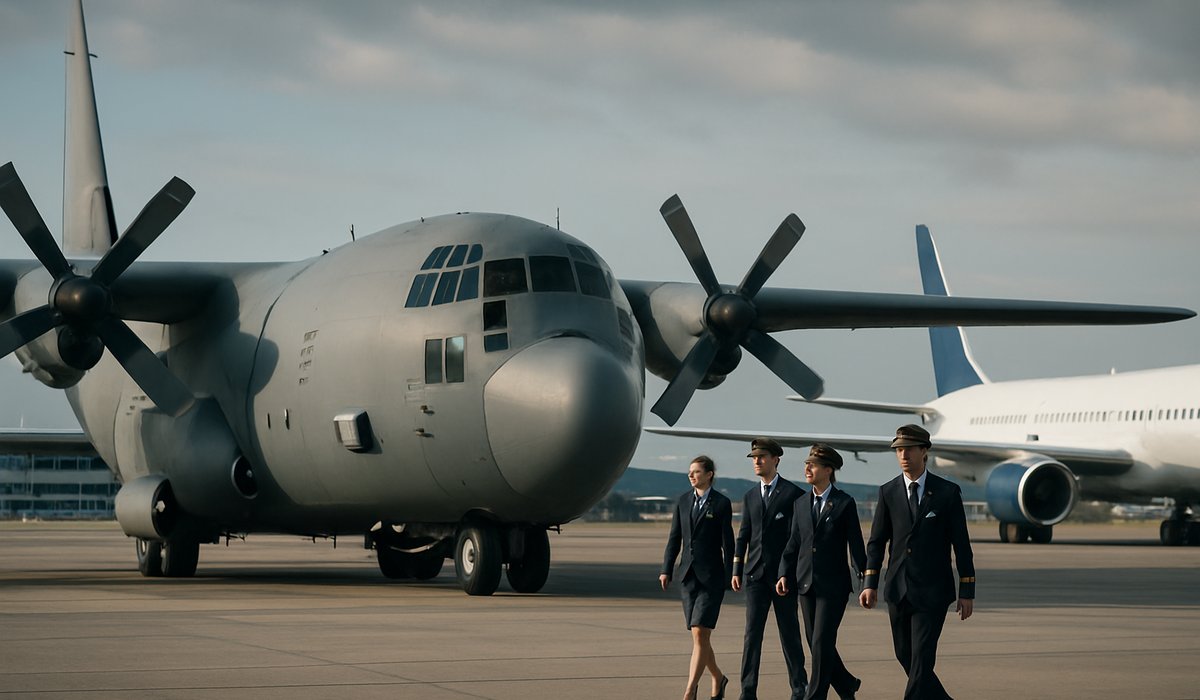
Image generated by AI
The C-130 Hercules: Seven Decades of Military Aviation Dominance—How Many Were Built?
From Antarctica rescues to global defense operations, Lockheed's legendary transport aircraft remains the backbone of allied air forces worldwide
A Production Legacy Spanning Generations
The Lockheed C-130 Hercules stands as one of aviation's most enduring success stories. Since its initial development in the 1950s, this four-engine tactical transport aircraft has become the workhorse of military operations across the globe, with production numbers that underscore its unparalleled demand among defense establishments.
The sheer scale of C-130 production reflects its critical role in modern military logistics. Lockheed has manufactured over 2,600 aircraft across multiple variants and generations, making it one of the most widely produced military aircraft in history. This staggering production volume speaks to both the platform's technical superiority and the sustained confidence placed in it by defense forces worldwide.
Global Deployment and Operational Reach
The aircraft's versatility has driven its adoption far beyond the United States Air Force. Today, the C-130 Hercules operates with air forces on six continents, from established NATO allies to emerging military powers. The Royal New Zealand Air Force exemplifies this global footprint—its fleet regularly undertakes extraordinary missions, including recent humanitarian evacuation operations in Antarctica where extreme conditions and remote locations demand the aircraft's legendary reliability and performance capabilities.
From tactical airlift and cargo transport to special operations support and humanitarian relief, the C-130 has proven adaptable to virtually every mission profile. The US Coast Guard similarly relies on specialized variants for maritime patrol and rescue operations, demonstrating the platform's cross-service utility.
Continuous Evolution and Modernization
Production figures alone tell only part of the story. The C-130 has undergone continuous modernization since its introduction, with successive variants—including the C-130J Super Hercules—incorporating advanced avionics, improved engines, and enhanced cargo-handling systems. This capacity for upgrade and adaptation has extended the aircraft's operational relevance across seven decades of technological change.
Military procurement strategies worldwide have consistently prioritized C-130 acquisitions, even as newer platforms have emerged. The aircraft's proven track record, established logistics infrastructure, and interoperability with allied forces have created significant switching costs that favor continued investment in the platform.
Strategic Implications for Global Defense
The C-130's dominance in military transport reflects deeper geopolitical realities. As defense budgets remain constrained, established platforms with proven performance records maintain strategic advantage. The aircraft's presence in allied air forces also reinforces military interoperability networks critical to coalition operations and humanitarian response.
FAQ: Understanding the C-130 Hercules Production Story
How many C-130 Hercules aircraft have been manufactured in total? Over 2,600 C-130 Hercules aircraft have been produced since the platform's introduction, making it one of history's most prolific military aircraft programs.
Which countries operate the C-130 Hercules today? The aircraft serves with air forces across six continents, including the United States, allied NATO members, Australia, Canada, Japan, and numerous other defense establishments globally.
What variants of the C-130 are currently in service? The C-130J Super Hercules represents the latest production variant, featuring modern avionics and improved engines, while earlier C-130H models remain operational with many air forces.
Why has the C-130 remained in production for so long? Its exceptional versatility, reliability, and adaptability across multiple mission types—from tactical airlift to humanitarian rescue—have sustained demand among military and coast guard services worldwide.
What makes the C-130 suitable for extreme operations like Antarctic missions? The aircraft's robust design, powerful engines, long-range capability, and proven performance in challenging environments make it ideal for remote-area operations including medical evacuations and disaster relief.
Related Travel Guides
Flight Delay Compensation Guide 2026
Understanding Airline Route Changes
Airport Security Process Updated (2026)
External Resources
Disclaimer
This article is for informational and educational purposes only. It does not constitute legal, financial, or professional advice. While we strive to provide accurate and up-to-date information, travel policies, regulations, and conditions change rapidly. Always verify information with official sources before making travel decisions. Nomad Lawyer makes no representations about the accuracy, reliability, completeness, or suitability of the information provided. Readers should consult qualified professionals for advice specific to their circumstances. The views expressed in this article are those of the author and do not necessarily reflect the views of Nomad Lawyer.
Kunal K Choudhary
Co-Founder & Contributor
A passionate traveller and tech enthusiast. Kunal contributes to the vision and growth of Nomad Lawyer, bringing fresh perspectives and driving the community forward.
Learn more about our team →