
Electronic Immigration System Outage Disrupts Canadian Boarding at Houston Airport
An electronic immigration verification system failure at Houston's George Bush Intercontinental Airport prevents Air Canada passengers from boarding in H2 2026.

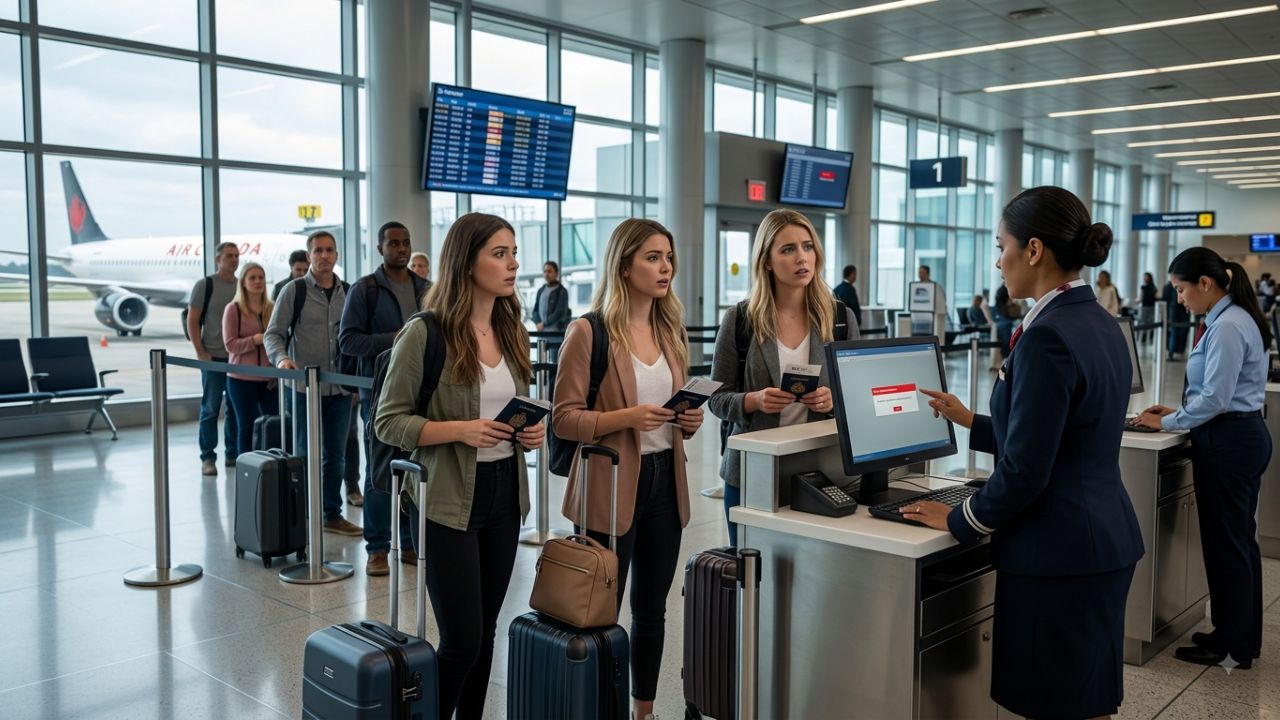
Image generated by AI
A technical failure in an electronic immigration verification system at Houston's George Bush Intercontinental Airport (IAH) left multiple Air Canada passengers bound for Montréal unable to board their flight on August 17, 2026. Despite holding valid Canadian passports, travelers were stopped at the gate after the automated clearance system failed to approve their entry status.
The aviation market in North America is observing a significant transition toward automated border screening, with airports and airlines increasingly relying on digital verification to process international departures. While these electronic check-in systems are designed to improve efficiency, reduce check-in queues, and enhance national security, they also expose travelers to unexpected delays when digital connections fail. A key milestone in this technology dependence occurred at George Bush Intercontinental Airport in Houston, Texas. A connection outage between passenger processing systems and Canadian security verification databases resulted in several Air Canada passengers being denied boarding for their flight to Montréal.
For the traveler, the real impact of this technology transition is the potential for sudden delays even when all personal documentation is completely valid. Passengers who had completed standard airport check-in and security screening were stopped at the final boarding gate. This disruption highlights the necessity of having robust manual backup verification systems in place to prevent technical outages from canceling passenger travel plans.
The Role of Automated Verification in International Departures
Modern international travel relies on interconnected databases that verify passenger eligibility before a flight takes off. When a traveler checks in for an international route, the airline transmits their passport data through government-linked clearance platforms to ensure they meet destination-country entry rules. These electronic verification systems rely on complex Application Programming Interfaces (APIs) that query multiple security databases in real time. The query transfers encrypted passenger name record (PNR) details and passport identifiers to determine if a passenger's document has been flagged or matches destination visa requirements. When there is a latency lag or direct network failure at these api endpoints, the airline's check-in gate cannot resolve the query, defaulting to boarding locks. For Canada-bound flights, these electronic verification systems confirm whether travelers hold valid passports, visas, or Electronic Travel Authorizations (eTA).
Airlines face severe financial penalties from immigration authorities if they transport travelers who lack valid entry documents. Consequently, boarding software is programmed to automatically block boarding passes unless a positive clearance signal is received from the destination country's database. When a technical failure cuts off communication between the gate and the security database, the system defaults to a denial of service, preventing gate agents from clearing passengers for departure. In the Houston incident, affected passengers had to wait while Air Canada personnel coordinated with border authorities to perform manual checks, eventually rebooking the travelers onto alternative flights.
The Geography of Houston's Global Aviation Hubs
George Bush Intercontinental Airport serves as the primary international gateway for the Houston metropolitan area and a key transit link for flights between Canada, the United States, and Latin America. The airport handles millions of passengers annually, operating five passenger terminals (Terminals A, B, C, D, and E) connected by automated underground trains and above-ground people movers. Terminal D and Terminal E serve as the primary processing zones for international departures and arrivals, housing advanced biometric boarding gates and automated passport control kiosks.
This high level of automation is designed to handle large passenger volumes, but it also creates a single point of failure when regional network connections experience outages. When check-in systems cannot verify data with the Canada Border Services Agency (CBSA) or U.S. Customs and Border Protection (CBP), passenger flow is immediately bottlenecked at the gate, demonstrating how dependent modern aviation hubs are on continuous digital connectivity.
Ecotourism and Community Support in Houston
While navigating technical challenges at the airport can be exhausting, travelers visiting Houston can offset their transit stress and environmental footprint by exploring the city's green spaces and supporting local businesses. Houston features extensive urban parks and wetland preservation initiatives designed to protect the regional ecosystem:
- Buffalo Bayou Park: A 160-acre green space stretching through the city, featuring native plantings, hiking trails, and urban bat colonies. Travelers can explore the park via non-motorized bike paths to minimize their transport emissions. Buffalo Bayou Park is also home to the historic Cistern, a massive subterranean reservoir built in 1926 that has been repurposed as an architectural public art space. The bayou itself is a critical waterway that drains regional rainfall into the San Jacinto River, and local conservation initiatives focus on planting native trees to stabilize soil erosion and restore natural biomes. Supporting volunteer-led cleanups along the bayou directly helps in preserving the local river system's water quality.
- The Houston Tunnel System: A unique subterranean pedestrian network linking corporate towers, restaurants, and local shops below the downtown streets, offering a cooled walking environment that reduces the need for surface vehicle travel.
- Local Culinary Support: Instead of dining at national fast-food chains, travelers are encouraged to visit independent Tex-Mex spots, slow-smoked Texas BBQ pits, and local Viet-Cajun crawfish joints, keeping tourism spending within Houston's diverse community.
By selecting low-impact transport methods, such as the electric METRORail light rail system, visitors can explore the Museum District and Downtown area while reducing urban carbon emissions.
Destination Specialist Local Insider Tips
To help you manage travel procedures at Houston's airports and enjoy the cultural environments of the city safely and responsibly, regional specialists suggest the following tips:
- Arrive Three Hours Prior to Departure: For international flights departing from IAH, allow at least three hours before your scheduled flight time to account for potential digital verification or biometric boarding delays.
- Keep Physical and Digital Backups: Carry printed copies of your passport photo page, visa confirmations, and flight itineraries. Having a physical backup is essential if airport electronic databases experience connection outages.
- Savor Authentic Viet-Cajun Crawfish: Sample local Houston cuisine. Try Viet-Cajun crawfish (boiled crawfish tossed in garlic butter and Asian spices), a local culinary fusion developed by the city's Vietnamese-American community.
- Utilize the METRORail Light Rail: Avoid renting a vehicle for downtown travel. The METRORail Red, Green, and Purple lines offer clean, efficient, and cheap transit between major tourist hubs, hotels, and the Museum District.
- Confirm System Status Before Panic: If your boarding pass is delayed at the gate due to an immigration verification error, remain calm and ask the airline staff if it is a system-wide database connection issue before assuming there is a problem with your personal passport.
Long-Term Outlook for Automated Border Control
The long-term outlook for international travel involves further integration of biometrics, facial recognition, and automated database screening at border crossings. As airlines and immigration departments transition to paperless travel, the reliability of these global networks will remain a primary focus for aviation authorities.
To prevent future disruptions like the Houston incident, international aviation bodies and border agencies must develop synchronized backup protocols, allowing airlines to perform secure, temporary manual verifications when databases experience temporary outages. By balancing advanced security technology with operational flexibility and passenger support, the global aviation sector can build a resilient transit network that protects border integrity while ensuring smooth journeys for international travelers.
Related Travel Guides
Disclaimer
This article is for informational and educational purposes only. It does not constitute legal, financial, or professional advice. While we strive to provide accurate and up-to-date information, travel policies, regulations, and conditions change rapidly. Always verify information with official sources before making travel decisions. Nomad Lawyer makes no representations about the accuracy, reliability, completeness, or suitability of the information provided. Readers should consult qualified professionals for advice specific to their circumstances. The views expressed in this article are those of the author and do not necessarily reflect the views of Nomad Lawyer.
Kunal K Choudhary
Co-Founder & Contributor
A passionate traveller and tech enthusiast. Kunal contributes to the vision and growth of Nomad Lawyer, bringing fresh perspectives and driving the community forward.
Learn more about our team →