
Severe Travel Chaos Hits Columbus Airport as Delta and American Airlines Suffer 6 Flight Cancellations Disrupting Major US and Canada Routes: Airline News
Massive airport disruptions hit John Glenn Columbus International Airport (CMH), triggering 6 flight cancellations across Delta and American Airlines and severing routes to Boston and Toronto.

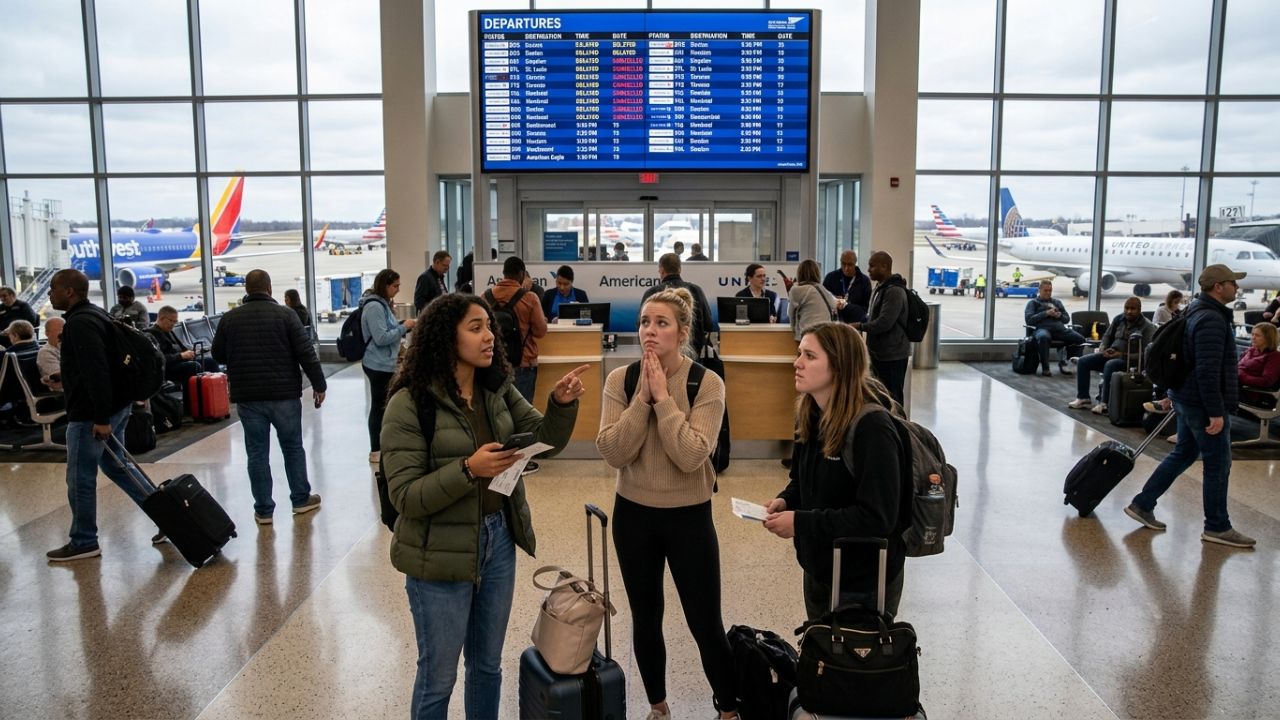
Image generated by AI
In a damaging breakdown of regional aviation mobility across the Midwest, localized travel chaos has violently disrupted standard operations at John Glenn Columbus International Airport (CMH). Reported on June 20, 2026, as stranded passengers frantically monitor the latest airline news for any sign of relief, a compounding wave of operational bottlenecks has triggered severe airport disruptions. Airport tracking data officially recorded a logistical collapse consisting of multiple delayed operations and 6 outright flight cancellations, effectively isolating business travelers and families inside the Ohio terminals. This operational failure has inflicted highly targeted logistical damage across two major legacy carriers: Delta Air Lines and American Airlines. As the gridlock destroys highly sensitive connecting itineraries bound for Boston, Houston, St. Louis, Toronto, and Montreal, this meltdown in Columbus represents today's most crucial headline in breaking aviation updates and passenger survival strategy.
By introducing direct passenger coordination and dynamic scheduling backups, the regional aviation hubs target growing passenger demand across vital commerce sectors. The choice to coordinate flight departures in phases helps to manage gate capacity, supporting the country's broader regional transportation network.
Context: The Vulnerability of Regional Gateways
For the US aviation network, the massive disruption at John Glenn Columbus International Airport exposes the extreme sensitivity of vital regional hubs to sudden operational strain.
Columbus serves as an incredibly important feeder gateway, actively funneling Midwest passengers into the massive domestic and international networks of Delta and American Airlines. Crucially, regional airports rely on tight, meticulously scheduled turnaround times to maximize efficiency. When operational challenges—ranging from severe localized weather to downstream air traffic control restrictions at major hubs—assault the CMH airspace, the damage violently ripples outward. The current disruption pattern reveals that Delta and American are absorbing intense delays that ultimately force the cancellation of 11% of their scheduled operations at the airport. Because a single cancelled regional jet in Columbus instantly destroys connecting itineraries for passengers attempting to reach Europe via Atlanta or Canada via Chicago, this localized wave of 6 cancellations guarantees widespread connectivity challenges across multiple regions.
To view live flight schedules, verify the active departure status of your specific Columbus itinerary, or to track potential route restorations prior to heading to the airport, travelers must consult official aviation directories. For direct updates regarding how these operational failures might impact your current flight cancellations out of Ohio, travelers should aggressively utilize the official digital portals of their respective airlines. To explore live flight tracking and monitor the exact severity of the cascading bottlenecks paralyzing the broader US airspace, passengers can consult the official FlightAware tracking service.
Section-Wise Breakdown: The Route Contagion
The Domestic US Network Strain
The disruption originating at CMH violently extended across a massive network of major US cities. The flight cancellations and delays directly infected crucial domestic corridors, severely impacting flights bound for Dallas, Atlanta, Austin, Nashville, Boston, Charlotte, Denver, Greenville, Houston, Washington, Las Vegas, Los Angeles, New York City, Orlando, Chicago, Minneapolis, St. Louis, Jacksonville, Miami, and Phoenix. This immense domestic spread proves that an operational collapse in Ohio instantly chokes the entire national aviation grid, destroying feeder traffic for major legacy hubs.
The Cross-Border Canadian Collapse
Crucially, the operational collapse severely impacted cross-border travel into Canada. High-value international routes connecting Columbus directly to Toronto and Montreal are caught in the travel chaos. Travelers attempting to reach these vital Canadian business centers are suffering intense scheduling failures, severing critical economic ties and stranding executives.
The Legacy Carrier Breakdown
The disruption is heavily concentrated on legacy carriers rather than low-cost operators. Delta Air Lines suffered 3 outright cancellations and 5 delays, while American Airlines matched that damage with 3 cancellations and 6 delays. When two legacy giants fail simultaneously at a regional hub, passenger rebooking capacity drops to absolute zero.
Technical Roster: Columbus Disruption Matrix
To ensure absolute factual accuracy regarding the exact volume of grounded flights and the specific operational damage inflicted upon each airline, the following matrix details the strictly verified FlightAware data:
Official Flight Cancellations and Delays at CMH Airport
| Airline | Cancelled Flights | Delayed Flights |
|---|---|---|
| Delta Air Lines | 3 | 5 |
| American Airlines | 3 | 6 |
Data accurately reflects the exactly 6 cancellations recorded at John Glenn Columbus International Airport (CMH) on June 20, 2026. Delta and American Airlines each cancelled 11% of their scheduled operations during this reporting period.
Passenger Impact: The Chaos of Missed Connections
For the passengers physically trapped inside the terminals of John Glenn Columbus International Airport, the immediate impact is severe logistical exhaustion and the massive threat of destroyed onward itineraries.
Families attempting to begin summer vacations in Florida and business travelers racing to critical meetings in Boston or Toronto found themselves frantically refreshing departure boards as the delays compounded. Because both Delta and American suffered 11% cancellation rates simultaneously, the terminal became intensely overcrowded, completely overwhelming gate agents. Passengers subjected to the 6 outright flight cancellations were forced into agonizing lines, desperately attempting to secure rebookings on an airline network operating with zero spare capacity. For travelers trapped on delayed outbound flights to Atlanta or Dallas, the cascading failure practically guarantees they will miss their crucial connecting flights, forcing them to absorb the exorbitant costs of sudden overnight hotel accommodations.
Industry Analysis: The Mechanics of Regional Cancellations
Aviation analysts monitoring the localized collapse at CMH note that passengers must urgently execute a strict survival strategy to navigate this specific travel chaos.
Analysts emphasize that when a regional gateway like Columbus suffers an 11% cancellation rate on its legacy carriers, the logistical recovery is exceptionally brutal. Regional airports do not house massive fleets of spare aircraft or reserve crews. If a Delta jet assigned to CMH suffers a mechanical failure or times out due to weather delays, a replacement aircraft must be flown in from Atlanta or Detroit, which can take hours or even days depending on network availability. The aviation industry is intentionally conservative, choosing to cancel a regional feeder flight rather than allow a severely delayed aircraft to infect the tightly synchronized schedule of a massive downstream hub like Chicago O'Hare.
Actionable Advice for Surviving the CMH Meltdown
If you are currently trapped inside John Glenn Columbus International Airport, or attempting to fly out of Ohio during this operational breakdown, you must execute this strategic survival checklist immediately:
- Exploit the Digital Alternatives: As soon as you learn your flight is canceled, stay calm and immediately check your airline’s mobile app. Do not wait in a massive physical line at the service desk. Attempt to rebook yourself digitally. If the app fails, try calling the airline's customer service number to completely bypass the physical queues inside the terminal.
- Audit Alternative Transit Instantly: Columbus is geographically connected to several major Midwest cities. If your flight to Chicago or St. Louis is officially canceled, immediately evaluate alternative transport like rental cars or Amtrak. Driving a rental car to your destination may be significantly faster than waiting three days for Delta to find you an empty seat on another regional jet.
- Understand Your Compensation Rights: Familiarize yourself with the specific airline’s policies regarding cancellations. If the 6 cancellations at CMH were caused by carrier-controlled issues (like mechanical failures), you are entitled to meals and hotel accommodations. If the DOT mandates a cash refund because you choose not to travel after a severe delay, demand it immediately.
FAQ: Columbus Airport Flight Cancellations
How many flights were delayed or canceled at Columbus Airport?
According to FlightAware data, the airport recorded 6 outright flight cancellations and several delayed flights heavily concentrated on legacy carriers.
Which airlines were most affected by the travel chaos at CMH?
Delta Air Lines suffered 3 cancellations and 5 delays. American Airlines also suffered 3 cancellations and 6 delays. Both carriers lost roughly 11% of their scheduled operations.
Which major routes were disrupted by the Columbus cancellations?
The massive gridlock severely impacted cross-border Canadian routes to Toronto and Montreal, alongside major US hubs including Boston, Houston, St. Louis, Atlanta, Dallas, and Chicago.
The Reality of Regional Hub Fragility
The catastrophic breakdown at John Glenn Columbus International Airport proves definitively that regional feeder airports possess a terrifying operational fragility. By effectively grounding 6 flights and delaying operations across Delta and American, the localized failure quickly stranded travelers bound for Boston, Texas, and Canada. Yet, as exhausted travelers frantically attempt to rebook their flights or secure scarce rental cars in Ohio, they must accept a critical new reality: a single cancelled regional jet in Columbus can completely destroy an international itinerary. Surviving this level of interconnected travel chaos now demands extreme adaptability, a complete refusal to panic in long customer service lines, and the tactical discipline to instantly evaluate driving to an alternative hub the exact second a cancellation is announced.
Key Takeaways
- Massive Regional Collapse: Columbus Airport (CMH) suffered severe travel chaos, recording 6 outright flight cancellations and multiple delays.
- Legacy Carriers Impacted: Delta Air Lines and American Airlines absorbed the entirety of the cancellations, each losing 11% of their scheduled flights.
- Domestic Network Decimated: Operations were paralyzed across major US hubs including Boston, Houston, St. Louis, Dallas, and Atlanta.
- International Contagion: The delays severely infected cross-border Canadian routes, explicitly severing critical links to Toronto and Montreal.
- Survival Strategy: Passengers are strongly urged to instantly rebook via airline apps and proactively evaluate ground transportation alternatives to bypass the regional gridlock.
Related Travel Guides
Massive Travel Chaos Paralyzes Chicago O'Hare with 1,425 Disruptions
Disclaimer
This article is for informational and educational purposes only. It does not constitute legal, financial, or professional advice. While we strive to provide accurate and up-to-date information, travel policies, regulations, and conditions change rapidly. Always verify information with official sources before making travel decisions. Nomad Lawyer makes no representations about the accuracy, reliability, completeness, or suitability of the information provided. Readers should consult qualified professionals for advice specific to their circumstances. The views expressed in this article are those of the author and do not necessarily reflect the views of Nomad Lawyer.
Kunal K Choudhary
Co-Founder & Contributor
A passionate traveller and tech enthusiast. Kunal contributes to the vision and growth of Nomad Lawyer, bringing fresh perspectives and driving the community forward.
Learn more about our team →