
Himachal Pradesh Shipki La Border Tourism Growth: New Regulations Required After 70,000 Visits
Himachal Pradesh reports a threefold increase in border tourism visits, prompting calls for a unified regulatory code to manage security and safety at the Shipki La frontier.
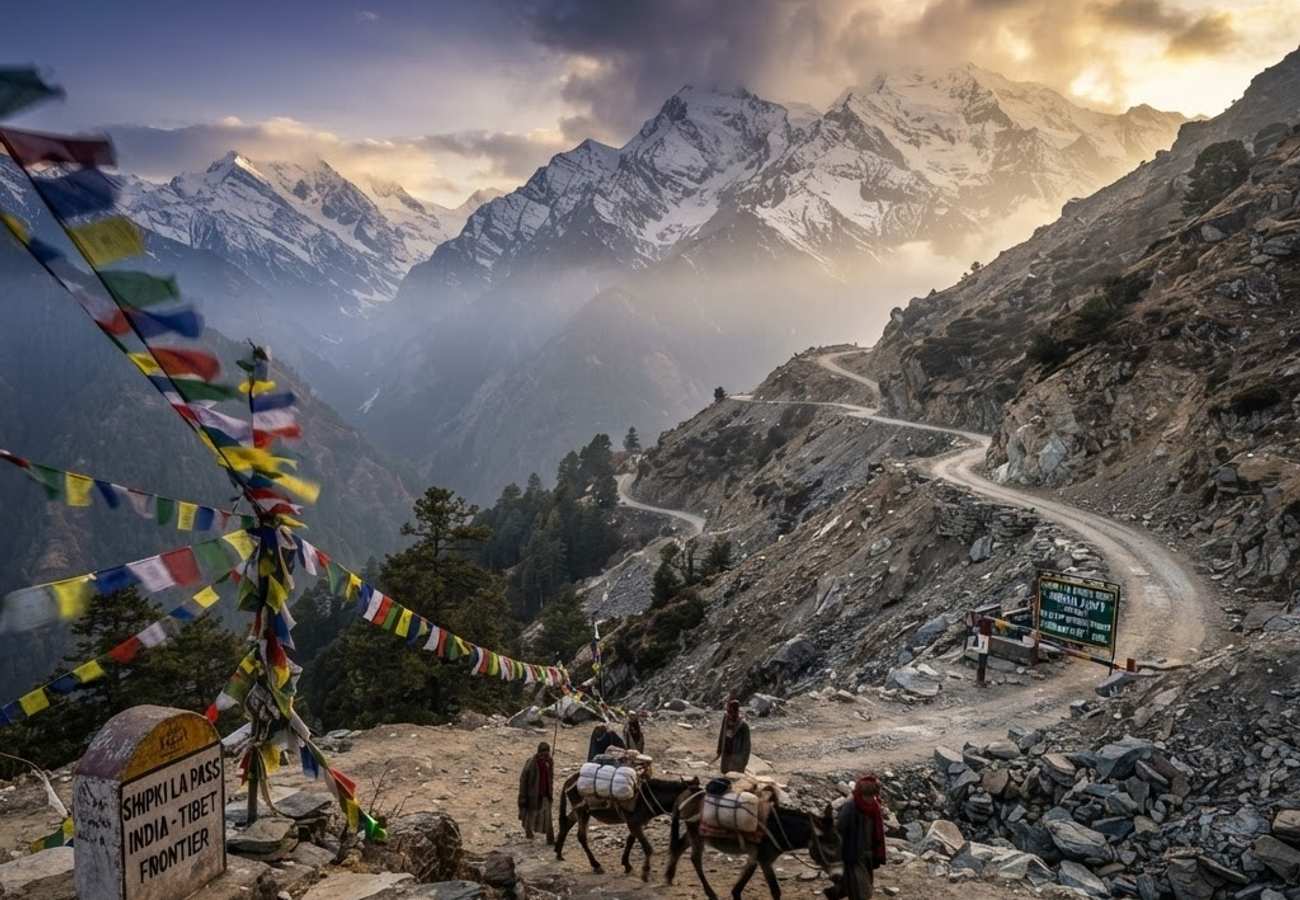
Image generated by AI
The Himachal Pradesh government is facing urgent pressure to establish a unified regulatory code for Shipki La border tourism following a surge in visitor numbers that exceeded 70,000 in 2025.
Regulated Access at the India-Tibet Frontier
Shipki La, located in the Kinnaur district at an elevation of approximately 3,930 metres, has transitioned from a remote trading pass to a significant domestic tourism draw. The Himachal Pradesh government formally opened the crossing to regulated domestic tourism on 10 June 2025, aiming to stimulate the economy of remote border communities and revive the historical importance of the Kinnaur region.
Despite the opening, Shipki La remains a sensitive security zone. Access is not guaranteed and is contingent upon security conditions, valid identification, road availability, and direct instructions from the civil administration. The current transition phase highlights a tension between the state's goal of economic development and the stringent requirements of national security.
Analysis of Border Tourism Growth (2024-2025)
Data from the Himachal Pradesh government indicates a rapid increase in interest in frontier destinations. However, official figures require precise interpretation to avoid overstating the traffic at Shipki La specifically.
| Official Tourism Indicator | Reported Position | Correct Interpretation |
|---|---|---|
| Border-region visits (2024) | Around 21,000 | Collective count for all HP border areas |
| Border-region visits (2025) | More than 70,000 | Collective count, not Shipki La exclusive |
| Annual Increase | More than threefold | Strong demand for regulated frontier zones |
| Shipki La Launch Date | 10 June 2025 | Regulated domestic tourism initiative |
| Shipki La Altitude | Approx. 3,930 metres | High-altitude safety critical |
While the volume of visitors has increased, there is a notable absence of data regarding visitor spending, overnight stays, or local employment figures. This data gap complicates the assessment of whether the tourism surge is translating into sustainable economic growth for the Kinnaur district.
The Case for a Unified Border Tourism Code
Currently, visitors navigate a fragmented set of rules derived from government statements, district guidelines, and security checkpoints. This inconsistency creates confusion regarding what is permitted in a high-security zone. A formal "Border Tourism Code" is proposed to consolidate the following parameters:
- Documentation: Specific identity documents accepted and registration requirements.
- Movement: Defined accessible roads, viewpoints, and entry/exit windows.
- Security: Explicit "no-go" zones, including military installations and field defences.
- Media Restrictions: Clear boundaries on where photography is permitted and a total ban on drones and professional filming in sensitive areas.
- Emergency Protocols: Standardized emergency contact numbers and weather-related evacuation procedures.
Conflicting Administrative Guidance
A significant friction point exists between state-level promotion and district-level enforcement. While the state promotes Shipki La, the Kinnaur District Administration’s guidelines—updated as recently as 26 August 2026—state that roads leading toward Shipki La and Kaurik from NH-22 are not permitted.
This discrepancy means travellers may arrive at the destination only to find their path blocked by civil administration orders. Until a consolidated guidance document is released, the district administration maintains that movement in notified areas is strictly controlled, and the length of stay may be regulated on an individual basis.
Logistics and Safety Constraints
Cross-Border Limitations
It is a critical distinction that domestic tourism at Shipki La does not grant access to Tibet. The tourism initiative is entirely separate from the traditional border-trade system used by authorized local traders. While images of mule caravans and trade may suggest an open border, tourists are restricted to the Indian side of the frontier. Any mentions of a future Kailash Mansarovar pilgrimage route through this pass remain speculative and subject to national and international approval.
High-Altitude Health Risks
At 3,930 metres, the risk of Acute Mountain Sickness (AMS) is high. Rapid ascent from lower elevations can lead to nausea, dizziness, exhaustion, and shortness of breath.
Traveler Logistics Guide: Navigating the Kinnaur Frontier
From a ground-level perspective, the best way to navigate this region is to treat it as a military zone rather than a leisure destination.
- Document Readiness: Carry original government-issued photo IDs (Aadhaar, Passport, or Voter ID). Digital copies are often insufficient at security checkpoints.
- Verification: Do not rely on third-party travel blogs. Verify road accessibility directly with the Kinnaur district administration 48 hours before departure.
- Acclimatization: To avoid AMS, plan a gradual ascent. Spend at least one night at a mid-altitude stop before attempting to reach the pass.
- Photography Ethics: If you see a military installation or a "No Photography" sign, adhere to it strictly. Security personnel at the frontier have the authority to confiscate equipment or detain individuals violating security protocols.
Strict adherence to civil administration guidelines is the only way to ensure uninterrupted access to this sensitive frontier.
Related Travel Guides
Disclaimer
This article is for informational and educational purposes only. It does not constitute legal, financial, or professional advice. While we strive to provide accurate and up-to-date information, travel policies, regulations, and conditions change rapidly. Always verify information with official sources before making travel decisions. Nomad Lawyer makes no representations about the accuracy, reliability, completeness, or suitability of the information provided. Readers should consult qualified professionals for advice specific to their circumstances. The views expressed in this article are those of the author and do not necessarily reflect the views of Nomad Lawyer.