Hilton Introduces Zero Emission Hotel Prototype to Drive Greener Future for US Hospitality Sector

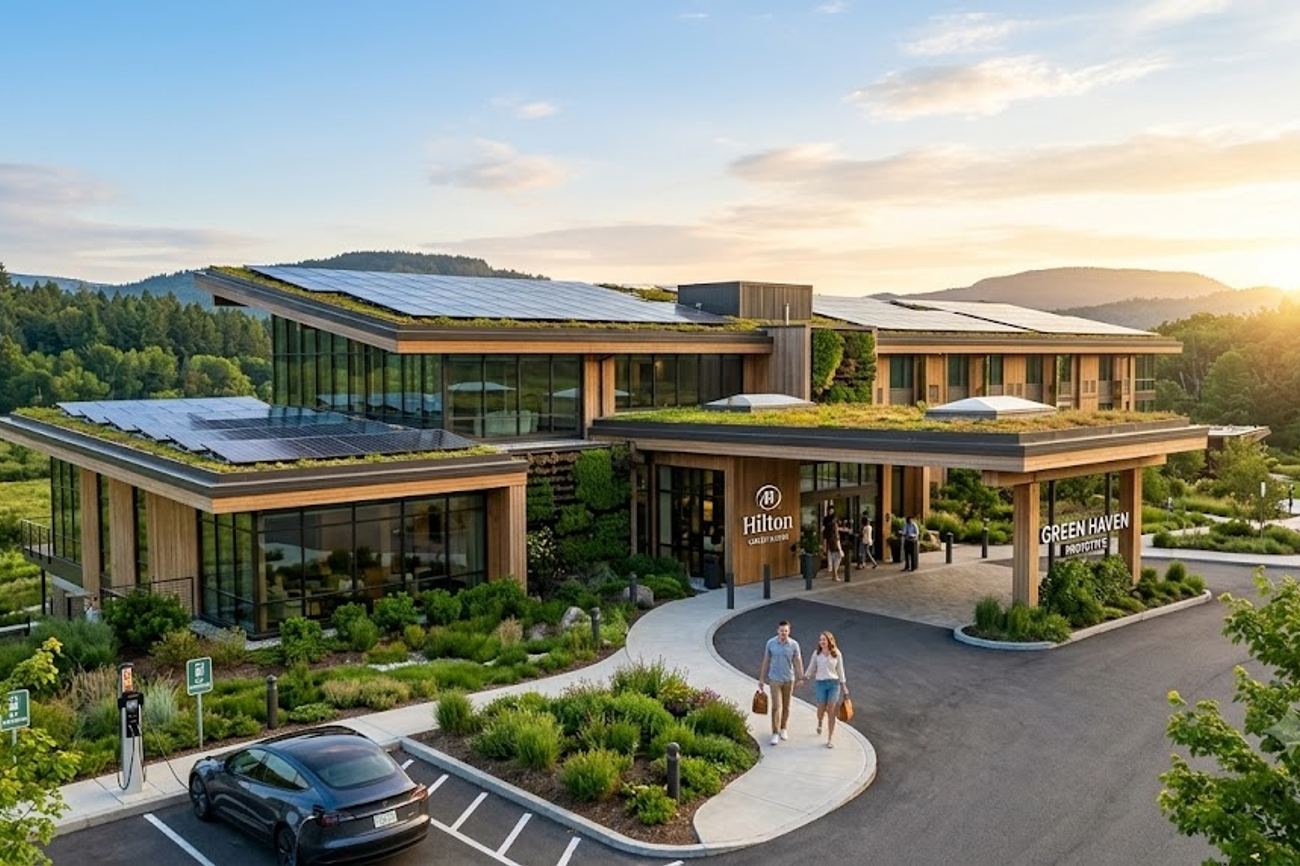
Image generated by AI
[McLean, Virginia, October 2024] — Hilton has launched a first-of-its-kind "Clean Energy Prototype" for its Home2 Suites brand, offering U.S. developers a scalable hotel model designed to achieve zero operational emissions. The initiative allows property owners to implement all-electric systems and renewable energy integration to drastically lower utility overhead without modifying the standard guest experience.
The move comes as the hospitality sector faces mounting pressure from rising utility costs. By shifting from traditional energy sources to a ready-to-use, sustainable development model, Hilton aims to insulate hotel operators from energy market volatility while meeting corporate carbon reduction targets. The prototype is now available for adoption by owners and developers across the United States, marking the company's first widely available hotel design focused on the total elimination of operational emissions.
The Drive Toward Zero-Emission Infrastructure
The catalyst for this design shift is a combination of escalating operational expenses and a strategic push toward decarbonization. Hilton is positioning the Clean Energy Prototype as a financial tool as much as an environmental one, targeting the high cost of energy—one of the largest line items in a hotel's operating budget.
The prototype integrates three primary pillars of efficiency:
- All-Electric Systems: The removal of gas-fired equipment in favor of high-efficiency electric alternatives.
- Renewable Energy Integration: The capacity for hotels to generate power on-site or secure green energy through external supply agreements.
- Advanced Building Envelopes: Improved structural designs that minimize energy leakage and optimize thermal performance.
This shift is supported by the U.S. Department of Energy (DOE), which has long advocated for the electrification of commercial buildings to reduce greenhouse gas emissions. By embedding these features into the construction stage, Hilton ensures that sustainability is a foundational element of the property rather than an expensive retrofit.
Market Impact and Performance Metrics
Hilton conducted a comprehensive modeling assessment across 13 different U.S. cities to determine how the Clean Energy Prototype performs against traditional Home2 Suites designs. The data indicates a significant leap in both fiscal and environmental performance.
| Metric | Projected Improvement/Reduction |
|---|---|
| Overall Energy Efficiency | ~30% Increase |
| Annual Energy Expenses | 18% to 40% Reduction (Market Dependent) |
| Operational Carbon Emissions | ~440 Metric Tonnes Reduction |
| Asset Value | Increase via improved building performance |
The wide variance in energy savings (18% to 40%) suggests that the prototype's effectiveness is heavily influenced by local utility rates and the availability of regional renewable energy credits. However, the consistent reduction in carbon emissions underscores the model's viability as a tool for meeting strict environmental regulations.
Practical Traveler Advisory and Strategic Insights
For the average guest booking a stay at a Home2 Suites, the transition to a Clean Energy Prototype will be virtually invisible. Hilton has explicitly stated that the design does not alter the guest experience. Travelers will still find the same extended-stay amenities, room layouts, and service standards.
However, there are secondary impacts for the modern traveler:
- Alignment with Values: Guests who prioritize eco-conscious travel can now identify properties that operate with zero emissions, a factor increasingly influencing booking decisions.
- Consistency of Service: Because the prototype focuses on "resilience," guests are less likely to experience service disruptions caused by energy instability or outdated HVAC systems.
- Corporate Compliance: Business travelers whose companies mandate stays at sustainable properties will have more options within the Hilton portfolio.
This shift aligns with broader trends monitored by the Global Sustainable Tourism Council (GSTC), which emphasizes the need for hospitality brands to move toward measurable, science-based targets rather than vague "green" claims.
The Broader Sustainability Roadmap
The Home2 Suites prototype is not an isolated project but a component of a global strategy. Hilton is simultaneously expanding its energy procurement programs, which allow hotel owners to hedge against price spikes and source cleaner energy.
The scale of these efforts is already evident in the company's 2025 data. Hilton’s energy programs have already helped participating owners avoid more than 102,130 metric tonnes of carbon emissions. By combining these operational procurement strategies with the new physical building prototype, Hilton is creating a dual-track approach to sustainability: one that manages how energy is bought and another that manages how it is used.
Existing Home2 Suites properties already utilize several efficiency measures, including ENERGY STAR certified appliances, water-saving landscaping, and advanced lighting systems. The Clean Energy Prototype simply evolves these fragmented features into a unified, zero-emission system.
Future Implementation Timeline
As Home2 Suites remains one of Hilton's primary growth engines in the U.S. market, the Clean Energy Prototype is expected to become the blueprint for a significant portion of new developments. The rollout will likely follow a phased approach:
- Early Adoption: Developers of new-build properties in high-cost energy markets will be the first to implement the prototype to maximize the 18%-40% cost savings.
- Market Expansion: Integration into municipal areas with strict carbon mandates or "green building" zoning laws.
- Standardization: Potential transition of the prototype into the default design standard for all new Home2 Suites constructions.
The long-term goal is to create a scalable model that can be adapted to various climates and urban densities across North America, providing a template for other hotel brands to follow.
FAQ: Hilton Clean Energy Prototype 2024
Will room rates increase because of the new sustainable design? No. The prototype is designed to reduce operational costs for the owner. There is no indication that these efficiencies will result in higher prices for guests; in fact, lower overhead can lead to more competitive pricing.
Does this mean existing Home2 Suites are being renovated? The Clean Energy Prototype is primarily a development model for new hotels. While existing hotels may adopt some energy procurement strategies, the full zero-emissions design is targeted at new construction and development.
How does "zero operational emissions" work in practice? The hotel eliminates on-site combustion of fossil fuels (like natural gas for heating) and replaces them with electric systems powered by renewable energy, either generated on-site via solar/wind or purchased through green energy contracts.
Will guests notice any difference in room temperature or lighting? No. Hilton has confirmed the guest experience remains unchanged. The efficiency gains come from the building's "back-end" infrastructure—such as the HVAC systems and building envelope—rather than reducing guest comforts.
The hospitality industry is no longer treating sustainability as a luxury, but as a mandatory hedge against rising costs.
Related Travel Guides
This article is for informational purposes. Flight routes, passenger regulations, visa rules, and transit advisories are subject to change by airlines and aviation authorities. Readers are advised to verify schedules and travel documentation with relevant carriers and border agencies before departure.
Related Stories
EU Probes Booking.com Under Digital Services Act Over Fake Hotel Listings, Hijacked Reservations, and Search Ranking Transparency