
As Travel Chaos and Flight Cancellations Ground United and Delta in New York, the Hidden Airline Seat Armrest Button Emerges as a Critical Aviation Safety Requirement: Airline News
While severe airport disruptions trap passengers on the tarmac, the hidden airline seat armrest button serves as a strictly regulated safety feature to preserve the 90-second evacuation standard.

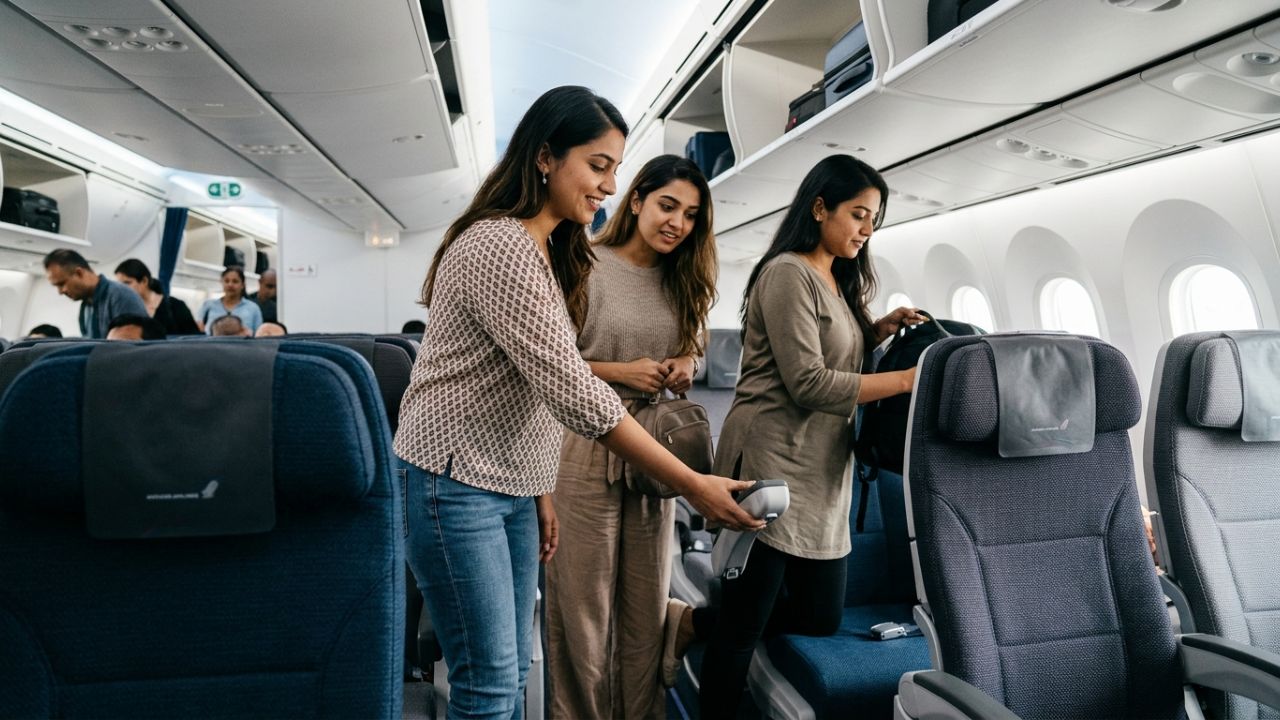
Image generated by AI
As massive waves of travel chaos and rolling flight cancellations continue to trap exhausted passengers on congested tarmacs across major hubs like New York, Chicago, and Atlanta, a little-known engineering secret inside the economy cabin is gaining viral attention. Reported on June 20, 2026, amidst widespread airport disruptions that have paralyzed major carriers including United Airlines, Delta Air Lines, and American Airlines, travelers are actively discovering the hidden airline seat armrest button. Located on the underside of the outer aisle armrest, this covert mechanism allows the armrest to flip completely upward. While stranded passengers often share this as a comfort "hack" to gain extra space during agonizing ground holds, the latest airline news reveals that this mechanism is actually a strictly regulated aviation safety feature. Designed by aerospace engineers to comply with the Air Carrier Access Act, this button bolsters passenger accessibility, protects cabin crew from injury, and guarantees that aircraft meet the absolute 90-second emergency evacuation standard mandated by global aviation authorities during breaking aviation updates.
By introducing direct passenger coordination and dynamic scheduling backups, the regional aviation hubs target growing passenger demand across vital commerce sectors. The choice to coordinate flight departures in phases helps to manage gate capacity, supporting the country's broader regional transportation network.
Context: Engineering Safety Amidst Aviation Gridlock
For the international aviation network, the hidden aisle armrest button exposes the incredible depth of safety engineering baked into commercial aircraft, even as external operational networks collapse into chaos.
While travelers in the United States, Germany, and Japan frequently scour the cabin for extra legroom during massive airport disruptions, the true secret to survival sits right at their fingertips. The mechanism itself varies slightly depending on whether the seat was manufactured by aerospace giants in France or the United States, but it is always deliberately hidden from plain sight. By sliding a hand underneath the armrest casing near the structural hinge, a passenger will feel a small, unmapped plastic tab or recessed release lever. Engaging this mechanism releases the internal locking pins, allowing the entire armrest to pivot upward smoothly. Airlines intentionally do not actively advertise the presence of this button to prevent passengers from permanently raising the armrest and subsequently blocking the narrow cabin aisles during flight.
To view live flight schedules, verify the active departure status of your specific itinerary, or to track potential route restorations prior to heading to the airport, travelers must consult official aviation directories. For direct updates regarding how massive operational failures might impact your current flight cancellations out of New York or Chicago, travelers should aggressively utilize the official digital portals of their respective airlines. To explore live flight tracking and monitor the exact severity of the cascading bottlenecks paralyzing the broader US airspace, passengers can consult the official FlightAware tracking service.
Section-Wise Breakdown: Dissecting the Hidden Mechanism
Accessibility Compliance Laws
The presence of this adjustable boundary is not a voluntary comfort perk developed by Delta or United; it is a rigid legal requirement. Under the Air Carrier Access Act, international transport departments explicitly mandate that commercial aircraft configured with 30 or more seats must feature movable armrests on at least half of all available aisle seats. This establishes a foundational, non-negotiable standard for passenger accessibility compliance across the entire global aviation grid.
Dignified Wheelchair Transfers
When an aisle is paralyzed by travel chaos, efficient boarding becomes critical. When a passenger with severe mobility impairments boards an aircraft, they must transfer from their personal wheelchair to a highly specialized, incredibly narrow boarding wheelchair. Trying to lift a passenger over a fixed, rigid armrest is incredibly undignified and poses a massive injury risk to the assisting crew. By utilizing the secret aisle armrest button, the barrier completely disappears, allowing the passenger to slide horizontally directly into their seat.
The Clear-Air Turbulence Threat
Beyond accessibility, this hidden control is a heavily vetted aviation safety feature. During the cruise phase of a flight, if the outer armrest is left raised, an aisle passenger’s elbows and feet naturally drift outward into the walking path. This drastically increases the risk of passengers getting struck by heavy beverage carts. More importantly, in the event of severe, unexpected clear-air turbulence, a raised armrest fails to contain a passenger laterally, resulting in preventable broken bones or severe bruising.
Technical Roster: Safety and Evacuation Matrix
To ensure absolute factual accuracy regarding the specific operational protocols governing this hidden mechanism, the following matrices detail the strictly verified accessibility transfers and evacuation risk cycles:
The Accessibility Transfer Pattern
| Operational Phase | Required Action | Resulting Outcome |
|---|---|---|
| Stage 1: Aisle Entry | Passenger utilizes specialized Aisle Boarding Chair | Positions passenger parallel to the assigned row |
| Stage 2: Barrier Removal | Crew engages the Secret Armrest Button | The outer armrest pivots upward, removing the physical block |
| Stage 3: Lateral Movement | Passenger executes a Horizontal Slide | Moves seamlessly from the aisle chair into the aircraft seat |
| Stage 4: Completion | Armrest is locked back into the down position | Achieves safe, dignified, and Injury-Free Boarding |
The Emergency Evacuation Risk Cycle
| Risk Phase | Incident Catalyst | Evacuation Impact |
|---|---|---|
| The Safety Violation | Armrest is intentionally Left Raised | Passenger loses crucial lateral body containment |
| The Trigger Event | Aircraft suffers Emergency Impact Forces | Violent deceleration or hard landing violently shifts the cabin |
| The Physical Failure | Passenger is Displaced Laterally | Passenger's body is violently thrown sideways into the primary walking path |
| The Catastrophic Result | Aisle Blocked / Egress Delayed | Fails the FAA mandated strict 90-second aircraft evacuation standard |
Data accurately reflects the strict operational standards mandated by global aviation regulators (FAA and EASA). The armrest must remain locked down during taxi, takeoff, and landing to ensure emergency evacuation efficiency.
Passenger Impact: Comfort vs. Survival
For the passengers physically trapped inside congested aircraft during massive tarmac delays, the immediate impact of discovering this hidden button is a sudden surge in personal comfort.
However, aviation safety briefings explicitly mandate that all aisle armrests must be securely locked in the down position during taxi, takeoff, and landing. When travel chaos disrupts schedules, exhausted passengers frequently attempt to sleep with the armrest raised. This directly jeopardizes emergency evacuation efficiency. During a hard landing or sudden deceleration event, the human body is subjected to intense lateral forces. A lowered armrest serves as a vital structural pocket, keeping the passenger’s body safely contained within their seat boundaries. If the armrest is left up, a passenger can be thrown sideways directly into the aisle. This creates a physical blockade that halts the flow of traffic, entirely disrupting the strict 90-second aircraft evacuation standard. When seconds mean the difference between life and death, an improperly positioned armrest can kill.
Industry Analysis: Hidden Ecosystems of the Cabin
Aviation analysts monitoring cabin design note that passengers must urgently understand these hidden engineering features to maximize their safety during flight.
Analysts emphasize that the secret aisle armrest button is simply one piece of an unmapped ecosystem of hidden features engineered into modern economy cabins. For instance, many travelers do not realize that the standard adjustable headrest features internal structural wings. By grabbing the edges and folding them inward, a passenger can create a secure cradle that prevents their head from slumping sideways. Similarly, the tray table assemblies on newer aircraft models are mounted on secondary adjustable rails, allowing passengers to slide the surface closer to their bodies. Understanding these hidden mechanisms proves that cabin architecture is balanced perfectly between daily passenger comfort and life-saving engineering.
Actionable Advice for Navigating Cabin Safety
If you are currently trapped on an aircraft during an operational breakdown or tarmac hold, you must execute this strategic survival checklist immediately:
- Locate the Hidden Release: Run your hand along the underside of the outer aisle armrest, near the hinge assembly where the armrest connects to the main seat frame. You will feel the recessed tab. Press or slide it forward, and lift the armrest upward to stretch your legs during a prolonged ground delay.
- Lock It Down for Takeoff: The absolute second the captain announces departure, you must slam the armrest back down until it physically clicks into the locked position. Do not argue with flight attendants if they demand you lower it; it is a federal requirement to preserve the 90-second evacuation standard.
- Utilize the Headrest Wings: To prevent severe neck cramps while sleeping during a massive delay, forcefully fold the thick outer edges of your leather headrest inward. This creates a structural cradle that stabilizes your skull.
FAQ: The Hidden Airline Seat Armrest Button
Where is the hidden aisle armrest button located?
The secret release mechanism is located on the absolute underside of the outer aisle armrest, completely hidden near the hinge assembly where the armrest connects to the main seat frame.
Why does the hidden armrest button exist?
It was legally mandated by the Air Carrier Access Act to allow seamless, dignified boarding wheelchair transfers for passengers with limited mobility, while also acting as a lateral body barrier during turbulence.
When must the aisle armrest be locked down?
While the armrest can be raised during boarding or mid-flight cruise, federal regulations mandate it must remain securely locked down during taxi, takeoff, and landing to preserve emergency evacuation efficiency.
The Reality of Cabin Engineering
The discovery of the hidden aisle armrest button proves definitively that commercial airlines design their cabins with ruthless precision to balance passenger accessibility and absolute survival. As exhausted travelers trapped by airport disruptions in New York and Chicago utilize this button to gain extra space, they must accept a critical new reality: an airplane seat is a highly regulated piece of survival equipment. Surviving the modern aviation landscape now demands extreme situational awareness, a complete refusal to compromise safety protocols for personal comfort during takeoff, and the tactical discipline to explicitly lock down all structural barriers to ensure that, in the event of a catastrophic failure, the entire cabin can evacuate in exactly 90 seconds.
Key Takeaways
- Hidden Mechanism: A secret recessed tab on the underside of the outer aisle armrest allows it to flip completely upward.
- Legal Mandate: The Air Carrier Access Act requires 30+ seat aircraft to feature movable armrests on at least half of all aisle seats.
- Accessibility Compliance: The movable armrest enables dignified, injury-free horizontal transfers from narrow boarding wheelchairs.
- Turbulence Protection: A locked armrest acts as a vital lateral barrier, preventing passengers from sliding into the aisle during severe clear-air turbulence.
- Evacuation Standard: The armrest MUST be locked down during takeoff and landing to prevent aisle blockages and preserve the mandatory 90-second evacuation rule.
Related Travel Guides
Massive Travel Chaos Paralyzes Chicago O'Hare with 1,425 Disruptions
Disclaimer
This article is for informational and educational purposes only. It does not constitute legal, financial, or professional advice. While we strive to provide accurate and up-to-date information, travel policies, regulations, and conditions change rapidly. Always verify information with official sources before making travel decisions. Nomad Lawyer makes no representations about the accuracy, reliability, completeness, or suitability of the information provided. Readers should consult qualified professionals for advice specific to their circumstances. The views expressed in this article are those of the author and do not necessarily reflect the views of Nomad Lawyer.
Kunal K Choudhary
Co-Founder & Contributor
A passionate traveller and tech enthusiast. Kunal contributes to the vision and growth of Nomad Lawyer, bringing fresh perspectives and driving the community forward.
Learn more about our team →