
Helsinki Expands as Northern Europe's Premier Asia Gateway as Dedicated Freighters Link the Baltic with Global Trade
Helsinki Airport reinforces its strategic position on the shortest Europe-Asia great-circle route as Qatar Airways Cargo launches dedicated freighter operations connecting Nordic commerce worldwide.

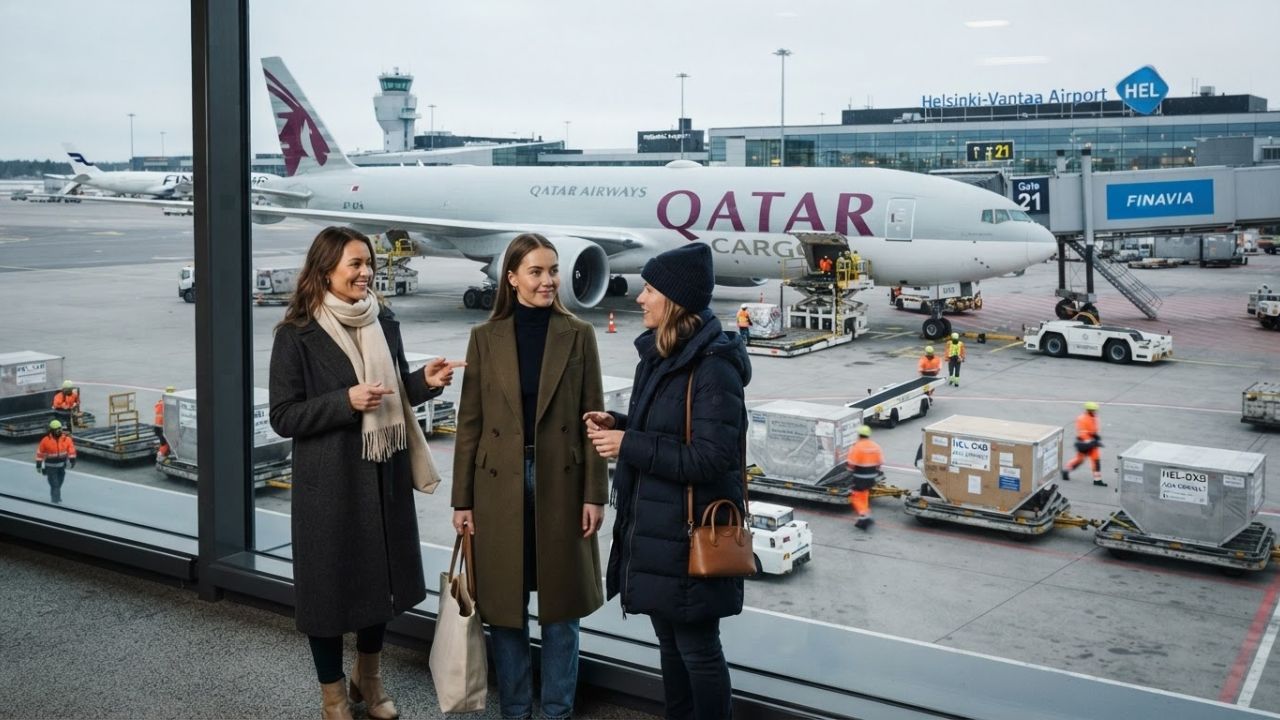
Image generated by AI
Perched at the top of the globe, Helsinki Airport sits directly on the shortest great-circle flight trajectory connecting Western Europe with the manufacturing and technological powerhouses of East Asia. While international travelers know the Finnish capital for its minimalist Nordic design, Baltic sea breezes, and public wood-fired saunas, the city has quietly cemented its reputation as one of the most efficient intercontinental transfer hubs on earth. That northern bridge received a major operational boost as Qatar Airways Cargo inaugurated dedicated freighter operations at Helsinki Airport, linking Northern Europe directly into its global network via Hamad International Airport in Doha. Managed by airport operator Finavia, this expansion provides vital freight capacity for temperature-sensitive pharmaceuticals, telecommunications components, specialised machinery, and fresh Arctic seafood, positioning Helsinki as an indispensable commercial bridge between East and West.
The Northern Route Advantage: Balancing Trade and Passenger Mobility
Helsinki's enduring strength as an aviation capital comes down to simple orbital geography. When flying between Northern Europe and key Asian economic centers like Tokyo, Seoul, Shanghai, Singapore, and Mumbai, routing across high northern latitudes cuts hundreds of nautical miles off conventional southerly paths. For decades, national flag carrier Finnair Cargo and Finavia leveraged this geographic shortcut to build one of the world's most seamless transit hubs, pairing swift passenger connections with expansive belly-hold freight capabilities.
The addition of dedicated freighter services introduces an entirely new tier of supply chain resilience. Unlike passenger airliners where cargo space is restricted by passenger baggage and seasonal passenger demand, dedicated widebody freighters accommodate oversized industrial machinery, high-volume technology shipments, and strict cold-chain pharmaceutical consignments. By linking Helsinki directly with Doha's global distribution hub, Finnish exporters gain round-the-clock access to Middle Eastern, African, and South Asian markets, ensuring that local innovations move overseas without bureaucratic bottlenecks or multi-hub delays.
What Makes Helsinki Different: Sea Fortresses, Modernism, and Steam Rituals
Stepping beyond the modern glass-and-timber concourses of Helsinki Airport reveals a seaside capital defined by clean lines, functional elegance, and an intimate dialogue with the Baltic Sea. Helsinki does not overwhelm visitors with frantic noise; it invites calm contemplation.
Just a short ferry ride from the central Market Square lies the sea fortress of Suomenlinna, inscribed by the UNESCO World Heritage Centre. Built by Sweden in the mid-18th century across six interconnected granite islands to defend against Russian naval expansion, Suomenlinna is one of the world's largest maritime fortresses. Walking past its weathered earthen ramparts, historic dry docks, and grass-topped cannon bunkers feels like stepping into a living archive, where several hundred permanent residents still live in restored garrison cottages alongside artist studios.
Back on the mainland, Helsinki's urban identity reflects the architectural vision of masters like Alvar Aalto and Carl Ludvig Engel. The neoclassical grandeur of Senate Square and the stark white domes of Helsinki Cathedral contrast with modern marvels like the Oodi Central Library—a soaring timber-and-glass community living room where book stacks coexist with recording studios and public maker-spaces.
Yet the true heartbeat of Finnish culture is discovered in the sauna. With over three million saunas in a country of 5.5 million people, sweating in the cedar heat is not a luxury; it is a sacred civic right. At public sauna sanctuaries like Löyly on the waterfront or the historic wood-burning Kotiharjun Sauna in the bohemian Kallio district, locals gather to cast water on hot stones (löyly), step onto cold outdoor decks, and plunge into the frigid waters of the Baltic Sea, embracing an elemental wellness ritual that revitalizes body and spirit. Discovering these neighborhood traditions is made effortless through neighborhood initiatives curated by MyHelsinki.
Visitor Insider Tips: Navigating the Capital and Transit Corridors
To experience Helsinki with the confidence of an experienced local, keep these practical tips in mind:
- Seamless Transit via the Ring Rail Line: Do not spend money on expensive airport taxis. Helsinki Airport connects directly to the Central Railway Station via the subterranean Ring Rail Line (trains I and P). The electric train ride takes roughly 30 minutes, with departures every 10 minutes throughout the day, fully covered by a standard ABC regional ticket purchased through the HSL Helsinki Region Transport mobile app.
- Sauna Etiquette and Cultural Respect: In traditional public saunas like Kotiharjun, bathers sit on a clean paper seat cover (pefletti) and maintain a quiet, meditative atmosphere. If joining the sauna at design-forward venues like Löyly, swimwear is required in communal mixed-gender areas. Always shower thoroughly before entering the hot room, and ask your bench-mates politely before throwing fresh water on the rocks.
- Taste Authentic Nordic Coastal Flavors: Savor the clean tastes of Finnish cooking. Order a steaming bowl of lohikeitto (rich salmon soup simmered with potatoes, leeks, heavy cream, and fresh dill) served with dense dark rye bread (ruisleipä). Sample pan-fried Baltic herring (silakat) with creamy mashed potatoes, or visit a neighborhood bakery in Töölö for a warm korvapuusti (cardamom-infused cinnamon bun).
- Where to Base Yourself in the Capital: For quiet tree-lined avenues and proximity to modern art museums, stay in Töölö. If you prefer independent design boutiques, vintage fashion, and specialty coffee roasters, base yourself in the Design District or Punavuori. For a hip, unpretentious atmosphere with classic dive bars and communal saunas, choose the northern enclave of Kallio.
- Mastering the Midnight Sun and Winter Darkness: During June and July, the sun barely dips below the horizon, creating nearly 24 hours of daylight perfect for late-night archipelago kayaking. In the depth of winter (November through January), daylight shrinks to under six hours; carry a pocket reflector on your winter coat, as dark Finnish streets make pedestrians difficult for drivers to spot.
Cultural and Environmental Context: Sustainable Aviation and Carbon Neutrality
Finland's emergence as an international transport gateway is paired with an uncompromising commitment to environmental protection. Finavia was among the first airport operators in Europe to achieve carbon-neutral status across its entire nationwide network of airports, utilizing 100 per cent renewable electricity, airport vehicles powered by bio-diesel, and solar energy generation.
At the same time, air cargo operations are adapting to global climate obligations. Because Arctic flight paths are particularly sensitive to high-altitude emissions and contrail cirrus formation, carriers operating out of Helsinki are actively investing in sustainable aviation fuels (SAF) derived from waste oils and forestry residues.
On the ground, Helsinki aims to become completely carbon-neutral, encouraging visitors to explore via extensive bicycle path networks, electric trams, and zero-emission harbor ferries. By respecting the natural shoreline, keeping noise levels low in nature reserves like Nuuksio National Park, and patronizing restaurants committed to seasonal foraging and sustainable Baltic fisheries, travelers support a balanced economic model where global transport efficiency coexists peacefully with pristine Nordic wilderness.
FAQ: Visiting Helsinki and the Northern Air Crossroads 2026
What is the fastest way to get from Helsinki Airport to the city center?
The subterranean commuter train (lines I and P) departs directly from the airport terminal to Helsinki Central Railway Station in 30 minutes. Trains run every 10 minutes and require a standard HSL ABC ticket.
Do I need to book public saunas in Helsinki in advance?
Popular waterfront saunas like Löyly and Allas Sea Pool require advance online reservations, especially on weekends. Historic neighborhood saunas like Kotiharjun Sauna and Sauna Hermanni welcome walk-ins during public bathing hours.
When is the best time of year to visit Helsinki?
June through August offers warm weather, 20 hours of daylight, lively seaside terraces, and open-air island festivals. Alternatively, December provides a festive winter atmosphere with illuminated Christmas markets and cozy traditional saunas.
Is English widely spoken across Helsinki and public transport?
Yes. English is spoken fluently by virtually all transit workers, hotel staff, restaurant servers, and locals throughout the capital, making independent travel remarkably straightforward.
Between the clean granite ramparts of Suomenlinna and the quiet steam of the wooden sauna, Helsinki proves that the most powerful connections on earth are forged in quiet simplicity.
Related Travel Guides
Disclaimer
This article is for informational and educational purposes only. It does not constitute legal, financial, or professional advice. While we strive to provide accurate and up-to-date information, travel policies, regulations, and conditions change rapidly. Always verify information with official sources before making travel decisions. Nomad Lawyer makes no representations about the accuracy, reliability, completeness, or suitability of the information provided. Readers should consult qualified professionals for advice specific to their circumstances. The views expressed in this article are those of the author and do not necessarily reflect the views of Nomad Lawyer.
Raushan Kumar
Founder & Lead Developer
Full-stack developer with 11+ years of experience and a passionate traveller. Raushan built Nomad Lawyer from the ground up with a vision to create the best travel and law experience on the web.
Learn more about our team →