
Heavy Monsoon Rains Disrupt Manila-Laoag Flight Routes and Strand Passengers at Laoag International Airport 2026
Persistent monsoon rains and thunderstorms in Ilocos Norte have triggered widespread flight cancellations and delays at Laoag International Airport, disrupting the critical Manila-Laoag air link.
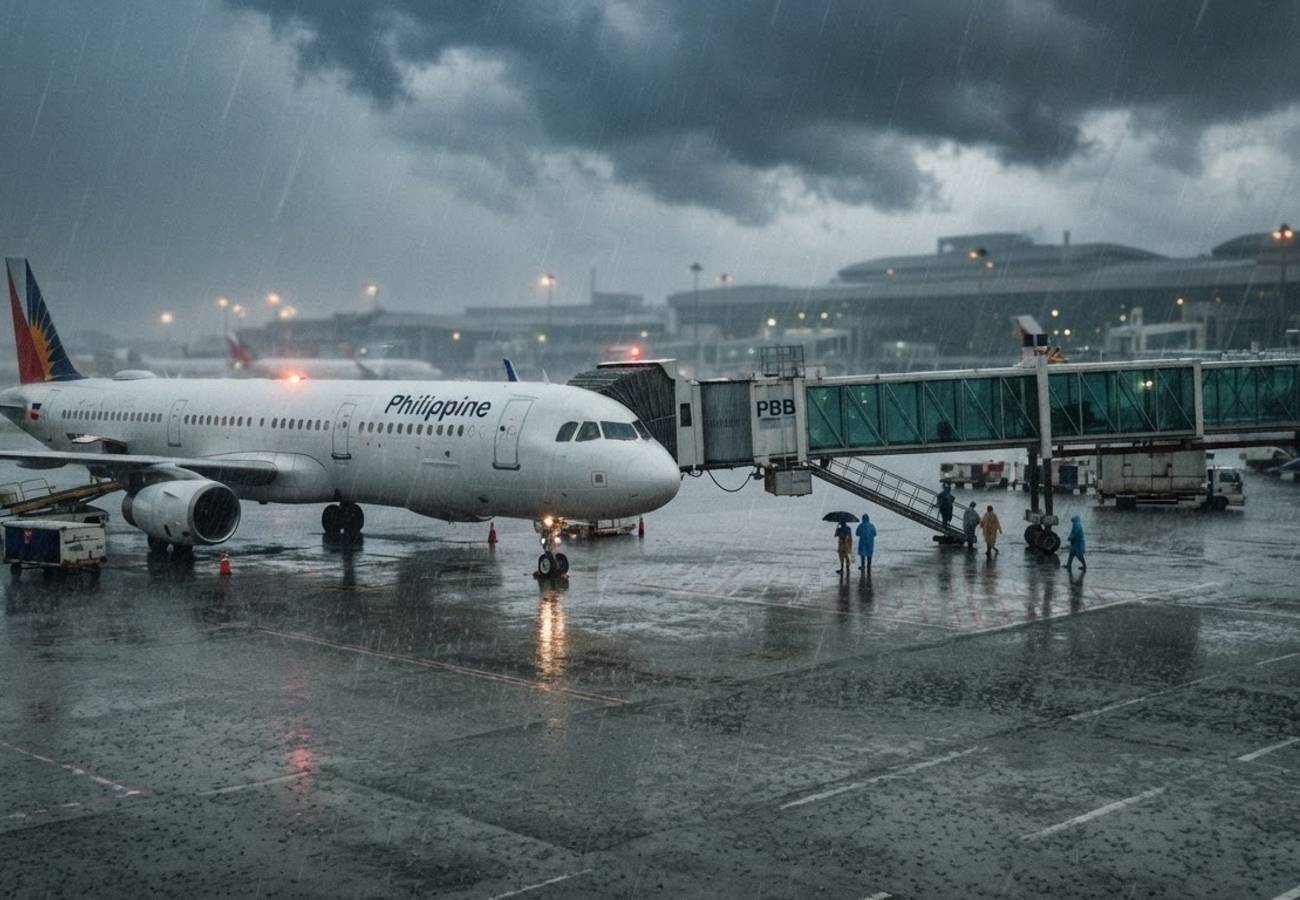
Image generated by AI
Severe monsoon activity over Northern Luzon has paralyzed operations at Laoag International Airport, leaving passengers stranded and severing the primary air link to Manila. With rain probabilities hitting 90%, the regional gateway faces significant operational instability.
Monsoon Weather Systems Impacting Ilocos Norte
Laoag and the surrounding Ilocos Norte region are currently under the influence of repeated rounds of heavy rain and thunderstorms. Meteorological data for August 31, 2026, indicates a high probability of precipitation, with rain chances estimated between 85% and 90%. These conditions are characterized by high humidity, low cloud ceilings, and persistent southerly winds, all of which severely degrade visibility and compromise runway surface conditions.
Regional disaster management bulletins have placed the Ilocos Region on heightened alert. The current weather profile increases the risk of landslides and flooding, which directly impacts the accessibility and safety of coastal aviation hubs like Laoag. Historical station data confirms a pattern of unsettled conditions consistent with the peak southwest monsoon season, making the airport particularly vulnerable to sudden closures.
Manila–Laoag Route Disruptions
Laoag International Airport serves as the primary domestic gateway for Ilocos Norte, with the Manila route acting as the dominant commercial corridor. Because this route is served by a limited number of daily rotations, the cancellation of a single flight creates a systemic failure in connectivity.
Philippine Airlines operates the core service on this route. Due to the "thin" nature of these provincial flights, there is very little redundancy in the schedule. When weather-related cancellations occur, aircraft and crew rotations are disrupted, often halting air connectivity for an entire news cycle. Real-time monitoring shows that even when flights are not fully cancelled, passengers are experiencing extended holding patterns and diversions to alternate airfields.
Route Specification and Operational Status
| Route Segment | Primary Carrier | Typical Frequency | Current Status | Primary Disruptor |
|---|---|---|---|---|
| Manila (MNL) $\rightarrow$ Laoag (LAO) | Philippine Airlines | Limited Daily Rotations | Irregular / Cancelled | Low visibility / Thunderstorms |
| Laoag (LAO) $\rightarrow$ Manila (MNL) | Philippine Airlines | Limited Daily Rotations | Irregular / Cancelled | Low visibility / Thunderstorms |
Traveler Logistics Guide: Navigating Ilocos Norte Disruptions
From a ground-level perspective, the best way to navigate a shutdown at Laoag International Airport is to avoid relying solely on airline notifications, which are often delayed at smaller provincial terminals.
1. Connection and Rebooking Strategies Because seats on subsequent flights fill rapidly after a cancellation, passengers should immediately attempt to rebook via the airline's mobile app rather than waiting in line at the airport service desk. If same-day air travel is unavailable, do not wait at the terminal; secure hotel accommodation in Laoag city center immediately, as local capacity fills quickly during mass strandings.
2. Ground Transport Alternatives The primary alternative to air travel is the Luzon west coast corridor via bus. However, be advised that during 85-90% rain probability events, road conditions often deteriorate. A one-hour flight can turn into a full-day or overnight bus journey. If opting for overland travel, check with local transport authorities regarding flooding on the main highways before departing.
3. Digital Transit Tools Travelers should monitor the Philippine Atmospheric, Geophysical and Astronomical Services Administration (PAGASA) for real-time weather alerts. For those utilizing digital transit IDs or fast-track services, ensure all documentation is offline-accessible, as network congestion can occur during regional emergencies.
Infrastructure Impact Assessment
The recurring nature of these disruptions highlights a critical vulnerability in the Philippines' provincial aviation infrastructure. Smaller airports like Laoag lack the advanced navigational aids required to maintain operations during low-visibility monsoon events.
This instability has a ripple effect across the wider domestic network. When aircraft are stranded in Laoag or diverted, it creates a "knock-on" effect that impacts crew scheduling and aircraft positioning for other domestic legs, potentially causing delays in Manila even for routes unaffected by the local weather in Ilocos Norte. There is a growing need for integrated contingency planning that links air travel with more resilient land-based transport options to prevent total regional isolation during the monsoon season.
Travelers are urged to build significant buffers into their itineraries when visiting Northern Luzon during the southwest monsoon.
Related Travel Guides
Disclaimer
This article is for informational and educational purposes only. It does not constitute legal, financial, or professional advice. While we strive to provide accurate and up-to-date information, travel policies, regulations, and conditions change rapidly. Always verify information with official sources before making travel decisions. Nomad Lawyer makes no representations about the accuracy, reliability, completeness, or suitability of the information provided. Readers should consult qualified professionals for advice specific to their circumstances. The views expressed in this article are those of the author and do not necessarily reflect the views of Nomad Lawyer.