
Heathrow Resumes Full Operations After Southern Runway Grass Fire
London Heathrow Airport has resumed normal operations after emergency crews rapidly extinguished a grass fire near the southern runway.
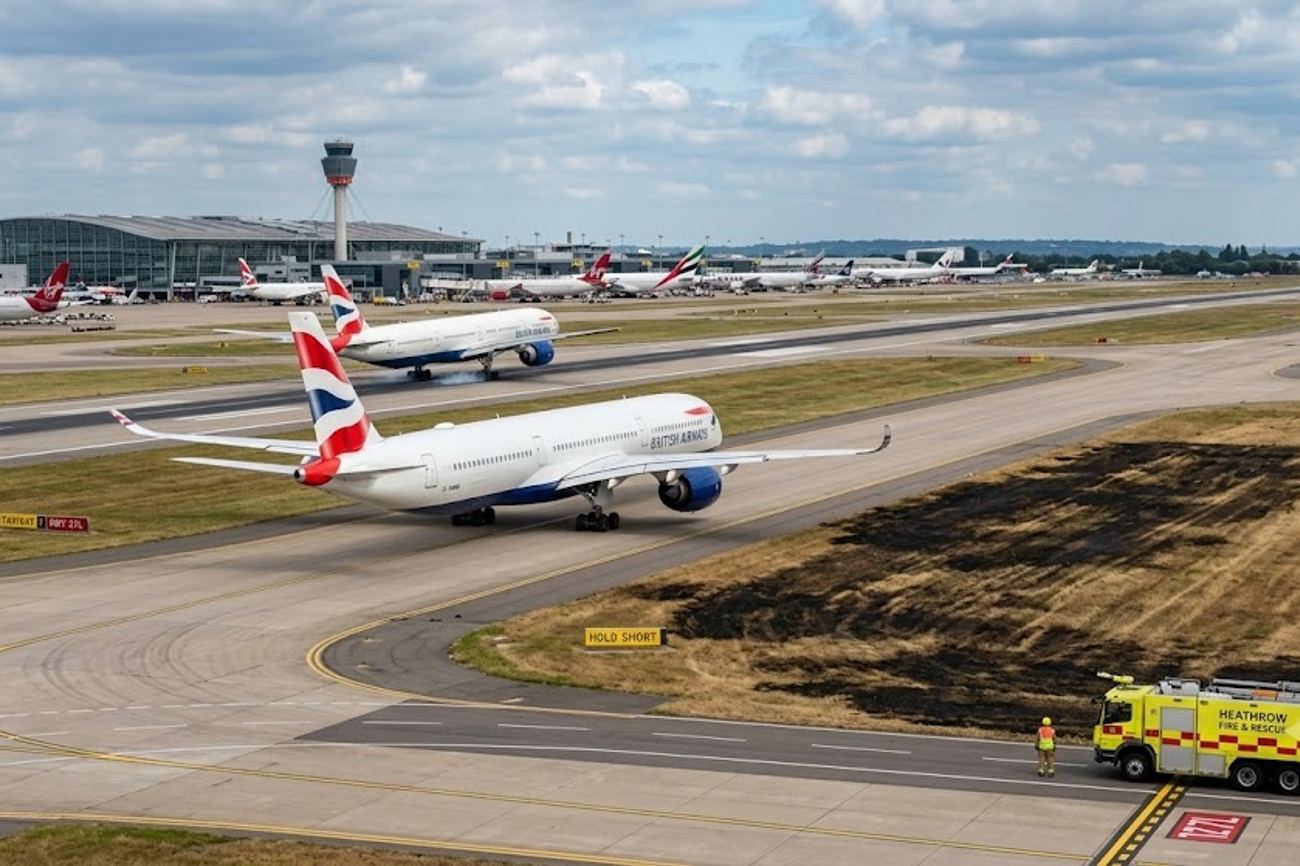
Image generated by AI
Rapid Emergency Response Prevents Prolonged Heathrow Shutdown
London Heathrow Airport has restored full travel services following a grass fire that broke out near its southern runway on September 6, 2026. Airport emergency teams activated immediate safety protocols to contain the blaze and secure the airfield, preventing a wider systemic failure at one of the world's most congested aviation hubs.
The incident required the temporary closure of the southern runway while firefighting crews worked to extinguish the flames. Because Heathrow relies on its dual-runway system to manage high-density international traffic, any reduction in capacity typically triggers immediate delays across the network.
Airport officials confirmed that the swift intervention of operational staff and emergency personnel minimized the impact on flight schedules. Once the fire was extinguished, rigorous safety inspections were conducted before the runway was cleared for aircraft movements.
Impact on International Flight Connectivity
The temporary loss of one runway created a bottleneck for flights linking the UK with key global markets in North America, Asia, Europe, and the Middle East. However, the speed of the resolution ensured that the disruption remained limited.
- Affected Area: Perimeter grass zone adjacent to the southern runway.
- Operational Status: Both runways are now fully operational.
- Passenger Impact: Temporary delays and schedule adjustments; passengers were advised to coordinate directly with airlines for updated departure and arrival times.
The event underscores the volatility of airfield operations, where environmental factors—such as grass fires—can instantly compromise runway availability. At a hub of Heathrow's scale, the transition from full capacity to single-runway operations necessitates precise air traffic coordination to avoid gridlock.
Resilience and Safety Protocols at LHR
This incident highlights the critical role of airfield resilience. Airport authorities prioritized safety over operational speed, refusing to reopen the southern runway until all safety checks were finalized.
The coordination between firefighters, airfield operations staff, and air traffic control is designed to handle unexpected environmental risks. By containing the fire rapidly, Heathrow avoided a prolonged disruption that could have impacted thousands of passengers and disrupted dozens of international carriers.
Key Takeaways
- Swift Containment: A grass fire near the southern runway was quickly extinguished by airport emergency crews.
- Full Restoration: Both runways are back in service following comprehensive safety inspections.
- Limited Disruption: While some passengers experienced delays, the rapid response prevented a large-scale operational collapse.
- Safety First: Operational continuity was only restored after the area was deemed entirely safe for aircraft.
FAQ
Are flights currently delayed at Heathrow? Operations have returned to normal, and both runways are fully operational. Passengers should check their specific flight status via their airline's app or website.
Which runway was affected by the fire? The fire occurred in the grass area adjacent to the southern runway.
Was there any danger to passengers or aircraft? No. The fire was contained to the runway-side grass, and safety protocols ensured that aircraft movements only occurred once the area was secured.
Related Travel Guides
Disclaimer
This article is for informational and educational purposes only. It does not constitute legal, financial, or professional advice. While we strive to provide accurate and up-to-date information, travel policies, regulations, and conditions change rapidly. Always verify information with official sources before making travel decisions. Nomad Lawyer makes no representations about the accuracy, reliability, completeness, or suitability of the information provided. Readers should consult qualified professionals for advice specific to their circumstances. The views expressed in this article are those of the author and do not necessarily reflect the views of Nomad Lawyer.