
Breaking Airline News: Heathrow Airport Plunges into Travel Chaos as Middle East Conflict Devastates Qatar, UAE, and Saudi Arabia Routes
Breaking airline news: Amidst a terrifying era of severe geopolitical conflict, London Heathrow suffers a catastrophic 31% plunge in Middle Eastern traffic, sparking massive flight cancellations and paralyzing travel chaos.

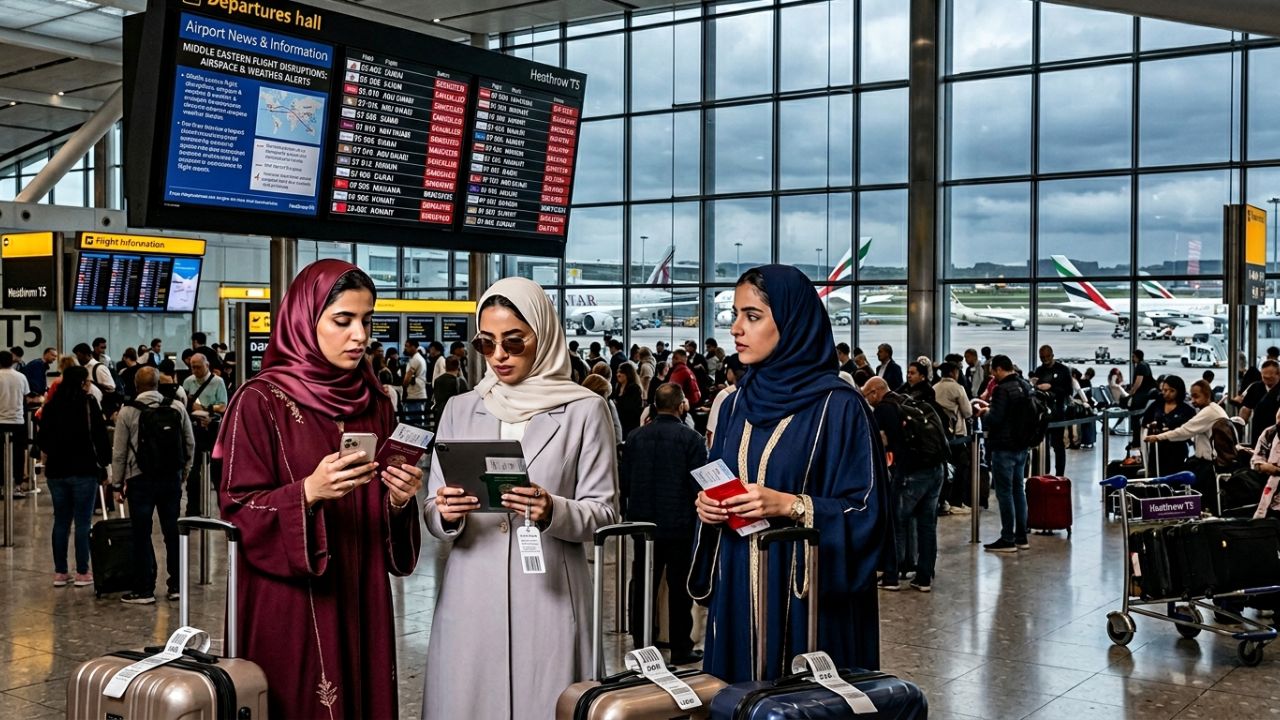
Image representing the intense strategic battle as UK aviation authorities desperately manage severe capacity constraints and terrifying transit friction triggered by the catastrophic collapse of major Gulf flight corridors.
Breaking Airline News: Heathrow Airport Plunges into Travel Chaos as Middle East Conflict Devastates Qatar, UAE, and Saudi Arabia Routes
As paralyzing geopolitical conflict, terrifying airspace closures, and severe operational fragility violently threaten to completely choke highly complex global transit networks, London Heathrow is facing an unprecedented logistical nightmare. In a desperate bid to physically and psychologically manage international travelers amid the terrifying threat of extreme travel chaos triggered by catastrophic flight cancellations, the UK’s primary international gateway has reported devastating operational metrics. Officially confirming a massive 31% year-on-year collapse in passenger traffic originating from the Middle East, Heathrow is caught in the crossfire of regional instability devastating vital flight corridors connecting the UK to Qatar, the UAE, Bahrain, Saudi Arabia, Iraq, and Israel. By violently severing these critical links, airlines have been forced into massive emergency rerouting, creating severe bottlenecks that have plunged the airport into extreme congestion. This operational paradigm shift is transforming modern global logistics, proving that actively managing shifting geopolitical airspace is the absolute ultimate defense against the agonizing misery and airport disruptions historically defining international travel crises.
In a harrowing display of modern aviation vulnerability, the sheer logistical nightmare of attempting to navigate essential corridors out of London has historically forced passengers into terrifying transit scenarios. For months, securing a connection through major Gulf hubs meant risking it all on violently unpredictable flight schedules—staring at departure boards with intense anxiety as rolling delays and sudden airspace closures virtually guaranteed a catastrophic denial of boarding. The data from May 2026 exposes the brutal reality: Heathrow recorded 7.1 million passengers across its four terminals, representing a 1.2% overall year-on-year decline. While this is a slight stabilization compared to April’s terrifying 5.3% drop, the underlying metrics reveal a fundamentally broken international matrix. Airlines are aggressively fighting back against this structural paralysis by violently reducing flight frequencies to the Middle East, leading directly to a massive reduction in both corporate and leisure travel, and unleashing unprecedented travel chaos for passengers relying on these routes to connect to Asia, Africa, and North America.
Expanded Overview: The Massive Scale of the Transit Collapse
The terrifying crisis of overwhelming passenger stress currently gripping complex intercontinental itineraries brutally exposes the severe limitations of relying on vulnerable global transit hubs. Recognizing that aggressively forcing travelers into airspace threatened by conflict leads directly to severe psychological friction and broken itineraries, airlines have fundamentally rewritten their network strategies. The sheer scale of this tactical realignment is immense. Flights to and from massive Gulf mega-hubs like Dubai and Doha have experienced catastrophic reductions. This sudden vacuum in capacity forces passengers to scramble for alternative routing, creating a massive ripple effect that paralyzes onward connections and inflicts severe financial and emotional costs on thousands of stranded travelers.
Section-Wise Breakdown: The Operational Realignment
Shattering the Gulf Corridor: The 31% Middle East Collapse
To survive the terrifying surge in global airspace restrictions without triggering immediate civilian casualties, airlines anchored their defense by actively suspending services. This necessary safety protocol has resulted in a terrifying 31% year-on-year plunge in Middle Eastern traffic at Heathrow. Travelers from Qatar, the UAE, Bahrain, Saudi Arabia, Iraq, and Israel are finding it nearly impossible to execute seamless transit. The collapse of business travel along these specific routes is particularly devastating, destroying corporate itineraries and crippling international trade corridors.
Breaking the Domestic Gridlock: The Peak Passenger Paradox
While international routes hemorrhage traffic, domestic pressure remains terrifyingly high. UK-origin passenger traffic experienced a 1.9% decline, heavily influenced by regional uncertainty and Heathrow's absolute lack of available runway capacity. Yet, in a brutal paradox, Heathrow recorded its busiest single day of the month on May 22nd. An astounding 262,000 passengers flooded the terminals, coinciding with the start of the UK half-term school holidays. This massive surge against a backdrop of constrained capacity violently highlights the operational strain placed on airport infrastructure during peak travel surges.
Deploying the Infrastructure Defense: Terminal Upgrades and Regulatory Battles
To combat the terrifying threat of terminal meltdowns, Heathrow has aggressively initiated emergency and long-term investment programs, including desperate upgrades to terminal four car parks and check-in facilities to handle the congestion. However, these vital defenses are violently threatened by regulatory bureaucracy. Heathrow is locked in a fierce battle with the Civil Aviation Authority (CAA), warning that proposed caps on airport charges will effectively strangle the funding required to execute these massive infrastructure upgrades, risking a total loss of competitiveness against expanding European rivals.
Securing Future Skies: The 2029 Third Runway Strategy
This massive infrastructural shift demands extreme future-proofing. To alleviate the terrifying capacity constraints that currently leave the airport operating at absolute maximum throughput, Heathrow is aggressively pursuing planning permission for a highly controversial third runway. With a target completion date of 2029, this massive concrete expansion is positioned as the ultimate weapon to reduce congestion, accommodate future growth, and permanently shield the UK from the travel chaos associated with capped flight limits.
Heathrow Operational Impact Matrix
To fully comprehend the massive logistical and strategic fallout of this terrifyingly volatile network collapse, corporate travel managers and affected tourists must review the exact operational metrics defining the Heathrow crisis. The following matrix provides a granular breakdown of the specific, officially verified statistical data driving this massive disruption mitigation effort.
| Heathrow Traffic & Strategic Metric | Verified Operational Data (May 2026) |
|---|---|
| Total Passenger Volume | 7.1 Million Passengers Across Four Terminals |
| Overall Year-on-Year Decline | 1.2% Reduction (Improving from 5.3% in April) |
| Middle East Traffic Collapse | 31% Drop (Impacting Qatar, UAE, Bahrain, Saudi Arabia, Iraq, Israel) |
| UK-Origin Domestic Decline | 1.9% Reduction |
| Peak Single-Day Passenger Record | 262,000 Passengers on May 22nd (Half-Term Peak) |
| Primary Impacted Global Hubs | Dubai, Doha |
| Current Infrastructure Upgrades | Terminal Four Car Parks and Check-in Facilities |
| Future Expansion Target | Third Runway (Target Completion 2029) |
Passenger Impact: Surviving the Geopolitical Trap
For the thousands of global tourists and corporate professionals attempting to navigate the rapidly collapsing transit corridors between the UK and the Gulf, this massive traffic decline represents a highly terrifying logistical trap. The brutal reality of enduring a terrifyingly sudden cancellation because an airline was forced to suspend a Dubai or Doha route inflicts intense psychological stress—leaving the passenger entirely stranded and scrambling for highly expensive replacement tickets on European carriers. By aggressively monitoring the geopolitical situation and booking alternative routing through less impacted hubs, passengers drastically reduce their exposure to these terrifying environments, securing a highly reliable connection that completely bypasses the domino effect of Middle East travel chaos.
Survival Guide for Transit Travelers
Travelers desperately preparing to navigate the modernized global network must immediately execute the following survival protocols:
- Violently Reject Unstable Corridors: Corporate and leisure travelers must aggressively transition their onward Asian and African bookings away from heavily impacted hubs like Dubai and Doha until the geopolitical situation stabilizes. Utilizing alternative European or direct Asian carriers acts as a critical shield against sudden flight cancellations.
- Anticipate the Terminal 4 Congestion: Passengers utilizing terminal four must arrive hours earlier than standard recommendations. The ongoing infrastructure upgrades, combined with the airport operating at maximum throughput, guarantee terrifyingly long processing times during peak hours.
- Acknowledge the Capacity Limit: Because Heathrow is effectively operating at 100% capacity, any minor disruption—such as weather or a single mechanical failure—will trigger a massive cascading wave of travel chaos. Ensure your travel insurance covers extreme, unmitigated delays.
Industry Analysis: The Economics of Tactical Constriction
From a strategic aviation perspective, the travel turmoil currently threatening London highlights the terrifying vulnerability of airports restricted by bureaucratic oversight and physical limits. Industry analysts confirm that the 31% collapse in Middle East traffic temporarily masks Heathrow's critical lack of runway space. However, if the CAA successfully caps investment funding, Heathrow will completely lose the ability to finance the third runway, effectively shielding rival European hubs (like Frankfurt and Charles de Gaulle) from competition and allowing them to permanently steal the UK's massive aviation revenue.
Conclusion: A Strategic Retreat to Ensure Aviation Survival
As the extremely critical global travel season accelerates, the massive passenger declines and capacity battles executing at Heathrow represent a massive warning to the UK aviation sector. The aggressive maneuvering proves that capturing market dominance requires terrifyingly swift and highly optimized infrastructure investments to connect passengers safely across shifting geopolitical boundaries while shielding them from the brutal reality of operational unreliability. For the modern wandering family booking their tickets, utilizing this tactically complex airport requires extreme caution and meticulous flight discovery. By acting aggressively to secure tickets on non-impacted routes and preparing for severe terminal congestion, travelers can successfully survive intense travel surges and completely avoid the paralyzing threat of Heathrow-induced travel chaos.
Key Takeaways
- Massive Tactical Collapse: Heathrow Airport recorded 7.1 million passengers in May 2026, suffering a 1.2% overall decline driven by catastrophic geopolitical disruption.
- Crushing the Gulf Bottleneck: Traffic from the Middle East—specifically impacting Qatar, the UAE, Bahrain, Saudi Arabia, Iraq, and Israel—plunged by a terrifying 31%.
- Strategic Passenger Paradox: Despite the international collapse, Heathrow endured its busiest single day of the month on May 22nd, processing a massive 262,000 passengers during the school half-term peak.
- Massive Infrastructure Battles: The airport is desperately fighting Civil Aviation Authority (CAA) proposals that would cap charges and destroy funding for vital upgrades and the critical 2029 third runway.
- Traveler Advisory: Global passengers must aggressively re-route their Asian and African itineraries to avoid the travel chaos currently plaguing disrupted Gulf hubs like Dubai and Doha, and prepare for extreme congestion within Heathrow’s terminals.
Related Travel Guides
Disclaimer
This article is for informational and educational purposes only. It does not constitute legal, financial, or professional advice. While we strive to provide accurate and up-to-date information, travel policies, regulations, and conditions change rapidly. Always verify information with official sources before making travel decisions. Nomad Lawyer makes no representations about the accuracy, reliability, completeness, or suitability of the information provided. Readers should consult qualified professionals for advice specific to their circumstances. The views expressed in this article are those of the author and do not necessarily reflect the views of Nomad Lawyer.
Kunal K Choudhary
Co-Founder & Contributor
A passionate traveller and tech enthusiast. Kunal contributes to the vision and growth of Nomad Lawyer, bringing fresh perspectives and driving the community forward.
Learn more about our team →