
Hawaii 2027 Study Tours: Island Students Lead Global Cultural Travel Across the Pacific

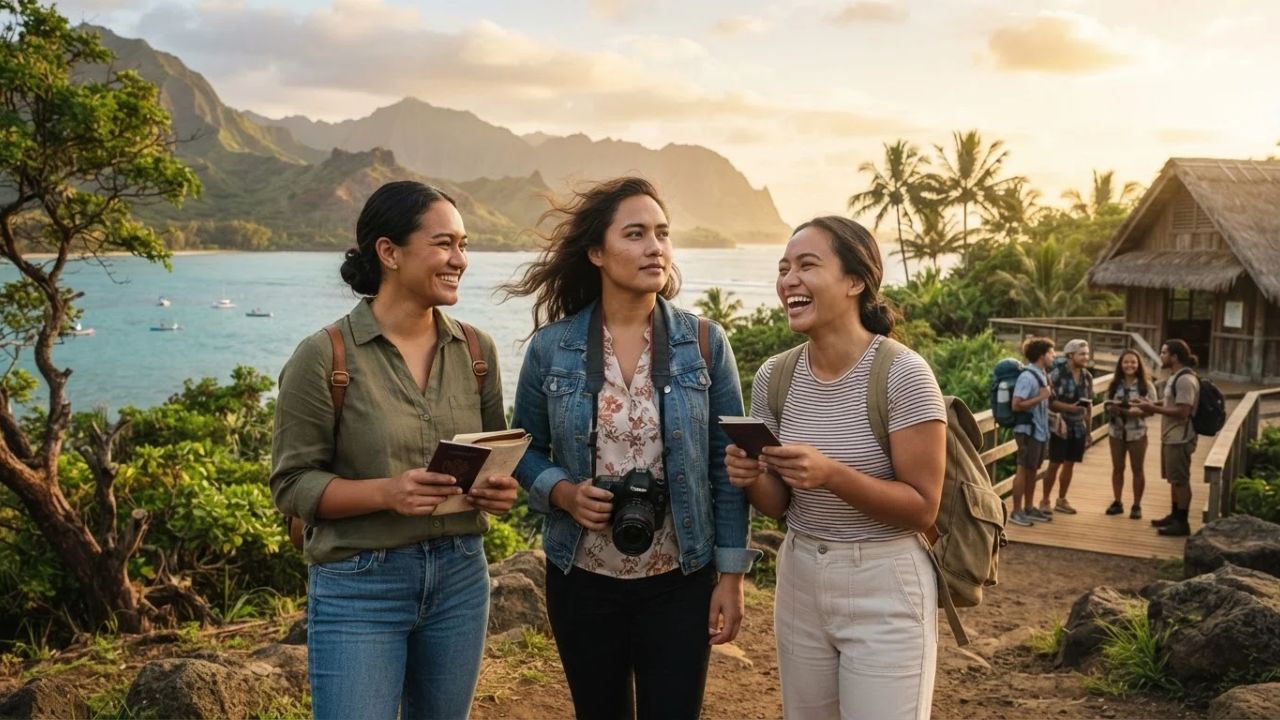
Capped at just $500 with all airfare and lodging covered, Hawaii's 2027 Sister-State Study Tours will send public high school ambassadors to the Philippines, South Korea, and Japan to redefine Pacific cultural diplomacy. Organizers are proving that high-impact international travel can nurture environmental stewardship, indigenous knowledge, and cross-border community resilience.
The Local Trend Revealed: Educational Diplomacy as the Next Frontier in Pacific Travel
Travel across the Pacific is undergoing a profound structural shift from passive sightseeing toward experiential education and citizen diplomacy. Leading this evolution, the State of Hawaii has announced the launch of the 2027 Sister-State Study Tours programme. Organized by the Pacific & Asian Affairs Council (PAAC) in direct partnership with the Honolulu-based East-West Center and backed by state funding, this initiative transforms overseas journeys into intensive leadership laboratories for public high school students across the Hawaiian Islands.
Instead of traditional resort vacations, the 2027 cohort will travel overseas to three key sister-state territories: the Ilocos region (Ilocos Norte and Ilocos Sur) in the Philippines, Jeju Island in South Korea, and Okinawa Prefecture in Japan. Selected students in grades 9 through 12 will not choose their destination individually; rather, program administrators will assign placements based on research objectives and thematic alignment, immersing participants in local public schools, civic chambers, agricultural cooperatives, and cultural institutions.
2027 HAWAII SISTER-STATE STUDY TOURS: DESTINATION MATRIX
| Entity / Facility | Delays | Cancellations | Details |
|---|---|---|---|
| Partner Destination | Host Nation | Historical Bond | Core Curricular Focus |
| Ilocos Norte & Sur | Philippines | Century-old labor | Ancestral heritage, |
| migration (1906) | foodways & farming | ||
| Okinawa Prefecture | Japan | Uchinanchu diaspora | Island marine ecology & |
| & post-war kinship | Ryukyu arts preservation | ||
| Jeju Island | South Korea | Volcanic ecology & | UNESCO biosphere care & |
| tourism economies | regenerative hospitality |
Anatomy of the Three Sister-State Corridors
Each international corridor reflects deep historical roots that mirror Hawaii's own multicultural civic identity.
1. Ilocos Norte and Ilocos Sur, Philippines
The connection between Hawaii and northwestern Luzon stretches back more than 120 years to 1906, when the first Sakada contract plantation laborers departed the Ilocos coast to work Hawaiian sugar cane and pineapple fields. Today, Filipino Americans make up one of the largest ethnic groups in Hawaii. Traveling to Laoag, Vigan, and surrounding rural barangays, student ambassadors will trace ancestral linkages, visit heritage Spanish-colonial stone churches, observe traditional loom-weaving, and study modern irrigation and crop resilience alongside Filipino youth.
2. Okinawa Prefecture, Japan
Okinawa and Hawaii share a parallel oceanic culture rooted in ancient maritime navigation, indigenous linguistic traditions, and resilient island ecosystems. Hawaii is home to an active Uchinanchu (Okinawan diaspora) community that has maintained vibrant cultural festivals in Honolulu for generations. In Okinawa, students will participate in reciprocal high school classes, explore coral restoration sites, tour historic Shuri Castle reconstruction zones, and examine how the Ryukyu Islands safeguard unique musical and culinary customs amid rapid commercial development.
3. Jeju Island, South Korea
Formed by ancient volcanic activity, Jeju Island serves as South Korea's premier offshore sanctuary and shares unmistakable ecological parallels with the Hawaiian archipelago. Dominated by the volcanic shield of Hallasan Mountain, Jeju contains sprawling lava tubes, coastal basalt cliffs, and traditional stone-walled villages. Hawaii students will interact with Jeju youth to investigate how the island balances massive domestic visitor arrivals with the protection of UNESCO World Natural Heritage reserves and the cultural safeguarding of the Haenyeo (legendary female free-divers).
PROGRAMME ACCESSIBILITY AND SELECTION BENCHMARKS
| Category / Entity | Details / Impact |
|---|---|
| Parameter | Official Programme Requirement |
| Eligible Applicant Pool | Enrolled Hawaii public high school students (Grades 9–12) |
| Direct Participant Cost | Capped at approximately $500 (full travel value heavily subsidized |
| Inclusions Covered | Round-trip international flights, lodging, meals, transit, ins. |
| Financial Equity Support | Need-based waivers and grants to eliminate cost barriers |
| Key Applicant Criteria | Academic standing, personal email, zero prior study-tour travel |
| Preparatory Requirements | Virtual cohorts, research assignments, in-person training |
| Post-Travel Mandate | Public community presentations and research debriefs across Hawaii |
Cultural and Environmental Value: Information Gain and Sustainable Exchanges
For the visitor, the real impact of cultural exchange travel lies in dismantling the transactional nature of mass leisure tourism. When young ambassadors visit organic farms in Ilocos, participate in beach cleanses alongside Okinawan environmentalists, or learn sustainable marine harvesting from Jeju divers, travel becomes a tool of mutual survival for fragile island ecosystems.
Each of these destinations contends with climate change, rising sea temperatures, coastal erosion, and the economic pressures of overtourism. By sharing Hawaii's ancestral Hawaiian values—such as malama aina (caring for the land) and kuleana (personal and collective responsibility)—with peers across East and Southeast Asia, participants build regional conservation networks that outlast standard tourism visits.
SHARED ISLAND RESILIENCE PRIORITIES (2027)
| Category / Entity | Details / Impact |
|---|---|
| Regional Challenge | Shared Collaborative Focus Between Hawaii and Partners |
| Coastal Erosion | Coral reef regeneration and indigenous breakwater management |
| Food Sovereignty | Traditional agroforestry, taro and rice cultivation techniques |
| Language Preservation | Revitalizing Olelo Hawaii, Uchinaguchi (Okinawa), and Ilokano dialects |
| Tourism Diversification | Shifting away from all-inclusive resorts to community-based homestays |
Visitor Insider Tips: Responsible Exploration in Sister-State Regions
-
Off-Peak Exploration Windows:
- Ilocos (Philippines): Travel between November and February during the dry, cool season to avoid intense tropical summer humidity and monsoon rains.
- Okinawa (Japan): Late October through mid-November delivers pleasant 75°F (24°C) ocean breezes, warm swimming waters, and relief from summer typhoons and peak school holiday crowds.
- Jeju Island (South Korea): April and May (spring wildflower blooms) or October (autumn silver grass across Hallasan's slopes) offer the most serene conditions outside the summer typhoon season.
-
Cultural Etiquette Across Corridors:
- In Ilocos, always show deference to family elders using the traditional mano po greeting (touching the elder's hand to your forehead) when visiting local households.
- In Okinawa, remove footwear immediately before entering traditional Ryukyu tatami spaces, and bow respectfully when presented with tea or local awamori.
- On Jeju, respect the Haenyeo fishing zones; never touch diving markers, harvest shoreline shellfish, or disturb sacred stone dol hareubang statues.
-
Authentic Regional Gastronomy:
- Ilocos: Seek out roadside stalls for savory empanada stuffed with green papaya and garlicky Vigan longganisa sausage, dipped in spicy cane vinegar (sukang Iloko).
- Okinawa: Dine at family-run izakayas serving Goya Champuru (stir-fried bitter melon with tofu and egg) and tender simmered pork belly (rafute).
- Jeju: Visit traditional markets for black pork barbecue grilled over open coals and fresh abalone porridge (jeonbokjuk).
-
Community Sourcing: When traveling through rural provinces, direct your funds into locally owned family eateries, municipal heritage craft cooperatives, and registered cultural guides to ensure tourist dollars remain within host communities.
Tourism Outlook: Strengthening the Pacific Bridge
The 2027 Sister-State Study Tours illustrate how destination management can expand beyond hotel occupancy metrics to foster civic resilience. By capping student participation costs at roughly $500 and providing need-based waivers, the East-West Center and PAAC remove economic barriers, ensuring that students from working-class communities across Kauai, Maui, Molokai, Oahu, and Hawaii Island can represent their state abroad.
As global tourism faces scrutiny over carbon footprints and community disruption, educational youth mobility models demonstrate the pathway forward: small-footprint travel that builds durable diplomatic bridges, protects intangible cultural heritage, and equips the next generation of island leaders with global solutions for local challenges.
Related Travel Guides
Disclaimer
This article is for informational and educational purposes only. It does not constitute legal, financial, or professional advice. While we strive to provide accurate and up-to-date information, travel policies, regulations, and conditions change rapidly. Always verify information with official sources before making travel decisions. Nomad Lawyer makes no representations about the accuracy, reliability, completeness, or suitability of the information provided. Readers should consult qualified professionals for advice specific to their circumstances. The views expressed in this article are those of the author and do not necessarily reflect the views of Nomad Lawyer.
Preeti Gunjan
Contributor & Community Manager
A passionate traveller and community builder. Preeti helps grow the Nomad Lawyer community, fostering engagement and bringing the reader experience to life.
Learn more about our team →