Hanoi Unveils 2030 Tourism Masterplan Targeting 50.5 Million Visitors and $13 Billion Economy

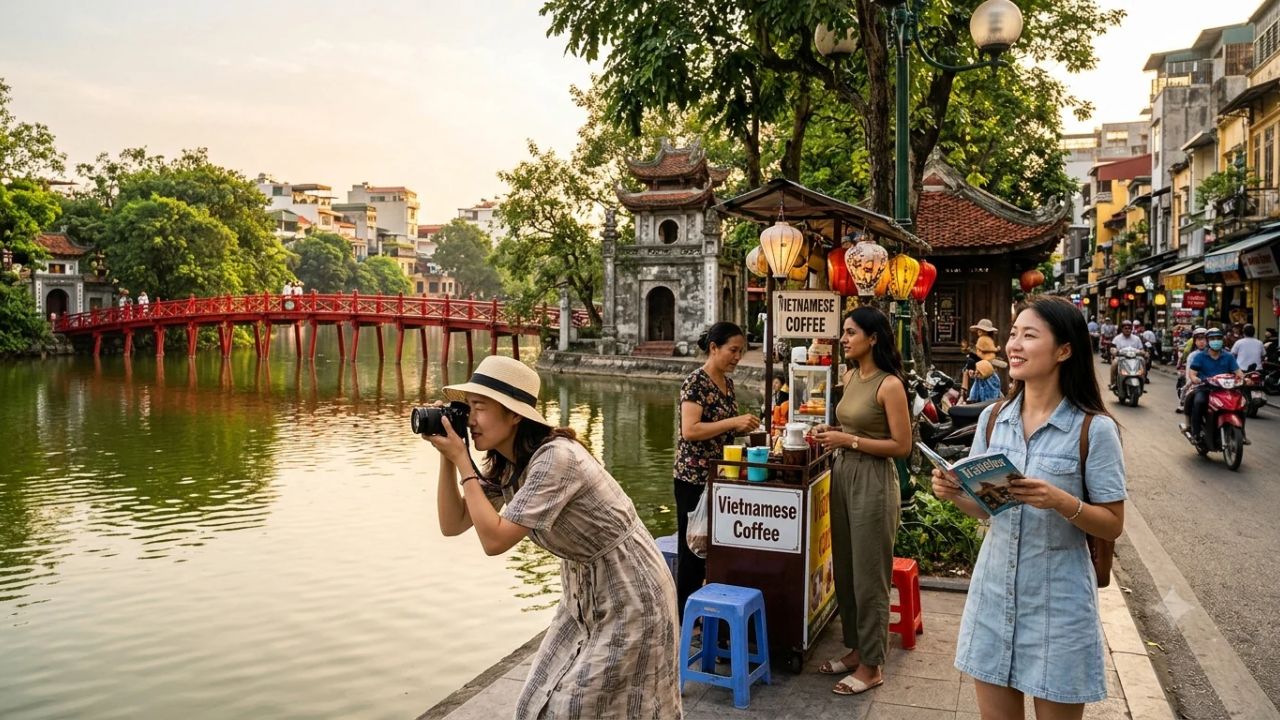
Vietnam's capital city of Hanoi formally enacts Plan No. 406/KH-UBND, establishing a roadmap to welcome up to 50.5 million annual visitors by 2030
[HANOI, Oct 31, 2026] — Vietnam’s millennial capital of Hanoi has officially launched its landmark tourism masterplan under Municipal Plan No. 406/KH-UBND, setting an ambitious target to welcome up to 50.5 million annual visitors and generate US$13.2 billion in revenue by 2030 as international arrivals surge by 22 percent behind expanding outbound travel from China, South Korea, India, and Western markets.
[!NOTE] Key Strategic Highlights and Municipal Performance Indicators: Formally promulgated on 19 October 2026 by the Hanoi People's Committee, Plan No. 406/KH-UBND outlines a comprehensive growth blueprint targeting between 47 million and 50.5 million total visitors annually by 2030—including 13 to 15 million international travelers and 34 to 35.5 million domestic tourists—generating between VND 295 trillion and VND 340 trillion (US$11.4 billion to US$13.2 billion) to contribute 7.5 to 8.0 percent of the city's gross regional product. During the first nine months of 2026, Hanoi welcomed 27.5 million visitors (+6.2 percent), with international arrivals accelerating by 22 percent to 6.67 million and tourism revenue expanding by 13.3 percent to VND 113.2 trillion. The strategy prioritizes the addition of 10,000 four- and five-star hotel rooms, the promotion of ancient craft villages (Bat Trang, Van Phuc, Duong Lam), expanded night-time walking streets, 70 percent destination digitization via the HanoiGo smart app, and national tourist area status for Hoan Kiem, Ba Vi, and Huong Son.
HANOI 2030 TOURISM MASTERPLAN ARCHITECTURE (PLAN NO. 406)
| Column 1 |
|---|
| [ 2030 MACROECONOMIC GOALS ] [ NINE-MONTH 2026 TRAJECTORY ] |
| - Annual Volume: 47.0 - 50.5 Million Visitors - Total Visitors: 27.5 Million (+6.2%) |
| - International Inbound: 13.0 - 15.0 Million Tourists - Foreign Arrivals: 6.67 Million (+22) |
| - Domestic Share: 34.0 - 35.5 Million Visitors - Domestic Footfall: 20.9 Million (+2) |
| - Total Revenue: VND 295 - 340 Trillion (US$11.4-13.2B) - Total Receipts: VND 113.2 Trillion |
| - GRDP Contribution: 7.5% - 8.0% of Municipal Economy - Revenue Growth Rate: +13.3% YoY |
| +----------------------------+---------------------------------------+ |
| v |
| [ CORE INFRASTRUCTURE EXPANSION ] [ HERITAGE & EXPERIENCE PILLARS ] |
| - Lodging: +10,000 Four- & Five-Star Rooms by 2030 - Historic: Thang Long, Van Mieu |
| - Occupancy Target: 68% - 70% Average Hotel Occupancy - Craft: Bat Trang, Van Phuc, Duong L |
| - Foreign Stay Duration: Increased to 3.5 - 4.0 Days - Night Economy: Walking zones & food |
| - Domestic Stay Duration: Increased to 2.5 - 3.0 Days - Smart Tourism: HanoiGo Platform |
| +----------------------------+---------------------------------------+ |
| v |
| [ REGIONAL INTERCONNECTIVITY CORRIDORS ] |
| - Northern Circuits: High-speed rail & expressways to Sa Pa (Lao Cai) & Ha Long (Quang Ninh) |
| - Cultural Triangle: Integrated excursion networks linking Ninh Binh, Hai Phong, & Ba Vi |
| - Central Heritage Links: Direct air and rail corridors connecting Hanoi to Hue and Da Nang |
The 2030 Masterplan: Deconstructing Hanoi Municipal Plan No. 406/KH-UBND
The formal issuance of Plan No. 406/KH-UBND on 19 October 2026 by the Hanoi People's Committee represents an intentional shift in Vietnamese tourism policy. For decades, international travel in Vietnam was characterized by a multi-city transit pattern, where overseas visitors treated the northern capital primarily as a convenient 24-hour staging ground before traveling onward to the limestone karsts of Ha Long Bay or the terraced rice valleys of Sa Pa.
Plan No. 406 dismantles this transit paradigm, repositioning Hanoi as a self-sustaining, high-yield cultural tourism epicenter. Under this strategic directive, the municipal government has established a clear timetable through 2030, targeting an annual volume of 47 million to 50.5 million visitors. Within this overarching goal, foreign international arrivals are projected to reach between 13 million and 15 million travelers, while domestic journeys from across Vietnam will contribute an additional 34 million to 35.5 million visits.
The macroeconomic dimensions of the plan are substantial. The municipal administration projects total tourism revenues to reach between VND 295 trillion and VND 340 trillion annually by 2030, representing an economic value of approximately US$11.4 billion to US$13.2 billion.
At this scale, tourism will directly generate between 7.5 percent and 8.0 percent of Hanoi’s Gross Regional Domestic Product (GRDP). By establishing measurable benchmarks across accommodation capacity, length of stay, visitor expenditure, and digital governance, Plan No. 406 aligns urban development with heritage preservation, elevating the capital alongside regional peer cities such as Bangkok, Tokyo, and Seoul.
HANOI TOURISM STRATEGIC TARGETS (PLAN NO. 406/KH-UBND)
| Strategic Metric 2026 Nine-Month Baseline 2030 Official Masterplan Target |
|---|
| -------------------------------------------------------------------------------------------- |
| Total Annual Visitors 27.5 Million (Jan-Sep Actual) 47.0 - 50.5 Million Visitors / Year |
| International Arrivals 6.67 Million (Jan-Sep Actual) 13.0 - 15.0 Million Foreign Tourists |
| Domestic Travel Volume 20.9 Million (Jan-Sep Actual) 34.0 - 35.5 Million Domestic Visitors |
| Annual Tourism Receipts VND 113.2 Trillion (Jan-Sep) VND 295 - 340 Trillion ($11.4-$13.2B) |
| Economic Contribution Expanding Sector Footprint 7.5% - 8.0% of Total Municipal GRDP |
| International Dwell Time 2.1 Days (Historical Average) 3.5 - 4.0 Days per Overseas Traveler |
| Average Hotel Occupancy 62.4% Across Capital Properties68.0% - 70.0% Annual Target Baseline |
Inbound Acceleration: 22% Foreign Visitor Surge Led by China, South Korea, and India
The empirical foundations supporting Hanoi’s 2030 vision are evident in the city’s economic tracking for the first nine months of 2026. Data recorded by the Hanoi Department of Tourism indicates that the capital welcomed 27.5 million total visitors between January and September 2026, marking a 6.2 percent increase compared to the corresponding period in 2025.
The standout finding within this performance is the composition of the visitor volume. While domestic travel expanded by a stable 2.0 percent to reach 20.9 million arrivals, international tourist arrivals accelerated by an extraordinary 22.0 percent, reaching 6.67 million overseas visitors.
This foreign influx propelled citywide tourism revenues upward by 13.3 percent, generating VND 113.2 trillion in direct visitor spending. The fact that international tourist growth is expanding at eleven times the rate of domestic volume demonstrates that the capital is capturing high-spending international demand.
This local expansion mirrors a nationwide inbound tourism revival. Across Vietnam as a whole, the General Statistics Office reported 17.7 million international arrivals during the first nine months of 2026, representing a 14.5 percent year-on-year increase. Mainland China and South Korea continue to serve as the dominant source markets, contributing nearly 4.0 million and approximately 3.1 million visitors respectively.
Together, these two Northeast Asian economies account for almost 40 percent of all international travelers entering the country. Concurrently, outbound travel from India, Japan, the United States, and Australia recorded double-digit increases, providing balanced geographic diversification.
For Hanoi, this expanding international volume represents a major commercial opportunity. Travelers from China and South Korea demonstrate strong demand for heritage exploration, boutique silk shopping, and northern culinary tours.
Meanwhile, high-yield travelers from India, North America, and Europe are extending their vacations to explore Hanoi's colonial French architecture, lakefront cafes, and traditional handicraft communities, transforming the city from a brief transit stop into a primary leisure destination.
VIETNAM & HANOI INBOUND PERFORMANCE MATRIX (JAN-SEP 2026)
| Jurisdiction / Inbound Pool Performance Metric Year-on-Year Growth & Market Share |
|---|
| -------------------------------------------------------------------------------------------- |
| Nationwide Vietnam Arrivals 17.7 Million Foreign Tourists +14.5% Year-on-Year Inbound Growth |
| Mainland China Outbound Nearly 4.0 Million Visitors Top National Source Market (~22.6%) |
| South Korea Outbound Approximately 3.1 Million Pax Second Largest Source Market (~17.5%) |
| Combined China & Korea 7.1 Million Combined Visitors 39.8% Share of Total Foreign Inbound |
| Hanoi Total Visitor Footfall27.5 Million Combined Arrivals +6.2% Overall Municipal Expansion |
| Hanoi Foreign Tourist Inflow6.67 Million Foreign Arrivals +22.0% Exceptional Long-Haul Surge |
| Hanoi Domestic Travel Base 20.9 Million Domestic Visitors +2.0% Steady Baseline Mobility |
| Hanoi Total Tourism ReceiptsVND 113.2 Trillion Generated +13.3% Economic Value Expansion |
Heritage and Cultural Anchors: Thang Long Citadel, Temple of Literature, and Hoan Kiem
At the core of Hanoi’s competitive advantage over regional metropolitan competitors lies its millenary historical continuity. Established as the royal capital of Dai Viet in 1010 AD by Emperor Ly Thai To under the auspicious name Thang Long (Ascending Dragon), the city possesses a dense layering of imperial, spiritual, and colonial architecture that provides rich cultural depth.
Under Plan No. 406, the municipal government has launched targeted initiatives to upgrade and integrate the city's foremost cultural monuments into cohesive, accessible heritage circuits. Prominent among these is the Imperial Citadel of Thang Long, inscribed as a UNESCO World Heritage Site. Serving as the seat of regional political power for thirteen consecutive centuries, the citadel features the ancient Doan Mon south gate, the stone foundations of the Kinh Thien Palace flanked by carved stone dragons, and preserved archaeological excavations that reveal subterranean structural layers dating from the seventh-century Chinese Tang dynasty protectorate through the Le and Nguyen dynasties.
Authorities have introduced evening night tours at the Citadel, illuminating stone pathways with traditional lanterns, hosting imperial court dance performances, and staging immersive archaeological discovery walks that allow visitors to handle ancient ceramic roof tiles under the guidance of heritage curators.
Equally central to Hanoi’s cultural landscape is the Temple of Literature (Van Mieu - Quoc Tu Giam). Founded in 1070 by Emperor Ly Thanh Tong, the complex functioned as Vietnam’s first imperial university, educating royal princes, mandarins, and civil administrators in Confucian philosophy.
International visitors wander through five traditional courtyards, admiring the Khue Van Cac pavilion, the reflective Well of Heavenly Clarity, and eighty-two surviving stone turtle steles inscribed with the names of civil doctoral laureates between 1442 and 1779. Contemporary nighttime light and sound shows use 3D projection mapping across historic timber gates, bringing ancient scholarly rituals to life for modern audiences.
In the center of the capital, Hoan Kiem Lake (Lake of the Restored Sword) and the surrounding Old Quarter serve as the communal heart of the city. Flanked by ancient willow trees, the iconic red-painted The Huc Bridge connects the shoreline with the island sanctuary of Ngoc Son Temple, where travelers learn the enduring fifteenth-century legend of Emperor Le Loi, the magic sword Thuan Thien, and the giant golden turtle.
Surrounding the lake, the 36 Guild Streets of the historic Old Quarter preserve traditional artisanal craft naming conventions, where ancient narrow tube-houses, hidden Buddhist pagodas, and sidewalk street food vendors create a dynamic streetscape that represents Hanoi's urban identity.
To formalize and protect these environments, Plan No. 406 actively pursues official National Tourist Area designation for the Hoan Kiem historical area, alongside the forested mountain reserve of Ba Vi and the sacred river cave shrines of Huong Son (the Perfume Pagoda).
HANOI PRIMARY CULTURAL & HERITAGE MONUMENTS
| Column 1 |
|---|
| Monument Complex Historical Epoch & Founding Key Architectural & Heritage Asset |
| -------------------------------------------------------------------------------------------- |
| Imperial Citadel Thang Long 1010 AD (UNESCO World Heritage)Doan Mon gate & Kinh Thien dragons |
| Temple of Literature 1070 AD (First National Univ) 82 Doctoral stone turtle steles |
| Hoan Kiem & Ngoc Son Temple 15th-Century Le Dynasty Legend Red The Huc Bridge & Turtle Tower |
| Hanoi Old Quarter 36 Ancient Guild Street Wards Historic tube-houses & guild shrines |
| Huong Son (Perfume Pagoda) Sacred Mountain Cave Shrines Riverboat pilgrimage & karst temples |
| Ba Vi Mountain Sanctuary French Colonial Hill Station Tropical cloud forest & biodiversity |
Traditional Craft Villages: Living Heritage in Bat Trang, Van Phuc, and Duong Lam
A unique strategic component of Plan No. 406 is the deliberate integration of Hanoi’s peri-urban craft villages into the formal international tourism portfolio. Surrounding the urban core of Hanoi is the highest concentration of artisanal craft villages in Vietnam, comprising more than 1,350 recognized craft hamlets where families have preserved specialized production techniques across multiple centuries.
The municipal strategy designates three historic settlements to serve as flagship, high-quality experiential tourism destinations:
Bat Trang Pottery Village
Situated along the banks of the Red River approximately thirteen kilometers southeast of downtown Hanoi, Bat Trang has produced fine ceramics, porcelain, and stoneware since the fourteenth century. Visitors arriving by road or riverboat can observe artisans throwing clay on foot-powered potter's wheels, applying natural cobalt glazes, and firing traditional wood and gas kilns.
The village’s landmark attraction, the Bat Trang Ceramic Museum (Center of Vietnamese Craft Excellence), features an architectural design inspired by clay-turners' stepping mounds. Travelers can participate in hands-on pottery workshops, shaping raw clay into personal bowls and vases before browsing hundreds of family-owned ceramic galleries selling handcrafted dining sets, tea services, and ornamental garden planters.
Van Phuc Silk Village
Located along the Nhue River in the Ha Dong district, Van Phuc stands as the cradle of traditional Vietnamese silk weaving, boasting a history exceeding one thousand years. Famous across Southeast Asia for its smooth, lightweight, and durable mulberry silk (lua van), the village features historic communal weaving sheds where vintage mechanical jacquard looms click rhythmically.
Visitors stroll along streets decorated with colorful silk umbrella canopies, observing silkworm cultivation, silk thread spinning, pattern punching, and traditional plant-based dyeing techniques using betel nuts, tea leaves, and wild forest barks. Boutique showrooms along the main village thoroughfare allow travelers to purchase custom-tailored ao dai tunics, silk scarves, and bed coverings directly from master weavers.
Duong Lam Ancient Village
Located approximately 45 kilometers west of Hanoi in Son Tay town, Duong Lam represents the premier surviving example of a traditional northern Vietnamese agricultural village. Known as the "Birthplace of Two Kings"—having produced King Phung Hung (761–802) and King Ngo Quyen (896–944), both of whom liberated Vietnam from foreign domination—Duong Lam preserves hundreds of timber-framed ancestral houses built from blocks of red laterite clay and mud mortar.
Visitors walk past ancient village banyan trees, brick-paved alleys, communal water wells, and historic clan temples, sampling locally brewed che lam (ginger sticky rice sweetmeat) and traditional fermented soy sauce (tuong) brewed in earthenware garden jars.
By certifying these craft villages as high-quality tourist areas, municipal authorities are directing visitor spending directly into rural households, preventing the loss of ancient craft skills, and relieving foot-traffic pressure on central urban landmarks.
FLAGSHIP EXPERIENTIAL CRAFT & ANCIENT VILLAGES
| Column 1 |
|---|
| Village Destination Specialized Artisan Heritage Interactive Tourist Experience |
| -------------------------------------------------------------------------------------------- |
| Bat Trang (Red River) 14th-Century Ceramic & Pottery Hands-on clay throwing & kiln museum |
| Van Phuc (Ha Dong) 1,000-Year Mulberry Silk Weave Jacquard loom weaving & ao dai tailoring |
| Duong Lam (Son Tay) Ancient Laterite Stone Houses Ancestral clan homestays & soy sauce |
| Development Objective At Least 3 Certified Model HubsPreserves craft guilds & boosts income |
The Hospitality Expansion: Adding 10,000 Luxury Rooms and Lengthening Visitor Stays
To host up to 50.5 million travelers by 2030, Hanoi must substantially expand its accommodation inventory. A historic weakness of the capital's visitor economy has been a shortage of internationally branded four- and five-star hotel rooms, which frequently resulted in severe room bottlenecks during peak autumn and spring holiday windows.
Plan No. 406 addresses this capacity constraint by mandating the development and delivery of at least 10,000 additional luxury hotel rooms in the four- and five-star categories by 2030. International hospitality brands—including Four Seasons, Ritz-Carlton, Fairmont, Mandarin Oriental, and Marriott International—are currently constructing premier properties in prime central locations near Hoan Kiem Lake, West Lake (Tay Ho), and the emerging western administrative corridor in Nam Tu Liem.
Concurrently, authorities have set a citywide hotel occupancy target of 68 percent to 70 percent, ensuring newly added room supply is supported by sustainable year-round traveler demand.
Equally significant is the strategic objective to lengthen average visitor dwell times. Historically, overseas visitors spent an average of only 2.1 days in Hanoi before departing for other provinces.
Plan No. 406 articulates a clear target to extend the average length of stay for international tourists to between 3.5 and 4.0 days, while increasing domestic visitor stays to between 2.5 and 3.0 days.
By diversifying the city's tourism offerings—introducing evening cultural spectacles, full-day craft village excursions, wellness retreats, and championship golf circuits around Ba Vi and Dong Mo—the municipality aims to keep travelers engaged in the capital longer, exponentially increasing per-capita dining, retail, and entertainment expenditures.
HANOI HOSPITALITY INFRASTRUCTURE & CAPACITY EXPANSION
| Hospitality Metric Current Baseline Environment 2030 Masterplan Target Threshold |
|---|
| -------------------------------------------------------------------------------------------- |
| Luxury Room Inventory Restricted Premium Inventory +10,000 Four- & Five-Star Hotel Rooms |
| Target Hotel Occupancy 62.4% Average Across City 68.0% - 70.0% Annual Occupancy Rate |
| International Length of Stay2.1 Days Average Dwell Time 3.5 - 4.0 Days per Overseas Traveler |
| Domestic Length of Stay 1.8 Days Average Dwell Time 2.5 - 3.0 Days per Domestic Visitor |
| High-End Hospitality Brands Sofitel Legend, InterCon, JW Four Seasons, Ritz-Carlton, Fairmont |
| Economic Impact Focus Higher Room Yield & Dining SpendExtended stays multiply local revenue |
The Night-Time Economy: Walking Promenades, 24-Hour Zones, and Digital Gastronomy
Recognizing that international tourists conduct a substantial portion of their recreational spending after sunset, Plan No. 406 places strong emphasis on developing a regulated, vibrant night-time tourism economy. Historically, strict municipal curfews required dining and entertainment venues in Hanoi to close by midnight, dampening evening economic activity.
Under the new municipal directive, Hanoi is actively establishing 24-hour entertainment, cultural, and commercial zones in designated tourist wards. The weekend pedestrian walking streets around Hoan Kiem Lake—which encompass Dinh Tien Hoang, Le Thai To, Hang Khay, and the surrounding historic grid—are being supplemented by new pedestrian promenades in the West Lake district (Trinh Cong Son walking street), the Ba Dinh administrative quarter, and Son Tay ancient fortress.
These walking corridors feature outdoor acoustic music performances, traditional ca tru chamber singing, water puppet theatrical pop-ups, and contemporary street art installations.
Gastronomy forms an indispensable element of Hanoi's evening appeal. Celebrated internationally by food critics and guidebooks for its nuanced balance of fresh herbs, aromatic broths, and delicate textures, Hanoi street food represents a primary motivation for global travelers.
To formalize and promote this culinary heritage, municipal authorities are launching a comprehensive Digital Food Map (Ban Do Am Thuc So), accessible via mobile devices. The digital platform guides international tourists to authentic Michelin-recognized and heritage eateries, introducing travelers to signature dishes such as pho bo (aromatic beef noodle soup simmered with star anise and cinnamon), bun cha (charcoal-grilled pork patties served over cold rice noodles with tangy dipping sauce), cha ca La Vong (pan-fried turmeric fish cooked tableside with fresh dill and shrimp paste), and banh cuon (steamed rice crepes filled with minced pork and wood ear mushrooms).
By pairing regulated street food markets with hygienic standards and digital payment systems, Hanoi creates a welcoming, safe evening environment for global food travelers.
NIGHT-TIME TOURISM ECONOMY & GASTRONOMIC ECOSYSTEM
| Column 1 |
|---|
| Development Dimension Municipal Initiative Tourism & Economic Benefit |
| -------------------------------------------------------------------------------------------- |
| Pedestrian Corridors Hoan Kiem & Trinh Cong Son Traffic-free cultural night walks |
| Operating Hour Extension Designated 24-Hour Zones Captures evening international spend |
| Digital Food Map Smartphone Culinary Navigation Guides tourists to authentic street eats |
| Signature Dishes Pho, Bun Cha, Cha Ca La Vong Promotes UNESCO-level food traditions |
| Cultural Performances Ca Tru, Water Puppets & Folk Enriches evening entertainment options |
| Public Safety & Hygiene Regulated Vendor Licensing Ensures food safety & cleanliness |
Smart Tourism Infrastructure: The HanoiGo Multilingual Ecosystem and Digital Mapping
Modern international travelers rely heavily on digital platforms for navigation, ticket booking, and real-time translation. To modernize destination governance and remove language barriers for overseas visitors, Plan No. 406 mandates the extensive technological modernization of Hanoi's visitor ecosystem.
By 2030, the municipal government aims to achieve 70 percent complete digitization of all primary tourist destinations, national monuments, and priority heritage sites across the capital. Historic temples, pagodas, and craft workshops are being outfitted with standardized QR-code wayfinding stations, multilingual automated audio-guide systems, and virtual reality (VR) 360-degree exhibition displays that allow visitors to visualize vanished imperial structures in 3D.
The technological centerpiece of this initiative is the development of the "HanoiGo" smart tourism platform. Built as an integrated mobile application and web portal, HanoiGo delivers comprehensive travel services in multiple international languages, including Vietnamese, English, Mandarin, Korean, Japanese, and French.
The application integrates real-time public transit schedules (including the Hanoi Metro Line 2A and Line 3), digital ticketing for museums and cultural performances, authenticated hotel and homestay reservations, interactive walking maps, emergency tourist police contact channels, and digital payment integrations compatible with international credit cards and mobile wallets.
By centralizing destination information into a single intuitive platform, Hanoi empowers independent travelers to explore the capital confidently, reducing administrative friction and eliminating reliance on unlicensed third-party tour touts.
SMART TOURISM & DIGITAL TRANSFORMATION ARCHITECTURE
| Column 1 |
|---|
| Technological Domain 2030 Mandate / Project Operational Delivery Feature |
| -------------------------------------------------------------------------------------------- |
| Destination Digitization 70% of Attractions Digitized QR code guides, VR 3D visualizations |
| Central Smart Platform "HanoiGo" Mobile Application Integrated multilingual visitor portal |
| Language Availability 6 Key International Languages EN, VN, ZH, KO, JA, and FR options |
| Transit Integration Real-time Metro & Bus Tracking Live schedules for Line 2A & Line 3 |
| Ticketing & Booking Direct Cashless Payment GatewayPaperless entry for museums & theaters |
| Visitor Safety & Assistance Centralized Digital Hotline Direct access to Tourist Police desk |
Regional Corridor Interconnectivity: Integrating Northern and Central Vietnam
A final, vital pillar of Plan No. 406 is the strategic reinforcement of regional transport corridors linking Hanoi with neighboring tourism hubs across Northern and Central Vietnam. Rather than viewing adjacent provinces as commercial rivals, the capital’s masterplan recognizes that a strong, interconnected regional network benefits the entire nation by encouraging travelers to embark on multi-destination extended tours.
Hanoi serves as the natural geographical and transport gateway for northern Vietnam. High-speed expressways and modernized railway lines radiate outward from the capital, connecting travelers directly with the limestone river karsts of Trang An and Tam Coc in Ninh Binh (a 90-minute drive south), the coastal deep-water cruise ports of Hai Phong and Ha Long Bay (a two-hour highway transit east), and the high-altitude montane trekking routes of Sa Pa and Mount Fansipan in Lao Cai province (a five-hour expressway journey northwest).
Concurrently, inter-regional aviation and rail links connecting Hanoi with central cultural destinations—including the imperial citadel of Hue, the ancient trading port of Hoi An, and the coastal hub of Da Nang—are being strengthened through coordinated marketing agreements between provincial tourism departments.
Travelers landing at Noi Bai International Airport (HAN) can easily combine five days exploring Hanoi's imperial monuments, craft villages, and street food corridors with scenic overland journeys through northern nature reserves and central historic kingdoms.
Through balanced investments in high-capacity infrastructure, sustainable heritage protection, luxury hospitality, and smart digital navigation, Hanoi is establishing itself as an extraordinary cultural metropolis, fully prepared to welcome 50.5 million visitors by 2030.
REGIONAL HIGH-SPEED TRANSPORT & TOURISM CORRIDORS
| Column 1 |
|---|
| Regional Circuit Corridor Transport Infrastructure Mode Travel Time & Primary Tourism Asset |
| -------------------------------------------------------------------------------------------- |
| Hanoi - Ninh Binh Axis North-South Expressway / Rail 90 Mins: Trang An UNESCO Karsts & Caves |
| Hanoi - Ha Long & Hai Phong Hai Phong-Ha Long Expressway 120 Mins: UNESCO World Heritage Cruise |
| Hanoi - Sa Pa (Lao Cai) Noi Bai-Lao Cai Expressway 5 Hours: High-altitude alpine trekking |
| Hanoi - Central Heritage Direct Domestic Air & Fast Rail75 Mins by air: Imperial Citadel Hue |
| Capital Aviation Hub (HAN) Noi Bai Terminal 2 Expansion Long-haul intercontinental gateway |
Frequently Asked Questions (PAA)
What is Hanoi’s tourism target for 2030 under Plan No. 406?
Under Municipal Plan No. 406/KH-UBND issued on 19 October 2026, Hanoi aims to welcome between 47 million and 50.5 million tourists annually by 2030. This target includes 13 to 15 million international visitors and 34 to 35.5 million domestic travelers. Total tourism revenue is projected to reach between VND 295 trillion and VND 340 trillion (approximately US$11.4 billion to US$13.2 billion), contributing 7.5 to 8.0 percent of the city's gross regional product.
How many tourists visited Hanoi in the first nine months of 2026?
Between January and September 2026, Hanoi welcomed approximately 27.5 million total visitors, representing a 6.2 percent increase compared to the same period in 2025. International tourist arrivals surged by 22.0 percent to reach 6.67 million overseas visitors, while domestic arrivals totaled 20.9 million. Total tourism revenue generated during this nine-month period expanded by 13.3 percent to VND 113.2 trillion.
Which countries send the most tourists to Vietnam and Hanoi?
Mainland China and South Korea are the leading source markets for tourism in Vietnam, contributing nearly 4.0 million and approximately 3.1 million visitors respectively during the first nine months of 2026. Together, they represent almost 40 percent of all international arrivals nationwide. Other key source markets experiencing significant growth include India, Japan, the United States, and Australia.
What are the main historic craft villages to visit near Hanoi?
Hanoi's tourism masterplan highlights three flagship traditional craft villages:
- Bat Trang Pottery Village: A 700-year-old ceramics center along the Red River featuring hands-on pottery workshops and an architectural ceramic museum.
- Van Phuc Silk Village: An ancient textile community in Ha Dong famous for traditional mulberry silk weaving, hand looms, and custom ao dai tailoring.
- Duong Lam Ancient Village: A preserved agricultural settlement in Son Tay known for its red laterite stone houses, ancient banyan trees, and centuries-old ancestral homes.
How is Hanoi expanding its hotel and hospitality capacity?
To support its 2030 visitor goals, Hanoi plans to add at least 10,000 four- and five-star hotel rooms, partnering with leading international luxury brands such as Four Seasons, Ritz-Carlton, Fairmont, and Marriott. Authorities aim to achieve an average citywide hotel occupancy rate of 68 to 70 percent while extending the average length of stay for international visitors from 2.1 days to between 3.5 and 4.0 days.
Related Travel Guides
This article is for informational purposes. Flight routes, passenger regulations, visa rules, and transit advisories are subject to change by airlines and aviation authorities. Readers are advised to verify schedules and travel documentation with relevant carriers and border agencies before departure.
Related Stories
Tajikistan Elevates Central Asia Tourism Ambitions: International Forum Spotlights Pamir Mountains, Mehrgon Festival, and Silk Road Heritage
WTTC Economic Impact Report: US Leads $2.63T Global Tourism Economy as Spain, India, and Malta Surge