
Gulf Aviation Crisis: Over 320 Cancellations and 2,270 Delays Disrupt Riyadh, Dubai, and Cairo Hubs
Heightened security alerts, drone defense restrictions, and extended transit corridors ground 326 flights and delay 2,272 services across major Middle Eastern airport hubs.

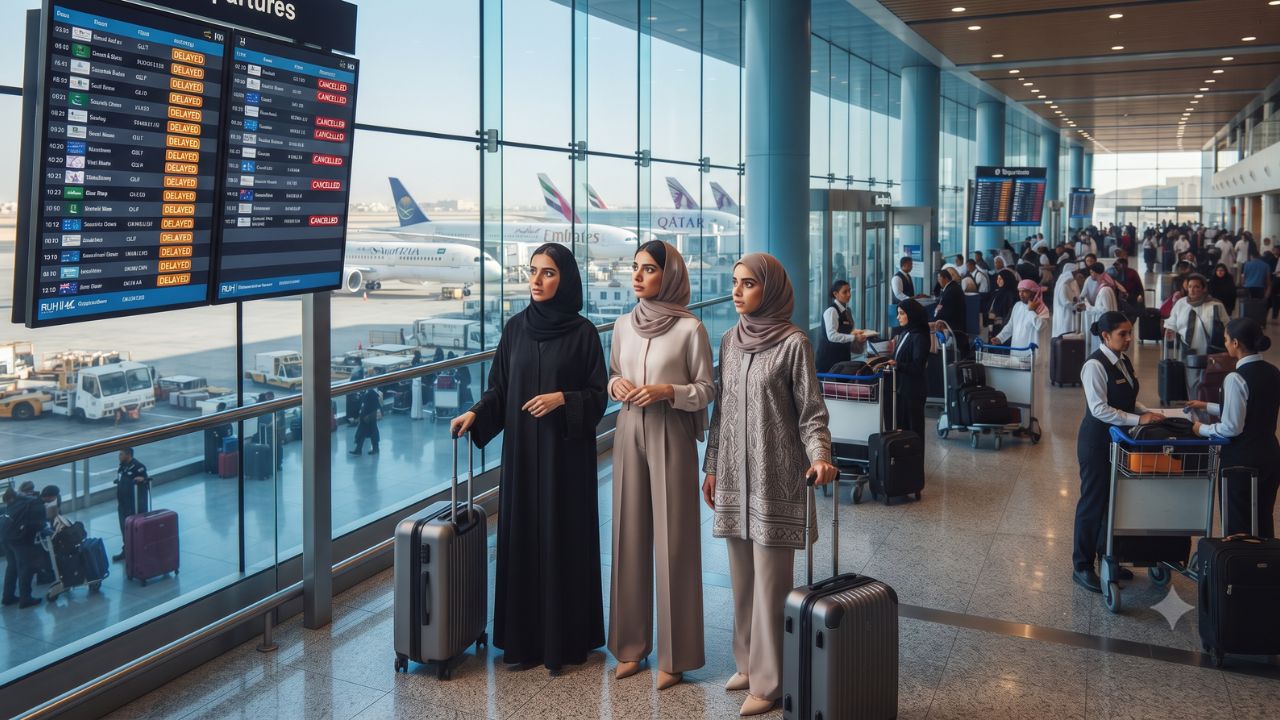
Riyadh Air recorded a staggering 64% flight delay rate in a single operational window as compounding airspace bans and drone security protocols grounded 326 flights and delayed 2,272 departures across the Middle East. Verified aviation tracking data compiled on October 9, 2026, at 4:28 PM Eastern Time (October 10 at 12:28 AM Gulf Standard Time) through FlightAware and regional correspondents reveals unprecedented operational pressure across 17 major transit hubs spanning Saudi Arabia, the United Arab Emirates, Qatar, Oman, Egypt, Jordan, and Türkiye.
The severe disruption follows heightened regional security measures and precautionary flight diversions responding to reported Houthi drone and missile activity targeting civil aviation infrastructure in Saudi Arabia. To maintain passenger safety, international civil aviation authorities and regional regulators have mandated wider circumvention corridors, lengthening flight times and triggering massive schedule breakdowns across interconnected global mega-hubs.
Saudi Arabia and the UAE: The Epicenters of Regional Disruption
The operational impact split sharply between outright cancellations in Saudi Arabia and extensive holding patterns across the United Arab Emirates:
- Saudi Arabia (199 Cancellations / 683 Delays): King Khalid International Airport in Riyadh (RUH) absorbed the brunt of the crisis, registering 130 cancellations (16% origin and 18% destination cancellation rates) alongside 323 delays. King Abdulaziz International in Jeddah (JED) logged 30 cancellations and 204 delays, while King Fahd International in Dammam (DMM) reported 19 cancellations and 71 delays. Domestic southern airfields faced critical shutdowns, with Abha Regional (AHB) posting 10 cancellations (11% origin cancellation rate) and 34 delays, Najran (EAM) logging four cancellations, Gizan (GIZ) recording three, and Madinah (MED) logging three cancellations and 51 delays.
- United Arab Emirates (46 Cancellations / 491 Delays): Dubai International Airport (DXB), managed by Dubai Airports, experienced massive congestion with 35 cancellations and 243 delays (3% origin/destination cancellation rate). Abu Dhabi International (AUH) recorded 134 delays and two cancellations, Sharjah International (SHJ) logged 97 delays and five cancellations, and Al Maktoum International (DWC) recorded 17 delays and four cancellations (5% origin rate).
Transcontinental Ripple Effects: Cairo, Istanbul, Doha, and the Levant
Beyond the Arabian Peninsula, transit corridors linking Africa, Europe, and Asia suffered cascading delays:
- Hamad International & Seeb: Doha’s Hamad International (DOH) recorded 123 delays and 10 cancellations, while Oman’s Seeb International in Muscat reported 32 delays and four cancellations.
- Egypt & North Africa: Cairo International Airport (CAI) registered 142 delays and nine cancellations as North African feeder traffic missed scheduled connecting banks.
- Turkish Transit Gateways: Istanbul Airport (IST) absorbed 312 delays and 30 cancellations, while Istanbul Sabiha Gökçen (SAW) logged 149 delays and 12 cancellations. Mediterranean holiday gateway Antalya Airport recorded 148 delays and two cancellations.
- Levant & Northern Cyprus: Queen Alia International in Amman (AMM) reported 41 delays and six cancellations, Ben Gurion in Tel Aviv recorded 114 delays and one cancellation, Ercan in Northern Cyprus posted 34 delays and six cancellations, and Erbil in Iraq logged three delays and one cancellation.
Airport Disruption and Cancellation Metrics
The table below summarizes flight delays, cancellation figures, and origin/destination cancellation rates across all affected regional airports:
| Airport Facility | Code | Country | Flight Delays | Flight Cancellations | Origin / Dest Cancellation % | Primary Operational Stress Factor |
|---|---|---|---|---|---|---|
| King Khalid Int'l (Riyadh) | RUH | Saudi Arabia | 323 | 130 | 16% / 18% | Drone/missile security alerts & airspace closures |
| Istanbul Airport | IST | Türkiye | 312 | 30 | 1% / 2% | Extended diversion routes & flow management |
| Dubai International | DXB | UAE | 243 | 35 | 3% / 3% | Holding patterns & regional airspace restrictions |
| King Abdulaziz Int'l (Jeddah) | JED | Saudi Arabia | 204 | 30 | 4% / 3% | Red Sea corridor route diversions |
| Istanbul Sabiha Gökçen | SAW | Türkiye | 149 | 12 | 0% / 1% | Low-cost network rotation bottlenecks |
| Antalya Airport | AYT | Türkiye | 148 | 2 | Negligible | Mediterranean airspace slot metering |
| Cairo International | CAI | Egypt | 142 | 9 | 1% / 1% | Middle East transit feeder delays |
| Abu Dhabi International | AUH | UAE | 134 | 2 | Negligible | Arabian Gulf arrival routing holds |
| Hamad International (Doha) | DOH | Qatar | 123 | 10 | 0% / 1% | Southern Gulf corridor metering |
| Ben Gurion (Tel Aviv) | TLV | Israel | 114 | 1 | Negligible | Eastern Mediterranean security routings |
| Sharjah International | SHJ | UAE | 97 | 5 | — / 1% | Regional low-cost turnaround backlogs |
| King Fahd Int'l (Dammam) | DMM | Saudi Arabia | 71 | 19 | 7% / 6% | Eastern Province sector flight holds |
| Prince Mohammad (Madinah) | MED | Saudi Arabia | 51 | 3 | 3% / — | Domestic pilgrimage schedule adjustments |
| Queen Alia (Amman) | AMM | Jordan | 41 | 6 | 2% / 2% | Levant transit route adjustments |
| Abha Regional | AHB | Saudi Arabia | 34 | 10 | 11% / 10% | Southern border precautionary ground stops |
| Ercan International | ECN | Northern Cyprus | 34 | 6 | 4% / 4% | Eastern Mediterranean diversion ripple |
| Seeb Int'l (Muscat) | MCT | Oman | 32 | 4 | Negligible | Arabian Sea departure rerouting |
| Al Maktoum Int'l | DWC | UAE | 17 | 4 | 5% / — | Cargo and charter slot delays |
Airline Performance: Cancellations and Delay Rates
Carrier operations reflected intense pressure, with Saudia leading in total cancellations and regional low-cost operators recording extreme delay percentages:
| Carrier | Cancellations | Cancellation Rate (%) | Flight Delays | Delay Rate (%) | Operational Profile & Impact |
|---|---|---|---|---|---|
| Saudia | 53 | 10% | 210 | 40% | Highest total cancellations nationwide |
| Turkish Airlines | 25 | 1% | 299 | 18% | Highest individual delay count across network |
| Emirates | 20 | 3% | 113 | 21% | Long-haul connection holds at DXB |
| Qatar Airways | 10 | 1% | 108 | 16% | Transit holding delays at Hamad hub |
| EgyptAir | 10 | 3% | 44 | 15% | Regional African-Middle Eastern schedule strain |
| flydubai | 9 | 2% | 77 | 25% | Regional narrow-body aircraft rotations |
| Pegasus Airlines | 8 | 1% | 175 | 23% | Anatolian and European connection delays |
| Air Arabia | 5 | 2% | 88 | 36% | High delay rate across Sharjah base |
| flyadeal | 5 | 2% | 78 | 43% | Severe domestic Saudi schedule disruption |
| Royal Jordanian | 4 | 2% | 12 | 8% | Managed schedule reductions |
| flynas | 2 | 0% | 120 | 45% | Extreme domestic rotation delays |
| Etihad Airways | 2 | 0% | 95 | 28% | Downline Abu Dhabi connecting holds |
| Riyadh Air | 2 | 7% | 18 | 64% | Highest delay percentage across all carriers |
| Oman Air | 2 | 1% | 16 | 15% | Moderate schedule adjustments |
Visitor Insider Tips for Navigating Middle Eastern Air Hubs
- Buffer Long-Haul Transit Windows: If booking intercontinental itineraries connecting through Dubai (DXB), Doha (DOH), Riyadh (RUH), or Istanbul (IST), maintain minimum connection times of at least four to five hours. A standard 90-minute layover is highly susceptible to missed connections under current flight diversion routes.
- Monitor Civil Aviation Authority Directives: Follow real-time airspace updates issued by Saudi Arabia's General Authority of Civil Aviation (GACA) and local airport authorities before heading to the terminal.
- Claim Statutory Duty of Care at Hubs: If your flight is delayed by more than four hours or canceled overnight at DXB, DOH, or JED, visit the airline transfer service desk immediately. Carriers are obligated to provide meal vouchers, complimentary Wi-Fi access, and hotel vouchers for prolonged layovers under regional passenger protection frameworks.
- Preserve Digital Itinerary Records: Take screenshots of rolling departure gate board announcements, mobile app notifications, and booking reference numbers. Travel insurance underwriters require timestamped carrier cancellation notices to reimburse emergency accommodation and alternative flight bookings.
Geopolitical Security and the Fragility of Global Air Corridors
The Middle East represents the central geographic bridge connecting Europe, Africa, and the Asia-Pacific basin. The closure or constriction of strategic flight information regions (FIRs) forces hundreds of wide-body aircraft into narrow flight tracks over the Arabian Sea, the Red Sea, and Egypt.
This geographic compression causes immediate fuel-burn penalties and airborne holding patterns that extend from Cairo to Istanbul. Acknowledging the complex intersection between regional security and international aviation mobility is critical for modern travelers navigating one of the world's most vital crossroads.
FAQ: Gulf Flight Disruptions October 2026
What caused the widespread flight cancellations in Saudi Arabia?
Precautionary security restrictions, temporary airspace closures, and flight diversions following reported drone and missile activity led to 199 cancellations across Saudi airports.
Which airline experienced the highest delay rate?
Riyadh Air recorded the highest delay rate at 64%, followed by flynas at 45%, flyadeal at 43%, and Saudia at 40%.
Are flights operating normally through Dubai and Abu Dhabi?
While major UAE airports remain open, Dubai International recorded 243 delays and 35 cancellations, and Abu Dhabi logged 134 delays due to regional holding patterns.
What passenger rights apply if my flight is canceled in the Gulf?
Airlines must provide free rebooking on the next available flight or a full ticket refund, alongside complimentary meals, refreshments, and hotel accommodation for extended delays.
Across the shifting sands and crowded skies of the Middle East, patience and preparation remain the traveler's most reliable compass.
Related Travel Guides
Disclaimer
This article is for informational and educational purposes only. It does not constitute legal, financial, or professional advice. While we strive to provide accurate and up-to-date information, travel policies, regulations, and conditions change rapidly. Always verify information with official sources before making travel decisions. Nomad Lawyer makes no representations about the accuracy, reliability, completeness, or suitability of the information provided. Readers should consult qualified professionals for advice specific to their circumstances. The views expressed in this article are those of the author and do not necessarily reflect the views of Nomad Lawyer.
Kunal K Choudhary
Co-Founder & Contributor
A passionate traveller and tech enthusiast. Kunal contributes to the vision and growth of Nomad Lawyer, bringing fresh perspectives and driving the community forward.
Learn more about our team →