
Gulf Air Deploys Airbus A321LR Fleet to Help Passengers Bypass Massive Travel Chaos, Flight Cancellations, and Severe Airport Disruptions Crippling Rival Middle East Mega-Hubs: Latest Airline News
As massive travel chaos paralyzes global mega-hubs, Gulf Air leverages the Airbus A321LR and its highly efficient Bahrain base to provide a disruption-proof alternative for international commuters.

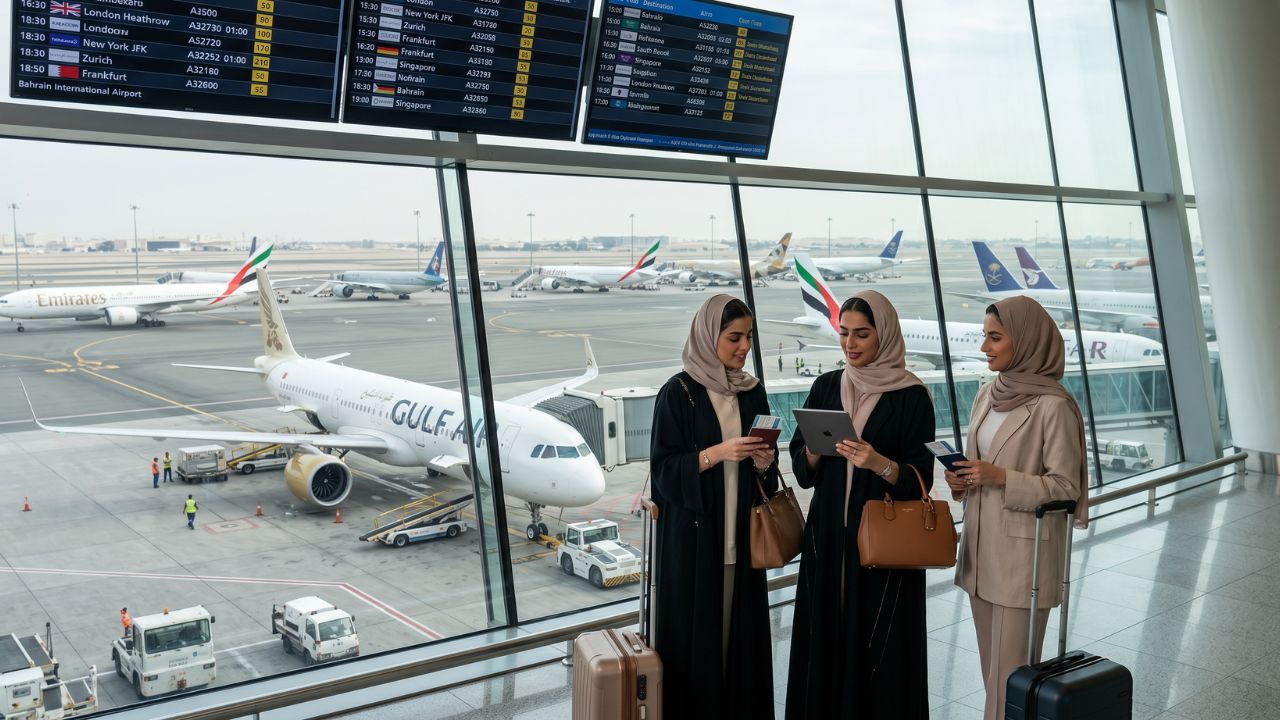
Image generated by AI
In a dramatic strategic realignment designed to exploit the severe travel chaos and rolling flight cancellations currently infecting the Middle East’s most congested mega-hubs, Gulf Air has officially executed a massive aviation shake-up under the direction of CEO Martin Gauss. Confirmed on June 18, 2026, the national carrier of Bahrain is actively positioning itself as the ultimate disruption-proof bypass for premium international commuters. While massive regional rivals like Emirates, Qatar Airways, Etihad Airways, and the emerging Riyadh Air battle for global dominance—frequently exposing their passengers to severe airport disruptions caused by overwhelming hub congestion—Gulf Air is pivoting toward extreme agility. By heavily deploying the highly efficient Airbus A321LR narrowbody across approximately 50 strategic destinations, Gulf Air is guaranteeing passengers fast, highly secure connections through Bahrain International Airport. This deliberate avoidance of massive terminal gridlock on critical routes linking London, Zurich, and New York commands today's most essential headline in breaking airline news and absolutely vital global aviation updates.
By introducing direct passenger coordination and dynamic scheduling backups, the regional aviation hubs target growing passenger demand across vital commerce sectors. The choice to coordinate flight departures in phases helps to manage gate capacity, supporting the country's broader regional transportation network.
Context: The Vulnerability of Global Mega-Hubs
For the millions of global passengers who rely on the Middle East as the primary intercontinental transit corridor, the sheer scale of the localized operational bottlenecks at massive mega-hubs has transformed luxury travel into an absolute logistical nightmare.
Historically, aviation strategy dictated that bigger was always better. Carriers like Emirates and Qatar Airways built massive fleets of A380s and B777s, funneling hundreds of thousands of passengers through Dubai and Doha daily. However, the modern reality of global travel chaos has exposed the fatal flaw of this model: when massive airport disruptions occur, the fallout is catastrophic. A sudden weather event or localized airspace restriction can instantly trigger thousands of cascading flight cancellations, physically trapping tens of thousands of passengers in hyper-congested terminals. Gulf Air is actively capitalizing on this structural vulnerability. Rather than trying to match the sheer volume of its rivals, Gulf Air is utilizing the exceptional range of the A321LR to fly thinner, highly targeted routes directly into Bahrain. Because Bahrain operates as an efficient, low-congestion premium hub, Gulf Air can physically guarantee significantly faster transfer times, mathematically protecting its passengers from the massive delays and lost baggage that plague the region's largest transit airports.
To view live flight schedules, verify the active delay status of your specific itinerary, or to track active regional airspace restrictions, travelers must consult official aviation directories. For direct booking access into this highly efficient, disruption-proof transit network, travelers should aggressively utilize the official Gulf Air portal to secure their connections before travel chaos strikes. To explore live flight tracking and monitor the exact severity of the localized bottlenecks causing the flight cancellations at competitor hubs, passengers can consult the official FlightAware tracking service.
Section-Wise Breakdown of Gulf Air’s Strategic Bypass
Bahrain: The Anti-Congestion Hub
Bahrain International Airport operates as the strategic anchor for Gulf Air's entire premium connectivity model. While neighboring mega-hubs frequently suffer from agonizing holding patterns and massive security queues, Bahrain offers an inherently streamlined passenger flow. This operational agility means that when global travel chaos inevitably strikes the broader network, Gulf Air can process connecting passengers, refuel aircraft, and execute turnarounds with minimal exposure to the severe airport disruptions paralyzing larger regional competitors.
The A321LR: The Ultimate Disruption Weapon
The Airbus A321LR is the central technological catalyst for this strategy, and the airline is actively evaluating the even longer-range A321XLR. Because the A321LR is a narrowbody aircraft, it boards and deplanes significantly faster than the massive widebodies utilized by Gulf Air's rivals. This reduces terminal congestion and allows the airline to maintain high load factors on highly specific routes—like the critical New York corridor—without dumping massive surges of passengers into the terminal simultaneously.
The Global Route Wars
Gulf Air is aggressively targeting high-value financial and corporate corridors, explicitly focusing on London, New York, and Zurich. By linking these massive global centers directly through Bahrain, Gulf Air offers corporate travelers a highly reliable sanctuary. Furthermore, strategic codeshare partnerships with carriers like Aegean Airlines allow Gulf Air to seamlessly extend its disruption-proof network deep into Europe without relying on highly congested traditional gateways.
Technical Roster: Gulf Air Operational Realignment Data
To ensure absolute factual accuracy regarding the exact parameters of this fleet modernization and the specific route networks utilized to bypass regional congestion, the following matrix details the verified strategic deployment data:
Gulf Air Premium Connectivity Matrix
| Strategic Realignment Metric | Operational Verification |
|---|---|
| Operating Carrier & Leadership | Gulf Air (Directed by CEO Martin Gauss) |
| Strategic Low-Congestion Hub | Bahrain International Airport |
| Primary Fleet Asset | Airbus A321LR (Evaluating A321XLR) |
| Network Footprint | Selective targeting of approximately 50 global destinations |
| Primary Long-Haul Corridors | London, Zurich, and New York |
| Primary Regional Competitors | Emirates, Qatar Airways, Etihad Airways, Riyadh Air, Saudia |
Passenger Impact: Reclaiming Transit Control
For the thousands of corporate road warriors and premium leisure travelers exhausted by the grueling logistics of navigating the Middle East's largest airports, Gulf Air's realignment provides an immediate, tangible sanctuary.
The immediate passenger impact is the absolute restoration of transit sanity. A corporate traveler flying from London to Asia no longer has to panic about missing their connection in a mega-hub due to sudden flight cancellations. By routing through Bahrain on a Gulf Air A321LR, the passenger experiences a drastically smaller terminal footprint, faster security processing, and highly predictable boarding cycles. This eliminates the severe stress associated with travel chaos. The airline's strategic investment in Premium Economy and upgraded Business Class directly acknowledges that passengers are willing to pay for a more intimate, heavily controlled transit experience that actively shields them from the massive crowds and rolling airport disruptions defining modern aviation.
Industry Analysis: The Fragmentation of the Gulf
Aviation industry analysts view Gulf Air's strategic shift as definitive proof that the Middle Eastern aviation market is fracturing into two highly distinct models: hyper-volume mega-carriers and hyper-efficient premium connectors.
Analysts note that as Riyadh Air prepares to launch, the battle for sheer scale is becoming mathematically unsustainable for mid-sized carriers. Gulf Air correctly identified that attempting to fight Emirates or Qatar Airways on volume guarantees failure. Instead, by utilizing the A321LR, Gulf Air has successfully insulated its operations. Industry experts warn that the legacy mega-hubs are approaching peak saturation. If global travel chaos continues to trigger massive cascading delays at these primary airports, premium passengers will completely abandon them, opting instead for the disruption-proof agility and guaranteed transfer times provided by Gulf Air's highly targeted Bahrain network.
Actionable Advice for Surviving Middle East Transit
If you are navigating the highly congested Middle East transit corridors this season, execute this strategic planning checklist to fully bypass regional travel chaos:
- Route Through Bahrain: If your itinerary involves flying from Europe to Asia, actively search for Gulf Air connections through Bahrain International Airport. Deliberately avoiding the region's largest mega-hubs is the most effective way to eliminate your exposure to mass flight cancellations.
- Target the A321LR: When booking, review the specific aircraft type. The Airbus A321LR offers a significantly faster boarding and deplaning process, completely bypassing the massive boarding gate gridlock associated with A380s and B777s.
- Leverage Codeshare Protections: If flying into broader Europe, utilize Gulf Air’s partnership with Aegean Airlines. Ensure the entire itinerary is booked on a single ticket so that if minor airport disruptions occur, the airlines are legally obligated to execute your rebooking.
- Avoid Peak Congestion Windows: Even at efficient hubs like Bahrain, always attempt to schedule connections outside of the major midnight-to-4AM transfer waves to maximize your buffer against any localized travel chaos.
FAQ: Gulf Air Strategy & Travel Chaos
Why is Gulf Air focusing on the Airbus A321LR?
The Airbus A321LR provides Gulf Air with exceptional fuel efficiency and route flexibility, allowing the airline to open new long-haul destinations without the massive capacity risks and severe terminal congestion associated with larger widebody jets.
How does Gulf Air help passengers avoid airport disruptions?
By utilizing Bahrain International Airport as its primary hub, Gulf Air offers significantly faster transfer times and lower passenger volumes, allowing travelers to completely bypass the massive travel chaos and flight cancellations frequently infecting larger Middle Eastern mega-hubs.
Which airlines does Gulf Air compete against?
Gulf Air operates in a highly competitive region dominated by global mega-carriers including Emirates, Qatar Airways, Etihad Airways, and the emerging Riyadh Air, choosing to compete on premium efficiency rather than sheer network scale.
The Reality of Disruption-Proof Hubs
The massive strategic realignment executed by Gulf Air proves definitively that absolute agility is the ultimate defense against systemic physical travel chaos. By deploying the highly efficient Airbus A321LR and routing premium passengers through the low-congestion sanctuary of Bahrain International Airport, the airline has provided global commuters with a heavily armored bypass to regional terminal gridlock. As neighboring mega-carriers desperately struggle to process surging passenger volumes—frequently triggering massive connecting queues, rolling flight cancellations, and excruciating airport disruptions—travelers must accept a critical new reality: avoiding brutal travel anxiety requires actively abandoning the world's largest transit hubs and exclusively booking with agile carriers mathematically designed to completely insulate their passengers from the harsh realities of the global connecting network.
Key Takeaways
- Strategic Realignment: Gulf Air, under CEO Martin Gauss, is actively transforming into a premium connectivity carrier to avoid direct volume competition with regional giants.
- The A321LR Advantage: The airline is heavily relying on the Airbus A321LR (and evaluating the A321XLR) to execute highly efficient, low-congestion long-haul operations.
- Bypassing the Gridlock: By funneling passengers through Bahrain International Airport, Gulf Air completely avoids the massive travel chaos and airport disruptions plaguing nearby mega-hubs.
- Targeted Expansion: The airline focuses on approximately 50 high-value destinations, explicitly prioritizing critical business corridors like London, Zurich, and New York.
- Passenger Survival: Premium travelers must aggressively target these highly agile, narrowbody routes to physically protect themselves from the severe flight cancellations currently infecting the Middle East transit network.
Related Travel Guides
Massive Travel Chaos Paralyzes Chicago O'Hare with 1,425 Disruptions
Disclaimer
This article is for informational and educational purposes only. It does not constitute legal, financial, or professional advice. While we strive to provide accurate and up-to-date information, travel policies, regulations, and conditions change rapidly. Always verify information with official sources before making travel decisions. Nomad Lawyer makes no representations about the accuracy, reliability, completeness, or suitability of the information provided. Readers should consult qualified professionals for advice specific to their circumstances. The views expressed in this article are those of the author and do not necessarily reflect the views of Nomad Lawyer.
Kunal K Choudhary
Co-Founder & Contributor
A passionate traveller and tech enthusiast. Kunal contributes to the vision and growth of Nomad Lawyer, bringing fresh perspectives and driving the community forward.
Learn more about our team →