
The U-2 Dragon Lady: How America's Most Secretive Cold War Spy Plane Revolutionized Aerial Reconnaissance
Breaking airline news and aviation industry updates for 2026.

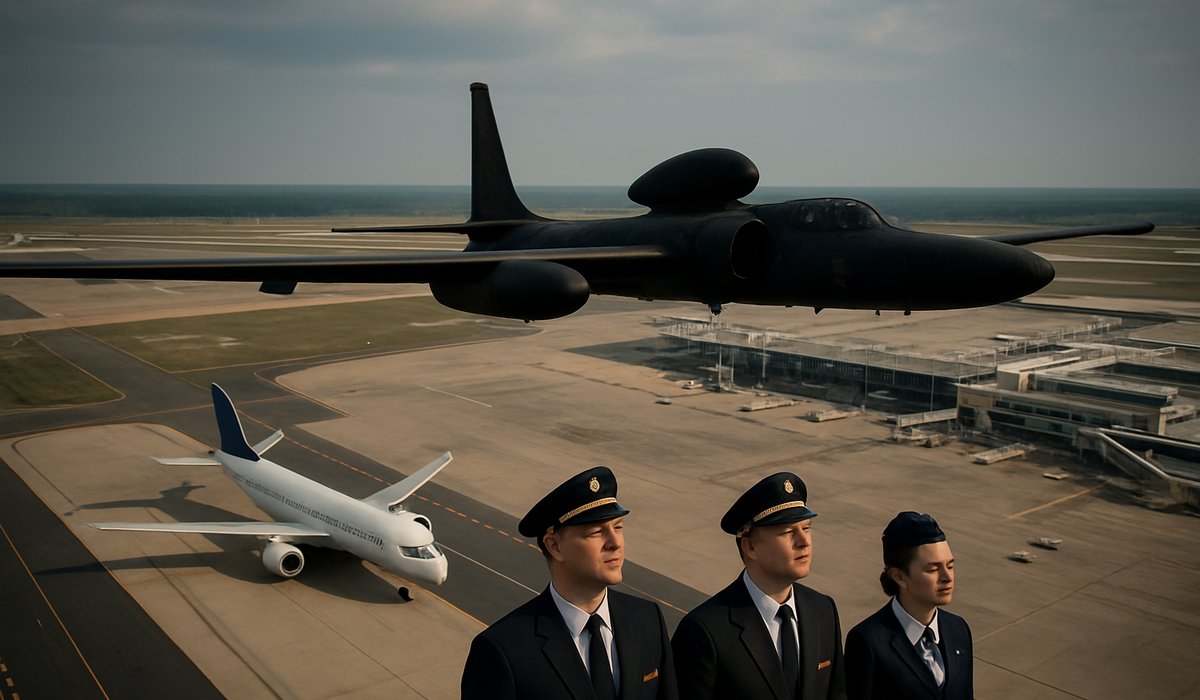
Image generated by AI
The U-2 Dragon Lady: How America's Most Secretive Cold War Spy Plane Revolutionized Aerial Reconnaissance
Declassified details reveal the extraordinary engineering behind the iconic aircraft that changed intelligence gathering forever
A Response to Soviet Secrecy
During the height of Cold War tensions in the early 1950s, the United States faced an unprecedented intelligence crisis. The Soviet Union remained largely impenetrable to Western observation—foreign journalists were barred from entering the country, and conventional reconnaissance methods proved inadequate against the Iron Curtain's opacity. With nuclear weapons development accelerating behind closed Soviet borders, American military and intelligence officials confronted a stark reality: the nation possessed no reliable means to monitor Soviet capabilities or intentions across thousands of miles of inaccessible territory.
This intelligence vacuum prompted what would become one of the most audacious classified programs of the era. The Central Intelligence Agency and the United States Air Force initiated a top-secret initiative to develop an aircraft capable of penetrating Soviet airspace at altitudes where conventional interception appeared impossible. The result was the Lockheed U-2, a revolutionary spy plane that would define an entire generation of Cold War espionage.
Engineering Innovation at Extreme Altitudes
The U-2, christened the "Dragon Lady" by its crews, represented a dramatic departure from conventional aircraft design. Engineers at Lockheed's legendary Skunk Works facility prioritized altitude capability above virtually all other considerations. The aircraft's distinctive long, slender wings—reminiscent of a high-performance glider—were engineered to achieve sustained flight at altitudes exceeding 70,000 feet, well beyond the operational ceiling of Soviet fighter aircraft and surface-to-air missile systems of that era.
This extreme altitude performance came at significant engineering costs. The aircraft sacrificed traditional defensive systems, fuel capacity optimization, and conventional landing gear configurations to achieve its reconnaissance objectives. Pilots flew in pressurized cabins designed for space-flight conditions, requiring specialized pressure suits that resembled early astronaut equipment.
Reshaping Intelligence Operations
The Dragon Lady fundamentally transformed how nations conducted strategic reconnaissance. For nearly a decade, U-2 overflights provided American policymakers with unprecedented visibility into Soviet military installations, weapons development facilities, and industrial capacity. The photographic intelligence gathered through these missions—later declassified in part—informed critical decisions regarding nuclear deterrence strategy and military preparedness throughout the Cold War period.
The aircraft's operational success demonstrated that technological innovation could overcome geographical and political barriers that conventional diplomacy could not penetrate, establishing principles of aerial surveillance that influenced intelligence operations for decades to come.
Frequently Asked Questions
How high could the U-2 spy plane actually fly? The U-2 Dragon Lady operated at altitudes exceeding 70,000 feet, placing it beyond the effective range of contemporary Soviet air defense systems and fighter aircraft.
Why was the U-2 called the "Dragon Lady"? The nickname emerged organically among pilots and flight crews, though the exact origin remains partially obscured by classification protocols.
How did the U-2 improve American intelligence gathering during the Cold War? The aircraft provided direct photographic evidence of Soviet military capabilities and weapons development, replacing unreliable intelligence estimates with concrete visual data.
What made the U-2 vulnerable despite its extreme altitude capability? While Soviet fighters couldn't reach its cruising altitude, advancing surface-to-air missile technology eventually posed significant threats, as demonstrated by operational incidents in the early 1960s.
Did the U-2 program influence modern surveillance aircraft design? Yes—the program's principles regarding altitude performance and reconnaissance capabilities informed subsequent generations of military and civilian high-altitude aircraft development.
Related Travel Guides
Disclaimer
This article is for informational and educational purposes only. It does not constitute legal, financial, or professional advice. While we strive to provide accurate and up-to-date information, travel policies, regulations, and conditions change rapidly. Always verify information with official sources before making travel decisions. Nomad Lawyer makes no representations about the accuracy, reliability, completeness, or suitability of the information provided. Readers should consult qualified professionals for advice specific to their circumstances. The views expressed in this article are those of the author and do not necessarily reflect the views of Nomad Lawyer.
Preeti Gunjan
Contributor & Community Manager
A passionate traveller and community builder. Preeti helps grow the Nomad Lawyer community, fostering engagement and bringing the reader experience to life.
Learn more about our team →