
Green Lanes Strategy: Fast-Tracking Mega Tourism Investment in Asia
Governments in the Philippines, Thailand, and beyond are implementing "Green Lanes" to slash tourism project approval times from 36 months to 18.

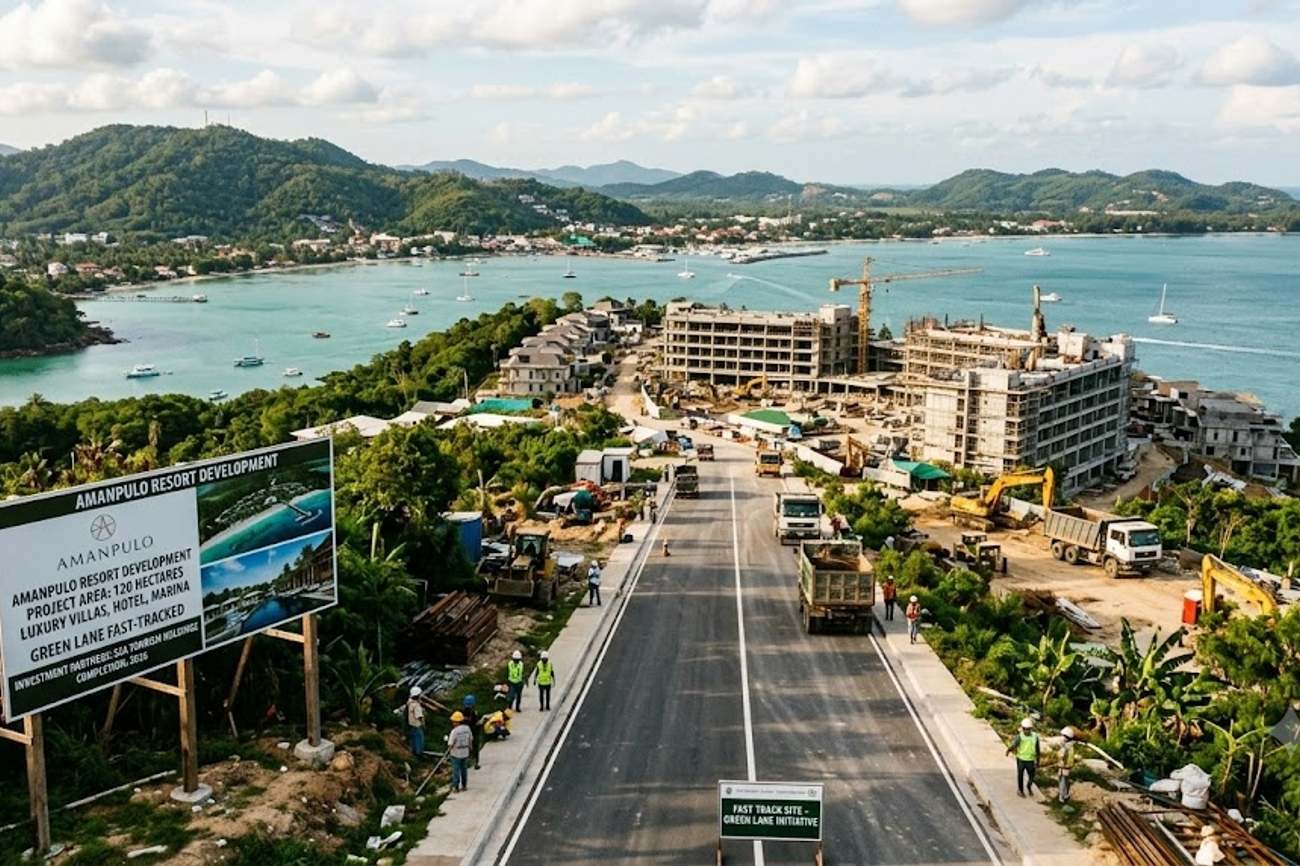
Image generated by AI
Mega tourism developments have entered a high-velocity phase as sovereign governments restructure regulatory frameworks to attract institutional capital. The shift toward "Green Lanes" addresses a critical failure in traditional public administration: the administrative attrition that previously stalled multi-billion dollar hospitality schemes.
Historically, the primary barrier to foreign direct investment (FDI) in luxury resorts and integrated destinations was not engineering complexity, but a linear permitting system. In emerging markets, developers typically faced regulatory delays of 24 to 36 months before site preparation could commence. These delays were exacerbated by the requirement for sequential approvals across municipal boards, land management bureaus, and environmental agencies.
The Green Lanes Strategy replaces this fragmented approach with an integrated administrative architecture. This model is currently being deployed in the Philippines, Thailand, Malaysia, Indonesia, Vietnam, Saudi Arabia, Greece, and the Maldives.
Core Operational Pillars
The strategy rests on three specific mechanisms designed to reduce financial risk for private equity funds and hotel operators:
- Centralized Entry Points: Regulatory oversight is consolidated into single-window hubs, such as the One-Stop Action Center for Strategic Investments (OSAC-SI) under the Board of Investments (BOI). Investors are assigned a dedicated Account Officer to manage the workflow across all national and local agencies.
- Statutory Processing Windows: To prevent inertia, legislation—such as Republic Act No. 11032 in the Philippines—imposes legally binding deadlines on government responses.
- Parallel Processing: Agencies now review project components concurrently. Environmental evaluations, foreshore leases, and structural plans are processed simultaneously rather than sequentially.
Data Table: Traditional vs. Green Lane Frameworks
| Development Phase | Traditional Sequential Framework | Accelerated Green Lanes Strategy |
|---|---|---|
| Pre-Development Clearances | 24 to 36 Months | 12 to 18 Months |
| Inter-Agency Coordination | Fragmented across individual bureaus | Centralised via dedicated Account Officers |
| Processing Timeframes | Discretionary with frequent delays | Enforced statutory limits (3, 7, and 20 days) |
| Environmental & Land Reviews | Sequential approval dependencies | Parallel evaluation of land, building, and eco-permits |
| Investor Entry Point | Multiple national and local agencies | Unified One-Stop Action Center (OSAC-SI) |
Statutory Processing Limits
Under the fast-track mandates, agencies must adhere to the following maximum processing windows:
- Simple Transactions: 3 working days.
- Complex Transactions: 7 working days.
- Highly Technical Transactions: 20 working days (includes land-use conversions, foreshore leases, and environmental compliance certificates).
Why This Matters
From a logistical perspective, the transition to Green Lanes is a response to the extreme capital intensity of modern "off-grid" luxury tourism. When a developer is funding seawater desalination, private air access, and microgrid energy generation, every month of administrative delay increases exposure to material inflation and macroeconomic volatility.
Our analysis indicates that by compressing pre-development lead times by 50% to 70%, governments are effectively lowering the risk premium for institutional investors. For the traveler, this means a faster pipeline of high-capacity, sustainable infrastructure in previously inaccessible regions. For the industry, it signals a shift where "ease of doing business" is now a primary competitive tool for attracting FDI over traditional tax incentives.
Industry Outlook
Expect a surge in "integrated destination" announcements over the next 24 months as projects currently in the Green Lane pipeline reach the groundbreaking stage. We anticipate other emerging markets in Africa and Latin America will attempt to replicate the OSAC-SI model to compete for global hospitality capital. The next evolution will likely involve the integration of digital twins and AI-driven permitting to further shrink the 12-to-18-month window.
Internal Link Suggestions:
- Analysis of Foreign Direct Investment Trends in Southeast Asian Hospitality
- The Impact of Republic Act No. 11032 on Regional Infrastructure
- Sustainable Infrastructure Requirements for Off-Grid Island Resorts
Related Travel Guides
Disclaimer
This article is for informational and educational purposes only. It does not constitute legal, financial, or professional advice. While we strive to provide accurate and up-to-date information, travel policies, regulations, and conditions change rapidly. Always verify information with official sources before making travel decisions. Nomad Lawyer makes no representations about the accuracy, reliability, completeness, or suitability of the information provided. Readers should consult qualified professionals for advice specific to their circumstances. The views expressed in this article are those of the author and do not necessarily reflect the views of Nomad Lawyer.
Kunal K Choudhary
Co-Founder & Contributor
A passionate traveller and tech enthusiast. Kunal contributes to the vision and growth of Nomad Lawyer, bringing fresh perspectives and driving the community forward.
Learn more about our team →