
Wings Across the Delta: How Greater Bay Airlines’ Expansion Connects Travelers to Hong Kong’s Next Era
Greater Bay Airlines aligns with Hong Kong’s 2026–2030 development plan, expanding routes across Asia and mainland China while opening seamless transit corridors into the vibrant Pearl River Delta.

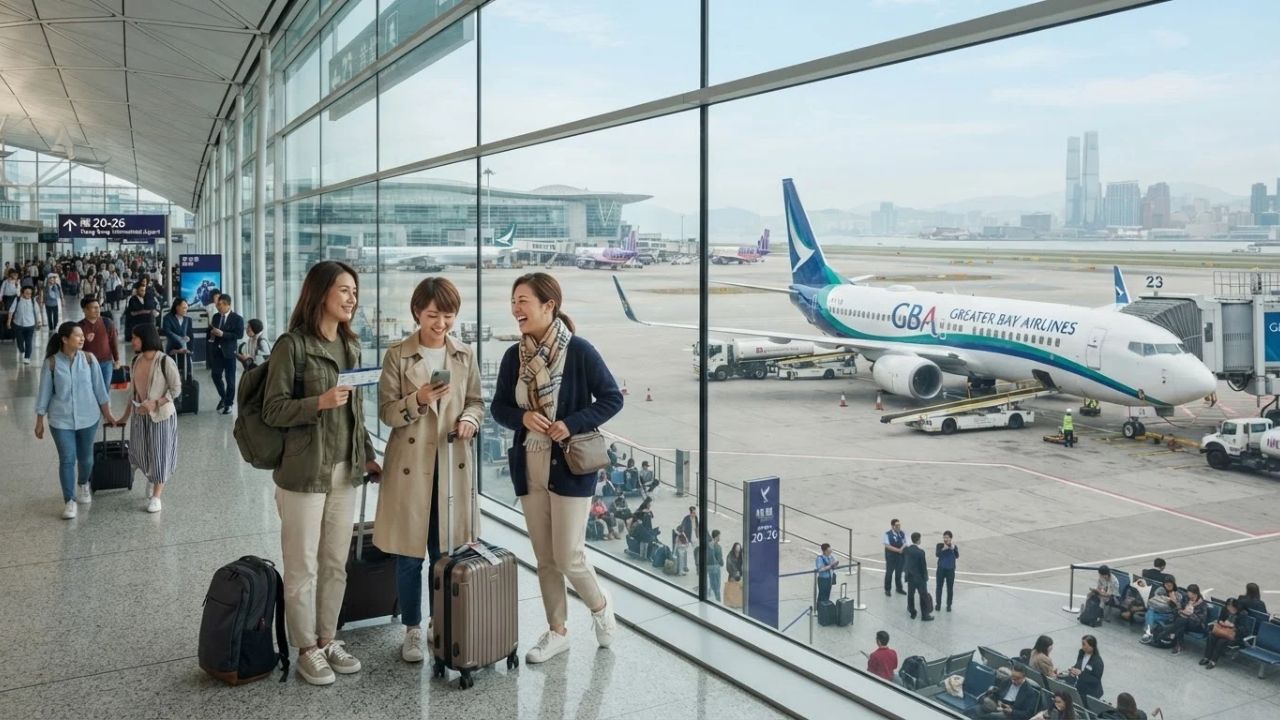
Greater Bay Airlines expands Asian and mainland China connectivity under Hong Kong’s 2026–2030 development roadmap
While most international visitors view Hong Kong through the vertical drama of Central's glass towers or the iconic panorama from Victoria Peak, few realize that the city anchors an integrated mega-region of eighty-six million people whose skies are undergoing their most ambitious transformation in years. Following the formal announcement of Hong Kong's first five-year development plan covering 2026 to 2030 and the accompanying 2026 Policy Address, homegrown carrier Greater Bay Airlines (GBA) has pledged to significantly expand its flight network. The airline is accelerating route launches across mainland China and key Asian capitals, firmly positioning the territory as the primary aerial gateway for the Guangdong-Hong Kong-Macao Greater Bay Area. Under the leadership of Vice Chairman and Chief Executive Officer Hou Wei, GBA is aligning its commercial flight paths with national development goals, transforming regional air travel into an agile, highly connected bridge between international travelers and the economic heartland of Southern China.
The carrier's strategic roadmap highlights how regional aviation is changing throughout East and Southeast Asia. Rather than competing solely on long-haul routes, Greater Bay Airlines is building high-frequency links that connect secondary and tertiary commercial centers directly to Hong Kong. Hou Wei noted that the policy initiatives rolled out under the government’s five-year framework provide strong momentum for deeper regional integration, enhancing Hong Kong's competitive advantage and creating optimal conditions for the sustainable growth of the aviation industry. For transiting passengers, this expansion translates into broader schedule flexibility, shorter connection times, and seamless transfers into the wider Pearl River Delta.
Wings Across the Pearl River: Greater Bay Airlines and the 2026–2030 Master Plan
At the core of Greater Bay Airlines’ operational push is the determination to reinforce Hong Kong’s standing as an international aviation hub. The carrier is adding point-to-point routes connecting Hong Kong to underserved regional business centers across Asia, alongside direct services to rapidly growing mainland cities. This strategy complements the extensive infrastructure upgrades at Hong Kong International Airport, where the fully commissioned Three-Runway System has dramatically increased flight capacity, aircraft movements, and passenger throughput.
The airline’s network expansion extends far beyond traditional airport gate transfers. GBA’s operations are designed to integrate with Hong Kong's multimodal transit network, which allows passengers to connect effortlessly between flights, high-speed rail services, and cross-boundary ferries without passing through separate immigration checkpoints. Travelers arriving on a GBA morning service can transition directly to high-speed trains at West Kowloon Station or board fast catamarans at the SkyPier terminal, reaching manufacturing capitals like Dongguan or innovation centers like Shenzhen within an hour of touchdown.
This operational synergy provides substantial benefits for leisure and cultural travelers. As Greater Bay Airlines widens its route map, visitors gain the freedom to craft open-jaw itineraries across East Asia. A traveler can arrive in Hong Kong, explore the territory's vibrant urban neighborhoods and forested islands, take a sea shuttle to Macao, and continue onward to regional mainland destinations on a single, coordinated booking.
What Makes Hong Kong and the Greater Bay Area Experientially Unique
Beyond the boardroom strategies and airport runways, Hong Kong offers an experiential contrast found nowhere else on earth. The city is a study in vertical density folded directly against rugged subtropical wilderness. You can step out of a futuristic financial atrium in Admiralty and, within fifteen minutes, find yourself hiking along misty granite ridges overlooking the South China Sea.
On Lantau Island, where the international airport sits on reclaimed land, travelers are greeted by peaceful mountain sanctuaries. A short ride on the Ngong Ping 360 cable car carries you across verdant valleys to the monumental bronze Tian Tan Buddha and the incense-scented courtyards of Po Lin Monastery. Down on the western coast of Lantau, the ancient stilt-house fishing village of Tai O preserves the traditional maritime lifestyle of the Tanka people, who have lived aboard wooden sampans and overwater shacks for generations.
The surrounding Greater Bay Area enriches this journey through incredible cultural variety. A scenic drive across the fifty-five-kilometer Hong Kong-Zhuhai-Macao Bridge brings travelers to the UNESCO World Heritage Centre inscribed Historic Centre of Macao. Here, Portuguese stone mosaics, baroque Catholic church facades, and incense-filled A-Ma Temple pavilions tell the five-hundred-year story of early maritime trade between East and West. The entire delta forms a vast cultural circuit where colonial architecture, Cantonese culinary traditions, and high-tech urban centers exist within touching distance.
Visitor Insider Tips
Discovering Hong Kong like a seasoned local means understanding the subtle rhythms of its neighborhoods and public transit systems:
- Rethinking Victoria Peak: The historic Peak Tram is an engineering marvel, but queues at the Garden Road terminus can stretch past an hour on weekend afternoons. Take the tram early on a weekday morning before 09:00, or ride public bus 15 from Central Pier through the winding hillside roads of Wan Chai Gap for equally dramatic views at a fraction of the cost. Once at the summit, walk the circular Lugard Road trail for uncrowded views over Victoria Harbour.
- The Power of the Octopus Card: Immediately upon arrival at the airport, purchase a physical Octopus card or download the digital mobile version. This contactless card functions as universal currency across the territory, covering the Airport Express train, the MTR subway, vintage double-decker trams ("Ding Dings"), the historic Star Ferry, as well as corner bakeries and neighborhood cafes.
- Dining in Neighborhood Cha Chaan Tengs: Skip international hotel buffets and head to a classic cha chaan teng (Hong Kong-style tea cafe) in Sham Shui Po or Jordan. Order a hot cup of silky milk tea brewed through a traditional sackcloth filter, accompanied by French toast drizzled with condensed milk or a warm pineapple bun (bo lo baau) served with a thick slice of cold salted butter.
- Tea Drinking Etiquette: During dim sum lunches at traditional teahouses like Lin Heung Lau, keep an eye on your companion's teacup. When someone pours hot tea for you, tap your index and middle fingers twice lightly on the table; this classic gesture serves as a silent thank-you without interrupting the conversation. If your ceramic teapot needs refilling, simply balance the lid upside down on top of the pot.
- Navigating Local Itineraries: Check the comprehensive cultural calendar and seasonal festival listings curated by Discover Hong Kong to catch traditional celebrations such as the Cheung Chau Bun Festival or the mid-autumn Tai Hang Fire Dragon Dance.
Cultural and Environmental Context
Hong Kong’s ambitious aviation and infrastructural expansion takes place against a backdrop of conscientious environmental management. Although celebrated worldwide for its skyline, more than forty percent of Hong Kong's total land area is protected within designated country parks and nature reserves. Hiking trails like the hundred-kilometer MacLehose Trail through Sai Kung and the Dragon's Back in Shek O provide critical wildlife corridors for wild boar, barking deer, and black kites. Urban planners are challenged to balance new airport runways and residential reclamation with the conservation of these vital green spaces.
The waters of the Pearl River estuary present an equally delicate conservation priority. The shallow coastal waters surrounding Lantau Island serve as a primary habitat for the vulnerable Indo-Pacific humpback dolphin, affectionately known locally as the pink dolphin. Infrastructure projects, including airport runway extensions and cross-boundary bridge pillars, are monitored under strict ecological guidelines, with dedicated marine parks established around Sha Chau and Lung Kwu Chau to safeguard marine mammals from vessel traffic.
On a cultural front, Hong Kong is witnessing a renewed grassroots dedication to neighborhood heritage. While glass towers continue to rise, historic civic complexes like Tai Kwun—the former Central Police Station and Victoria Prison compound—have been painstakingly repurposed into public art spaces. Neighborhoods like Sham Shui Po celebrate intangible heritage by supporting traditional family-run craftsmen, from handmade bamboo steamer artisans to masters of neon sign fabrication. Greater Bay Airlines' integration into regional tourism encourages visitors to support these living traditions, ensuring that the delta's historical roots remain vibrant as modern transit networks expand.
FAQ: Traveling in Hong Kong and the Greater Bay Area 2026
How do I travel from Hong Kong International Airport to downtown?
The Airport Express train is the fastest route, reaching Kowloon Station in twenty-two minutes and Central on Hong Kong Island in twenty-four minutes, with trains departing every ten minutes.
Do international travelers need separate visas for Macao and mainland China?
Macao maintains a separate visa-free regime similar to Hong Kong for most Western passports. Traveling into mainland cities like Shenzhen or Guangzhou generally requires a Chinese visa or eligibility under regional transit visa exemptions.
What is the most scenic budget journey in Hong Kong?
Crossing Victoria Harbour between Tsim Sha Tsui and Central aboard the historic green-and-white Star Ferry costs less than one US dollar and delivers world-class skyline views.
When is the best time of year to visit Hong Kong?
Autumn through early winter, from October through December, offers pleasant temperatures, clear skies, and lower humidity, making it ideal for walking tours, outdoor dining, and mountain hikes.
From the rhythmic thrum of the Star Ferry docking at Tsim Sha Tsui to the whisper of high-speed trains gliding toward the mainland, Hong Kong remains an electric crossroads where ancient sea traditions and future skies converge.
Related Travel Guides
- Precision on the Tarmac: How Etihad Airways and Swissport Redefine the Global Abu Dhabi Stopover
- The Bosphorus Engine Standoff: How Turkish Airlines’ High-Stakes Fleet Talks Reshape Travel Across Istanbul
- Bridging the Wadden Sea: How the Esbjerg–Groningen Air Shuttle Unlocks Northern Europe’s Secret Coastal Capitals
Disclaimer
This article is for informational and educational purposes only. It does not constitute legal, financial, or professional advice. While we strive to provide accurate and up-to-date information, travel policies, regulations, and conditions change rapidly. Always verify information with official sources before making travel decisions. Nomad Lawyer makes no representations about the accuracy, reliability, completeness, or suitability of the information provided. Readers should consult qualified professionals for advice specific to their circumstances. The views expressed in this article are those of the author and do not necessarily reflect the views of Nomad Lawyer.
Raushan Kumar
Founder & Lead Developer
Full-stack developer with 11+ years of experience and a passionate traveller. Raushan built Nomad Lawyer from the ground up with a vision to create the best travel and law experience on the web.
Learn more about our team →