
Bridging the Wadden Sea: How the Esbjerg–Groningen Air Shuttle Unlocks Northern Europe’s Secret Coastal Capitals
Through a distribution partnership between Hahnair and Finnish air mobility platform LYGG, a direct corporate flight corridor links Esbjerg and Groningen, turning an arduous seven-hour overland trek into a 45-minute hop across the Wadden Sea.

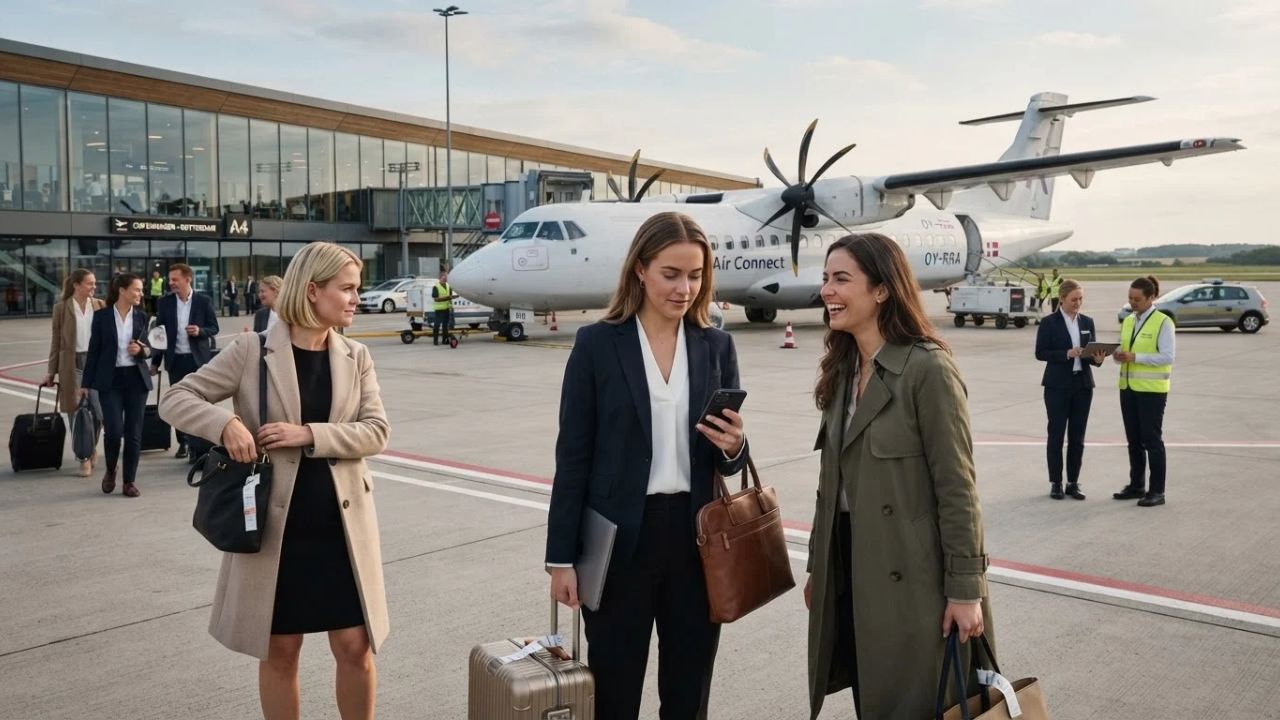
A direct regional flight shuttle connecting Esbjerg with Groningen bridges the maritime energy capitals of Denmark and the Netherlands across the Wadden Sea
Separated by barely three hundred kilometers as the migrating curlew flies across the shallow intertidal mudflats of the German Bight, traveling overland between Denmark’s offshore wind capital of Esbjerg and the vibrant Dutch university city of Groningen requires an exhausting seven-hour journey across congested German motorways and multiple train connections. Now, a pioneering distribution alliance between German ticketing specialist Hahnair and Finnish regional air mobility operator LYGG transforms that grueling overland slog into a swift forty-five-minute hop across the North Sea coastline. By integrating LYGG’s dedicated corporate shuttle flights directly into global distribution systems via Hahnair’s HR-Shuttle Manager and standard HR-169 ticket stock, this cross-border air link redefines how regional innovators, energy specialists, and discerning cultural travelers move between two of Northern Europe’s most dynamic coastal gateways.
Headquartered in Vantaa, Finland, and operating under the brand promise “LYGG – It’s About Time,” LYGG focuses on restoring direct air connectivity to underserved regional markets through bespoke corporate shuttle agreements. For independent travelers and cultural voyagers who know the North Sea region intimately, this route represents an extraordinary shortcut. It stitches together the tidal flats of Southwest Jutland with the historic canals and cycling streets of the Northern Netherlands, unlocking two distinct maritime cultures united by the shared waters of the UNESCO-protected Wadden Sea.
The Bypass Strategy: How Regional Air Mobility Redraws North Sea Corridors
The partnership between Hahnair and LYGG represents a major structural advancement for European regional aviation. Historically, small regional shuttle flights struggled to gain visibility because they operated outside traditional Global Distribution Systems (GDS). Under this new agreement, Hahnair makes LYGG’s flight inventory bookable under its HR designator, enabling authorized business travel agencies and corporate partners to reserve flights through standard booking engines and issue tickets using Hahnair’s established HR-169 ticket stock.
The collaboration provides LYGG with a complete distribution infrastructure, encompassing flight inventory management, automated ticketing, commercial reporting, and dedicated technical assistance. As Adriana C. Carrelli, Vice President Airline Business at Hahnair, noted: “We are pleased to welcome LYGG as a new HR-Shuttle Manager partner. Corporate shuttle flights greatly benefit from reliable and standardised distribution processes via the GDS. With our experience, technology and connectivity, we are ideally positioned to support companies like LYGG in making dedicated corporate air services easy to book and manage.”
Highlighting the customer benefits of direct regional routing, Roope Kekäläinen, Founder and CEO of LYGG, stated: “LYGG is all about providing efficient transportation for people and companies. By partnering with Hahnair, we can offer our corporate customers a seamless booking and ticketing experience while focusing on what matters most: convenient, reliable and time-saving air connectivity.”
While the shuttle initially focuses on connecting the industrial and academic corridor between Esbjerg in Denmark and Groningen in the Netherlands, the partners have confirmed that additional regional cross-border routes are slated for development across Northern Europe in the near future.
What Makes Esbjerg and Groningen Culturally and Geographically Distinct
To appreciate why this direct air bridge is so compelling, one must look at the rich maritime identities anchoring both ends of the flight path. Both cities are gateway ports to the Wadden Sea, recognized by the UNESCO World Heritage Centre as the largest unbroken system of intertidal sand and mudflats on earth, extending across the coastlines of the Netherlands, Germany, and Denmark.
In Denmark, Esbjerg is a fascinating study in maritime transformation. Founded in 1868 as a fishing port following the loss of the duchies of Schleswig and Holstein, the city has evolved into the global nerve center for offshore wind energy. Along Sædding Strand, visitors are greeted by "Man Meets the Sea" (Mennesket ved Havet), Svend Wiig Hansen’s monumental nine-meter-tall white chalk-like statues of four seated men gazing stoically out into the North Sea.
Just a twelve-minute ferry ride from Esbjerg harbor lies Fanø, a charming barrier island where narrow cobblestone lanes wind between eighteenth-century sea-captain cottages with thatched roofs and hand-painted tile stoves. A short drive south brings you to Ribe, Denmark’s oldest continuously inhabited town, established around 700 AD, where the Romanesque Ribe Cathedral towers over crooked half-timbered houses and historic night-watchman walking trails.
Across the water in the Netherlands, Groningen presents an entirely different cultural rhythm. As the undisputed capital of the Northern Netherlands, Groningen is world-renowned as the premier cycling city on the planet, where over 60 percent of all local journeys are made on two wheels. Its historical core is completely pedestrianized, centered around the 97-meter Gothic Martinitoren (St. Martin's Tower), affectionately known to locals as d'Olle Grieze (the Old Grey One).
Beside the central canals sits the Groninger Museum, a bold postmodern architectural masterpiece designed by Italian architect Alessandro Mendini that houses avant-garde contemporary art, fine Dutch porcelain, and regional maritime artifacts. Surrounding the lively Grote Markt and Vismarkt plazas, centuries-old brown cafes serve craft Dutch ales to a youthful population driven by the historic University of Groningen, established in 1614.
Visitor Insider Tips
Navigating this cross-border coastal corridor with local expertise requires practical practicalities:
- Effortless Terminal Transit: Esbjerg Airport (EBJ) is a remarkably calm regional facility located just nine kilometers northeast of central Esbjerg. Security clearance takes mere minutes, and short-term parking is situated directly outside the terminal doors. At Groningen Airport Eelde (GRQ), regional bus line 9 delivers travelers directly to Groningen Centraal railway station in twenty-five minutes.
- Fanø Island Cycling Tactics: When visiting Fanø from Esbjerg, rent an upright bicycle at the Nordby ferry dock. Cycle south along the hard-packed, ultra-wide tidal sands toward the traditional maritime village of Sønderho. Pack a windproof jacket, and stop at the sandbars at low tide to observe wild harbor seals resting on the mudflats.
- Wadden Sea "Wadlopen" Safety: In Groningen, participating in Wadlopen—the traditional practice of hiking across the seabed during low tide—is an unforgettable adventure. Never attempt to walk onto the tidal flats without a certified local guide; tidal surges in the Wadden Sea move faster than a sprinting runner, and deep mud channels can quickly disorient unescorted walkers.
- Authentic Regional Gastronomy: In Esbjerg, seek out traditional smørrebrød shops for freshly peeled Rømø brown shrimp piled high on buttered dark rye bread, or sample regional West Jutland bakskuld (salted and dried dab flatfish grilled with butter). In Groningen, head to a market stall on the Vismarkt for an eierbal—a local specialty consisting of a hard-boiled egg encased in seasoned curry ragout, breaded, and deep-fried to crisp perfection.
- Cycling Etiquette in Groningen: When riding a rental bicycle through Groningen's car-free city center, remember that local cyclists ride assertively. Keep to the right side of the red-asphalt cycle tracks, use hand signals clearly before turning, and never walk in designated bike lanes, which are reserved strictly for two-wheeled traffic.
Cultural and Environmental Context
The coastal region shared by Denmark and the Netherlands is one of Europe's most ecologically delicate environments. Overseen by the Wadden Sea National Park and Dutch conservation authorities, the region provides indispensable feeding and resting grounds for over ten million migratory shorebirds traveling along the East Atlantic Flyway each year.
The development of point-to-point regional air mobility between mid-tier cities offers an intriguing environmental alternative to traditional aviation. By connecting offshore wind engineers, marine scientists, and cross-border researchers directly between Esbjerg and Groningen, LYGG eliminates the need for passengers to drive thousands of kilometers or take circuitous flights through congested hub airports like Copenhagen or Amsterdam Schiphol. These short-haul turboprop services significantly reduce total transit emissions compared to multi-leg connecting routes.
Simultaneously, initiatives supported by VisitDenmark champion sustainable tourism that benefits coastal communities. In places like Fanø and the rural borgen (historic brick estates) of Groningen province, tourism revenue flows directly to local maritime museums, artisan cheese creameries, and tidal conservation guides, preserving centuries-old coastal traditions for future generations.
FAQ: Traveling Between Esbjerg and Groningen 2026
How long does the flight between Esbjerg and Groningen take? The non-stop regional shuttle flight operated by LYGG takes approximately forty-five minutes, compared to six to seven hours by overland car or rail transit.
Can independent business travelers book LYGG shuttle flights? Yes. Through Hahnair’s HR-Shuttle Manager and GDS integration, authorized business travel agencies and corporate booking platforms can issue tickets under the HR designator.
What is the distance between Esbjerg and Groningen? The direct aerial distance across the North Sea and German Bight is roughly 320 kilometers (200 miles), whereas the driving distance around the coastline exceeds 550 kilometers.
What shared UNESCO World Heritage site connects these two regions? Both Esbjerg and Groningen are primary gateways to the Wadden Sea, an interconnected intertidal wetland sanctuary spanning Denmark, Germany, and the Netherlands.
When the vast shallows of the North Sea are bridged in under an hour, two historic maritime cultures meet as neighbors across the rising tide.
Related Travel Guides
- Beyond the Pre-Flight Pint: How London Gatwick’s 3,800-Sqm Dining Overhaul Reinvents British Travel Gastronomy
- Words Across the Dunes: How the Abu Dhabi International Book Fair 2026 Redefines Arab Literary Tourism
- The 17-Hour Transpacific Leap: What American Airlines’ Potential LAX–Singapore Route Means for Pacific Rim Voyagers
Disclaimer
This article is for informational and educational purposes only. It does not constitute legal, financial, or professional advice. While we strive to provide accurate and up-to-date information, travel policies, regulations, and conditions change rapidly. Always verify information with official sources before making travel decisions. Nomad Lawyer makes no representations about the accuracy, reliability, completeness, or suitability of the information provided. Readers should consult qualified professionals for advice specific to their circumstances. The views expressed in this article are those of the author and do not necessarily reflect the views of Nomad Lawyer.
Raushan Kumar
Founder & Lead Developer
Full-stack developer with 11+ years of experience and a passionate traveller. Raushan built Nomad Lawyer from the ground up with a vision to create the best travel and law experience on the web.
Learn more about our team →