Europe Transport Strikes Trigger Travel Chaos: Italy, Spain, Germany, and UK Face Rail and Flight Disruptions

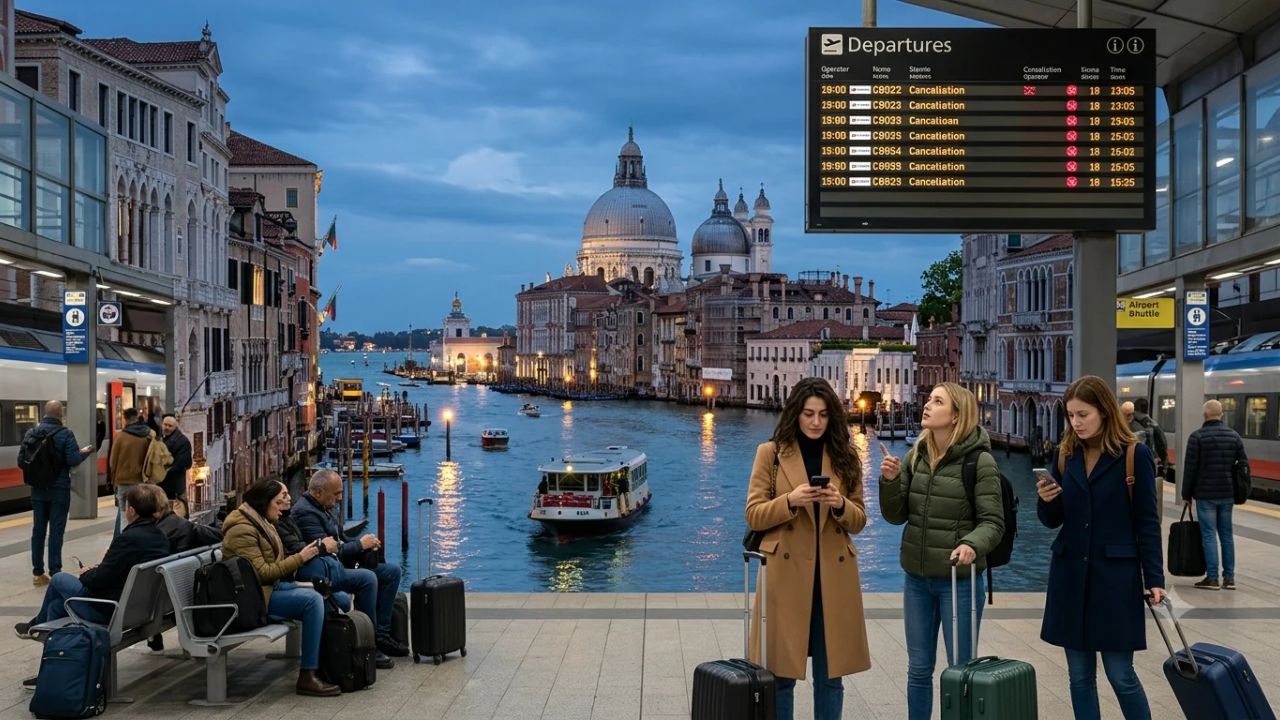
Cross-border travel across Western and Southern Europe faces extensive disruption throughout November 2026, as synchronized transport strikes across Italy, Spain, France, Germany, the United Kingdom, and Belgium curtail high-speed rail, urban transit, and regional aviation networks.
Driven by escalating disputes over wage adjustments against inflation, staffing shortages, and working condition reforms, labor unions across multiple European nations have scheduled overlapping industrial walkouts. The most severe travel friction centers on Italy, which faces a paralyzing 23-hour nationwide railway stoppage alongside air traffic control walkouts, and Spain, where general strike action and Renfe train driver protests have triggered mandatory government minimum-service quotas across high-speed AVE and commuter lines. Simultaneously, localized rail walkouts in Germany's Baden-Württemberg, rolling London Underground driver strikes, and regional transit actions in France and Belgium are complicating itineraries just as European destinations prepare for the high-volume winter holiday and Christmas market season.
For international tourists, business executives, and cross-border commuters, the coordinated disruptions mean that confirmed train tickets and flight boarding passes no longer guarantee timely transit. Navigating this turbulent travel corridor requires a granular understanding of mandatory statutory service guarantees, European passenger compensation frameworks under Regulation (EC) 261/2004 and Regulation (EU) 2021/782, and proactive booking strategies designed to absorb unexpected transit delays.
European Transport Under Strain: The November 2026 Multi-Country Strike Wave
The timing of the November 2026 transport strikes creates significant operational pressure across European mobility corridors. Following a demanding summer travel season and persistent post-inflationary cost pressures, transport labor syndicates are leveraging pre-holiday travel volumes to demand structural contract revisions.
EUROPEAN TRANSPORT STRIKE CALENDAR: NOVEMBER 2026 MASTER SUMMARY
| Entity / Route | Metrics | Operational Status |
|---|---|---|
| Country | Strike Dates | Primary Transport Sectors Affected |
| Italy | Nov 13, 16, 20–22 | National Rail, Metro/Buses, Air Traffic Control (ENAV) |
| Spain | Nov 10–12, 17 | High-Speed AVE, Cercanías Commuters, Aviation Crews |
| France | Nov 5 (Residual Action) | Regional TER, Paris Transilien, Intercités |
| Germany | Nov 12–13 | SWEG Regional Rail & Buses (Baden-Württemberg) |
| United Kingdom | Nov 12 & From Nov 26 | Chiltern Railways; London Underground Rolling Stoppage |
| Belgium | Nov 9 & Dec 4 | Regional TEC Subcontracted Buses (Wallonia) |
While the intensity of disruption varies—ranging from total nationwide railway shutdowns in Italy to localized bus disputes in Belgium—the cumulative effect threatens multi-leg European itineraries. A traveler flying into Frankfurt to connect with a high-speed train to Milan or Madrid risks finding their onward rail connection canceled, causing ripple effects across hotel reservations and non-refundable tour bookings.
Italy's Paralyzing Stoppages: 23-Hour Railway Shutdown and Aviation Disruptions
Italy confronts the continent's most congested and severe industrial action calendar in November 2026, with synchronized walkouts affecting municipal public transport, intercity railways, and national airspace.
ITALY NOVEMBER 2026 STRIKE SCHEDULE
+-------------------------------------------------------------------------+
|  Nov 13: Milan ATM (Metro/Tram/Bus) & Venice ACTV Bus Walkouts          |
|  Nov 16: Naples ANM 4-Hour Public Transit Stoppage (11:00–15:00)        |
|  Nov 20: Nationwide General Strike Across Public & Private Sectors      |
|  Nov 20–21: 23-HOUR NATIONWIDE RAILWAY STRIKE (21:00 Nov 20 to 20:00 Nov 21)|
|  Nov 21: Nationwide ENAV Air Traffic Control Walkout (13:00–17:00)       |
|  Nov 22: Selected Airport Ground Handling & Aviation Staff Stoppages    |
+-------------------------------------------------------------------------+
The 23-Hour Nationwide Railway Shutdown (Nov 20–21)
The centerpiece of Italian labor action is a comprehensive 23-hour national railway strike beginning at 21:00 on Friday, November 20, and running until 20:00 on Saturday, November 21. Organized by major railway unions, the walkout involves train drivers, onboard conductors, and maintenance personnel across state operator Trenitalia, private high-speed carrier Italo, and regional operator Trenord (Lombardy).
The practical fallout for travelers is acute:
- Intercity High-Speed Corridors: Frequencies along premier high-speed lines—including Rome–Florence–Bologna–Milan and Rome–Naples–Salerno—will be severely curtailed. While select long-distance trains are protected under statutory emergency mandates, dozens of scheduled departures will be removed from timetables.
- Statutory Guaranteed Service Windows (Fasce di Garanzia): Under Italian law (Law 146/1990), essential regional train services must operate during mandatory peak commuting hours—specifically 06:00 to 09:00 and 18:00 to 21:00. Outside these windows, regional train service between suburban hubs and central tourism centers will experience widespread cancellations.
- Airport Rail Express Links: Dedicated airport transit lines, including the Leonardo Express linking Rome Termini to Fiumicino Airport (FCO) and the Malpensa Express connecting Milan Cadorna/Centrale to Malpensa Airport (MXP), are subject to cancellations or substitution by limited replacement bus services, causing severe roadway congestion.
Aviation Double-Whammy: ENAV and Airport Walkouts (Nov 21–22)
Aviation passengers face compounded hurdles over the weekend:
- ENAV Air Traffic Controllers Strike (Nov 21): Personnel at Italy’s national air navigation service provider, ENAV, will stage a nationwide four-hour stoppage between 13:00 and 17:00 on Saturday, November 21. Because air traffic control walkouts ground departures and restrict airspace overflight slots, domestic and European flights landing in or departing from Rome Fiumicino, Milan Malpensa, Venice Marco Polo, and Naples Capodichino will suffer widespread delays and tactical cancellations.
- Ground Handling Strikes (Nov 22): Following the ENAV stoppage, ground handlers, baggage sorting staff, and refueling contractors at selected regional airports will walk off the job on Sunday, November 22, prolonging passenger check-in and baggage collection delays.
Spain's Railway Minimums: Renfe Driver Walkouts and General Strike Guarantees
In Spain, transport networks face intense operational disruption centered around a nationwide general strike on November 11, accompanied by rolling railway protests on November 10, 12, and 17.
SPAIN RAILWAY MINIMUM SERVICE MANDATES (NOVEMBER 11 GENERAL STRIKE)
Commuter Rail (Cercanías) Peak Hours : [===========================================] 75%
Commuter Rail (Cercanías) Off-Peak   : [=============================] 50%
Media Distancia Regional Trains       : [=====================================] 65%
High-Speed AVE & Long-Distance       : [==========================================] 73%
Catalonia Regional Transit Peak      : [===============] 25% (Stringent Local Mandate)
Rail Freight Networks                : [===============] 26%
Deciphering the Servicios Mínimos Framework
To protect public mobility during labor strikes, Spain’s Ministry of Transport and Sustainable Mobility establishes legally binding minimum service quotas (servicios mínimos). For the November 11 general strike, transport operators must maintain:
- 73% of High-Speed AVE and Long-Distance Departures: Three out of every four long-distance and high-speed trains operated by Renfe between major urban pairs (Madrid–Barcelona, Madrid–Seville, Madrid–Valencia) must run. The remaining 27% of scheduled trains are canceled, leaving affected passengers to rebook onto surviving departures.
- 65% of Media Distancia Regional Trains: Mid-distance regional rail services connecting provincial capitals are reduced to roughly two-thirds capacity.
- 75% Peak-Hour Cercanías Commuter Trains: During peak hours (06:00–09:00, 13:30–15:30, and 18:30–20:30), three-quarters of suburban trains must operate. Outside peak windows, frequency drops to 50%, causing heavy overcrowding on platforms at Madrid Atocha, Madrid Chamartín, and Valencia Joaquín Sorolla.
Catalonia's Strict Local Constraints
In Catalonia, regional labor authorities enacted a significantly more restrictive minimum service decree:
- 25% Transit Guarantee in Barcelona: Certain metropolitan public transit networks and regional Rodalies commuter lines are mandated to operate at only 25% capacity during designated peak commuting periods, creating severe bottlenecks for tourists traveling between Barcelona Sants station, central Plaça de Catalunya, and Barcelona-El Prat Airport (BCN).
- Domestic Aviation Ripple Effects: Airline ground operations at Madrid Barajas (MAD) and Barcelona-El Prat (BCN) face staffing reductions under general strike protocols, disrupting short-haul domestic feeder flights that connect international passengers with long-haul transoceanic departures.
France and Germany: Regional Disruptions vs. National Trunk Line Resilience
While Italy and Spain face broad nationwide transport stoppages, France and Germany illustrate a contrasting dynamic: intense, localized disruptions alongside resilient national high-speed corridors.
FRANCE & GERMANY: STRIKE GEOGRAPHY & MODAL RESILIENCE
| Entity / Route | Metrics | Operational Status |
|---|---|---|
| Jurisdiction | Strike Target & Scope | Operational Impact on Travelers |
| France | Regional TER & Intercités rail; | Paris-to-region connections disrupted; |
| (National Actions) | Paris Transilien commuter routes | TGV InOui/Ouigo and Paris Metro normal |
| Germany | SWEG regional buses and railways; | Black Forest and rural Baden-Württemberg |
| (Baden-Württ.) | localized depots on Nov 12–13 | curtailed; Deutsche Bahn ICE unaffected |
France: Regional Rail Fallout vs. High-Speed Stability
Following nationwide industrial action on November 5 that mobilized public sector and transport labor over wage stagnation and austerity budgets, the French travel landscape experienced uneven operational impacts:
- Regional TER Networks Hit Hardest: Regional express trains (TER) managed by national operator SNCF faced substantial timetable reductions across Normandy, Nouvelle-Aquitaine, and Occitanie, stranding travelers attempting to visit regional heritage towns.
- Paris Suburbs and Intercités: Commuter rail lines (Transilien) serving the Île-de-France region and select classic Intercités routes experienced rolling delays.
- High-Speed TGV and Paris Metro Resilient: In contrast to past general strikes, high-speed TGV InOui, budget Ouigo, and international Eurostar routes operated close to normal timetables, while the RATP-managed Paris Metro maintained full service across automated lines (Lines 1, 4, and 14). International tourists traveling exclusively between major metropolis hubs experienced minimal disruption.
Germany: The Baden-Württemberg Regional Stoppage
In Germany, November industrial action remained geographically concentrated rather than crippling the entire national network:
- SWEG Labor Dispute (Nov 12–13): Transport union ver.di organized targeted walkouts involving the Southwest German Transport Company (SWEG) on November 12 and 13. The dispute centered on bus depots and regional train operations in Baden-Württemberg.
- Tourism Destination Friction: Visitors traveling through the Black Forest (Schwarzwald), Lake Constance (Bodensee), and regional wine valleys encountered canceled feeder buses and reduced regional train connections.
- National Deutsche Bahn Network Operational: Long-distance Intercity Express (ICE) and Intercity (IC) trunk routes operated normally by Deutsche Bahn, with major commercial hubs like Frankfurt, Munich, and Berlin unaffected by national rail shutdowns.
United Kingdom and Belgium: London Underground Threats and Regional Transit Actions
Transport labor friction extends across the English Channel and the Low Countries, introducing transit risks for international visitors arriving in London and Brussels.
UK & BELGIUM TRANSPORT LABOR DISRUPTIONS
+-------------------------------------------------------------------------+
|  UK: Chiltern Railways Train Managers Strike (Nov 12)                    |
|  UK: London Underground 8-Day Rolling Strike Wave (Starting Nov 26)     |
|  Belgium: Wallonia TEC Subcontracted Regional Bus Walkout (Nov 9 & Dec 4)|
+-------------------------------------------------------------------------+
United Kingdom: London Underground Winter Strikewave
London faces an escalating transit dispute after the National Union of Rail, Maritime and Transport Workers (RMT) declared eight days of rolling industrial action involving London Underground train operators, scheduled to begin on Thursday, November 26, and extend intermittently into February 2027:
- Dispute over Pay and Rostering: The action follows breakdowns in negotiations over revised working rosters and shift agreements across the Tube network.
- Impact on West End and Festive Tourism: The timing directly targets London’s peak Christmas shopping and seasonal leisure season. Stoppages on major Tube lines (such as the Piccadilly, Central, and Northern lines) will overwhelm city buses, taxis, and the Elizabeth line, while severely complicating airport connections to London Heathrow (LHR).
- Chiltern Railways Action (Nov 12): Ahead of the Tube disputes, train managers at Chiltern Railways walked out on November 12, disrupting regional commuter services operating from London Marylebone toward Oxford, Aylesbury, and Birmingham Snow Hill.
Belgium: Walloon Bus Stoppages Without National Gridlock
In Belgium, transit disruption remains confined to regional operations:
- TEC Subcontractor Disputes (Nov 9 & Dec 4): Drivers employed by private subcontractors for Walloon public transport operator TEC staged a regional walkout on November 9, with a secondary stoppage confirmed for December 4.
- Local Connectivity Affected: The action primarily impacts regional bus corridors in southern Belgium, affecting access to smaller rural communities and regional heritage sites.
- Brussels Hubs Operating Normally: Belgium’s national railway company (SNCB/NMBS) and international flight operations at Brussels Airport (BRU) and Brussels South Charleroi (CRL) continue normal schedules, sparing international business travelers from nationwide shutdowns.
Economic and Tourism Repercussions: The Threat to Festive Winter Travel
The multi-country wave of transport strikes lands during a critical transitional window for the European hospitality and tourism economy. November serves as the launchpad for winter festive getaways, corporate year-end congresses, and seasonal retail travel.
THE TOURISM MULTIPLIER OF TRANSPORT DISRUPTION
+-----------------------------------+      +-----------------------------------+
| High-Speed Rail Cancellations     |      | Airport & Air Traffic Stoppages   |
| Italy, Spain, France TER routes   |      | Italy ENAV, ground staff delays   |
+-----------------------------------+      +-----------------------------------+
                  \                                  /
                   \                                /
                    v                              v
             +--------------------------------------------+
             | COMPROMISED MULTI-CITY ITINERARIES         |
             | Missed flight connections & delayed check-in|
             +--------------------------------------------+
                                  |
                                  v
             +--------------------------------------------+
             | FINANCIAL FALLOUT FOR HOSPITALITY & RETAIL |
             | Reduced restaurant spend; hotel cancellations|
             | Unrecoverable non-refundable tour tickets  |
             +--------------------------------------------+
The Domino Effect on Multi-Country Itineraries
International tourists visiting Europe frequently construct complex, multi-city itineraries combining low-cost flights with point-to-point high-speed rail. When a rail link between Florence and Venice or Madrid and Seville is abruptly canceled:
- Travelers miss non-refundable hotel reservations in their next destination city.
- Sightseeing passes for major attractions (such as the Uffizi Gallery or the Sagrada Família) expire unused due to rigid entry-time slots.
- Passengers holding separate flight tickets on point-to-point carriers forfeit connecting long-haul flights without airline rebooking protection.
Hospitality and Retail Revenue At Risk
Hotels in major urban centers—including Rome, Florence, Milan, Madrid, and Barcelona—report operational friction stemming from delayed guest check-ins, requests for last-minute date modifications, and shortened stays. Urban restaurateurs and Christmas market vendors suffer reduced footfall when suburban commuter rail networks operate at restricted capacity, curtailing local shopping excursions.
Passenger Rights Playbook: Navigating EU261 and Rail Compensation Regulations
When industrial action disrupts European travel, passengers are shielded by comprehensive consumer protection statutes. Understanding these statutory rights ensures travelers recover unexpected out-of-pocket expenses.
EUROPEAN PASSENGER RIGHTS STATUTES: FLIGHTS VS. TRAINS
| Entity / Route | Metrics | Operational Status |
|---|---|---|
| Regulation | Coverage Scope | Core Passenger Entitlements |
| Regulation (EC) | Commercial flights | Rerouting, full refund, mandatory meals, |
| No 261/2004 | departing from EU airports | and hotel accommodation if stranded overnight |
| Regulation (EU) | Cross-border and domestic | Rebooking, full ticket reimbursement, and |
| No 2021/782 | European railway journeys | compensation (25% for 60+m, 50% for 120+m) |
Aviation Passenger Rights: Regulation (EC) No 261/2004
If your flight departing from an EU airport is canceled or delayed due to strike action:
- Mandatory Duty of Care: The operating carrier must provide complimentary meals, refreshments, and two free phone calls or emails during extended delays (exceeding two to four hours depending on flight distance).
- Overnight Accommodation: If a strike forces an overnight delay, the airline is legally obligated to arrange and pay for hotel accommodation and airport transfers.
- Refund vs. Rerouting: Passengers can choose between a full ticket refund within seven days or rerouting to their final destination at the earliest opportunity under comparable transport conditions.
- Compensation Exception: While strikes by an airline’s own staff (pilots, cabin crew) are generally categorized by EU courts as inherent to corporate management and eligible for statutory compensation (€250 to €600), strikes by external third parties—such as ENAV air traffic controllers or airport security screeners—are classified as extraordinary circumstances, exempting airlines from cash compensation while preserving their mandatory duty of care.
Railway Passenger Rights: Regulation (EU) No 2021/782
If your rail journey is canceled or delayed by more than 60 minutes due to industrial walkouts:
- Rerouting and Alternative Transit: The rail operator (Trenitalia, Renfe, SNCF, DB) must offer alternative transport to your destination without extra charge, or reimburse 100% of the ticket cost if the trip no longer serves its purpose.
- Delayed Journey Compensation: If you choose to travel despite delays, you are entitled to statutory compensation: 25% of the ticket fare for delays between 60 and 119 minutes, and 50% of the ticket fare for delays of 120 minutes or longer.
- Meals and Lodging: In the event of a total line stoppage stranding passengers overnight, the railway operator must provide reasonable meals and overnight hotel lodging where physically available.
Strategic Traveler Protocol: Surviving European Transit Disruptions
To mitigate the impact of announced transport strikes across Italy, Spain, France, and Germany, international travelers should implement proactive contingency protocols:
STRIKE MITIGATION DECISION MATRIX
+-------------------------------------------------------------------------+
|  1. AUDIT STATUTORY GUARANTEED LISTS (*TRENI GARANTITI* / *MÍNIMOS*)    |
|     - Verify whether your train number appears on official exempt lists |
|     - Renfe: Check Ministry resolution; Trenitalia: Check protected PDF |
+-------------------------------------------------------------------------+
|  2. EXPAND TRANSIT BUFFERS TO A MINIMUM OF FOUR HOURS                   |
|     - Avoid tight 60-minute connections between trains and flights       |
|     - Arrive at international airports at least 3.5 hours before takeoff|
+-------------------------------------------------------------------------+
|  3. LEVERAGE INTERCITY COACH NETWORKS AS CONTINGENCY BACKUPS            |
|     - Reserve flexible coach seats (FlixBus, Itabus, Alsa)               |
|     - Long-distance bus routes operate independently of rail strikes    |
+-------------------------------------------------------------------------+
|  4. REVIEW TRAVEL INSURANCE "KNOWN EVENT" CLAUSES                       |
|     - Policies purchased after strike announcement exclude disruption   |
|     - Ensure policy includes specific "missed connection" coverage      |
+-------------------------------------------------------------------------+
Proactive Verification Steps
- Consult Guaranteed Timetables: Both Trenitalia and Renfe publish official lists of protected trains (treni garantiti and servicios mínimos) on their corporate websites 48 hours prior to strike action. If your train number appears on this register, it is legally mandated to operate regardless of union participation.
- Secure Backup Coach Reservations: When high-speed rail lines face shutdowns, commercial intercity coach operators (such as FlixBus, Itabus in Italy, and Alsa in Spain) provide dependable overland alternatives. Book refundable coach tickets as an insurance policy when rail strikes are announced.
- Activate Push Notifications: Download the official mobile applications of your transport providers (Trenitalia, Italo Treno, Renfe, DB Navigator, TfL Go) and enable real-time push alerts to receive immediate platform changes, cancellation notices, and replacement bus details.
Frequently Asked Questions
When are the major railway strikes scheduled in Italy for November 2026?
Italy faces a nationwide 23-hour railway strike from 21:00 on Friday, November 20, until 20:00 on Saturday, November 21, affecting Trenitalia, Italo, and Trenord. Additional urban transport walkouts take place in Milan and Venice on November 13, and in Naples on November 16, alongside a general strike on November 20.
What are the minimum railway services guaranteed during Spain's train strikes?
Under official servicios mínimos mandates for Spain's November 11 general strike, 73% of high-speed AVE and long-distance trains must run, alongside 65% of regional Media Distancia trains, and 75% of Cercanías commuter trains during peak hours (50% off-peak). In Catalonia, local peak transit is guaranteed at only 25%.
How will the ENAV air traffic control strike impact flights in Italy?
Personnel at Italy's air traffic control agency, ENAV, will strike nationwide on Saturday, November 21, from 13:00 to 17:00. This will ground domestic departures and restrict international overflights, generating delays and cancellations across Rome Fiumicino, Milan Malpensa, Venice, and Naples airports.
Will the London Underground strike affect airport connections in late November 2026?
Yes. The RMT union has announced eight days of rolling strikes for London Underground drivers beginning Thursday, November 26. This will disrupt Tube lines across London, including the Piccadilly line serving Heathrow Airport, forcing passengers onto alternative buses, coaches, or the Elizabeth line.
Am I entitled to a refund or compensation if my train is canceled due to a strike?
Yes. Under EU Regulation (EU) 2021/782, passengers whose trains are canceled or delayed by more than 60 minutes are entitled to a full ticket refund or free rebooking onto the next available service. If you choose to travel and arrive over an hour late, you are entitled to 25% compensation (or 50% for delays of two hours or more).
Does travel insurance cover expenses incurred during European transport strikes?
Travel insurance coverage depends on when the policy was purchased. If insurance was purchased before the specific strike dates were publicly announced, policies with trip delay or missed connection provisions typically reimburse unrecoverable lodging and alternative transport costs. Policies bought after strike dates become public knowledge routinely exclude strike-related claims.
Related Travel Guides
- Netherlands Warns of EES Border System Errors and False Schengen Overstay Flags: Traveler Rights and Rectification Guide
- South America Tourist Attraction Restrictions: Machu Picchu, Torres del Paine, and Christ the Redeemer Tighten Access for 2026-2027
- Singapore CTC Travel Warns of Fake Senior Holiday Packages Circulating on Facebook: Scam Prevention Guide
- Germany Achieves Record Tourism Momentum as International Overnight Stays Jump 4.8% in September 2026
This article is for informational purposes. Flight routes, passenger regulations, visa rules, and transit advisories are subject to change by airlines and aviation authorities. Readers are advised to verify schedules and travel documentation with relevant carriers and border agencies before departure.
Related Stories

US Strengthens Airline Passenger Rights Amid Ebola Travel Restrictions: DOT Refund and Voucher Mandates Explained

South America Tourist Attraction Restrictions: Machu Picchu, Torres del Paine, and Christ the Redeemer Tighten Access for 2026-2027