
Global Coffee Tourism Surges as Key Destinations Partner
Global coffee tourism rises in 2026, led by Brazil's specialty routes and Colombia's Coffee Axis, connecting travelers with agricultural heritage.
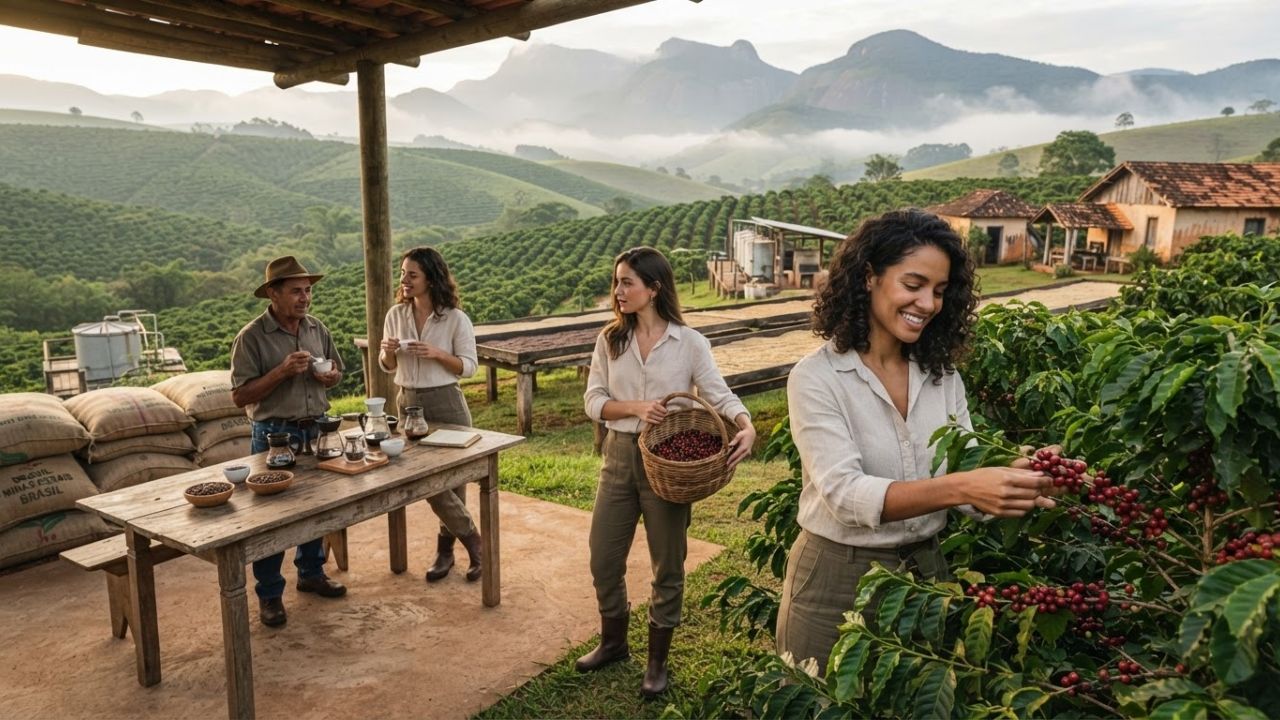
Image generated by AI
Global coffee tourism is transforming from simple café-tasting experiences to immersive plantation journeys, connecting travelers with rural agricultural economies. Led by Brazil's specialty routes and Colombia's Coffee Axis, which welcomed 21,758 foreign entries in early 2025, this trend offers unscripted cultural encounters across the world's premier bean-producing regions.
Brazil's Specialized Coffee Corridors: Minas Gerais and Bahia
The travel sector in Brazil is experiencing a transition as planners build regional destinations to diversify visitor experiences. In August 2026, the specialty coffee routes in Minas Gerais and Bahia are offering travelers a sustainable option that supports rural agricultural communities.
By establishing these seasonal travel corridors, the airline's management aims to support both business and leisure travel flows. Corporate travelers and travel agencies, which maintain strong relationships with global destination management organizations, benefit from direct seat capacity. This economic integration supports the travel sector, providing service providers with a reliable channel for high-value bookings.
By establishing these seasonal travel corridors, the airline's management aims to support both business and leisure travel flows. Canadian corporate travelers and travel agencies, which maintain strong relationships with European and Asian destination management organizations, would benefit from direct seat capacity. This economic integration supports the travel sector, providing service providers with a reliable channel for high-value bookings.
By establishing these seasonal travel corridors, the airline's management aims to support both business and leisure travel flows. Canadian corporate travelers and travel agencies, which maintain strong relationships with European and Asian destination management organizations, would benefit from direct seat capacity. This economic integration supports the travel sector, providing service providers with a reliable channel for high-value bookings.
By establishing these seasonal travel corridors, the airline's management aims to support both business and leisure travel flows. Canadian corporate travelers and travel agencies, which maintain strong relationships with European and Asian destination management organizations, would benefit from direct seat capacity. This economic integration supports the travel sector, providing service providers with a reliable channel for high-value bookings.
By establishing these seasonal travel corridors, the airline's management aims to support both business and leisure travel flows. Canadian corporate travelers and travel agencies, which maintain strong relationships with European and Asian destination management organizations, would benefit from direct seat capacity. This economic integration supports the travel sector, providing service providers with a reliable channel for high-value bookings.
By establishing these seasonal travel corridors, the airline's management aims to support both business and leisure travel flows. Canadian corporate travelers and travel agencies, which maintain strong relationships with European and Asian destination management organizations, would benefit from direct seat capacity. This economic integration supports the travel sector, providing service providers with a reliable channel for high-value bookings.
Minas Gerais remains a primary focus, featuring Sul de Minas and Cerrado Mineiro routes.
These itineraries combine coffee tastings with regional gastronomy, historic towns, and local cheese markets. In Bahia, the largest producer in the Northeast, the Planalto da Conquista coffee route connects 22 specialty farms across Barra do Choça and Vitória da Conquista, covering approximately 54 kilometres. These tours allow visitors to explore specialty harvesting, bean roasting, and regional food culture.
The Coffee Axis of South and Central America: Colombia and Costa Rica
Developing agricultural tourism routes helps South and Central American destinations sustain rural incomes.
This localized disruption also offers a unique opportunity for duty-free retailers and terminal operators to design services suited for stranded passengers. By monitoring passenger comfort levels during long delays, airport customer teams can provide complimentary amenities to ensure guest satisfaction. This proactive approach helps build traveler confidence, ensuring that regional transit routes remain competitive with global hub standards.
This localized disruption also offers a unique opportunity for duty-free retailers and terminal operators to design services suited for stranded passengers. By monitoring passenger comfort levels during long delays, airport customer teams can provide complimentary amenities to ensure guest satisfaction. This proactive approach helps build traveler confidence, ensuring that regional transit routes remain competitive with global hub standards.
Colombia's Eje Cafetero includes Pereira, Armenia, and Manizales.
The Coffee Axis welcomed 21,758 foreign entries between January and September 2025, with 14,979 arrivals originating from the United States. In Costa Rica, the 2025–26 harvest is projected to reach 1,763,951 fanegas of coffee fruit. The sector incorporates 24,653 registered producers, 307 processing firms, and 99 exporters, with average national productivity at 21.4 to 22.0 fanegas per hectare. Costa Rica sold 1,472,553 46-kilogram bags for export, and allocated 241,199 bags to domestic consumption.
Heritage and Scale in East Africa and Asia: Ethiopia, Vietnam, and Indonesia
Specialty coffee cultivation and historical preservation are becoming key tourism drivers in Africa and Asia.
This environmental focus is supported by regional climatologists and conservationists who monitor ecosystem health. By tracking tourist footprint signals, managers can ensure that natural areas remain protected. The integration of carrying-capacity policies with wilderness trails demonstrates how tourism planning can protect biodiversity while offering high-quality educational hikes.
This localized culinary focus also offers a unique opportunity for restaurant associations and culinary schools to design programs suited for premium travelers. By monitoring traveler culinary preferences during long stays, local chefs can provide customized dishes to ensure guest satisfaction. This proactive approach helps build traveler confidence, ensuring that Goan coastal dining remains competitive with global culinary standards.
This localized culinary focus also offers a unique opportunity for restaurant associations and culinary schools to design programs suited for premium travelers. By monitoring traveler culinary preferences during long stays, local chefs can provide customized dishes to ensure guest satisfaction. This proactive approach helps build traveler confidence, ensuring that Goan coastal dining remains competitive with global culinary standards.
Ethiopia stands as the botanical birthplace of Coffea arabica.
Average annual production between 2020 and 2022 was 498,104 tonnes, with Oromia producing approximately 375,000 tonnes (75%). In Vietnam, the 2024–25 crop generated a record export turnover of US$8.4 billion, exporting over 1.5 million tonnes from a growing area of 731,900 hectares. Indonesia, the fourth-largest producer, projects 10.9 million 60-kilogram bags for 2024–25, highlighting Arabica trails in Gayo, Toraja, and Kintamani. In Guatemala, the tourism authority recorded 3,361,843 international visitors in 2025, generating US$1.3902 billion in tourist spend.
Community Support and Sustainable Agrarian Tourism
Directing tourism revenue to smallholder coffee cooperatives preserves traditional farming systems.
For the visitor, the real impact is utilizing sustainable transit, directly supporting local pickers, regional ground drivers, and independent farm stays.
Sustainable initiatives include reusing organic coffee pulp as compost, installing solar-powered crop dryers, and protecting watershed ecosystems near plantations.
Visitor Guide: Local Specialties, Coffee Etiquette, and Route Tips
Exploring coffee plantations and coordinating rural transit links involves planning travel paths, booking with local cooperatives, and trying local delicacies.
Sample traditional culinary specialties during your stay. Savor Brazilian Pão de Queijo, warm cassava cheese rolls paired with black coffee. Try Colombian Bandeja Paisa, a platter of beans, plantains, and rice, or traditional Ethiopian stews.
Coordinate your local transport. Fly to Vitória da Conquista Airport (VDC) to access Bahia's 54-kilometer specialty route. Hire a local guide through the national coffee association (such as Anacafé in Guatemala) to coordinate farm visits.
Observe farm etiquette and guidelines. Always obtain permission before picking coffee cherries. Sturdy, waterproof boots are recommended for field walks. Passports must have at least 6 months of validity.
Future Outlook: Rebuilding a Resilient Global Agrarian Network
The long-term development of coffee tourism depends on integrating transport corridors with regional planning. Agricultural departments and national tourism offices are collaborating to support regional travel pipelines.
Sustainable initiatives include building low-emission shuttle links, promoting eco-friendly guesthouses, and introducing cultural heritage guides. By combining smart visitor management with traditional agricultural preservation, the region aims to support travel innovation, securing a resilient and connected future for Central Europe's mountain communities.
Related Travel Guides
Disclaimer
This article is for informational and educational purposes only. It does not constitute legal, financial, or professional advice. While we strive to provide accurate and up-to-date information, travel policies, regulations, and conditions change rapidly. Always verify information with official sources before making travel decisions. Nomad Lawyer makes no representations about the accuracy, reliability, completeness, or suitability of the information provided. Readers should consult qualified professionals for advice specific to their circumstances. The views expressed in this article are those of the author and do not necessarily reflect the views of Nomad Lawyer.