
Heritage Sites Deploy Hard Visitor Caps to Combat Overtourism
Mount Fuji, Pompeii, and Rome's Trevi Fountain implement strict timed entries, daily caps, and fee structures to preserve fragile heritage.

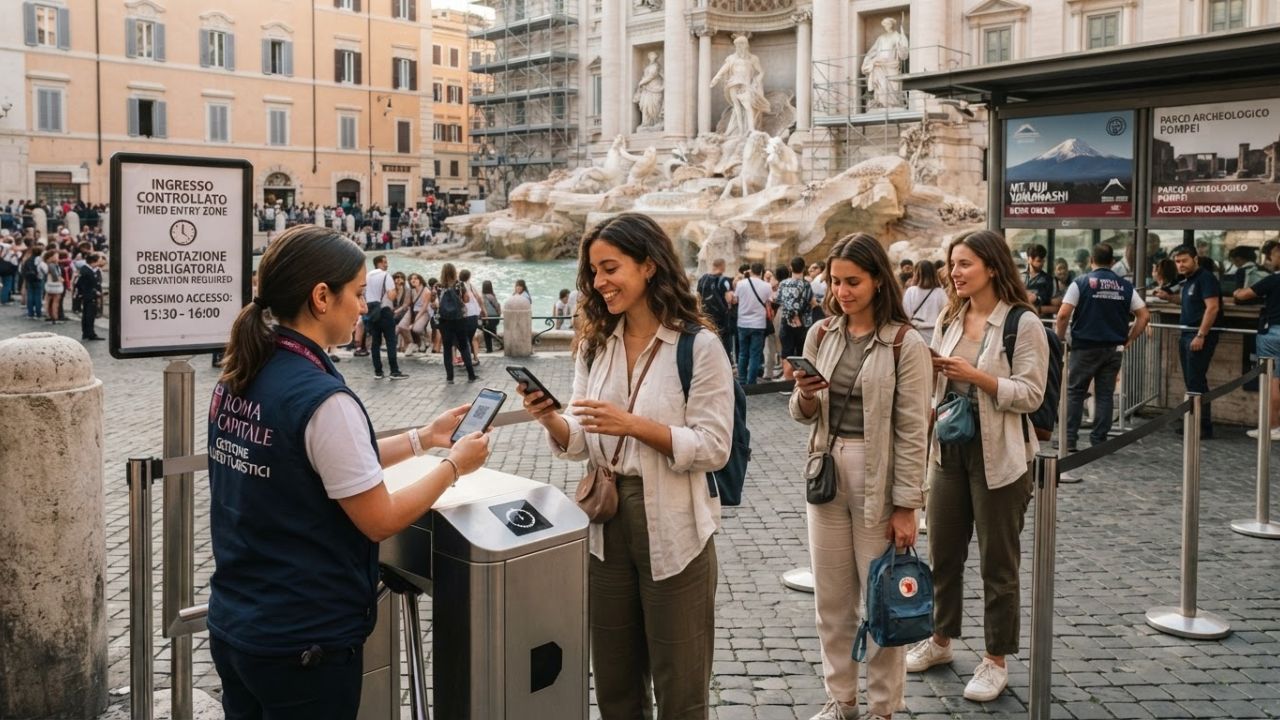
Image generated by AI
Global heritage sites including Mount Fuji, Pompeii, and Rome's Trevi Fountain are deploying strict daily visitor caps and timed entry ticketing systems. Driven by record-breaking tourist volumes, these systems aim to protect historical masonry and fragile mountain ecosystems from severe physical degradation.
Restoring Mountain Trails: Mount Fuji's Yoshida Trail Quotas
The travel sector in Japan is experiencing a transition as planners build regional destinations to diversify visitor experiences. In August 2026, the implementation of daily trail limits on Mount Fuji is offering travelers a sustainable option that protects high-altitude alpine zones.
By establishing these seasonal travel corridors, the airline's management aims to support both business and leisure travel flows. Corporate travelers and travel agencies, which maintain strong relationships with global destination management organizations, benefit from direct seat capacity. This economic integration supports the travel sector, providing service providers with a reliable channel for high-value bookings.
By establishing these seasonal travel corridors, the airline's management aims to support both business and leisure travel flows. Canadian corporate travelers and travel agencies, which maintain strong relationships with European and Asian destination management organizations, would benefit from direct seat capacity. This economic integration supports the travel sector, providing service providers with a reliable channel for high-value bookings.
By establishing these seasonal travel corridors, the airline's management aims to support both business and leisure travel flows. Canadian corporate travelers and travel agencies, which maintain strong relationships with European and Asian destination management organizations, would benefit from direct seat capacity. This economic integration supports the travel sector, providing service providers with a reliable channel for high-value bookings.
By establishing these seasonal travel corridors, the airline's management aims to support both business and leisure travel flows. Canadian corporate travelers and travel agencies, which maintain strong relationships with European and Asian destination management organizations, would benefit from direct seat capacity. This economic integration supports the travel sector, providing service providers with a reliable channel for high-value bookings.
By establishing these seasonal travel corridors, the airline's management aims to support both business and leisure travel flows. Canadian corporate travelers and travel agencies, which maintain strong relationships with European and Asian destination management organizations, would benefit from direct seat capacity. This economic integration supports the travel sector, providing service providers with a reliable channel for high-value bookings.
By establishing these seasonal travel corridors, the airline's management aims to support both business and leisure travel flows. Canadian corporate travelers and travel agencies, which maintain strong relationships with European and Asian destination management organizations, would benefit from direct seat capacity. This economic integration supports the travel sector, providing service providers with a reliable channel for high-value bookings.
The Yamanashi Prefectural Government has set a mandatory daily limit of 4,000 climbers along the Yoshida Trail.
This quota controls trail congestion and bans sleep-deprived "bullet climbing" to reduce emergency rescues. Climbers must register through an online booking platform (3,000 slots allocated) or register on-site (1,000 slots), paying a ¥2,000 access fee. The entry gate operates between 03:00 and 16:00. The Japanese National Tourism Organization (JNTO) notes these regulations have decreased trail erosion and littering.
Protecting Ancient Masonry: Pompeii's Strict Allocation Caps
Preservation officials use daily registration thresholds to limit physical wear on ancient ruins.
This localized disruption also offers a unique opportunity for duty-free retailers and terminal operators to design services suited for stranded passengers. By monitoring passenger comfort levels during long delays, airport customer teams can provide complimentary amenities to ensure guest satisfaction. This proactive approach helps build traveler confidence, ensuring that regional transit routes remain competitive with global hub standards.
This localized disruption also offers a unique opportunity for duty-free retailers and terminal operators to design services suited for stranded passengers. By monitoring passenger comfort levels during long delays, airport customer teams can provide complimentary amenities to ensure guest satisfaction. This proactive approach helps build traveler confidence, ensuring that regional transit routes remain competitive with global hub standards.
The Archaeological Park of Pompeii officially enforces a daily cap of 20,000 visitors.
Morning slots (09:00 to 12:00) allow up to 15,000 entries, while afternoon slots (12:00 onwards) are limited to 5,000. Director Gabriel Zuchtriegel explains that intense human pressure poses structural risks to Roman stonework. Entry tickets now require personalized visitor names to stop unofficial reselling and disperse tourists to secondary archaeological zones in the region.
Urban Crowd Flow: Rome's Trevi Fountain Basin Control
Densely populated cities use micro-ticketing systems to manage access to monumental landmarks.
This environmental focus is supported by regional climatologists and conservationists who monitor ecosystem health. By tracking tourist footprint signals, managers can ensure that natural areas remain protected. The integration of carrying-capacity policies with wilderness trails demonstrates how tourism planning can protect biodiversity while offering high-quality educational hikes.
This localized culinary focus also offers a unique opportunity for restaurant associations and culinary schools to design programs suited for premium travelers. By monitoring traveler culinary preferences during long stays, local chefs can provide customized dishes to ensure guest satisfaction. This proactive approach helps build traveler confidence, ensuring that Goan coastal dining remains competitive with global culinary standards.
This localized culinary focus also offers a unique opportunity for restaurant associations and culinary schools to design programs suited for premium travelers. By monitoring traveler culinary preferences during long stays, local chefs can provide customized dishes to ensure guest satisfaction. This proactive approach helps build traveler confidence, ensuring that Goan coastal dining remains competitive with global culinary standards.
To manage crowds during the 2025 Jubilee, the Municipality of Rome limits Trevi Fountain basin access.
Only 400 visitors are permitted at the lower stone basin at any given moment. Non-residents must purchase a €2 ticket via online booking or on-site QR codes, while the upper piazza remains free. Municipal officials use this revenue to fund preservation efforts and hire security stewards.
Sector Alignments: Aviation, Hotels, and Policy Integration
Global transport links and hospitality brands align their services with destination capacity limits.
For the visitor, the real impact is using booking engines that link hotel concierges directly with timed entry passes, supporting independent lodging, municipal guide associations, and regional transport networks.
Sustainable guidelines include booking off-peak shoulder seasons, utilizing local public transit, and following heritage preservation rules.
Visitor Guide: Local Specialties, Booking Timelines, and Trail Etiquette
Exploring historic sites and coordinating transit involves booking tickets early, utilizing rail networks, and trying regional specialties.
Sample traditional culinary specialties during your stay. Savor Hoto Noodle Soup, flat wheat noodles cooked in miso broth with pumpkin at the base of Mount Fuji. Try authentic Neapolitan Pizza in Pompeii and Cacio e Pepe in Rome.
Coordinate your local transport. Take the Fuji Excursion train from Tokyo's Shinjuku Station to Kawaguchiko Station to reach Mount Fuji. Board the Circumvesuviana train from Naples Central Station directly to Pompei Scavi to reach the ruins.
Observe entry regulations and booking rules. Register for Mount Fuji Yoshida climbing passes online at least 30 days in advance. Book Trevi Fountain lower basin tickets via the Rome municipal portal. Passports must have at least 6 months of validity.
Future Outlook: Rebuilding a Resilient Conservation Architecture
The long-term development of global heritage tourism depends on integrating transport corridors with regional planning. Culture ministries and tourist bureaus are collaborating to support regional travel pipelines.
Sustainable initiatives include building low-emission shuttle links, promoting eco-friendly guesthouses, and introducing cultural heritage guides. By combining smart visitor management with traditional agricultural preservation, the region aims to support travel innovation, securing a resilient and connected future for Central Europe's mountain communities.
Related Travel Guides
Disclaimer
This article is for informational and educational purposes only. It does not constitute legal, financial, or professional advice. While we strive to provide accurate and up-to-date information, travel policies, regulations, and conditions change rapidly. Always verify information with official sources before making travel decisions. Nomad Lawyer makes no representations about the accuracy, reliability, completeness, or suitability of the information provided. Readers should consult qualified professionals for advice specific to their circumstances. The views expressed in this article are those of the author and do not necessarily reflect the views of Nomad Lawyer.
Kunal K Choudhary
Co-Founder & Contributor
A passionate traveller and tech enthusiast. Kunal contributes to the vision and growth of Nomad Lawyer, bringing fresh perspectives and driving the community forward.
Learn more about our team →