
Global Aviation Power Shift: Delta, United, and Emirates Lead 2026 Strategic Realignment
A strategic convergence of the world's leading carriers is redefining international air traffic, moving away from region

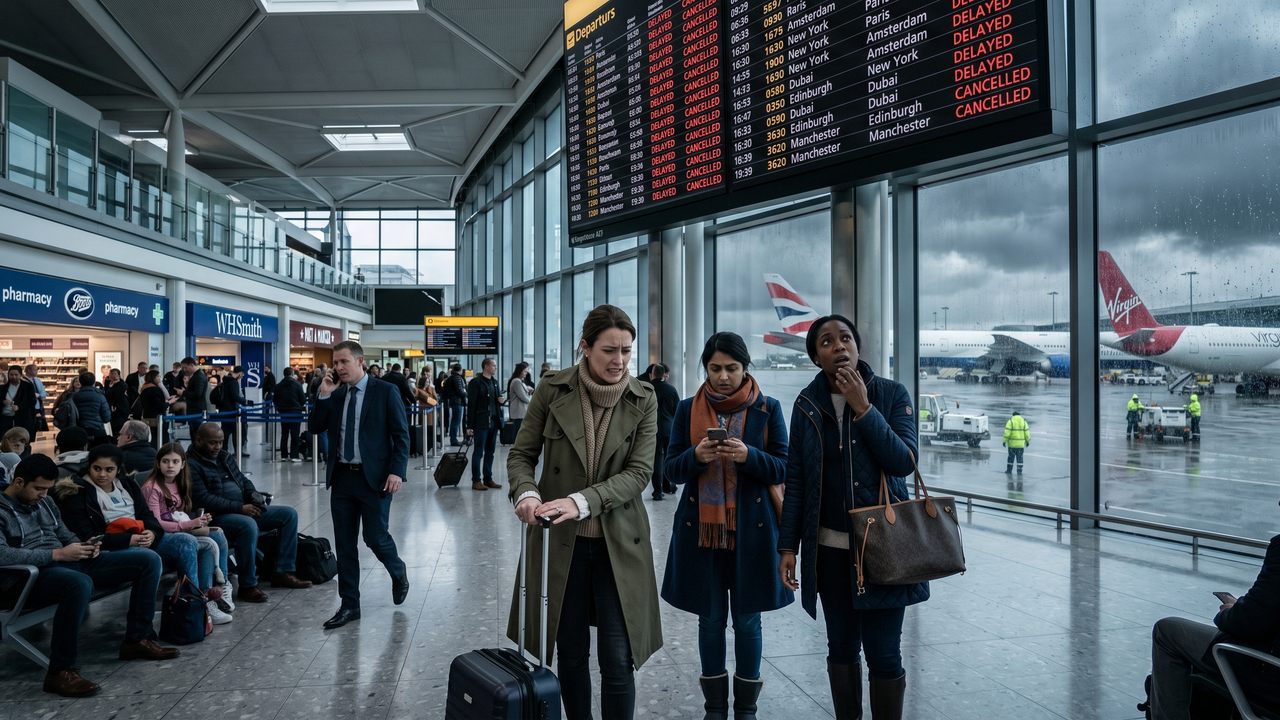
Image generated by AI
The New Architecture of Global Air Travel
The aviation industry is undergoing a fundamental structural transformation in 2026. Rather than traditional mergers, global giants—including Delta Air Lines, United Airlines, Emirates, and Qatar Airways—are utilizing joint ventures and sophisticated codeshare agreements to consolidate influence over the world's most lucrative long-haul corridors.
This shift is fueled by an unprecedented surge in international demand and the deployment of next-generation aircraft. The result is a move toward "connectivity control," where a small group of elite carriers optimizes hub operations to dominate transpacific and transatlantic traffic.
Regional Power Dynamics and Strategic Focus
The global map of aviation is being redrawn as carriers pivot their strategies to capture emerging markets and premium traveler segments.
North American Scale and Reach
The United States continues to anchor the global system through massive hub-and-spoke networks.
- Delta Air Lines is prioritizing operational efficiency and high-margin premium services.
- United Airlines is aggressively scaling its long-haul international footprint.
- American Airlines leverages its extensive alliance structure to maintain high passenger volumes.
- Southwest Airlines remains the benchmark for domestic low-cost efficiency.
Middle Eastern Connectivity Hubs
Carriers in the Middle East have evolved into the primary bridges between East and West.
- Emirates utilizes one of the world's largest wide-body fleets to maintain dominance in ultra-long-haul travel.
- Qatar Airways focuses on network expansion and luxury service standards to secure its position as a global transit leader.
Asia-Pacific Expansion
Growth in this region is driven by a rising middle class and significant infrastructure investment.
- IndiGo is transitioning from a domestic powerhouse to a significant international player.
- Singapore Airlines and ANA continue to set global benchmarks for service and punctuality.
- Air China and China Southern are leveraging massive domestic demand to expand their global fleet capacity.
European Efficiency and Sustainability
European aviation is balancing high-volume connectivity with aggressive green mandates.
- Ryanair maintains its grip on the short-haul, low-cost sector.
- Lufthansa Group and Air France-KLM are integrating their portfolios to strengthen transcontinental links.
Fleet Modernization as a Competitive Lever
In 2026, the ability to control the skies is directly tied to fleet composition. The industry is seeing a decisive move toward the Airbus A350 and Boeing 787, which allow airlines to operate "thinner" long-haul routes that were previously unprofitable.
Strategic investments are currently focused on:
- Wide-body Expansion: Increasing capacity for intercontinental flights.
- Fuel Efficiency: Adopting new engine technology to lower operating costs.
- Sustainability: Integrating Sustainable Aviation Fuel (SAF) and electric ground operations.
- Digital Integration: Using AI for flight optimization and seamless baggage tracking.
Distribution of Global Aviation Influence
The following table outlines the primary entities controlling the current global aviation power structure.
| Country / Region | Leading Carriers | Strategic Role |
|---|---|---|
| United States | Delta, United, American, Southwest | Global Network Anchors |
| United Arab Emirates | Emirates | Ultra-Long-Haul Dominance |
| Qatar | Qatar Airways | Premium Global Transit |
| India | IndiGo | Rapid International Expansion |
| Singapore | Singapore Airlines | Premium Service Excellence |
| Japan | All Nippon Airways (ANA) | Operational Reliability |
| China | Air China, China Southern | Massive Fleet Scale |
| Germany / Europe | Lufthansa Group | Regional Portfolio Leadership |
| France / Netherlands | Air France-KLM | Transcontinental Connectivity |
| Ireland / Europe | Ryanair | Low-Cost Sector Dominance |
Key Takeaways
- From Mergers to Alliances: The industry is favoring joint ventures and codeshares over formal mergers to control global traffic.
- Hub Dominance: Middle Eastern and US hubs are intensifying their control over intercontinental transit.
- Tech-Driven Growth: AI and next-gen wide-body aircraft are enabling the opening of new, non-traditional city pairs.
- Sustainability Mandates: Carbon reduction and SAF adoption are no longer optional but are core to fleet expansion strategies.
FAQ
How is the "power shift" in aviation happening? It is occurring through "alliance-driven consolidation," where airlines coordinate schedules, pricing, and routes via partnerships rather than buying each other out.
Which aircraft are driving this change? The Airbus A350 and Boeing 787 are critical because their efficiency allows airlines to fly long distances with fewer passengers, making more global destinations viable.
What is the impact on passengers? Passengers are seeing more one-stop global connectivity options and a higher prevalence of premium services on long-haul routes.
Related Travel Guides
Disclaimer
This article is for informational and educational purposes only. It does not constitute legal, financial, or professional advice. While we strive to provide accurate and up-to-date information, travel policies, regulations, and conditions change rapidly. Always verify information with official sources before making travel decisions. Nomad Lawyer makes no representations about the accuracy, reliability, completeness, or suitability of the information provided. Readers should consult qualified professionals for advice specific to their circumstances. The views expressed in this article are those of the author and do not necessarily reflect the views of Nomad Lawyer.
Preeti Gunjan
Contributor & Community Manager
A passionate traveller and community builder. Preeti helps grow the Nomad Lawyer community, fostering engagement and bringing the reader experience to life.
Learn more about our team →