
Turkish Airlines and Global Carriers Accelerate Multi-Billion-Dollar Flight Training Investments to Support Rapid Fleet Expansion
Global airlines, led by Turkish Airlines, are scaling flight simulator networks and academies to meet rising pilot demand and massive aircraft orders.

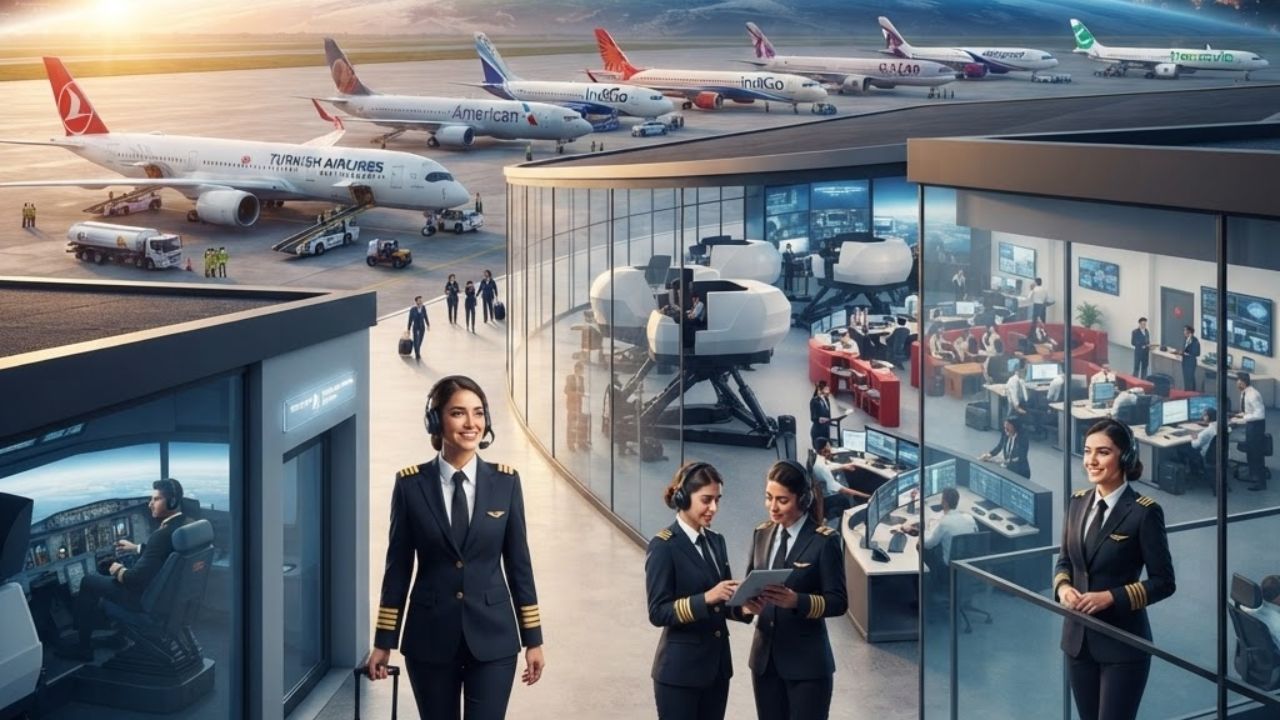
Image generated by AI
Turkish Airlines and Global Carriers Accelerate Multi-Billion-Dollar Flight Training Investments to Support Rapid Fleet Expansion
Turkish Airlines has signed an agreement with domestic technology manufacturer HAVELSAN for 12 advanced flight simulators, anchoring a global surge in pilot training infrastructure. Across North America, Europe, Asia, and the Middle East, commercial carriers are committing multi-billion-dollar investments to expand training academies, install full-flight simulators, and secure pilot pipelines ahead of scheduled aircraft deliveries.
The industry-wide focus on pilot development stems directly from record aircraft orders and long-term fleet growth plans. By building in-house simulator capacity and establishing dedicated flight academies, airlines are mitigating recruitment bottlenecks while cutting reliance on third-party training providers.
Turkish Airlines Expands Simulator Fleet for 800-Aircraft Fleet Goal
The agreement between Turkish Airlines and HAVELSAN includes eight Full Flight Simulators (FFS) and four Flight Training Devices (FTD). Designed and manufactured entirely within Türkiye, these 12 systems will support the carrier's plan to expand its operational fleet to more than 800 aircraft by 2033.
Construction of new simulator hangars began in January 2026, with the initial operational phase scheduled for 2027. A dedicated Flight Training Centre is expected to open in 2028, expanding the airline's infrastructure across three separate campuses by 2033.
The partnership also marks HAVELSAN’s formal entry into wide-body aircraft simulation. Turkish Airlines already operates seven EASA Level D certified HAVELSAN simulators, comprising three Airbus A320 NEO/CEO, three Boeing 737 MAX, and one Boeing 737 NG unit.
"By 2033, the Turkish Airlines Flight Training Centre is expected to become one of Europe’s largest aviation training facilities operating across three separate campuses," stated Prof. Murat Şeker, Chairman of the Board and Executive Committee at Turkish Airlines. He emphasized that the facility will fulfill internal training needs while serving third-party international carriers.
HAVELSAN General Manager Dr. Mehmet Akif Nacar noted that wide-body simulation requires complex software, motion systems, and visual tech. He affirmed that the contract underscores growing technical capabilities within Türkiye's domestic aerospace sector.
Asian Carriers Build Domestic Training Capacity to Support Fleet Orders
In India, Air India is expanding its pilot recruitment drive and infrastructure through the Air India Training Academy. The carrier is aligning its workflow with India's proposed Multi-Crew Pilot Licence (MPL) framework to prepare thousands of new pilots for incoming Airbus and Boeing aircraft.
Concurrently, IndiGo has partnered with CAE and InterGlobe to establish a training center equipped with up to six Full Flight Simulators. The domestic facility supports IndiGo's fleet expansion while backing India's simulator-heavy MPL training methodology.
In Southeast Asia, Malaysia Airlines is adding an Airbus A330neo Full Flight Simulator via the Airbus Asia Training Centre to strengthen wide-body crew transitions. Meanwhile, Philippines-based Cebu Pacific opened a 1,685-square-metre aviation training facility in 2026 to scale pilot and cabin crew instruction.
Western Airlines and Transatlantic Carriers Scale Academy Networks
American Airlines is bolstering its pilot pipeline through an expanded partnership with ATP Flight School. The initiative introduces specialized simulator rooms, hangars, and testing facilities in Charlotte, supporting candidates from initial training through to commercial flight decks.
In Europe, low-cost carrier easyJet continues expanding cadet recruitment through its ICAO-approved MPL pathway. The program emphasizes multi-crew cockpit simulation prior to commercial line flying.
Air France and Transavia (part of the Air France-KLM Group) have expanded Airbus A320 type-rating programs through BAA Training. Transavia has established a dedicated simulator center in Paris to handle growing pilot demand.
Middle Eastern and Central Asian Carriers Expand High-Tech Training
Qatar Airways continues relying on simulator-heavy MPL programs to train first officers across its expanding wide-body and narrow-body fleets.
In Central Asia, Uzbekistan’s Centrum Air signed a multi-year Full Flight Simulator contract with Acron Aviation for Airbus qualifications. Cargo operator My Freighter Airlines is investing in D-Level Full Flight Simulators, while Vietnam's Bamboo Airways secured long-term simulator access with BAA Training.
Strategic Impact on Airline Operations and Fleet Reliability
Modern Full Flight Simulators enable flight crews to train for engine failures, hydraulic loss, extreme weather, and complex airport approaches without risking operational aircraft. Achieving EASA Level D certification allows airlines to complete type ratings and recurrent proficiency checks entirely within ground-based simulation environments.
Simultaneously, adoption of the Multi-Crew Pilot Licence (MPL) allows airlines to focus cadet instruction on multi-pilot airline operations from day one. These investments improve fleet availability, lower training expense, and insulate airlines against regional pilot shortages.
Global Airline Pilot Training Expansion
| Airline | Country | Pilot Training Expansion Details |
|---|---|---|
| Turkish Airlines | Türkiye | Ordered 12 new HAVELSAN simulators (8 FFS + 4 FTD), expanding training across three campuses by 2033 to become one of Europe’s largest flight training centres. |
| Air India | India | Expanding pilot pipeline through Air India Training Academy while supporting India’s proposed Multi-Crew Pilot Licence (MPL). The airline is recruiting thousands of pilots for its fleet expansion. |
| IndiGo | India | Partnered with CAE and InterGlobe to establish a new simulator training centre featuring up to six Full Flight Simulators. IndiGo also supports India’s simulator-intensive MPL programme. |
| easyJet | United Kingdom | Uses the ICAO-approved Multi-Crew Pilot Licence (MPL) programme and continues expanding cadet recruitment alongside simulator-based airline-specific training. |
| Qatar Airways | Qatar | Continues using the MPL pathway to develop airline-specific first officers, relying extensively on simulator-based training. |
| Malaysia Airlines | Malaysia | Malaysia Airlines Academy is adding an Airbus A330neo Full Flight Simulator through Airbus Asia Training Centre to strengthen wide-body pilot training. |
| Cebu Pacific | Philippines | Opened a 1,685-square-metre aviation training facility in 2026 to expand pilot and cabin crew training capacity. |
| American Airlines | United States | Expanded its pilot pipeline through a major partnership with ATP Flight School, including new simulator rooms, hangars and testing facilities in Charlotte. |
| Bamboo Airways | Vietnam | Expanded simulator access through long-term agreements with BAA Training for Full Flight Simulator programmes. |
| Transavia (Air France-KLM Group) | Netherlands | Strengthened Airbus pilot training through a dedicated simulator centre in Paris operated with BAA Training. |
| Air France | France | Uses expanded Airbus A320 type-rating programmes through BAA Training as pilot demand increases. |
| Centrum Air | Uzbekistan | Signed a multi-year Full Flight Simulator agreement with Acron Aviation to enhance Airbus pilot qualifications. |
| My Freighter Airlines | Uzbekistan | Investing in advanced D-Level Full Flight Simulator training to support expanding cargo operations. |
Key Takeaways
- Homegrown Simulation Tech: Turkish Airlines' order of 12 HAVELSAN simulators marks the Turkish manufacturer's expansion into wide-body flight simulation.
- Long-Term Fleet Targets: The infrastructure expansion directly supports Turkish Airlines' objective to operate over 800 aircraft across three training campuses by 2033.
- Global Academic Scaling: Major international carriers—including Air India, IndiGo, American Airlines, easyJet, and Cebu Pacific—are building multi-simulator facilities and partnerships to prevent pilot shortfalls.
- Rise of MPL Programs: Airlines are increasingly utilizing Multi-Crew Pilot Licence (MPL) frameworks to train cadets in realistic, simulator-based environments before line operations.
FAQ: Airline Pilot Training Expansion 2026
Why are global airlines making multi-billion-dollar investments in flight simulators?
Massive aircraft order books from Airbus and Boeing require tens of thousands of newly qualified flight crews over the coming decade. Advanced full-flight simulators allow carriers to conduct initial type-ratings and recurrent training efficiently without taking revenue-generating aircraft out of service.
What is the significance of the Turkish Airlines and HAVELSAN agreement?
The deal provides 12 domestically built simulators (8 Full Flight Simulators and 4 Flight Training Devices) to support Turkish Airlines' planned fleet growth to 800+ aircraft by 2033. It also marks HAVELSAN's entry into the wide-body aircraft simulation market and supports the establishment of a three-campus training hub in Türkiye.
How does the Multi-Crew Pilot Licence (MPL) differ from traditional pilot training?
The MPL pathway relies heavily on advanced flight simulator training tailored specifically to multi-pilot commercial airline cockpits. Carriers like easyJet, Qatar Airways, Air India, and IndiGo use MPL to prepare cadet pilots directly for airline-specific operations.
Related Travel Guides
Disclaimer
This article is for informational and educational purposes only. It does not constitute legal, financial, or professional advice. While we strive to provide accurate and up-to-date information, travel policies, regulations, and conditions change rapidly. Always verify information with official sources before making travel decisions. Nomad Lawyer makes no representations about the accuracy, reliability, completeness, or suitability of the information provided. Readers should consult qualified professionals for advice specific to their circumstances. The views expressed in this article are those of the author and do not necessarily reflect the views of Nomad Lawyer.
Kunal K Choudhary
Co-Founder & Contributor
A passionate traveller and tech enthusiast. Kunal contributes to the vision and growth of Nomad Lawyer, bringing fresh perspectives and driving the community forward.
Learn more about our team →