
Germany Is Now on the Path to European Rail Tourism Growth as 74 Percent Back Better and Greener Travel
Germany Is Now on the Path to European Rail Tourism Growth as 74 Percent Back Better and Greener Travel

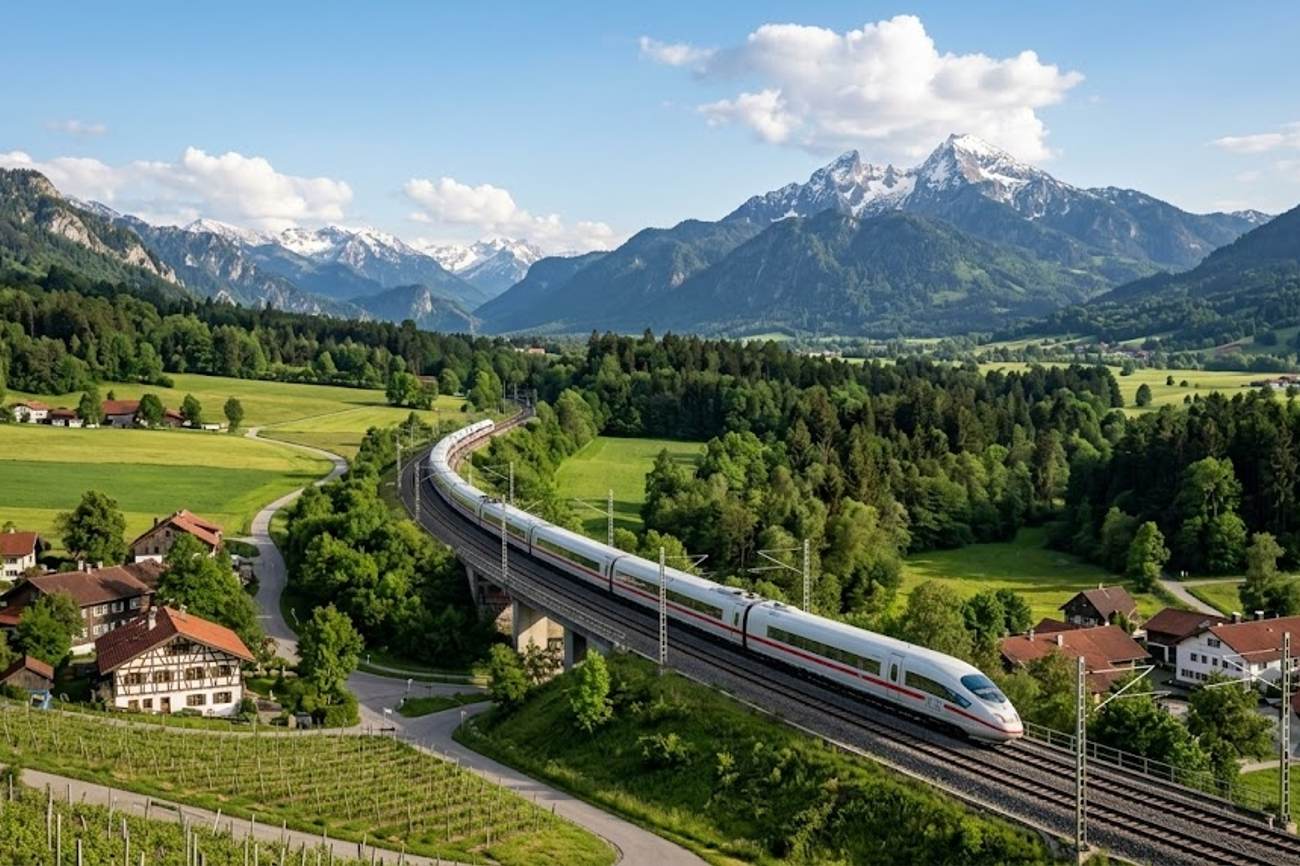
Image generated by AI
Only 7% of intra-EU overnight trips were made by train in 2024, yet a staggering 74% of Europeans now actively support the promotion of rail tourism to make their holidays more sustainable. This massive disconnect between what people say they want and how they actually travel reveals a continent standing on the edge of a logistical revolution, where the desire for slower, greener travel is finally colliding with the rigid realities of old infrastructure.
The Friction Between Desire and Reality
Right now, Europe is experiencing a psychological shift in how we perceive distance. For decades, the "flight habit" dominated, driven by the illusion of cheap airfares and the speed of hub-and-spoke networks. However, recent data from a July 2026 survey of 5,048 adults across all 27 EU member states indicates that two in three travelers are ready to ditch the airport if the rail connections actually exist.
The current state of play is a paradox. While the public is eager, the infrastructure is still catching up. In 2024, EU residents took 250 million overnight trips within the union. The dominance of the car (44%) and the plane (41%) remains absolute, leaving trains (7%), buses (5%), and water transport (2%) as the minority choices. The "Rail Tourism" movement isn't just about adding more tracks; it is about closing the gap between a public that wants to be sustainable and a system that often makes it prohibitively expensive or frustratingly slow.
What Makes the European Rail Experience Different
Traveling by rail in Europe offers a sensory and cultural immersion that aviation simply cannot replicate. When you fly, you teleport from one sterile terminal to another. When you take the train, you witness the gradual shift in architecture, language, and topography. You see the transition from the flat plains of Northern Europe to the jagged peaks of the Alps or the sun-baked olive groves of the Mediterranean.
To explore the latest statistical data on travel patterns across the continent, visit the Eurostat database on tourism for comprehensive insights into EU mobility.
The uniqueness of this experience is currently being bolstered by the European Commission's long-term vision. We are moving toward a future where the "border" is a formality rather than a hurdle. The goal is to transform the train from a mere utility into the destination itself. This is evident in the push for high-speed corridors that aim to shrink the continent. Imagine a world where the Berlin–Copenhagen route takes four hours by 2030 instead of the current seven, or where Sofia and Athens are linked by a six-hour journey by 2035.
For the nomad or the slow traveler, the appeal lies in the "secondary city." While planes dump everyone into capital cities, rail allows for the discovery of mid-sized hubs—places where the local economy benefits directly from the €125 average nightly spend per traveler. By diverting traffic away from over-touristed hotspots and into rural regions, rail travel acts as a mechanism for economic redistribution.
Visitor Insider Tips
Navigating the European rail network requires a different mindset than booking a flight. To move like a local and avoid the pitfalls of the "tourist trap" schedules, consider these strategies:
Timing and Booking Avoid the "last-minute" fallacy. While some regional trains have fixed prices, high-speed international lines (like the TGV or AVE) operate on a yield-management system similar to airlines. Book your long-haul legs as early as possible to secure the lowest fares, as cost remains the primary concern for 2026 travelers.
The Multi-Operator Hack One of the biggest frustrations is the "fragmented ticket." Currently, booking a trip across three different national operators can be a nightmare. Keep an eye on the European Commission's proposed ticketing regulations aimed at simplifying multi-operator journeys. Until these are fully implemented, use aggregators cautiously and always verify the platform number and connection time on the official national rail app of the country you are entering.
For more information on the strategic initiatives to modernize the continent's transport networks, review the European Commission's transport policy regarding sustainable mobility.
Etiquette and Comfort Comfort is the second most important factor for travelers. On long-haul journeys, always opt for the "First Class" or "Quiet Carriage" if your budget allows; the price difference is often negligible if booked early, but the mental health benefit of avoiding a noisy group of tourists is immense. When crossing borders, remember that "quiet zones" are strictly enforced in countries like Germany and Austria—keep your calls brief and your volume low.
Regional Specialties Don't rely on the dining car for a gourmet experience. The real magic of rail travel is the "station stop." In smaller towns, step off for 30 minutes to visit the local bakery or market. This is where you find the authentic regional flavors that aren't curated for the hotel buffet.
Cultural and Environmental Context
The push for rail tourism is not merely a trend; it is a response to the environmental crisis. However, the transition is fraught with tension. There is a constant struggle between the desire for "high-speed" efficiency and the preservation of "slow" heritage.
Tourism's interaction with local communities is shifting. When 250 million people move across borders, the environmental footprint is staggering. By shifting just 10% of car or air travel to rail, the carbon reduction would be monumental. Yet, the challenge lies in "over-tourism" in specific corridors. As rail makes secondary cities more accessible, there is a risk that these quiet enclaves will be overwhelmed by the same crowds that are currently fleeing Venice or Barcelona.
Furthermore, the push for high-speed rail often clashes with local land rights and environmental conservation. Building a line from Paris to Lisbon via Madrid by 2035 requires carving through diverse ecosystems. The goal of the EU's 2021 action plan for long-distance rail is to balance this expansion with sustainability, ensuring that the "greener" choice doesn't come at the cost of destroying the very landscapes travelers are coming to see.
Travelers looking to plan their journeys can utilize the official Deutsche Bahn portal to navigate Germany's expanding rail infrastructure and high-speed connections.
FAQ: Visiting Europe by Rail 2026
What is the best time to visit Europe by train? The shoulder seasons (May–June and September–October) are ideal. You avoid the extreme summer heat and the peak holiday crowds, and you are more likely to find competitive fares on high-speed lines.
Do I need a visa for cross-border rail travel? For most travelers, the Schengen Area allows seamless movement. However, always check the current European Commission Schengen guidance, as the 2026 rail initiatives do not change existing passport or visa requirements.
How do I get from major hubs like Berlin to Copenhagen? Currently, the journey takes about seven hours. However, under the EU's high-speed plan, this is targeted to be reduced to four hours by 2030. Check the latest timetables via official national rail operators.
Is rail travel safe for solo travelers? Yes, European rail is generally very safe. For added peace of mind, use official luggage lockers at stations and keep your valuables in a crossbody bag during busy transfers in major hubs.
The tracks are laid and the will is there; now we wait for the timetable to catch up with the dream.
Related Travel Guides
Disclaimer
This article is for informational and educational purposes only. It does not constitute legal, financial, or professional advice. While we strive to provide accurate and up-to-date information, travel policies, regulations, and conditions change rapidly. Always verify information with official sources before making travel decisions. Nomad Lawyer makes no representations about the accuracy, reliability, completeness, or suitability of the information provided. Readers should consult qualified professionals for advice specific to their circumstances. The views expressed in this article are those of the author and do not necessarily reflect the views of Nomad Lawyer.
Kunal K Choudhary
Co-Founder & Contributor
A passionate traveller and tech enthusiast. Kunal contributes to the vision and growth of Nomad Lawyer, bringing fresh perspectives and driving the community forward.
Learn more about our team →