
Germany Aligns With Global Travel Safety Trends As Hotel Bedbug Risks Prompt Smarter Luggage Habits
Germany Aligns With Global Travel Safety Trends As Hotel Bedbug Risks Prompt Smarter Luggage Habits

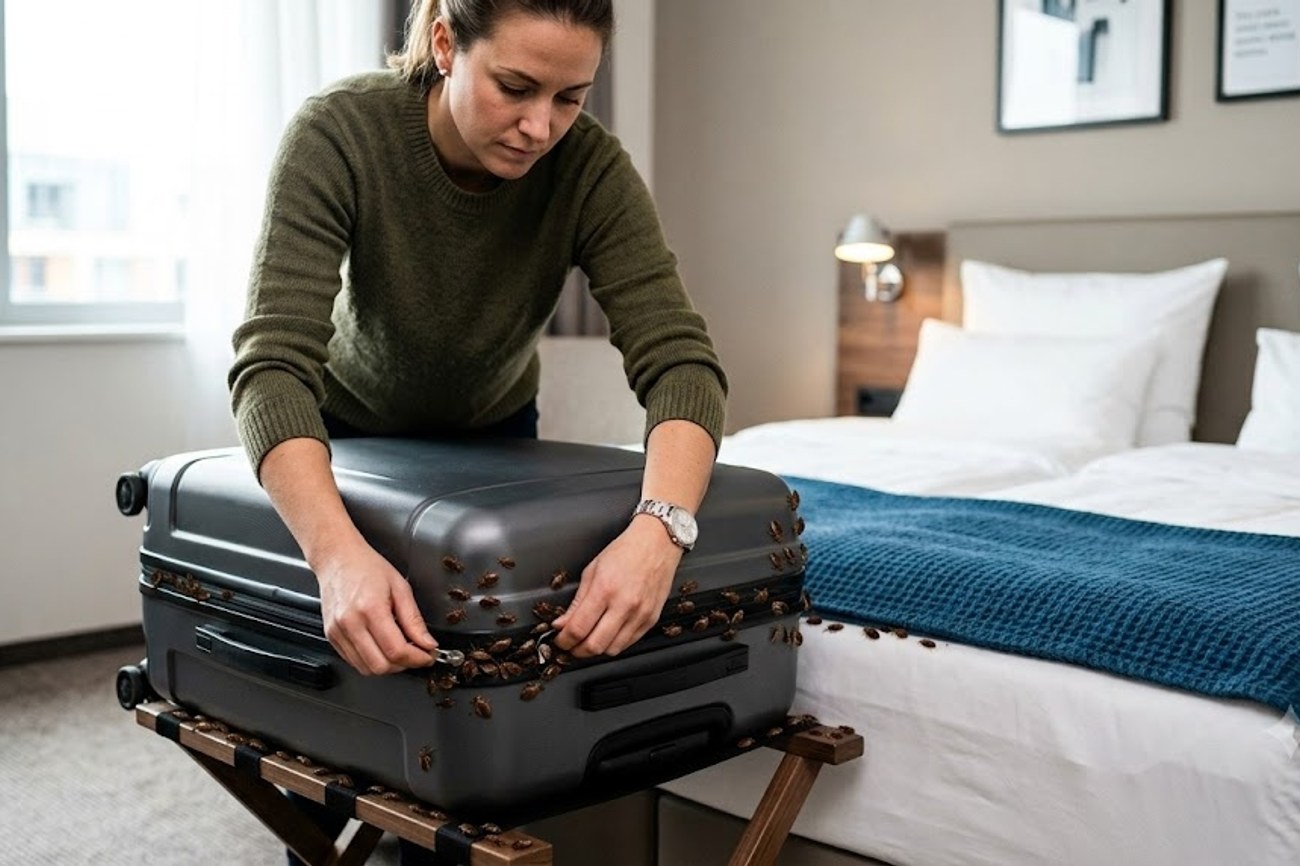
Image generated by AI
Zero percent of hotel star ratings—from budget hostels to luxury resorts—guarantee immunity from bedbug infestations, making the physical placement of luggage the primary line of defense for the modern traveler. While often dismissed as a hygiene failure, the presence of these blood-feeding insects is a logistical byproduct of global mobility rather than a reflection of a hotel's cleaning standards. The risk is not merely the discomfort of a bite during a trip, but the high probability of transporting these pests across international borders and into a primary residence.
The Logistics of Bedbug Transmission in Hospitality
The movement of bedbugs is inextricably linked to the habits of the international traveler. These insects do not fly; they rely entirely on "hitchhiking" via personal effects. The common habit of placing a suitcase directly on a hotel bed for the convenience of unpacking creates a direct bridge between a potential infestation site—the mattress seams or bed frame—and the interior of a traveler's luggage.
Soft-sided luggage, characterized by fabric pockets, polyester seams, and nylon mesh, provides an ideal architectural environment for bedbugs to hide. Even hard-sided luggage, while offering fewer surface areas for attachment, remains vulnerable at the zipper tracks, wheel housings, and handles. Because these pests are adept at hiding in cracks and crevices, the bed—the central hub of any hotel room—is the highest-risk zone. When a suitcase is placed on a mattress, the insects gain immediate access to clothing and linens, which they then inhabit during the traveler's journey to the next destination.
Risk Mitigation and Storage Protocols
To decouple the traveler's belongings from potential infestation zones, a shift in room utilization is required. The goal is to eliminate any physical contact between luggage and upholstered surfaces. The use of elevated luggage racks, provided by most professional hospitality providers, serves as a critical barrier.
The following table delineates the specific behavioral shifts required to minimize risk:
| Hotel Practice | Recommended Approach | Travel Safety Benefit |
|---|---|---|
| Suitcase placement | Utilize luggage racks distant from the bed | Eliminates direct contact with bedding/frames |
| Luggage storage | Maintain closed bags when not in use | Prevents insects from entering internal compartments |
| Clothing organization | Avoid placing garments on beds or floors | Reduces exposure to high-risk surfaces |
| Dirty laundry | Utilize sealed plastic bags for worn clothing | Prevents insects from nesting in loose fabric |
| Room inspection | Examine mattress seams and headboards | Enables early detection of infestations |
| Return journey | Conduct a full luggage audit upon departure | Facilitates early detection before home entry |
Beyond storage, the management of "dirty laundry" is a significant vulnerability. Research from 2017 indicates that the scent of worn clothing actively attracts bedbugs, meaning that a pile of used garments in an open suitcase acts as a chemical beacon for pests. For those adhering to World Health Organization (WHO) guidelines on general hygiene and pest avoidance, sealing worn clothes in airtight bags is a non-negotiable step in preventing the transport of insects.
Expert Analysis: The "Invisible" Logistics of Pest Migration
For the frequent traveler, the direct consequence of this biological reality is that the "luxury" of a hotel room is a false metric for safety. The pricing pressure and market consolidation of global hotel chains mean that rooms are turned over with extreme speed. Even in five-star establishments, a single infested suitcase from a previous guest can seed a room that is superficially spotless.
The pricing impact for the traveler manifests after the trip. The cost of professional heat treatment or chemical eradication for a home infestation far outweighs the minor inconvenience of using a luggage rack. Furthermore, the biological variability of human skin means that "the lack of bites" is not a reliable data point for safety. Some travelers possess a natural immunity to the proteins in bedbug saliva, meaning they can be heavily infested without ever seeing a red mark.
From a regulatory perspective, the responsibility often falls on the guest to perform a basic "visual audit." By checking mattress seams and headboards for small dark spots (fecal matter) or shed skins, travelers are performing a risk assessment that hotel housekeeping may miss during a rapid room turnover. If a guest discovers evidence, the only logical move is to notify management immediately. Simply moving rooms without reporting the issue allows the infestation to spread through the hotel's internal logistics, potentially affecting the guest's new room.
Key Takeaways
- Avoid the Bed: Never place suitcases, backpacks, or handbags on the bed or upholstered furniture; use elevated racks exclusively.
- Seal the Scent: Store all worn clothing in airtight, sealed bags to prevent attracting insects via the scent of human sweat and skin cells.
- Visual Audit: Perform a quick check of mattress seams and headboards upon arrival, looking for dark spots or shed skins.
- Material Awareness: While hard-sided luggage is slightly more resistant, zips and wheels remain viable entry points for pests.
- Post-Trip Protocol: Inspect all luggage and wash clothing on high heat immediately upon returning home to prevent domestic infestation.
FAQ: Hotel Bedbug Prevention 2024
How can I tell if my hotel room has bedbugs if I don't have bites? Look for physical evidence: small reddish-brown stains on sheets, tiny black dots (droppings) in mattress seams, or translucent shed skins. Since some people don't react to bites, visual inspection is the only reliable method.
Does hard-shell luggage completely protect me from bedbugs? No. While they cannot burrow into the plastic, bedbugs can hide in the seams, the fabric lining, the zipper tracks, and the crevices around the wheels. Storage habits are more important than the suitcase material.
What should I do if I find a bedbug in my room? Immediately notify hotel management and request a room change. Do not move your luggage into a new room until you have inspected your belongings, as you may inadvertently transport the pests to the new location.
Why is it important to seal dirty laundry? Worn clothing carries human scents that attract bedbugs. By sealing these items in plastic bags, you remove the olfactory lure and create a physical barrier that prevents insects from entering your clothing.
The safest journey is one where the traveler treats their luggage as a sealed environment, independent of the surfaces they encounter.
Tags: Bedbug Prevention 2024, Hotel Hygiene Protocols, International Travel Safety, Luggage Management, Hospitality Risk Assessment
Related Travel Guides
- Mpumalanga Aligns With Cape Town And Other Places Of South Africa In Lifting Safari Tourism With Investments And New Visitor Facilities
- Egypt Is Now Unlocking a New Opportunity as the Luxor Medical Tourism Hub Links Care and Nile Heritage
- Dubai Upgrades Oud Maitha Road With Major Travel Infrastructure Project To Cut Journeys And Boost City Connectivity
Disclaimer
This article is for informational and educational purposes only. It does not constitute legal, financial, or professional advice. While we strive to provide accurate and up-to-date information, travel policies, regulations, and conditions change rapidly. Always verify information with official sources before making travel decisions. Nomad Lawyer makes no representations about the accuracy, reliability, completeness, or suitability of the information provided. Readers should consult qualified professionals for advice specific to their circumstances. The views expressed in this article are those of the author and do not necessarily reflect the views of Nomad Lawyer.
Preeti Gunjan
Contributor & Community Manager
A passionate traveller and community builder. Preeti helps grow the Nomad Lawyer community, fostering engagement and bringing the reader experience to life.
Learn more about our team →