
Breaking Airline News: 183 Flights Severed at Frankfurt Airport as Massive Lufthansa Meltdown Triggers Apocalyptic European Travel Chaos
Breaking airline news: Amidst a terrifying era of severe operational fragility, a massive hub meltdown at Frankfurt Airport violently traps thousands of travelers, sparking extreme travel chaos and massive flight cancellations across Europe.

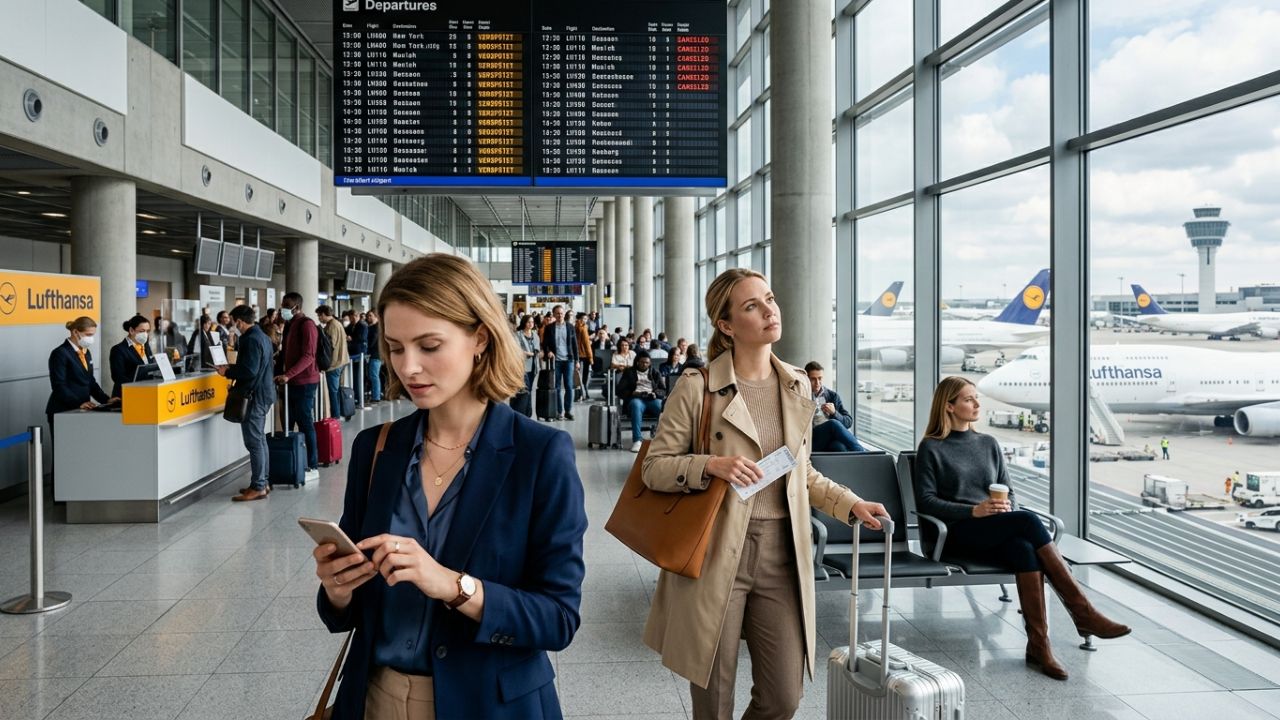
Image representing the intense strategic battle as airlines desperately attempt to recover from a massive operational meltdown at Frankfurt Airport, combating severe transit friction to prevent catastrophic travel chaos for European and transatlantic passengers.
Breaking Airline News: 183 Flights Severed at Frankfurt Airport as Massive Lufthansa Meltdown Triggers Apocalyptic European Travel Chaos
As paralyzing terminal bottlenecks, terrifying airspace congestion, and severe operational fragility violently threaten to completely shatter passenger mobility across the continent, Germany’s central aviation gateway has suffered a massive infrastructural collapse. In a terrifying display of modern aviation vulnerability, Frankfurt International Airport (FRA) is currently buckling under the weight of extreme airport disruptions. A catastrophic wave of 183 flight delays and 2 flight cancellations has violently trapped thousands of transiting passengers. This massive hub meltdown has brutally impacted critical operations for Lufthansa, Aegean Airlines, Austrian Airlines, British Airways, and Etihad Airways, instantly triggering a terrifying domino effect of missed connections. By paralyzing the critical crossroads linking Europe to the rest of the globe, the Frankfurt failure represents the absolute ultimate trigger for catastrophic, continent-wide travel chaos.
In a harrowing display of global transport fragility, the sheer logistical nightmare of attempting to navigate essential European corridors has historically forced passengers into terrifying transit scenarios. For years, securing a reliable connection through major hubs meant risking extreme physical exhaustion—navigating violently overloaded terminals and staring at departure boards during rolling delays. Today, the crisis at Frankfurt is aggressively amplifying this structural paralysis. Travelers now face the absolute terrifying reality that attempting to connect through Germany will strip them of their itineraries, forcing them into agonizingly long terminal delays as airlines desperately attempt to prevent the complete collapse of their broader global networks.
Expanded Overview: The Massive Scale of the Hub Meltdown
The terrifying crisis of overwhelming passenger stress currently gripping the Frankfurt terminal brutally exposes the severe limitations of highly interconnected aviation networks. Recognizing that a single failure at a mega-hub immediately destroys schedules globally, this massive delay event fundamentally rewrites the daily travel matrix. The sheer scale of this infrastructural threat is immense. While total flight cancellations were suppressed to 2, the massive volume of 183 delayed aircraft creates a brutal, rolling wave of congestion. Because airlines are choosing the agonizing path of delaying flights rather than outright aborting them, passengers are violently subjected to extreme wait times, missed onward flights, and the terrifying prospect of sleeping in the terminal.
Section-Wise Breakdown: The Operational Realignment
Shattering the German Gateway: FRA as the Epicenter of Chaos
To survive the terrifying surge in global travel demand without triggering immediate terminal meltdowns, mega-hubs must operate flawlessly. Frankfurt International Airport failed to hold the line. Making it the epicenter of the latest European aviation disruption, the concentration of delays amplified operational challenges across numerous international routes. With 105 delayed departures and 78 delayed arrivals, the airport is locked in a severe physical gridlock. The high volume of delayed flights created immediate, terrifying ripple effects extending far beyond Germany, proving that FRA remains a highly volatile pressure point capable of completely breaking the global aviation ecosystem.
Airline Casualties: Lufthansa Grounded
Looking beyond the airport infrastructure, the specific airline casualty list is massive. Several prominent carriers experienced severe operational disruptions. Lufthansa, Frankfurt’s absolute dominant carrier, took the hardest hit with a massive 85 delays and 2 cancellations. The chaos violently dragged in other major international and regional operators, including Aegean Airlines, Austrian Airlines, British Airways, Etihad Airways, Condor, Air Dolomiti, American Airlines, Air China, Croatia Airlines, Vietnam Airlines, and Icelandair. This concentration of delays proves that when Frankfurt breaks, it violently drags down every airline, forcing them to frantically reorganize aircraft deployment and crew assignments.
The Domino Effect: Gridlock Across Europe and Beyond
This massive infrastructural failure is heavily defined by its terrifying reach. The disruption violently extended across numerous strategic domestic, European, and international routes linked to Frankfurt. Aircraft scheduled to extract passengers to critical German cities like Munich (MUC), Hamburg (HAM), Berlin Brandenburg (BER), Düsseldorf (DUS), and Bremen (BRE) were violently held back. The European gridlock severed links to Dublin, Amsterdam, Brussels, London Heathrow, Edinburgh, Copenhagen, Luxembourg, Manchester, Krakow, Poznań, and Warsaw. Furthermore, international long-haul routes to Vancouver, Toronto, and various other global destinations were impacted, instantly evolving into catastrophic travel complications for connecting passengers.
The Passenger Toll: Agony in the Terminal
The strategic implications of this operational nightmare reveal a brutal airline defense tactic. The massive imbalance between 183 delays and only 2 cancellations proves that airlines violently prioritized maintaining network connectivity over passenger comfort. While outright cancellations trigger immediate refunds, rolling delays allow airlines to absorb the disruption. However, this strategy violently forces the passenger to endure agonizing uncertainty, increased accommodation risks, and the terrifying reality of constantly shifting departure times. Business travelers face extreme productivity losses while leisure itineraries are completely destroyed.
Frankfurt Operational Disruption Defense Matrices
To fully comprehend the massive logistical and strategic fallout of this terrifyingly uncoordinated network failure, corporate travel managers must review the exact operational metrics defining the Frankfurt capacity strain. The following matrices provide a granular breakdown of the specific, officially verified tracking data driving this massive travel chaos event.
Disruption Category Details
| Category | Details |
|---|---|
| Airport | Frankfurt International Airport (FRA) |
| Total Delayed Flights | 183 |
| Total Cancelled Flights | 2 |
| U.S.-Related Delays | 8 |
| U.S.-Related Cancellations | 0 |
| Most Affected Airline | Lufthansa (85 delays, 2 cancellations) |
| Other Airlines Reporting Delays | Aegean Airlines, Austrian Airlines, British Airways, Etihad Airways, Condor, Air Dolomiti, American Airlines, Air China, Croatia Airlines, Vietnam Airlines, Icelandair and others |
| Most Affected Origin Airport | Frankfurt (105 delayed departures, 1 cancellation) |
| Most Affected Destination Airport | Frankfurt (78 delayed arrivals, 1 cancellation) |
| Key German Routes Affected | Munich (MUC), Hamburg (HAM), Berlin Brandenburg (BER), Düsseldorf (DUS), Bremen (BRE) |
| Key European Routes Affected | Dublin (DUB), Amsterdam Schiphol (AMS), Brussels (BRU), London Heathrow (LHR), Edinburgh (EDI), Copenhagen (CPH), Luxembourg (LUX), Manchester (MAN), Krakow (KRK), Poznań (POZ), Warsaw (WAW) |
| International Routes Affected | Vancouver (YVR), Toronto Pearson (YYZ), Harstad/Narvik-Evenes (EVE), Tirana (TIA), Larnaca (LCA), Vilnius (VNO) |
| Passenger Impact | Hundreds of travelers facing delays, missed connections, extended airport waits, and schedule disruptions |
| Overall Operational Situation | Significant disruption across Frankfurt’s European and international network, with delays far outweighing cancellations and creating cascading effects throughout the day |
Frankfurt Disruption Overview Figures
| Metric | Total |
|---|---|
| Delayed Flights | 183 |
| Cancelled Flights | 2 |
| Primary Airport | Frankfurt International Airport |
| Impact Scope | Major European Routes |
| Affected Travelers | Hundreds |
Key Airlines Impacted
- Lufthansa
- Aegean Airlines
- Austrian Airlines
- British Airways
- Etihad Airways
- Additional International Carriers
Major Routes Affected
- Frankfurt – Munich
- Frankfurt – Hamburg
- Frankfurt – Dublin
- Frankfurt – Amsterdam
- Frankfurt – Berlin
Passenger Challenges During Disruptions
- Longer Waiting Times
- Missed Connections
- Rebooked Itineraries
- Extended Transit Periods
- Travel Uncertainty
Passenger Impact: Surviving the German Crush
For the thousands of global executives and tourists attempting to navigate the rapidly collapsing transit corridors of Europe, this massive hub failure represents a highly dangerous logistical trap. The brutal reality of enduring a terrifyingly sudden delay of 6 hours because a connecting aircraft is trapped in FRA inflicts intense psychological stress—leaving the passenger entirely stranded and missing critical onward long-haul flights. By aggressively preparing contingency plans, downloading airline tracking apps, and demanding immediate rebooking on alliance partners bypassing Frankfurt, passengers drastically reduce their exposure to these terrifying logistical environments.
Survival Guide for Hub Transit
Travelers desperately preparing to navigate the modernized global network must immediately execute the following survival protocols:
- Violently Monitor the FRA Status: If your itinerary forces you through Frankfurt, you must aggressively track incoming aircraft data. Do not wait for gate announcements. Use flight tracking apps to determine if your specific aircraft is trapped in the delay matrix.
- Execute Immediate Rebooking Protocols: If your initial leg into Germany is delayed, you must violently demand that your carrier rebook your entire itinerary through a highly stable alternate hub (like Zurich or Vienna) before you board. Do not fly into FRA if your connection time has already been destroyed.
- Anticipate the Baggage Collapse: With 183 flights delayed, the baggage handling system at Frankfurt is guaranteed to suffer massive bottlenecks. Travelers must aggressively pack essential survival gear and electronics exclusively in their carry-on luggage.
Industry Analysis: The Economics of Hub Fragility
From a strategic aviation perspective, the travel turmoil currently threatening Europe highlights the terrifying vulnerability of the hub-and-spoke model. Industry analysts confirm that while funneling thousands of passengers through Frankfurt maximizes airline profitability during normal operations, a sudden disruption violently destroys that margin. The massive decision by airlines to delay 183 flights rather than cancel them is a highly aggressive, tactical response designed to avoid paying outright cancellation compensation, effectively shifting the physical burden of travel chaos directly onto the passengers trapped in the terminal.
Conclusion: A Strategic Retreat to Ensure Aviation Survival
As the extremely critical global travel network faces severe operational stress, the massive delays executed at Frankfurt International Airport represent a massive warning to anyone attempting a multi-city transit. The aggressive maneuvering proves that surviving modern air travel requires terrifyingly swift and highly optimized passenger vigilance, assuming the absolute worst-case scenario at every mega-hub. For the modern traveler booking their flights, avoiding heavily congested central hubs offers an incredibly secure, highly insulated way to execute flight discovery. By acting aggressively to secure direct routes or highly stable regional connections, travelers can successfully survive intense operational surges and completely avoid the paralyzing physical threat of global travel chaos.
Key Takeaways
- Massive Tactical Meltdown: Frankfurt International Airport suffered a catastrophic operational disruption, logging 183 flight delays and 2 flight cancellations.
- Airline Casualties: Lufthansa suffered the absolute highest disruption volume with 85 delays and 2 cancellations. Global carriers including British Airways, Etihad Airways, and American Airlines were all dragged into the travel chaos.
- The Connecting Trap: The massive delay volume violently severed connections to critical global gateways including London Heathrow, Amsterdam, Vancouver, and Toronto.
- The Delay Strategy: Airlines violently prioritized rolling delays over outright cancellations to protect their global networks, leaving passengers stranded in the terminal for hours.
- Traveler Advisory: Global tourists and executives must aggressively avoid transiting through disrupted mega-hubs like FRA, utilizing direct extractions or smaller regional bypasses to avoid the terrifying threat of sudden itinerary collapse.
Related Travel Guides
- US Navy Decommissions Legendary Sub-Hunting Aircraft, Raising Questions About Operational Capability
- Airlines Flight Attendants 2026: Long-Haul Salary Reality Across United, Delta, American
- Finnair and Norwegian Air Sweden Cancel 4 Flights at Helsinki-Vantaa, Triggering Cascading Delays Across 50+ Cities on June 19, 2026
Disclaimer
This article is for informational and educational purposes only. It does not constitute legal, financial, or professional advice. While we strive to provide accurate and up-to-date information, travel policies, regulations, and conditions change rapidly. Always verify information with official sources before making travel decisions. Nomad Lawyer makes no representations about the accuracy, reliability, completeness, or suitability of the information provided. Readers should consult qualified professionals for advice specific to their circumstances. The views expressed in this article are those of the author and do not necessarily reflect the views of Nomad Lawyer.
Kunal K Choudhary
Co-Founder & Contributor
A passionate traveller and tech enthusiast. Kunal contributes to the vision and growth of Nomad Lawyer, bringing fresh perspectives and driving the community forward.
Learn more about our team →