
US Navy Decommissions Legendary Sub-Hunting Aircraft, Raising Questions About Operational Capability
Breaking airline news and aviation industry updates for 2026.

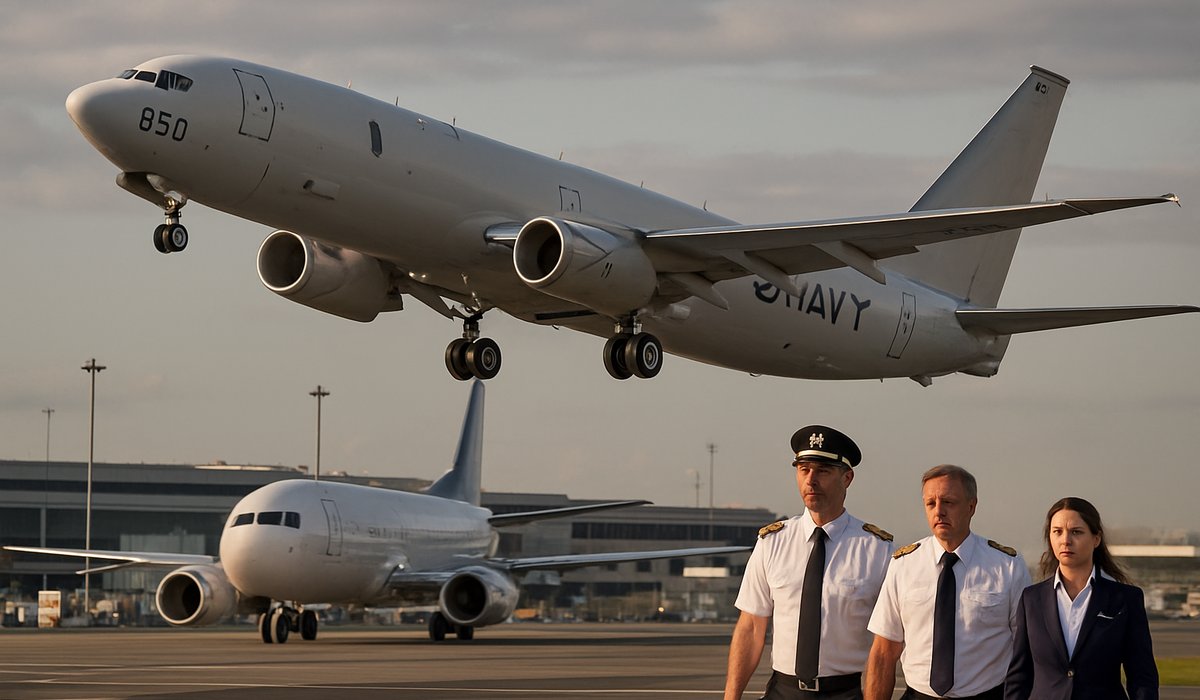
Image generated by AI
US Navy Decommissions Legendary Sub-Hunting Aircraft, Raising Questions About Operational Capability
The retirement of the S-3 Viking marks a significant shift in naval aviation strategy, leaving some analysts concerned about anti-submarine warfare readiness
A Four-Decade Legacy Comes to an End
The United States Navy has retired one of its most formidable maritime patrol assets, the S-3 Viking, an aircraft that spent over 40 years as the backbone of the service's submarine detection and tracking operations. The decision to phase out the versatile platform, which proved instrumental during the Cold War's most critical decades, has sparked debate within military aviation circles about whether its replacement adequately addresses the Navy's anti-submarine warfare (ASW) capabilities.
Design Excellence Born From Strategic Necessity
The S-3 Viking emerged during the height of Cold War tensions, when Soviet nuclear submarine expansion posed an unprecedented threat to American carrier strike groups and naval superiority. Developed to counter this emerging subsurface threat, the aircraft transcended its original mission parameters, evolving into a multi-role platform that demonstrated remarkable operational flexibility across diverse maritime scenarios.
Throughout its service tenure, the Viking proved instrumental in projecting American naval power across contested waters, establishing itself as an irreplaceable asset in the Navy's anti-submarine arsenal. Its sophistication in detecting and tracking underwater adversaries set the standard for generations of naval aviators and oceanographic intelligence specialists.
Industry Implications and Strategic Concerns
The retirement represents a broader shift in military aviation procurement strategy, with defense officials prioritizing modernization initiatives despite concerns from operational commanders about potential capability gaps. The decision reflects budgetary constraints and the Pentagon's pivot toward addressing multiple theater requirements simultaneously.
Defense analysts have raised questions about whether existing and future platforms can adequately replicate the Viking's proven effectiveness in submarine detection, given the complexity of modern undersea warfare and the increasing sophistication of adversarial submarines operated by near-peer competitors.
Looking Forward
The Navy's transition away from the S-3 platform marks a critical inflection point in maritime aviation doctrine. As geopolitical tensions escalate in key naval operating areas and adversaries advance their submarine technologies, military strategists must balance modernization imperatives with operational reality.
The retirement underscores the challenge facing contemporary defense planners: maintaining technological edge while managing finite resources across competing military requirements in an increasingly complex security environment.
FAQ
What was the S-3 Viking's primary mission? The aircraft was designed specifically for anti-submarine warfare, detecting and tracking nuclear-powered submarines during and after the Cold War era.
Why did the Navy retire this aircraft? Budgetary considerations and military modernization priorities led to the platform's decommissioning in favor of newer systems.
What replaced the S-3 Viking's capabilities? The Navy transitioned to alternative platforms, though some analysts question whether replacements fully match the original aircraft's operational effectiveness.
How long did the S-3 Viking serve the Navy? The aircraft remained in active service for over four decades, becoming one of the service's most enduring maritime platforms.
Does the retirement impact current anti-submarine warfare readiness? Military analysts debate whether capability gaps exist, particularly given evolving submarine technologies from peer competitors.
Related Travel Guides
-
IndiGo A321XLR Delhi Istanbul Daily Service Launches April 2026
-
Emirates, Etihad, Qatar, Air India Launch 344 Flights Across 50 Nations Now
External Resources
Disclaimer
This article is for informational and educational purposes only. It does not constitute legal, financial, or professional advice. While we strive to provide accurate and up-to-date information, travel policies, regulations, and conditions change rapidly. Always verify information with official sources before making travel decisions. Nomad Lawyer makes no representations about the accuracy, reliability, completeness, or suitability of the information provided. Readers should consult qualified professionals for advice specific to their circumstances. The views expressed in this article are those of the author and do not necessarily reflect the views of Nomad Lawyer.
Raushan Kumar
Founder & Lead Developer
Full-stack developer with 11+ years of experience and a passionate traveller. Raushan built Nomad Lawyer from the ground up with a vision to create the best travel and law experience on the web.
Learn more about our team →