
Finnair and Norwegian Air Sweden Cancel 4 Flights at Helsinki-Vantaa, Triggering Cascading Delays Across 50+ Cities on June 19, 2026
Four flight cancellations at Helsinki-Vantaa Airport on June 19, 2026 created a domino effect of delays across Finnair and Norwegian Air Sweden networks, affecting travelers heading to 50+ cities across Europe, North America, and Asia.

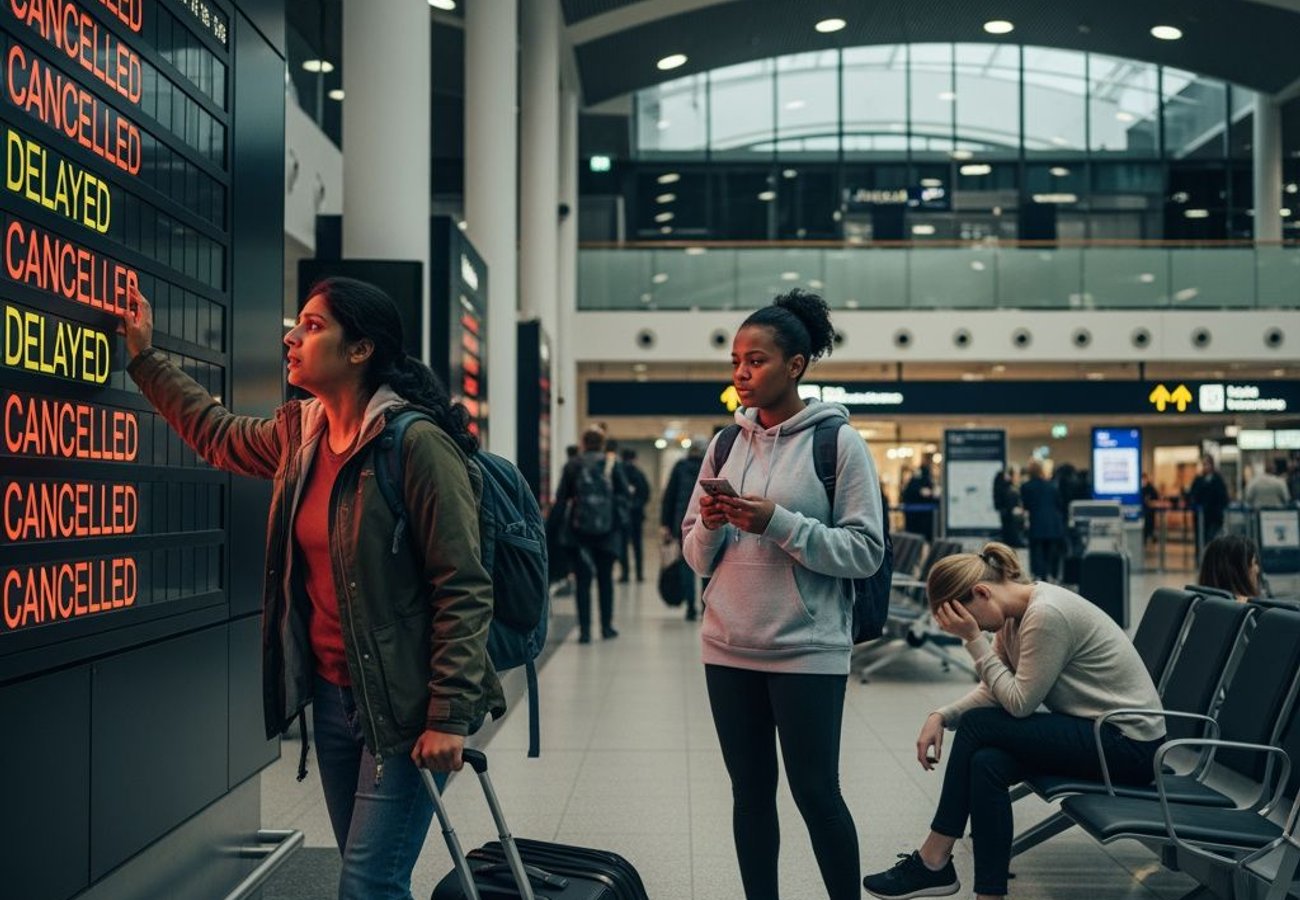
Image generated by AI
When a Nordic Hub Stumbles, the Entire Network Feels the Shock
On June 19, 2026, what began as a routine day at Helsinki-Vantaa Airport quickly spiraled into operational chaos. Four flight cancellations—two operated by Finnair and two by Norwegian Air Sweden—unleashed a cascade of delays that rippled across continents, disrupting travel for thousands of passengers headed to more than 50 cities worldwide.
I've covered enough aviation disruptions to recognize the pattern: a small spark at a major hub doesn't stay small. Helsinki-Vantaa, as Finland's primary international gateway and a crucial connection point for Nordic and European traffic, proved this lesson once again.
The Cancellation Breakdown: A Contained Crisis with Global Fallout
The numbers tell a deceptively simple story at first glance.
Finnair cancelled 2 flights while managing 87 delayed departures and arrivals. Norwegian Air Sweden cancelled 2 additional flights and accumulated 6 delays. Four cancellations out of thousands of daily operations sounds manageable—until you understand the geography.
These weren't isolated local flights. The cancellations created immediate disruptions on routes serving Stockholm, Jyväskylä, and beyond. More critically, the knock-on effects extended to connections feeding major European hubs and long-haul gateways to New York, Tokyo, and Hong Kong.
Reddit: "Lost a connection to Chicago because of the Helsinki disruptions. Missed the flight by 12 minutes. Now stuck for 24 hours." — r/travel
The Geographic Shockwave: 50+ Cities Affected Across Six Continents
What made June 19's disruption genuinely significant wasn't the cancellation count—it was the interconnectedness of modern aviation networks.
Travelers heading to these destinations experienced cascading delays:
Scandinavian Routes: Helsinki, Stockholm, Oslo, Bodø, Gothenburg, Copenhagen, Riga
Central Europe: Berlin, Frankfurt, Hamburg, Munich, Vienna, Prague, Warsaw, Kraków
Western Europe: London, Manchester, Amsterdam, Dublin, Paris, Brussels, Düsseldorf
Southern Europe: Rome, Milan, Vienna, Antalya, Athens, Rhodes, Chania, Málaga, Alicante, Madrid
Transatlantic: New York, Chicago
Asia-Pacific: Tokyo, Hong Kong
The disruption underscored a critical vulnerability in global aviation: major Nordic hubs handle not just regional traffic, but serve as essential connection points for intercontinental journeys. A delay in Helsinki directly impacts a businessman trying to reach Frankfurt, a tourist connecting to Tokyo, and a student heading to London.
What Happened: The Operational Cascade
When flights cancel at a hub airport, the mathematics of disruption work against passengers immediately. Finnair's 87 delays weren't accidents—they were the inevitable result of aircraft and crew repositioning, connecting passengers missing onward flights, and schedule compression as airlines tried to absorb the cancelled capacity.
Norwegian Air Sweden's 6 recorded delays were modest by comparison, but this airline operates fewer total daily flights through Helsinki, making the proportional impact potentially more severe for its network.
The true cost? Missed connections, rebooking onto fully-booked flights, hotel expenses for stranded passengers, and the compounding delays spreading through the evening and into the following day as the network tried to self-correct.
What to Do When Your Flight Gets Cancelled: Your Action Plan
If you find yourself caught in a situation like the June 19 disruptions, immediate action matters.
Stay Informed Before You Panic
The moment you hear about a cancellation, resist the urge to panic. Check the airline's official website, app, or FlightAware for real-time data. Airlines send notifications via email, SMS, and their apps—keep your phone accessible and notifications enabled.
Contact the Airline Strategically
If you're at the airport, head directly to the service desk rather than waiting in phone queues. If you haven't reached the airport, use the airline's online chat or app to avoid 90-minute hold times. Finnair and Norwegian Air Sweden maintain customer service channels specifically for operational disruptions—use them.
Know Your Legal Rights
This matters. Under EU Regulation 261/2004, passengers on European flights are entitled to compensation up to €600 depending on flight distance, provided the cancellation wasn't caused by extraordinary circumstances. Airlines must offer rebooking on the next available flight at no additional cost, or a refund.
Check whether your cancellation qualifies for compensation by reviewing official EU aviation passenger rights guidelines.
Secure Alternative Travel Options
Ask the airline about available seats on their next flight—often not for several hours or even the next day. Don't wait passively. Consider:
- Rebooking on a competing airline (the original airline should cover reasonable costs)
- Exploring rail alternatives (Helsinki has strong rail connections to Stockholm, Tallinn, and throughout Finland)
- Checking whether travel insurance covers rebooking expenses
Document Everything
Keep your boarding pass, cancellation notice, receipt for any expenses incurred (meals, accommodation, alternate transport), and communication records with the airline. These become essential if you pursue compensation claims later.
Why Nordic Hubs Matter More Than You Think
Helsinki-Vantaa handled approximately 20 million passengers in 2025, making it one of Europe's busiest connection points. The airport serves as the primary gateway for Finnair, which operates one of Europe's most extensive networks to Asia.
When operations falter at such hubs, the disruption scales dramatically. A single aircraft taken out of service doesn't just cancel one flight—it cascades through an entire day's schedule, stranding crews and equipment in unplanned locations.
The Bigger Picture: Network Resilience in Modern Aviation
The June 19 disruptions serve as a reminder that aviation networks have become almost impossibly complex. A cancellation in Helsinki affects passengers in 50+ cities because modern airlines operate hub-and-spoke models designed for maximum efficiency, not maximum resilience.
Airlines mitigate this through buffer times, spare aircraft, and crew scheduling flexibility. But when multiple disruptions occur simultaneously—weather, technical issues, or crewing problems—the system quickly saturates.
Passengers bearing the cost aren't abstractions. They're business travelers missing client meetings, families separated from reunions, and connecting passengers suddenly facing 24-hour delays through no fault of their own.
The Path Forward: Lessons for Travelers
The June 19, 2026 disruptions at Helsinki-Vantaa demonstrate why flexibility matters. If you're booking through major Nordic hubs, allow 3+ hours for international connections rather than the standard 2 hours. Monitor your flight status religiously during travel days. Consider travel insurance that covers rebooking expenses.
Most importantly: don't assume small cancellation counts mean small disruptions. In today's interconnected networks, one cancelled flight in Helsinki can strand a family bound for Tokyo.
When hubs stumble, the entire network trembles—and passengers everywhere feel the aftershock.
Related Travel Guides
Disclaimer
This article is for informational and educational purposes only. It does not constitute legal, financial, or professional advice. While we strive to provide accurate and up-to-date information, travel policies, regulations, and conditions change rapidly. Always verify information with official sources before making travel decisions. Nomad Lawyer makes no representations about the accuracy, reliability, completeness, or suitability of the information provided. Readers should consult qualified professionals for advice specific to their circumstances. The views expressed in this article are those of the author and do not necessarily reflect the views of Nomad Lawyer.
Preeti Gunjan
Contributor & Community Manager
A passionate traveller and community builder. Preeti helps grow the Nomad Lawyer community, fostering engagement and bringing the reader experience to life.
Learn more about our team →