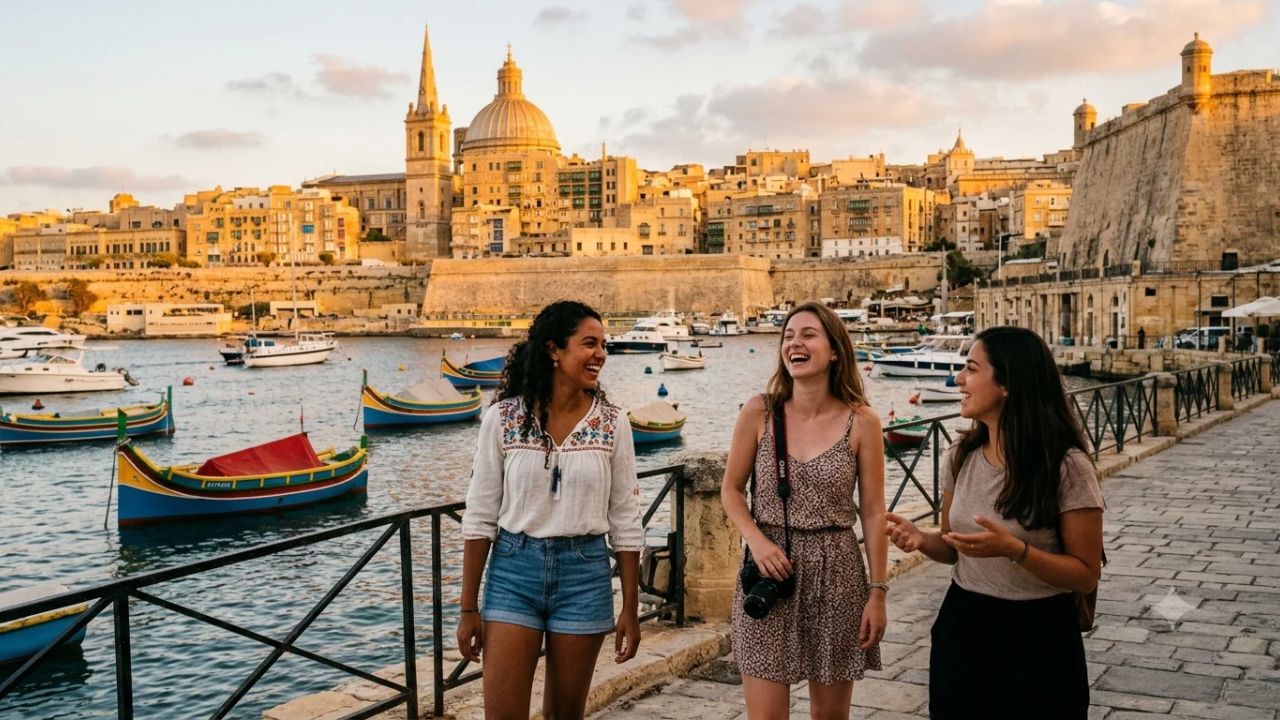
France Follows UK in Global Cultural Travel as Five European Museums Enter World’s Top 20 Rankings


Five European cultural institutions rank in the global top 20 for museum attendance, led by the Louvre Museum and the Palace of Versailles
[PARIS, Oct 30, 2026] — France has reinforced its premier standing in global cultural tourism alongside the United Kingdom and Vatican City, as five European cultural institutions secured coveted positions in the world’s top 20 most-visited museums for 2025, according to the newly released Themed Entertainment Association (TEA) Global Experience Index.
[!NOTE] Key Statistical Indicators and Attendance Benchmarks: The Themed Entertainment Association's Global Experience Index confirms that the world's 20 highest-ranked museums attracted 161.4 million visits in 2025, marking a 5.4 percent year-on-year increase compared to 153.2 million visits in 2024, with 16 of the top 20 institutions recording positive growth. France leads Europe's representation with the Louvre Museum in Paris ranking fourth globally (9.046 million visits) and the Palace of Versailles ranking fifth (8.400 million visits), generating a combined 17.446 million visits. The United Kingdom placed two London institutions in the global top 20: the Natural History Museum at seventh (7.117 million visits, up 13 percent) and the British Museum at thirteenth (6.440 million visits), totaling 13.557 million visits. Vatican City took eighth position with the Vatican Museums recording 6.934 million visits. China dominated the global table with 12 institutions—led by Beijing's Palace Museum (#1 with 19.0 million) and Summer Palace (#2 with 17.381 million)—while South Korea (Gyeongbokgung Palace #11, National Museum of Korea #12) and the United States (Metropolitan Museum of Art #17) broadened global cultural travel.
GLOBAL MUSEUM ATTENDANCE & CULTURAL TRAVEL ARCHITECTURE
| Column 1 |
|---|
| [ GLOBAL TOP-20 VOLUME BENCHMARKS ] [ EUROPEAN TOP-20 REPRESENTATION ] |
| - 2025 Total Top-20 Visits: 161.4 Million - 4. Louvre Museum (France): 9.046M |
| - 2024 Comparable Baseline: 153.2 Million - 5. Palace of Versailles (FR): 8.40M |
| - Annual Growth: +5.4% (+8.2 Million recorded visits) - 7. Natural History Museum (UK): 7.1 |
| - Expanding Institutions: 16 of Top 20 grew attendance - 8. Vatican Museums (Vatican): 6.93M |
| - Classification: Museums, Palaces & Curated Monuments - 13. British Museum (UK): 6.440M |
| +----------------------------+---------------------------------------+ |
| v |
| [ ASIAN MEGACENTERS & GLOBAL GIANTS ] [ HERITAGE MOBILITY & TRANSPORT ] |
| - China Dominance: 12 of Top 20 Global Positions - Paris Corridor: CDG Airport to RER |
| - 1. Palace Museum (Beijing): 19.00 Million Visits - London Hub: Heathrow to Tube/Rail |
| - 2. Summer Palace (Beijing): 17.38 Million Visits - Rome Access: FCO to Vatican Metro |
| - 3. Terracotta Warriors (Xi'an): 10.97 Million Visits - Timed digital ticketing mandates |
| - 11. Gyeongbokgung Palace (Seoul): 6.887 Million Visits - Dispersal to regional galleries |
Global Cultural Tourism Resurgence: Analyzing the TEA Experience Index
The publication of the Themed Entertainment Association’s Global Experience Index marks an important moment for global cultural tourism, demonstrating that international appetite for heritage, fine arts, and scientific discovery has expanded beyond historical baselines. Across the world’s twenty most-visited cultural institutions, total recorded attendance reached 161.4 million visits during 2025. When evaluated against the 153.2 million visits logged by the equivalent institutions in 2024, this performance represents a healthy 5.4 percent year-on-year increase, adding 8.2 million visits to the global cultural economy.
A notable characteristic of the 2025 index is the resilience and breadth of attendance growth. Sixteen of the top twenty cultural institutions registered positive annual growth, indicating that the expansion was widespread rather than concentrated in a handful of outlier attractions.
Equally significant is the methodology utilized by the index, which incorporates historic royal palaces, archaeological monument complexes, and heritage estates with curated collections alongside conventional art galleries and natural history museums. This comprehensive definition reflects how international tourists travel in practice. Holidaymakers seeking cultural immersion rarely distinguish between a standalone museum building and an imperial palace; both serve as premier destinations for architectural appreciation, historical education, and cultural engagement.
It remains essential for tourism analysts to interpret these metrics with precision. The reported figures reflect total recorded turnstile entries rather than the number of unique international travelers. Domestic residents, school groups, regional day-trippers, and repeat local visitors contribute significantly to these totals. Nevertheless, high attendance figures provide an invaluable barometer of global cultural visibility, highlighting the urban centers that successfully anchor international travel itineraries.
GLOBAL TOP-20 MUSEUM ATTENDANCE TRAJECTORY (2024 VS 2025)
| Performance Metric 2024 Baseline 2025 Audited Result Net Change / Trajectory |
|---|
| -------------------------------------------------------------------------------------------- |
| Total Top-20 Visits 153.2 Million 161.4 Million +5.4% (+8.2 Million Visits) |
| Institutions with Growth 14 Institutions 16 Institutions Widespread sector recovery |
| Global Leader (Attendance) Palace Museum (CN) Palace Museum (CN) 19.0 Million Visits |
| Non-China Global Leader Louvre Museum (FR) Louvre Museum (FR) 9.046 Million Visits |
| UK Attendance Benchmark London Cultural Hub Record Performance NHM reaches 7.117 Million |
France's Dual Powerhouses: The Louvre and the Palace of Versailles
France achieved an exceptional performance in the 2025 rankings, securing two spots within the world’s top five cultural institutions and establishing itself as Europe’s foremost cultural tourism heavyweight. Together, the Louvre Museum in central Paris and the Palace of Versailles situated in the southwestern suburbs welcomed a combined 17.446 million visits.
The Louvre Museum retained its standing as the most-visited museum in Europe and the most-visited cultural attraction in the world outside of mainland China. Capturing fourth position globally, the Louvre recorded 9.046 million visits in 2025.
Housed within the historic Palais du Louvre along the Right Bank of the Seine, the institution manages an extraordinary collection spanning ancient Near Eastern civilizations, Egyptian antiquities, classical Greek and Roman sculptures, Islamic art, and European master paintings. Iconic masterpieces—most notably Leonardo da Vinci’s Mona Lisa, the Winged Victory of Samothrace, and the Venus de Milo—continue to draw millions of international visitors.
To manage these high volumes while protecting guest comfort, the Louvre has maintained strict daily admission caps and mandatory advance digital reservation time slots, ensuring visitor flows through I.M. Pei’s iconic glass pyramid remain organized even during peak summer periods.
Just sixteen kilometers southwest of central Paris, the Palace of Versailles (Château de Versailles) claimed fifth position globally with 8.400 million recorded visits. As the former seat of French royal power under Louis XIV, Louis XV, and Louis XVI, Versailles provides a complementary heritage experience that balances the Louvre’s fine-art galleries with opulent baroque architecture and monumental landscape design.
Visitors exploring Versailles encounter the Hall of Mirrors (Galerie des Glaces), the lavish Royal Apartments, and André Le Nôtre’s expansive formal gardens, fountains, and Grand Trianon estate. The palace's dual appeal as an architectural masterpiece and a massive outdoor historical park enables it to absorb immense visitor volumes, making it an indispensable day-trip component for international travelers visiting the French capital.
FRANCE'S GLOBAL TOP-FIVE CULTURAL ATTRACTIONS
| Column 1 |
|---|
| Cultural Institution Global Rank 2025 Recorded Visits Strategic Heritage Profile |
| -------------------------------------------------------------------------------------------- |
| Louvre Museum (Paris) Rank 4 9,046,000 Fine art, classical antiquities |
| Palace of Versailles Rank 5 8,400,000 Royal architecture & gardens |
| Combined National Total — 17,446,000 Europe's premier cultural draw |
| European Standing Rank 1 & 2 Unchallenged Lead Drives high-yield Paris travel |
The United Kingdom's Twin Giants: Natural History and British Museum
The United Kingdom reinforced London’s reputation as one of the world's great intellectual and cultural capitals, placing two premier institutions within the global top twenty. Together, South Kensington’s Natural History Museum and Bloomsbury’s British Museum welcomed 13.557 million visits during 2025, providing exceptional educational access to domestic and international travelers alike.
The Natural History Museum achieved a landmark institutional milestone, recording approximately 7.117 million visits to secure seventh place globally. This performance established an all-time attendance record for the South Kensington institution, representing an impressive 13 percent increase compared to its 2024 attendance.
The museum’s success was driven by an innovative combination of world-class scientific collections, popular temporary exhibitions, and the successful public reopening of its transformed five-acre Nature Discovery Garden and Evolution Garden. These green outdoor spaces feature living laboratory displays, accessible walkways, and a life-sized bronze Diplodocus skeleton named Fern, expanding the museum’s appeal for family travel, school excursions, and international nature enthusiasts.
The British Museum claimed thirteenth position globally, attracting 6.440 million visits across 2025. Situated in the historic literary district of Bloomsbury, the museum houses a vast permanent collection documenting human history, art, and civilization from its origins to the present day.
Centered beneath Norman Foster's breathtaking glass-and-steel Great Court roof, international visitors can study monumental treasures of world heritage, including the Rosetta Stone, the Parthenon Sculptures, Egyptian mummies, and the Anglo-Saxon Sutton Hoo burial treasures.
Both London institutions benefit immensely from the UK government’s statutory policy of offering free general admission to permanent national collections. This policy lowers economic barriers for international families and young travelers, allowing tourists to integrate multiple museum visits into flexible city-break itineraries without incurring high ticketing costs.
UNITED KINGDOM GLOBAL TOP-20 CULTURAL INSTITUTIONS
| Column 1 |
|---|
| Cultural Institution Global Rank 2025 Recorded Visits Annual Growth & Heritage Role |
| -------------------------------------------------------------------------------------------- |
| Natural History Museum Rank 7 7,117,000 +13.0% YoY (All-time UK record) |
| British Museum Rank 13 6,440,000 Global antiquity & human history |
| Combined London Total — 13,557,000 Free admission policy advantage |
| Regional Clustering South Ken & Bloomsbury Anchors London city breaks |
Vatican City: Faith, Renaissance Art, and Papal Heritage
Occupying a unique position within European cultural tourism, Vatican City secured eighth place globally through the Vatican Museums (Musei Vaticani), which recorded 6.934 million visits during 2025. Despite its status as the world’s smallest independent sovereign state by area and population, Vatican City operates one of the most densely visited cultural complexes on earth.
The Vatican Museums represent an extraordinary convergence of religious devotion, classical archaeology, and Renaissance artistic achievement. Spanning seven kilometers of galleries, corridors, and courtyards, the complex houses treasures amassed by successive Roman Catholic popes over five centuries.
Visitors journey through the Gallery of Maps, the Pio-Clementino Museum of classical sculpture (featuring the renowned Laocoön and His Sons and the Apollo Belvedere), and the Raphael Rooms (Stanze di Raffaello) with the celebrated fresco of The School of Athens.
The culmination of every visit is Michelangelo’s masterpiece inside the Sistine Chapel (Cappella Sistina), whose magnificent ceiling frescoes depicting Genesis and The Last Judgment attract pilgrims, art historians, and holidaymakers from across the globe.
Because the Vatican Museums sit entirely within the urban fabric of Rome, their attendance is deeply integrated with broader Italian cultural itineraries. International travelers regularly combine morning visits to the Vatican Museums and St. Peter’s Basilica with afternoon walking tours through Rome’s historic center, exploring the Colosseum, the Roman Forum, the Pantheon, and the Trevi Fountain.
To manage intense visitor concentration, Vatican authorities have introduced advanced electronic ticketing, extended evening opening hours during summer months, and modernized accessibility pathways for travelers with limited mobility.
VATICAN CITY CULTURAL TOURISM BENCHMARKS
| Column 1 |
|---|
| Institution / Jurisdiction Global Position2025 Annual Visits Core Cultural & Sacred Assets |
| -------------------------------------------------------------------------------------------- |
| Vatican Museums Rank 8 6,934,000 Sistine Chapel, Raphael Rooms |
| Sovereign Territory Vatican City Enclave in Rome Religious & Renaissance masteries |
| Itinerary Integration Combined with Rome City Breaks St. Peter's & Roman Forum links |
| Operational Management Extended Evening Hours Digital entry & crowd control |
China's Unprecedented Dominance: Twelve Megasites in the Global Top 20
While European cultural institutions demonstrated outstanding resilience, the most striking structural reality revealed by the 2025 rankings is mainland China's commanding dominance of the global museum landscape. Chinese institutions captured twelve of the twenty available positions in the global top twenty, claiming the top three spots in the world.
Beijing’s Palace Museum—the historic Forbidden City that served as the imperial seat of the Ming and Qing dynasties for more than five hundred years—secured first place worldwide with an extraordinary 19.000 million visits. The Summer Palace (Yiheyuan), an imperial retreat of lakes, pavilions, and classical gardens in northwestern Beijing, claimed second position globally with 17.381 million visits. In Shaanxi province, the Emperor Qin Shihuang’s Mausoleum Site Museum in Xi’an, home to the Terracotta Army, placed third with 10.970 million visits.
Additional Chinese cultural landmarks appearing across the global top twenty include:
- Shenzhen Nanshan District Museum (Rank 6, 7.455 million visits), reflecting the rapid rise of modern regional cultural centers in the Greater Bay Area.
- Opium War Museum in Dongguan (Rank 9, 6.929 million visits), highlighting modern historical memory and educational heritage.
- National Museum of China in Beijing (Rank 10, 6.900 million visits), housing foundational cultural artifacts documenting Chinese history.
- Prince Kung’s Mansion Museum in Beijing (Rank 14, 6.120 million visits), preserving historic Qing dynasty courtyard architecture.
- Sanxingdui Museum in Guanghan (Rank 15, 6.080 million visits), showcasing bronze-age civilization artifacts.
- Chengdu Wuhou Shrine Museum (Rank 16, 6.030 million visits), celebrating Three Kingdoms history.
- Nanjing Museum (Rank 18, 5.860 million visits), an expansive regional center of ancient art.
- Shenyang Palace Museum (Rank 19, 5.852 million visits), early Qing imperial palace architecture.
- China Science and Technology Museum in Beijing (Rank 20, 5.530 million visits), a national center of scientific education.
China’s performance illustrates the immense power of its domestic tourism market, supported by government investments in cultural infrastructure, high-speed rail networks, and digital booking systems. While primarily supported by domestic travelers, these institutions represent high-value cultural assets that attract an expanding volume of international visitors following China’s recent expansions of visa-free travel policies.
CHINA'S TWELVE GLOBAL TOP-20 CULTURAL INSTITUTIONS
| Column 1 |
|---|
| Global Rank Institution Location / Province 2025 Recorded Visits |
| -------------------------------------------------------------------------------------------- |
| 1 Palace Museum (Forbidden City) Beijing 19,000,000 |
| 2 Summer Palace Beijing 17,381,000 |
| 3 Mausoleum of Qin Shihuang (Xi'an)Shaanxi 10,970,000 |
| 6 Shenzhen Nanshan District MuseumShenzhen, Guangdong 7,455,000 |
| 9 Opium War Museum Dongguan, Guangdong 6,929,000 |
| 10 National Museum of China Beijing 6,900,000 |
| 14 Prince Kung’s Mansion Museum Beijing 6,120,000 |
| 15 Sanxingdui Museum Guanghan, Sichuan 6,080,000 |
| 16 Chengdu Wuhou Shrine Museum Chengdu, Sichuan 6,030,000 |
| 18 Nanjing Museum Nanjing, Jiangsu 5,860,000 |
| 19 Shenyang Palace Museum Shenyang, Liaoning 5,852,000 |
| 20 China Science & Technology MuseumBeijing 5,530,000 |
Global Diversity: South Korea and the United States Beyond Europe and China
Beyond Europe and mainland China, the 2025 global rankings feature three prominent cultural institutions from South Korea and the United States, illustrating the diverse international distribution of high-volume cultural travel.
South Korea placed two Seoul-based institutions within the world’s top twenty, highlighting the international popularity of Korean heritage:
- Gyeongbokgung Palace captured eleventh place globally, welcoming 6.887 million visits. As the main royal palace of the Joseon dynasty, Gyeongbokgung attracts international travelers through traditional royal guard changing ceremonies, hanbok-wearing cultural experiences (which grant free admission to visitors wearing traditional dress), and night openings that illuminate historic pavilions against the Seoul cityscape.
- The National Museum of Korea secured twelfth position with 6.507 million visits. Located in central Seoul’s Yongsan district, the museum serves as a comprehensive showcase of Korean archaeology, art, and national history, offering free admission to its permanent galleries and hosting major international loan exhibitions.
In the United States, New York City’s Metropolitan Museum of Art (The Met) represented North America in the global top twenty, ranking seventeenth worldwide with 5.984 million visits.
Situated along Fifth Avenue’s Museum Mile bordering Central Park, The Met houses over two million works spanning five thousand years of world culture. From the ancient Egyptian Temple of Dendur and the American Wing to iconic European Impressionist galleries, The Met remains a cornerstone of New York City’s cultural visitor economy, driving hotel bookings, fine dining, and broad tourism expenditures across Manhattan.
SOUTH KOREAN & AMERICAN CULTURAL ANCHORS
| Column 1 |
|---|
| Institution City & Country Global Rank 2025 Recorded Visits |
| -------------------------------------------------------------------------------------------- |
| Gyeongbokgung Palace Seoul, South Korea Rank 11 6,887,000 |
| National Museum of Korea Seoul, South Korea Rank 12 6,507,000 |
| Metropolitan Museum of Art New York, USA Rank 17 5,984,000 |
Complete Global Top 20 Museum Attendance Table
The complete ranking of the world's twenty most-visited cultural institutions in 2025 illustrates the geographical distribution of cultural tourism between East Asia, Western Europe, and North America:
THE WORLD'S TOP 20 MOST-VISITED MUSEUMS (2025 AUDITED DATA)
| Column 1 |
|---|
| Rank Institution City & Country 2025 Visits |
| -------------------------------------------------------------------------------------------- |
| 1 Palace Museum (Forbidden City) Beijing, China 19,000,000 |
| 2 Summer Palace Beijing, China 17,381,000 |
| 3 Emperor Qin Shihuang's Mausoleum Site MuseumXi'an, China 10,970,000 |
| 4 Louvre Museum Paris, France 9,046,000 |
| 5 Palace of Versailles Versailles, France 8,400,000 |
| 6 Shenzhen Nanshan District Museum Shenzhen, China 7,455,000 |
| 7 Natural History Museum London, United Kingdom 7,117,000 |
| 8 Vatican Museums Vatican City 6,934,000 |
| 9 Opium War Museum Dongguan, China 6,929,000 |
| 10 National Museum of China Beijing, China 6,900,000 |
| 11 Gyeongbokgung Palace Seoul, South Korea 6,887,000 |
| 12 National Museum of Korea Seoul, South Korea 6,507,000 |
| 13 British Museum London, United Kingdom 6,440,000 |
| 14 Prince Kung's Mansion Museum Beijing, China 6,120,000 |
| 15 Sanxingdui Museum Guanghan, China 6,080,000 |
| 16 Chengdu Wuhou Shrine Museum Chengdu, China 6,030,000 |
| 17 Metropolitan Museum of Art New York, United States 5,984,000 |
| 18 Nanjing Museum Nanjing, China 5,860,000 |
| 19 Shenyang Palace Museum Shenyang, China 5,852,000 |
| 20 China Science and Technology Museum Beijing, China 5,530,000 |
Europe's Wider Cultural Landscape: Regional Champions Across Twenty Institutions
While only five European institutions secured positions within the worldwide top twenty, Europe’s broader regional ranking illustrates an extraordinarily rich geographic distribution of cultural heritage across ten different nations.
Beyond France, the UK, and Vatican City, the European top twenty features cultural landmarks across Russia, Türkiye, Italy, Austria, Spain, Poland, and Germany:
In London, cultural travel extends far beyond the Natural History and British museums. The Tate Modern secured ninth place in Europe with its collections of international modern and contemporary art along the South Bank of the Thames. The National Gallery along Trafalgar Square ranked tenth in Europe with its masterworks of Western European painting, while South Kensington's Victoria and Albert Museum (V&A) took seventeenth place for decorative arts and design.
In France, the Musée d’Orsay ranked fourteenth across Europe, renowned for its incomparable collection of French Impressionist and Post-Impressionist masterpieces housed within a restored Beaux-Arts railway terminal.
In Southern Europe, Italy's Pompeii Archaeological Park secured eleventh position in Europe, drawing millions to walk the preserved streets of an ancient Roman city buried by Mount Vesuvius in 79 AD. Florence's Uffizi Galleries completed Europe's top twenty, anchoring Renaissance cultural tours through Tuscany. In Spain, Madrid’s Museo Nacional del Prado ranked fifteenth in Europe, celebrated for masterworks by Velázquez, Goya, and El Greco.
In Central Europe, Austria’s Schönbrunn Palace in Vienna ranked twelfth in Europe, offering visitors grand imperial Habsburg staterooms and baroque palace gardens. In Poland, Wawel Royal Castle in Kraków placed sixteenth, preserving Polish royal history along the Vistula River. In Germany, Berlin’s Humboldt Forum placed eighteenth, highlighting international collections on Museum Island.
In Eastern Europe and Eurasia, the State Russian Museum in Saint Petersburg took sixth in Europe, the Peterhof State Museum-Reserve ranked seventh, the State Hermitage Museum took thirteenth, and Moscow’s State Tretyakov Gallery placed nineteenth. In Istanbul, Türkiye’s Topkapı Palace placed eighth across Europe, celebrating Ottoman imperial history overlooking the Bosphorus.
EUROPE'S TOP 20 MOST-VISITED CULTURAL ATTRACTIONS (2025)
| Column 1 |
|---|
| European Rank Attraction / Museum Country |
| -------------------------------------------------------------------------------------------- |
| 1 Louvre Museum France |
| 2 Palace of Versailles France |
| 3 Natural History Museum United Kingdom |
| 4 Vatican Museums Vatican City |
| 5 British Museum United Kingdom |
| 6 State Russian Museum Russia |
| 7 Peterhof State Museum-Reserve Russia |
| 8 Topkapı Palace Türkiye |
| 9 Tate Modern United Kingdom |
| 10 National Gallery United Kingdom |
| 11 Pompeii Archaeological Park Italy |
| 12 Schönbrunn Palace Austria |
| 13 State Hermitage Museum Russia |
| 14 Musée d’Orsay France |
| 15 Museo Nacional del Prado Spain |
| 16 Wawel Royal Castle Poland |
| 17 Victoria and Albert Museum (V&A) United Kingdom |
| 18 Humboldt Forum Germany |
| 19 State Tretyakov Gallery Russia |
| 20 Uffizi Galleries Italy |
Transport Interconnectivity and Strategic Itinerary Planning
The world’s most-visited cultural institutions are deeply reliant on high-capacity international aviation gateways, regional rail networks, and integrated urban transit systems. Efficient transport links allow international tourists to transition seamlessly from airport arrivals to museum entryways.
In Paris, international air travelers arriving via Paris Charles de Gaulle Airport (CDG) or Paris Orly Airport (ORY) connect into the city center via regional rail lines. Accessing the Louvre is straightforward via Metro Palais Royal-Musée du Louvre, while travelers journeying to the Palace of Versailles utilize the RER C suburban rail network directly to Versailles Château Rive Gauche station.
In London, London Heathrow Airport (LHR) provides immediate access to South Kensington’s museum quarter (Natural History Museum, V&A, and Science Museum) via the Piccadilly Line, while the high-speed Elizabeth Line links Heathrow directly with Tottenham Court Road for easy walking access to the British Museum in Bloomsbury.
In Rome and Vatican City, international flights into Rome Fiumicino Leonardo da Vinci Airport (FCO) connect via the Leonardo Express train to Roma Termini, where Metro Line A provides direct transit to Ottaviano-San Pietro station, situated a short walk from the entrance of the Vatican Museums.
In Beijing, international passengers entering via Beijing Capital International Airport (PEK) or Beijing Daxing International Airport (PKX) utilize express airport rail lines to connect directly into Beijing's subway system, where stations at Tiananmen East, Tiananmen West, and Beihai North provide rapid access to the Forbidden City and Summer Palace.
MAJOR URBAN CULTURAL GATEWAYS & TRANSIT CORRIDORS
| Destination Hub Primary International Airport Dedicated Cultural Transit Link |
|---|
| -------------------------------------------------------------------------------------------- |
| Paris, France Paris Charles de Gaulle (CDG) RER B to Metro; RER C to Versailles |
| London, United Kingdom London Heathrow (LHR) Piccadilly & Elizabeth Lines direct |
| Rome & Vatican City Rome Fiumicino (FCO) Leonardo Express & Metro Line A |
| Beijing, China Beijing Capital (PEK) Airport Express to Metro Lines 1 & 8 |
| Seoul, South Korea Incheon International (ICN) AREX Express to Seoul Subway Line 3 |
| New York, United States John F. Kennedy (JFK) AirTrain to Subway Lines 4, 5, 6 |
Sustainable Destination Governance: Managing Carrying Capacity and Preservation
While welcoming millions of visitors brings substantial economic vitality to host destinations—supporting hotels, restaurants, licensed tour operators, and public transport systems—high attendance places intense pressure on historical infrastructure and fragile cultural artifacts. Sustainable visitor governance has therefore become a central priority for museum administrations worldwide.
Leading institutions have abandoned open unreserved ticketing models in favor of dynamic timed-entry digital reservation platforms. The Louvre Museum, Palace of Versailles, Vatican Museums, and Beijing’s Palace Museum now require visitors to reserve specific entry time slots online well in advance.
These digital systems smooth out foot-traffic peaks, eliminate hours-long queues on exterior plazas, and prevent severe overcrowding inside sensitive gallery halls, such as Versailles' Hall of Mirrors or the Sistine Chapel.
In addition, museum authorities are actively reinvesting entrance fee revenues into comprehensive conservation, environmental stabilization, and technological modernization. Climate control systems have been upgraded to maintain exact temperature and humidity parameters, protecting ancient parchment scrolls, delicate oil pigments, and classical marbles from airborne pollutants and moisture generated by large human crowds.
Equally significant are public initiatives designed to encourage geographic dispersal. Tourism boards in Paris, London, and Rome are actively promoting regional satellite museums and secondary heritage sites—such as the Louvre-Lens in northern France, the Young V&A in Bethnal Green, or Rome’s Galleria Borghese—encouraging travelers to explore decentralized cultural circuits and reducing pressure on primary capital monuments.
SUSTAINABLE HERITAGE MANAGEMENT & CAPACITY PROTOCOLS
| Column 1 |
|---|
| Governance Dimension Operational Policy Mechanism Preservation & Visitor Benefit |
| -------------------------------------------------------------------------------------------- |
| Capacity Regulation Mandatory Timed-Entry Tickets Eliminates dangerous indoor crowds |
| Environmental Control High-efficiency HVAC systems Protects canvas, marble & parchment |
| Revenue Reinvestment Earmarked Conservation Funds Finances continuous art restoration |
| Geographic Dispersal Promotion of Regional SatellitesAlleviates capital city congestion |
| Accessibility Modernization Step-free ramps & elevators Ensures inclusive universal access |
Frequently Asked Questions (PAA)
What was the most-visited museum in the world in 2025?
The Palace Museum (the Forbidden City) in Beijing, China, was the most-visited museum in the world in 2025, recording 19.000 million visits according to the Themed Entertainment Association (TEA) Global Experience Index. Beijing’s Summer Palace ranked second globally with 17.381 million visits, while the Emperor Qin Shihuang’s Mausoleum Site Museum in Xi’an ranked third with 10.970 million visits.
Which European museum had the highest attendance in 2025?
The Louvre Museum in Paris, France, had the highest attendance of any European cultural institution in 2025, recording 9.046 million visits. It ranked fourth globally and was the most-visited cultural attraction in the world outside of mainland China. The Palace of Versailles, also located in the Paris metropolitan region, ranked second in Europe and fifth worldwide with 8.400 million visits.
Which UK museums made the global top 20 rankings?
Two United Kingdom institutions, both located in London, made the global top 20 rankings in 2025:
- The Natural History Museum in South Kensington ranked seventh globally with approximately 7.117 million visits, setting an all-time record for the institution with a 13 percent year-on-year increase.
- The British Museum in Bloomsbury ranked thirteenth globally with 6.440 million visits.
Do tourists need advance reservations to visit top European museums like the Louvre or Vatican?
Most top-ranked European cultural attractions require or strongly recommend advance timed-entry reservations online. The Louvre Museum, the Palace of Versailles, and the Vatican Museums enforce strict daily attendance limits and specific arrival windows to control crowd density. Securing reservations several weeks or months ahead of travel is highly recommended, particularly during the peak summer and spring holiday seasons.
How does free museum admission in the UK affect visitor numbers?
The United Kingdom’s national policy providing free general admission to permanent collections at national museums—including the Natural History Museum, the British Museum, the National Gallery, and Tate Modern—removes financial barriers for visitors. This policy allows London institutions to attract millions of domestic and international travelers, enabling family groups and budget-conscious travelers to experience world-class cultural heritage without purchasing expensive admission tickets.
Related Travel Guides
This article is for informational purposes. Flight routes, passenger regulations, visa rules, and transit advisories are subject to change by airlines and aviation authorities. Readers are advised to verify schedules and travel documentation with relevant carriers and border agencies before departure.
Related Stories
France and Spain Dominate Global Tourism as Combined Arrivals Near 200 Million Across World Top 20 Ranking
Salamanca Showcases Spain’s Golden Heritage: Complete Cultural Tourism and Historic Travel Guide