
France and Spain Wildfire Crisis 2026: 250,000 Evacuations and Major Road Closures Near Madrid
Massive wildfires across France and Spain have forced over 250,000 evacuations, shuttered key roads west of Madrid, and disrupted the Tour de France finale during the 2026 summer peak.

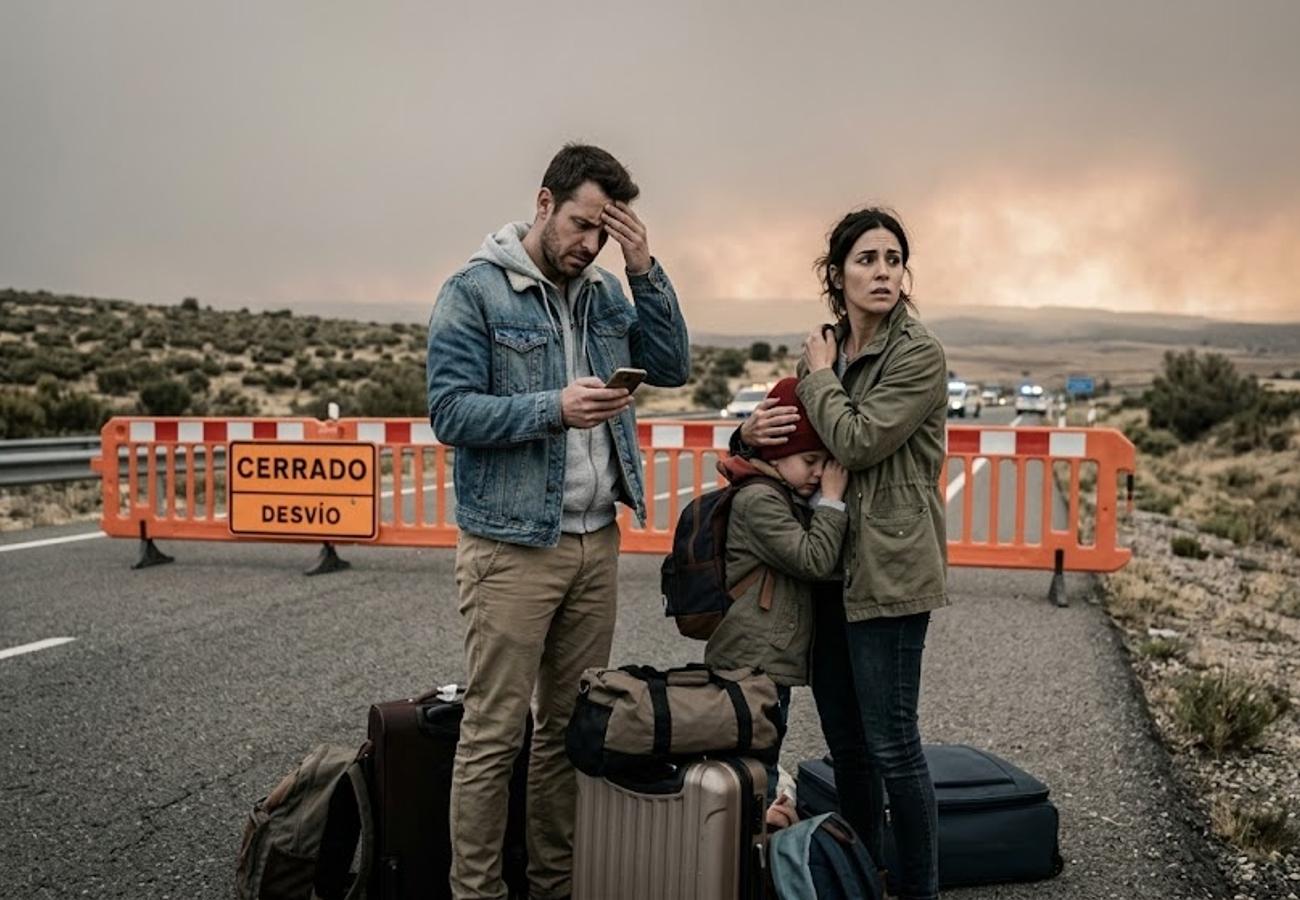
Image generated by AI
Over 250,000 people have been forced from their homes as catastrophic wildfires sweep through France and Spain. From the closure of critical transport arteries near Madrid to the redirection of security for the Tour de France, the 2026 summer peak is facing a severe operational crisis.
The convergence of prolonged drought, extreme heatwaves, and low soil moisture has turned southwestern Europe into a tinderbox. These are not isolated incidents; the scale of the 2026 blazes is impacting primary tourism hubs, rural communities, and international sporting events simultaneously.
French Emergency Response in Bordeaux and Gironde
France is currently the epicenter of the crisis. The most severe damage is concentrated in Gironde, Landes, and the Arcachon Basin, with the areas surrounding Bordeaux facing significant threats.
The French Interior Ministry reports that nearly 98,000 hectares have burned across the country in 2026, marking one of the most destructive seasons in national history. To combat the spread, the government has deployed:
- Military Support: Approximately 1,500 personnel are on the ground.
- Aviation Assets: Airbus A400M military transport aircraft are being used to drop massive quantities of fire retardant.
- Civilian Infrastructure: Schools, sports halls, and exhibition centers have been converted into emergency shelters for displaced tourists and residents.
The crisis reached a symbolic peak when officials were forced to shorten the final stage of the Tour de France. Security personnel originally assigned to the race were redeployed to assist in firefighting and evacuation efforts, illustrating the severity of the resource shortage.
Spanish Transport Gridlock West of Madrid
In Spain, the emergency is centered west of the capital. The Spanish Directorate-General for Traffic has issued multiple alerts as fires penetrate forested regions, cutting off access to mountain retreats, reservoirs, and rural tourism zones.
Travelers attempting to navigate the region should be aware of significant closures on the following routes:
- Regional Roads: M-501, M-507, M-510, M-512, M-533, M-540, M-541
- National/Local Routes: N-403, CL-501
Prime Minister Pedro Sánchez has emphasized that the government's primary objective remains the preservation of life, though the resulting road closures are creating a ripple effect of delays for those traveling between Madrid and the western provinces.
Aviation and Flight Operational Status
Despite the chaos on the ground, the aviation sector has not yet seen a systemic collapse. No major carriers have announced widespread, wildfire-specific cancellations, although passengers are urged to verify flight statuses in real-time.
Current Airline Status Overview
| Airline | Operational Status | Guidance |
|---|---|---|
| Air France | No widespread cancellations announced | Monitor official channels |
| Iberia | No nationwide disruptions confirmed | Check flight status |
| Ryanair | No official large-scale disruption | Use mobile app for updates |
| easyJet | Operations continuing | Monitor airline updates |
| Vueling | Operations continuing | Verify status before departure |
Regional Impact Summary
The following table outlines the specific disruptions currently affecting the two most impacted nations.
| Country | Primary Affected Areas | Key Travel Impacts |
|---|---|---|
| France | Gironde, Landes, Bordeaux, Arcachon Basin | Mass evacuations, emergency shelters, Tour de France route changes, road restrictions |
| Spain | West of Madrid and surrounding rural regions | Major road closures (M and N routes), restricted rural access, regional transport delays |
Strategic Advice for Summer Travelers
With July and August being the busiest months for European tourism, the risk of last-minute itinerary failure is high. Travelers are advised to adopt a flexible approach to their journeys.
Essential Precautions:
- Direct Verification: Do not rely on third-party booking sites; contact hotels in Bordeaux or western Madrid directly to confirm they are operational.
- Route Planning: Avoid relying on a single highway; have alternative maps ready for the Madrid periphery.
- Compliance: Follow evacuation orders immediately. Local authorities in Gironde and Landes have priority over tourist movement.
- Documentation: Keep digital and physical copies of travel insurance, as claims for "force majeure" events are expected to rise.
The 2026 wildfire season serves as a stark reminder of how climate volatility now dictates the operational reality of global tourism.
Related Travel Guides
Disclaimer
This article is for informational and educational purposes only. It does not constitute legal, financial, or professional advice. While we strive to provide accurate and up-to-date information, travel policies, regulations, and conditions change rapidly. Always verify information with official sources before making travel decisions. Nomad Lawyer makes no representations about the accuracy, reliability, completeness, or suitability of the information provided. Readers should consult qualified professionals for advice specific to their circumstances. The views expressed in this article are those of the author and do not necessarily reflect the views of Nomad Lawyer.
Kunal K Choudhary
Co-Founder & Contributor
A passionate traveller and tech enthusiast. Kunal contributes to the vision and growth of Nomad Lawyer, bringing fresh perspectives and driving the community forward.
Learn more about our team →