
US Aviation Crisis 2026: 4,367 Flight Delays and 210 Cancellations Hit Atlanta, JFK, and Boston
Severe weather triggers massive disruptions across the US aviation network, with 4,367 delays and 210 cancellations centered at major hubs like Hartsfield-Jackson Atlanta and JFK.

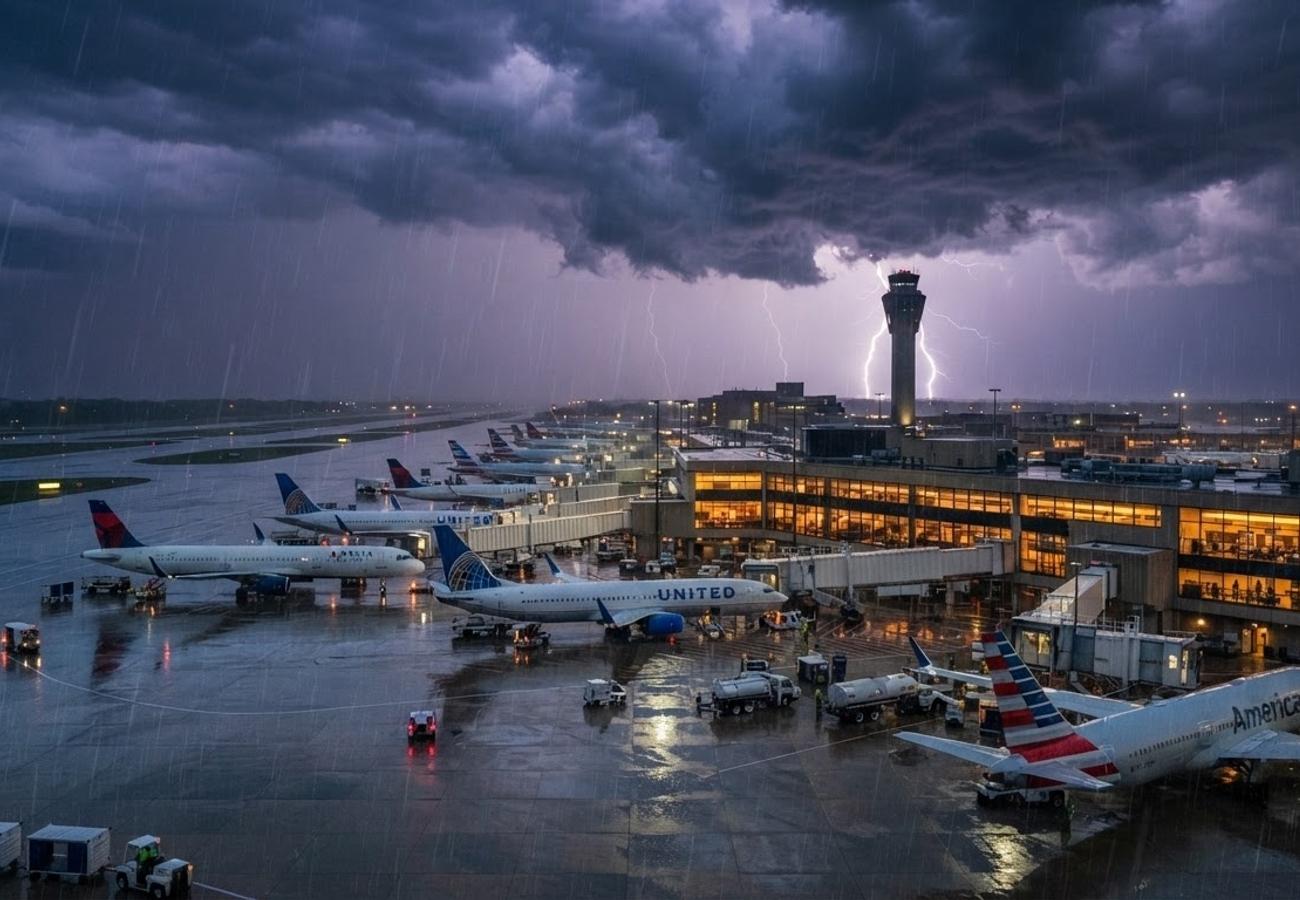
Image generated by AI
Severe weather systems across the central and eastern United States have triggered widespread operational failures, resulting in 4,367 delays and 210 cancellations nationwide.
The disruptions are concentrated in primary East Coast and Midwest hubs, with New York’s John F. Kennedy (JFK) and Hartsfield-Jackson Atlanta serving as the epicenters of the volatility.
Operational Breakdown of US Airspace Disruptions
The current instability is driven by slow-moving thunderstorms across the Plains and Midwest, creating a cycle of ground stops and departure delays. The impact is most visible at JFK, which accounted for over 25% of all national cancellations. Meanwhile, Atlanta recorded the highest volume of delays, largely attributed to Delta Air Lines' heavy operational footprint at the hub.
JetBlue has emerged as the hardest-hit carrier regarding cancellations, following the issuance of a comprehensive travel alert and waiver covering several East Coast cities.
Critical Impact Metrics by Airline
Our analysis of the flight data indicates that while some carriers maintained low cancellation rates, the volume of delays created a systemic ripple effect across domestic networks.
| Airline | Cancelled | Delayed |
|---|---|---|
| JetBlue | 65 | 304 |
| United Airlines | 21 | 332 |
| PSA Airlines (American Airlines) | 21 | 132 |
| Delta Air Lines | 17 | 796 |
| Alaska Airlines | 11 | 104 |
| Endeavor Air (Delta Connection) | 10 | 249 |
| American Airlines | 9 | 704 |
| Southwest Airlines | 7 | 513 |
Hub-Specific Disruption Data
The following airports experienced the most significant operational degradation:
- Hartsfield-Jackson Atlanta: 956 Delays | 14 Cancellations (Delta Air Lines reported 603 of these delays).
- John F. Kennedy (JFK): 218 Delays | 53 Cancellations (JetBlue led with 37 cancellations and 93 delays).
- Boston Logan: 198 Delays | 26 Cancellations (JetBlue accounted for 23 cancellations and 77 delays).
- Chicago O’Hare: 337 Delays | 14 Cancellations.
- LaGuardia: 200 Delays | 16 Cancellations.
FAA Weather Advisories and Departure Trends
The FAA has implemented Traffic Management Initiatives (TMI) to mitigate the impact of thunderstorms and heavy rain.
| Airport | Departure Delay | Trend | Primary Reason |
|---|---|---|---|
| Miami (MIA) | Avg 30 minutes | Decreasing | TMI due to weather |
| Fort Lauderdale (FLL) | Avg 30 minutes | Increasing | TMI due to weather |
| Hartsfield-Jackson (ATL) | Avg 30 minutes | Increasing | Thunderstorms |
Why This Matters: Industry Implications
From a logistical perspective, this data reveals a critical vulnerability in the "hub-and-spoke" model. When a primary node like Atlanta or JFK experiences weather-driven delays, the inefficiency propagates across the entire national network.
For travelers, the real impact is not just the 210 cancellations, but the 4,367 delays that freeze aircraft and crews in the wrong cities. This creates a "cascading failure" where a flight delayed in the morning causes a cancellation in the evening.
Market trends suggest that JetBlue's aggressive use of travel waivers—covering Boston, JFK, LaGuardia, Newark, Philadelphia, Washington Reagan, Westchester County, and Long Island/Islip—is a strategic move to reduce terminal congestion by encouraging passengers to rebook before arriving at the airport. For those flying through the Midwest, specifically Chicago, the repetition of storm cells over the same geography means operational recovery will be slower than typical seasonal weather events.
Forward Outlook
Expect continued volatility through the week as thunderstorms persist across the central and eastern US. Travelers should prioritize the following actions to mitigate risk:
- Immediate Rebooking: If departing from JFK, Atlanta, or Boston, rebook flights immediately upon notification.
- Digital Monitoring: Rely on airline mobile applications rather than terminal screens, as gate changes are occurring rapidly.
- Carry-on Strategy: Keep all essential medications and electronics in carry-on luggage to avoid loss during potential overnight delays or rerouting.
Airspace stability remains contingent on the movement of the current storm front away from the Midwest corridor.
Related Travel Guides
Disclaimer
This article is for informational and educational purposes only. It does not constitute legal, financial, or professional advice. While we strive to provide accurate and up-to-date information, travel policies, regulations, and conditions change rapidly. Always verify information with official sources before making travel decisions. Nomad Lawyer makes no representations about the accuracy, reliability, completeness, or suitability of the information provided. Readers should consult qualified professionals for advice specific to their circumstances. The views expressed in this article are those of the author and do not necessarily reflect the views of Nomad Lawyer.
Kunal K Choudhary
Co-Founder & Contributor
A passionate traveller and tech enthusiast. Kunal contributes to the vision and growth of Nomad Lawyer, bringing fresh perspectives and driving the community forward.
Learn more about our team →