
Flight Cancellations Omaha Eppley: Midwest Travelers Face Peak Season Disruption
Flight cancellations at Omaha Eppley Airfield surge in 2026 as airlines trim schedules during peak travel season. Midwestern passengers face unexpected disruptions, rebooking challenges, and extended terminal waits.

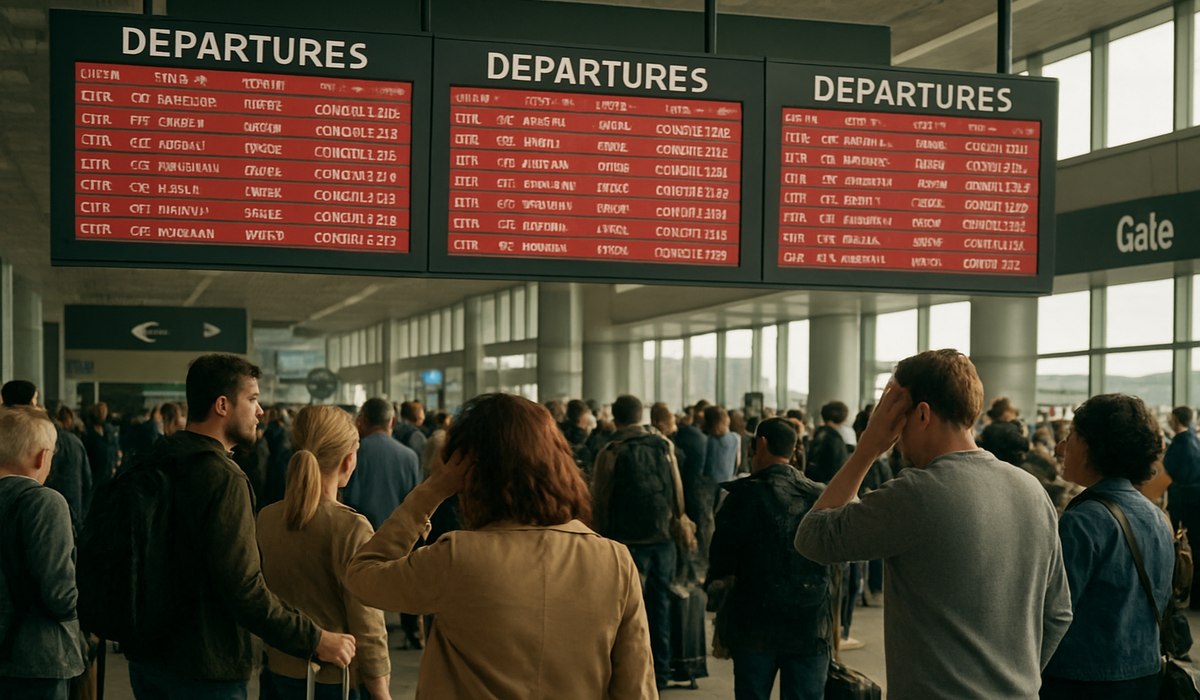
Image generated by AI
Omaha Eppley Faces Surge in Flight Cancellations as Airlines Adopt Lean Scheduling
Omaha Eppley Airfield is experiencing an unprecedented spike in flight cancellations as peak travel season collides with aggressive airline cost-cutting measures. Multiple carriers operating from Nebraska's busiest airport have trimmed schedules, concentrating flights on high-demand routes while eliminating marginal services. The result: thousands of Midwestern travelers are encountering last-minute cancellations, rebooking nightmares, and operational chaos that's atypical for the mid-size regional hub. Airlines cite staffing constraints, elevated fuel costs, and air traffic management limitations as key drivers behind the restructuring. However, the timing—coinciding with spring break and early summer bookings—has caught passengers off-guard, forcing many to explore alternative airports or delay trips entirely.
Spike in Cancellations Fuels Traveler Frustration
Recent flight data reveals a troubling pattern at flight cancellations Omaha Eppley during the critical May 2026 travel window. Passengers report waking to discover early-afternoon departures suddenly removed from schedules with minimal warning. Popular routes to Denver, Chicago, and Phoenix show clusters of cancellations, some announced over 24 hours before departure to account for anticipated network constraints.
Online travel forums and regional discussion boards overflow with accounts of disrupted itineraries. Travelers describe extended concourse waits, repeated gate changes, and uncertainty surrounding replacement flight availability. The disruption feels especially acute at Eppley because passengers have historically experienced smoother operations compared to major national hubs. However, this perception masks a fundamental reality: when airlines operate with razor-thin margins, a single cancellation cascades across the entire passenger experience. Track real-time cancellations and delays using FlightAware, which provides live departure board data for all Omaha Eppley flights.
How Lean Airline Scheduling Amplifies Disruption
Airlines serving Eppley have fundamentally reshaped their operational philosophy around "lean scheduling"—fewer total flights, higher passenger loads per departure, and zero-slack buffers for irregular operations. This model maximizes revenue efficiency during normal conditions but fails catastrophically when disruptions occur.
Industry analysis reveals that roughly three dozen nonstop destinations remain available from Omaha, but secondary routes now operate at reduced frequencies compared to 2025 levels. Carriers have systematically eliminated flights with historically low seat occupancy, consolidating passenger demand onto fewer departures. While this keeps individual flights fuller, it eliminates the capacity redundancy that travelers depend on during cancellations.
The problem intensifies because many Omaha-based connections feed through major hubs where other airlines are simultaneously cutting operations. When a Denver hub experiences staffing shortages or weather delays, those restrictions immediately impact connecting traffic through Omaha. The Federal Aviation Administration continues monitoring network capacity constraints at major facilities—explore current conditions at FAA.
Impact on Midwest Travelers and Regional Alternatives
Midwestern travelers caught in the flight cancellations Omaha Eppley surge face limited immediate solutions. Nearby alternatives include Kansas City International Airport (MCI, approximately 3.5 hours southwest) and St. Louis Lambert International Airport (STL, roughly 4 hours south). Both facilities maintain broader airline presence and higher flight frequencies, though they introduce significantly longer ground transportation commitments.
For business travelers and families with tight schedules, the viable options narrow considerably. Rebooking through Eppley typically means accepting multi-leg itineraries with lengthy layovers. Alternatively, some passengers have pivoted to driving to regional hubs—a costly and time-intensive workaround that reflects the desperation created by schedule instability at their home airport.
The broader Midwest region depends heavily on Eppley for air connectivity. Nebraska's economy, university systems, and healthcare networks all rely on consistent service to national markets. Extended schedule disruptions threaten business continuity and visitor accessibility for the Omaha metropolitan area, historically disadvantaged compared to larger coastal hubs.
Terminal Construction Compounds Operational Strain
Compounding the scheduling crisis, Omaha Eppley is mid-renovation through a nearly $1 billion modernization program. New concourses, expanded security checkpoints, and reconfigured passenger flows are transforming the terminal—but not without temporary operational friction.
Construction has shifted curbside access routes, consolidated parking areas, and created interior circulation detours that complicate passenger navigation. When combined with schedule disruptions forcing unexpected rebookings and overnight stays, the physical infrastructure strain becomes acute. Airport officials now require passengers to arrive two hours before domestic departures—a 30-minute extension from standard guidance—to accommodate construction-related processing delays and inflated security queue times.
These temporary facilities will ultimately enhance long-term capacity and passenger comfort. However, the current construction window creates a compounding crisis: scheduling instability plus physical infrastructure bottlenecks equal maximum passenger friction precisely when airlines are operating the fewest flights.
Traveler Action Checklist
Passengers navigating flight cancellations Omaha Eppley and Midwest air travel should implement these protective measures:
- Check flight status 24-48 hours before departure via FlightAware or your airline's app, not just departure boards.
- Set up push notifications for your specific flight to receive cancellation alerts before they appear publicly.
- Know your airline's rebooking policy and have alternative flight options researched before you arrive at the airport.
- Book return flights on different airlines when possible to reduce cascading cancellation risk across your itinerary.
- Arrive three hours early for international flights and two hours early for domestic departures to navigate construction-delayed security lines.
- Document all out-of-pocket expenses from cancellations (hotels, meals, ground transportation) to support U.S. Department of Transportation compensation claims.
- Review your airline's delay/cancellation compensation policies before traveling, especially for connecting flights where missed connections aren't carrier-caused.
- Consider alternative airports like Kansas City (MCI) or St. Louis (STL) for critical travel if Eppley shows elevated cancellation rates.
What This Means for Travelers: Key Takeaways
The convergence of aggressive airline scheduling, regional capacity cuts, and terminal construction represents a paradigm shift for Omaha travelers accustomed to reliable service. This disruption reflects broader industry consolidation where carriers prioritize per-flight profitability over schedule breadth and passenger options.
Expect schedule volatility to persist through summer 2026 as airlines optimize networks around peak demand periods. Travelers should adopt a defensive posture: monitor bookings obsessively, research alternatives before disruptions occur, and build extra buffer time into connections. The U.S. Department of Transportation enforces passenger rights requirements, detailed at US DOT Air Consumer Protection, that may qualify you for compensation depending on cancellation timing and your airline's policies.
Regional airports nationwide face similar pressures, making this an inflection point for American air travel. Passengers at smaller hubs must adapt to reduced redundancy and less flexible rebooking options than travelers at mega-hubs enjoy.
FAQ: Flight Cancellations and Omaha Eppley
What should I do if my Omaha Eppley flight is cancelled? Contact your airline immediately through their app or phone number rather than waiting in airport queues. Request rebooking on the next available flight on your airline or a partner carrier. Document the cancellation notification time, reason if provided, and all expenses incurred. File a Department of Transportation complaint if eligible for compensation under federal rules.
**Are
Disclaimer
This article is for informational and educational purposes only. It does not constitute legal, financial, or professional advice. While we strive to provide accurate and up-to-date information, travel policies, regulations, and conditions change rapidly. Always verify information with official sources before making travel decisions. Nomad Lawyer makes no representations about the accuracy, reliability, completeness, or suitability of the information provided. Readers should consult qualified professionals for advice specific to their circumstances. The views expressed in this article are those of the author and do not necessarily reflect the views of Nomad Lawyer.
Raushan Kumar
Founder & Lead Developer
Full-stack developer with 11+ years of experience and a passionate traveller. Raushan built Nomad Lawyer from the ground up with a vision to create the best travel and law experience on the web.
Learn more about our team →