
Transit Alert: Fiji Fuel Shortage Disrupts Nadi Airport Flight Operations
A temporary aviation fuel shortage at Fiji's Nadi International Airport has forced Air New Zealand, Virgin Australia, and Qantas to modify schedules.

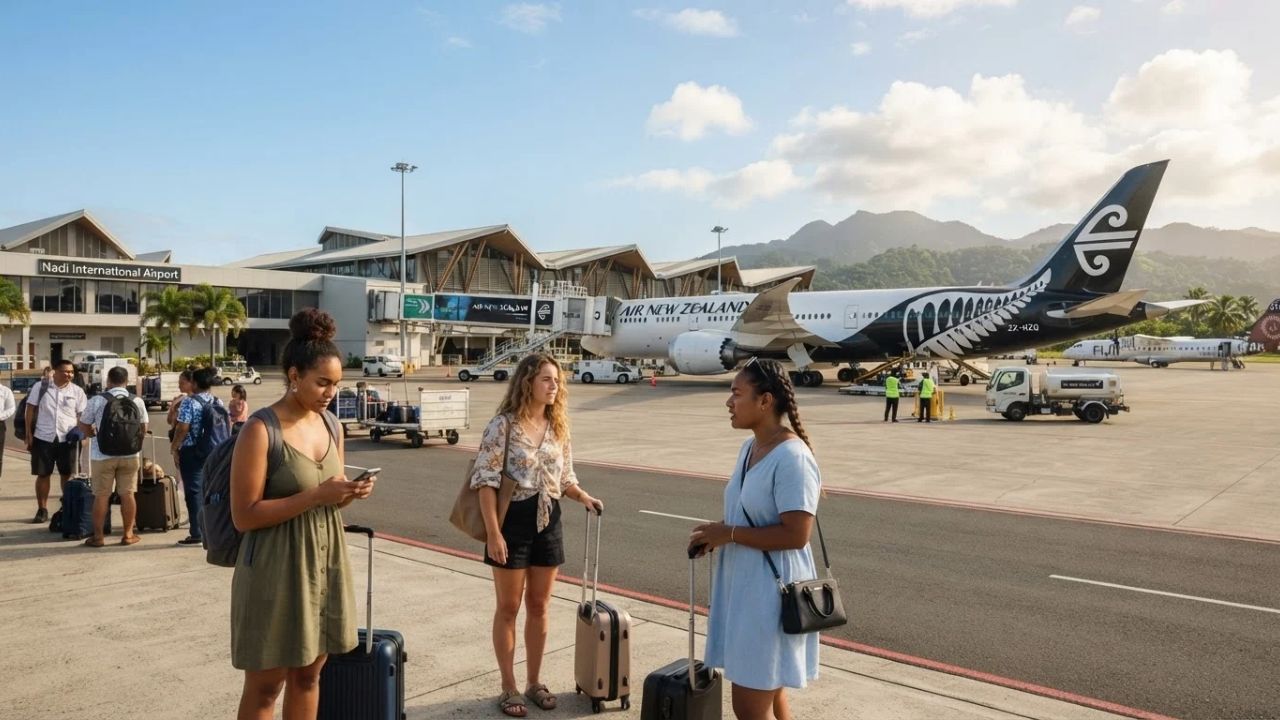
Image generated by AI
A temporary aviation fuel shortage at Fiji's Nadi International Airport has forced Air New Zealand, Virgin Australia, and Qantas to modify flight schedules. The supply challenge followed issues with a fuel delivery that failed to meet required aviation standards, requiring airlines to carry extra fuel or reroute aircraft.
Supply Chain Volatility and Pacific Aviation Ecosystems
A significant trend in Pacific aviation is the vulnerability of island transit corridors to supply chain disruptions. Because remote island nations rely on sea tankers to import refined aviation fuel, any quality control failure or delivery delay can cause fuel shortages at primary gateways. For airlines operating long-haul routes over water, these supply shocks require quick operational adjustments.
Carriers must implement fuel tankering—carrying extra return fuel from departure hubs—or schedule refueling stops at neighboring island airports. This operational adaptation adds weight, raises carbon emissions per flight, and alters passenger capacity limits.
Quality Control Issues and Nadi Airport Fuel Shortage
The fuel restrictions at Nadi International Airport (NAN) stem from import testing protocols:
- Delivery Standards Failure: Fiji Airways confirmed the shortage was caused by a fuel shipment that failed to meet strict safety and quality standards during port testing.
- Safety Priority: Aviation fuel must pass strict testing and approval procedures before being cleared for aircraft use, leading to the rejection of the shipment.
- Operational Stakeholders: Fiji Airports Limited, Fiji Airways, and government agencies are coordinating with fuel suppliers to resolve the supply constraints.
- Flight Impact: International airlines are modifying transit routes to avoid refuelling in Fiji until compliant fuel stocks are restored.
These parameters highlight the importance of testing protocols in maintaining aviation safety.
International Airline Operations and Diversion Strategies
Several major carriers have adjusted their flight operations to navigate the fuel restrictions:
Air New Zealand Adjustments
The carrier serves a major tourism corridor, as more than 219,000 New Zealand travelers visited Fiji last year:
- Fuel Tankering: Aircraft are carrying additional fuel from New Zealand to complete the return flight without refuelling in Nadi.
- Flight Upgrades: The airline upgraded two services to larger widebody aircraft to optimize passenger transport.
- Flight Cancellations: The carrier cancelled one scheduled flight to Nadi, moving passengers to alternative flights on the same day.
Virgin Australia Operations
The airline has adjusted its trans-Pacific routes to manage fuel usage:
- Refuelling Stops: Flights are making technical refuelling stops at Port Vila in Vanuatu and Nouméa in New Caledonia.
- Schedule Reductions: The airline has cancelled selected flights to manage fuel availability.
Qantas Operations
The Australian flag carrier is utilizing larger aircraft to bypass local refuelling:
- Airbus A330 Deployment: The airline is operating Airbus A330 aircraft on its Sydney-to-Nadi route, carrying enough fuel to complete the round trip without drawing from Nadi's stocks.
Fiji Aviation Fuel Disruption Coordinates
The table below breaks down the affected airport, carrier adjustments, alternative refueling ports, aircraft changes, and regional tourist statistics established for the disruption:
| Affected Airport Hub | Fuel Delivery Status | Carrier Brand | Operational Adjustment | Refueling Stop Options | Aircraft/Fleet Changes |
|---|---|---|---|---|---|
| Nadi International (NAN) | Failed safety standards | Air New Zealand | Fuel tankering & 1 cancel | Auckland (origin hub) | Upgraded 2 widebody flights |
| Primary Fiji Gateway | Quality control rejection | Virgin Australia | Technical stops & cancels | Port Vila & Noumea | Narrow-body schedule changes |
| Pacific Transit Hub | Multi-agency coordination | Qantas | Self-sufficient fuel capacity | Sydney (origin hub) | Airbus A330 widebody |
These coordinates outline the airports, carriers, adjustments, refueling options, and aircraft models established for the disruption.
Resource Stewardship and Environmental Efficiency
For the traveler, the benefit of choosing direct flights operated by widebody aircraft (like the Airbus A330) during fuel shortages is the reduction in route delays. However, carrying extra fuel increases aircraft weight, raising total fuel burn and greenhouse gas emissions.
Additionally, maintaining flight links protects Fiji's tourism economy, which supports local hospitality staff, resort workers, and transport operators. Following energy-saving guidelines at island resorts helps reduce the local environmental footprint.
For example, you can explore the changing dynamics of Transit Strategy: Turkish Airlines Expands Asia-Pacific Route Capacity to see how carriers allocate widebody fleets. For regional route expansions, comparing seasonal schedules matches other networks, such as the Transit Expansion: LOT Polish Airlines Connects Gdansk with Paris Orly updates. This trend is similar to the tourism growth seen in other destinations, as detailed in our guide on how Utica, New York Emerges as an Affordable Northeast Tourism Hub.
Visitor Insider Tips: Traveling to Fiji During the Fuel Shortage
If you are planning to travel to Fiji, keep these practical tips in mind:
- Confirm Flight Status Before Departure: Check your airline's mobile app frequently, as schedule adjustments or aircraft swaps can occur.
- Prepare for Technical Stops: If flying Virgin Australia, note that your flight time may increase to accommodate refueling stops in Port Vila or Noumea.
- Choose Widebody Flights for Reliability: Book Qantas Airbus A330 or Air New Zealand widebody flights, as these are less likely to experience fuel-related cancellations.
- Coordinate Resort Transfers: Notify your hotel or local transport driver if your flight experiences timing delays.
- Pack Essential Carry-On Items: Keep medications, chargers, and changes of clothing in your carry-on bag in case of flight schedule changes.
Long-Term Outlook for Pacific Tourism Connectivity
The long-term outlook for Pacific transit is focused on expanding regional fuel storage tanks, introducing sustainable aviation fuel (SAF) production in Oceania, and upgrading local port testing labs. As traveler demand for island vacations remains strong, aviation authorities will rely on strict quality checks to protect flight safety.
By resolving fuel supply chains and maintaining air links, the region aims to build a reliable transit network.
FAQ
What caused the fuel shortage at Nadi Airport?
The shortage followed issues with an imported fuel delivery that failed to meet aviation safety standards.
How did Air New Zealand respond to the fuel crisis?
The airline cancelled one flight, upgraded two to widebody aircraft, and carried extra return fuel from Auckland.
Which refueling ports were used by Virgin Australia?
Virgin Australia arranged technical refueling stops in Port Vila (Vanuatu) and Nouméa (New Caledonia).
Did Fiji Airways cancel its international flights?
No. Fiji Airways indicated that it managed its schedule to maintain normal operations without major disruptions.
Stay updated on the regional travel regulations and airport fuel guidelines shaping Pacific transit.
Related Travel Guides
Disclaimer
This article is for informational and educational purposes only. It does not constitute legal, financial, or professional advice. While we strive to provide accurate and up-to-date information, travel policies, regulations, and conditions change rapidly. Always verify information with official sources before making travel decisions. Nomad Lawyer makes no representations about the accuracy, reliability, completeness, or suitability of the information provided. Readers should consult qualified professionals for advice specific to their circumstances. The views expressed in this article are those of the author and do not necessarily reflect the views of Nomad Lawyer.
Raushan Kumar
Founder & Lead Developer
Full-stack developer with 11+ years of experience and a passionate traveller. Raushan built Nomad Lawyer from the ground up with a vision to create the best travel and law experience on the web.
Learn more about our team →