
Brazil Modernizes Viracopos Airport to Expand Regional Air Connectivity and Ease São Paulo Flight Congestion
Brazil and ANAC advance modernizations at Viracopos Airport in Campinas, enhancing international-to-domestic transfers and speeding turnaround times.

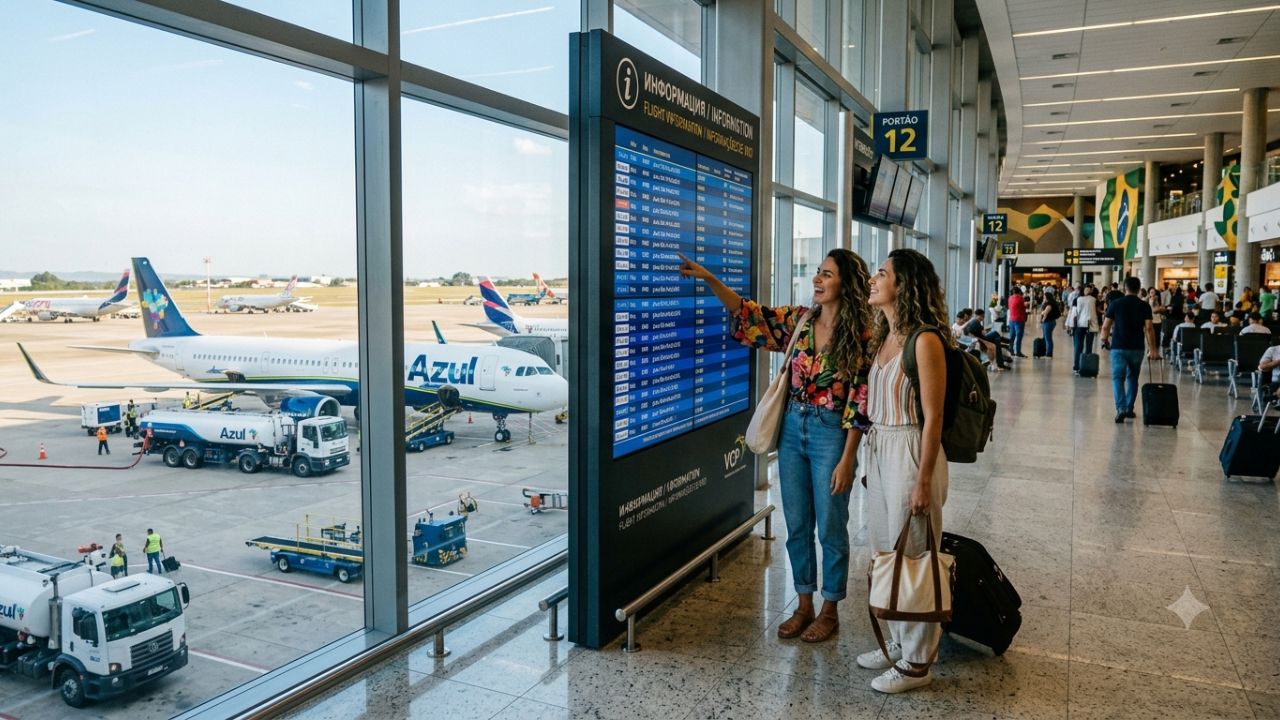
Image generated with AI
Brazil has initiated a comprehensive modernization program at Viracopos International Airport in Campinas, aiming to relieve acute airspace congestion across the Greater São Paulo metropolitan basin while accelerating passenger connections and aircraft turnaround performance. Coordinated between concessionaire Aeroportos Brasil Viracopos and the National Civil Aviation Agency (ANAC), the operational enhancements focus on reconfiguring passenger terminal flows, optimizing airside gate logistics, and establishing frictionless transfer corridors between inbound intercontinental flights and domestic feeder routes. Situated 90 kilometers northwest of central São Paulo, Viracopos is positioning itself as a vital secondary international hub capable of absorbing regional spillover from overburdened São Paulo-Guarulhos (GRU) and slot-constrained Congonhas (CGH).
The strategic overhaul addresses one of Latin America's most pressing civil aviation bottlenecks: balancing heavy passenger demand with the country's primary air cargo corridor. By upgrading transit lounges, customs clearing pathways, and apron servicing procedures, aviation planners seek to transform Campinas from an industrial cargo bastion into a seamless dual-purpose international passenger gateway.
Decentralizing São Paulo Airspace: Viracopos as a Strategic Relief Valve
Greater São Paulo represents the economic locomotive of South America, generating more commercial aviation demand than any other metropolitan zone on the continent. Historically, long-haul international traffic and domestic trunk routes have converged overwhelmingly on São Paulo-Guarulhos International Airport, while domestic corporate shuttles operate out of Congonhas. However, structural capacity limits, perimeter slot constraints, and recurring weather delays at Guarulhos have created severe operational pressure during peak morning and evening banks.
Viracopos International Airport (IATA: VCP, ICAO: SBKP) provides the geographical answer to this concentration risk. Nestled along the Bandeirantes and Anhanguera highway corridors, the facility directly anchors the Campinas Metropolitan Region—home to over 3.3 million residents and one of Brazil's wealthiest manufacturing and research corridors.
Aviation planners emphasize that diverting passenger growth to Viracopos requires more than terminal square footage; it demands reliable interline connectivity, competitive airline operating costs, and expedited ground access to central São Paulo.
| Airport Facility | IATA / ICAO | Distance to SP Centre | Primary Operational Role | Current Infrastructure Focus |
|---|---|---|---|---|
| São Paulo-Guarulhos | GRU / SBGR | 25 km Northeast | Major Intercontinental Hub & Domestic Trunk | Terminal 3 expansion & people mover link |
| São Paulo-Congonhas | CGH / SBSP | 8 km South | High-Frequency Domestic Corporate Shuttle | Slot caps, runway safety areas, and new pier |
| Viracopos-Campinas | VCP / SBKP | 90 km Northwest | Regional Passenger Hub & Latin America Cargo Gateway | Transit reconfiguration & turnaround optimization |
Re-Engineering International-to-Domestic Passenger Transfer Corridors
A primary pillar of the modernization initiative targets international-to-domestic passenger transfers, historically an area of friction for foreign travelers arriving in southeastern Brazil. Under existing federal regulations, all inbound passengers arriving from abroad must clear Federal Police immigration, retrieve checked baggage, pass through Federal Revenue (Receita Federal) customs screening, and re-check bags before boarding domestic connections.
The ongoing upgrade introduces redesigned transit pathways that minimize walking distances and eliminate redundant security queues between arrival gates and domestic departure concourses.
+-------------------------------------------------------------------------+
|             VIRACOPOS OPTIMIZED PASSENGER CONNECTION FLOW              |
+-------------------------------------------------------------------------+
  INBOUND INTERNATIONAL FLIGHT (Widebody Arrival)
         |
         v
  [Expedited Biometric Immigration Checkpoints (Polícia Federal)]
         |
         v
  [Dedicated Transfer Baggage Reclaim Carousels]
         |
         v
  [Streamlined Customs & Agro-Sanitary Screening (Receita Federal / Vigiagro)]
         |
         v
  [Direct Airside Re-Check Desks & Priority Transfer Screening Lanes]
         |
         v
  OUTBOUND DOMESTIC CONCOURSE (Regional Feeder Departures)
+-------------------------------------------------------------------------+
Modernized digital signage, multilingual transit concierges, and centralized re-check baggage belts reduce transit times by an estimated 20 to 30 minutes during heavy morning arrival banks. While structural border inspection mandates remain strictly governed by federal law, physical layout improvements ensure that travelers connect smoothly onto domestic networks serving interior cities across Minas Gerais, Paraná, and the Center-West region.
Airside Turnaround Acceleration to Maximize Airline Fleet Utilization
For commercial airlines, profitability hinges on minimizing ground time between flight segments. Aircraft turnaround entails a synchronized sequence of disembarkation, high-volume baggage offloading, cabin sanitization, technical refueling, catering replenishment, maintenance walk-arounds, and passenger re-boarding. Ground delays during any single step cascade across an airline's daily flight schedule, driving up fuel burn and passenger compensation costs.
The modernization program deployed by Aeroportos Brasil Viracopos and ANAC focuses heavily on ground-handling precision and airside digital management:
- Dynamic Gate Allocation: Implementing automated apron management algorithms to reduce aircraft taxi times and assign contact jet bridges based on real-time arrival sequencing.
- Pre-Positioned Utility Systems: Expanding fixed 400Hz ground power units and pre-conditioned air (PCA) connections at remote stands, eliminating dependence on mobile diesel generators.
- Synchronized Baggage Handling: Upgrading underground automated baggage sorting systems to transfer interline luggage directly between arrival holds and connecting departure bins.
- Parallel Servicing Protocols: Establishing standardized apron corridors to enable simultaneous refueling and dual-door passenger disembarkation where gate configurations permit.
===========================================================================
               CRITICAL PATH FOR REDUCED AIRCRAFT TURNAROUND
===========================================================================

 [Chocks On]
     |
     +--> Passenger Deplaning (Jet Bridge / Dual Stairs) ----+
     |                                                       |
     +--> Baggage & Cargo Unloading (High-Speed Conveyors) --+--> [Cabin Cleaning]
     |                                                       |         |
     +--> Hydrant Refueling & Ground Power Hookup -----------+--> [Catering Restock]
                                                             |         |
                                                             +--> [Boarding Call]
                                                                       |
                                                                       v
                                                                  [Pushback]
===========================================================================
By compressing standard narrowbody turnarounds from 45 minutes toward 30 to 35 minutes, Viracopos enables carrier networks—particularly domestic anchor tenant Azul Linhas Aéreas—to squeeze additional daily flight cycles out of each airframe.
Preserving Viracopos's Unmatched Air Freight Dominance
While passenger terminal upgrades capture public attention, cargo logistics remains the financial foundation of Viracopos. The airport operates South America’s most advanced air cargo terminal, processing approximately one-third of all airborne international import-export tonnage entering Brazil.
Campinas forms the core of São Paulo State's industrial engine, surrounded by multinational pharmaceutical plants, high-tech semiconductor fabrication centers, telecommunications developers, and precision automotive manufacturing corridors. These sectors require temperature-controlled cold chains, high-security bonded warehouses, and express customs clearance that older, urban-locked airports cannot accommodate.
The modernization blueprint guarantees that passenger traffic growth does not cannibalize cargo ramp access or dedicated freight runways. By delineating separate vehicular logistics roadways and modernizing airside apron space, Viracopos maintains 24/7 dedicated heavy freighter operations for global logistics carriers including Atlas Air, Cargolux, Lufthansa Cargo, and LATAM Cargo alongside commercial passenger flights.
Economic and Tourism Catalysts for the Campinas Metropolitan Basin
The expansion of Viracopos has profound ramifications for Campinas itself. Often referred to as Brazil’s "Silicon Valley," the municipality is home to the State University of Campinas (Unicamp), premier research laboratories, and major corporate headquarters. Enhanced direct air links reduce dependence on lengthy two-hour highway transfers to Guarulhos, making Campinas substantially more attractive for international business delegations and MICE (Meetings, Incentives, Conferences, and Exhibitions) events.
On the leisure side, improved regional connectivity unlocks tourism circuits across the interior of São Paulo State. Visitors can conveniently access:
- Circuito das Águas Paulista: The mineral spa and wellness towns of Serra Negra, Águas de Lindóia, and Amparo.
- Historic Coffee Route: Nineteenth-century coffee fazendas preserving colonial architecture and heritage agro-tourism experiences.
- Holambra Floral Capital: Brazil’s Dutch-heritage horticulture hub renowned for seasonal flower festivals and cultural tourism.
Realizing this tourism potential requires continued investment in intercity transit links, hotel room inventory, and aggressive air service marketing by regional tourism authorities.
Frequently Asked Questions: Viracopos Airport Modernization 2026
Where is Viracopos International Airport located relative to São Paulo?
Viracopos Airport (VCP) is located in Campinas, approximately 90 kilometers northwest of central São Paulo. It connects directly to the capital via the modern Bandeirantes (SP-348) and Anhanguera (SP-330) toll expressways.
Which airline operates the largest domestic flight network from Viracopos?
Azul Linhas Aéreas Brasileiras uses Viracopos as its primary nationwide operations hub, connecting Campinas with over 100 domestic destinations across every Brazilian state, alongside selected international flights to North America and Europe.
Do international transfer passengers still have to clear customs at Viracopos?
Yes. Under Brazilian federal regulations, all inbound international travelers must complete immigration, retrieve checked luggage, and clear customs before proceeding to domestic departure gates, though modernizations have substantially accelerated terminal processing times.
Why is Viracopos considered critical for Brazilian air cargo?
Viracopos handles roughly one-third of Brazil's total international air freight, offering specialized cold-chain infrastructure for pharmaceuticals, high-security electronics warehousing, and direct highway links to São Paulo State's manufacturing belt.
Related Travel Guides
Disclaimer
This article is for informational and educational purposes only. It does not constitute legal, financial, or professional advice. While we strive to provide accurate and up-to-date information, travel policies, regulations, and conditions change rapidly. Always verify information with official sources before making travel decisions. Nomad Lawyer makes no representations about the accuracy, reliability, completeness, or suitability of the information provided. Readers should consult qualified professionals for advice specific to their circumstances. The views expressed in this article are those of the author and do not necessarily reflect the views of Nomad Lawyer.
Raushan Kumar
Founder & Lead Developer
Full-stack developer with 11+ years of experience and a passionate traveller. Raushan built Nomad Lawyer from the ground up with a vision to create the best travel and law experience on the web.
Learn more about our team →