
Belarus Positions Minsk Airport as Eurasian Transit Hub: Belavia Streamlines Asian Connections With Paperless Baggage Transfers
Belarus coordinates Belavia schedules, paperless baggage transfers, and multilingual digital tech at Minsk Airport to link Asia with Eurasia.

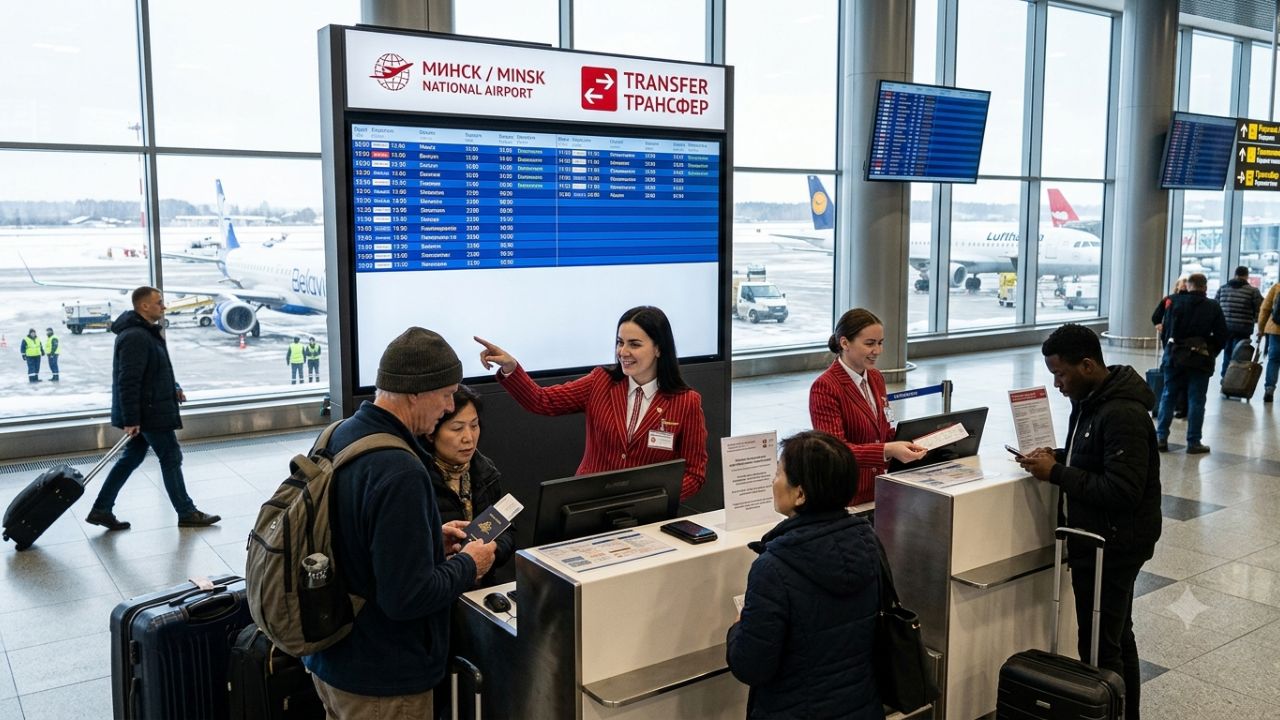
Minsk National Airport is developing paperless baggage transfers and multilingual transit corridors to capture Asian passenger flows across Eurasia.
Belarus is aggressively repositioning Minsk National Airport (MSQ) as a central international transit gateway, deploying paperless baggage transfers, accelerated airside connections, and multilingual terminal automation to capture passenger flows between South and Southeast Asia and the wider Eurasian region. Coordinated through a joint strategic framework uniting the Ministry of Sport and Tourism, the Aviation Department of the Ministry of Transport and Communications, and national flag carrier Belavia, the initiative seeks to transform the country's primary aviation facility into a high-efficiency transfer turntable. By eliminating manual baggage re-claims during international connections and minimizing minimum connecting times (MCT), authorities are building a specialized air corridor that bypasses increasingly congested Middle Eastern mega-hubs.
The operational strategy capitalizes on Belarus’s strategic geographic position between Eastern Europe, Central Asia, and northern Asian flight corridors. As demand for commercial travel, educational exchanges, and commercial trade expands from secondary hubs across South and Southeast Asia, Minsk is engineering an airside passenger experience tailored to international connecting traffic. However, civil aviation authorities note that the speed and scope of implementation remain dependent on interline carrier agreements, bilateral air service treaties, and strict compliance with national border clearance protocols.
                           ┌──────────────────────────────────────────────┐
                           │      Minsk Eurasian Air Transit Axis         │
                           └──────────────────────┬───────────────────────┘
                                                  │
                 ┌────────────────────────────────┴───────────────────────────────┐
                 ▼                                                               ▼
        ┌──────────────────────────────────┐                    ┌──────────────────────────────────┐
        │  Inbound Feed: South & SE Asia   │                    │ Outbound Destinations: Eurasia   │
        ├──────────────────────────────────┤                    ├──────────────────────────────────┤
        │ • Delhi, Mumbai, Tashkent feeder │                    │ • Russian Federation regional    │
        │ • Southeast Asian commercial hubs│                    │ • Central Asian capitals         │
        │ • Long-haul passenger flows      │                    │ • Caucasian commercial centers   │
        └─────────────────┬────────────────┘                    └─────────────────┬────────────────┘
                          │                                                       │
                          └───────────────────────┬───────────────────────────────┘
                                                  │
                                                  ▼
                        ┌──────────────────────────────────────────────────┐
                        │      Minsk National Airport (MSQ) Turntable      │
                        ├──────────────────────────────────────────────────┤
                        │ • Paperless interline baggage through-checking   │
                        │ • Automated multilingual wayfinding kiosks       │
                        │ • Seamless airside transit (no entry visa needed)│
                        │ • Belavia fleet synchronization & scheduling     │
                        └──────────────────────────────────────────────────┘
Strategic Geography: Bridging Asian Flight Paths With Eurasian Networks
Minsk National Airport serves as the principal aviation gateway of Belarus, handling scheduled commercial passenger services, seasonal charter flights, and high-value air cargo. Located approximately 42 kilometers east of the capital city, the facility features an expansive single-terminal complex with specialized international transit infrastructure originally constructed to service high-volume Soviet-era and post-Soviet regional movements.
In recent years, shifting international aviation corridors have altered traditional transit dynamics. By establishing targeted connecting frequencies with key South Asian hubs (including India and Pakistan) and Central Asian gateways (such as Uzbekistan and Kazakhstan), Minsk provides an alternative, geometrically direct transit pathway for passengers moving across the Eurasian continent.
For long-haul travelers, choosing a connection via Minsk hinges on operational reliability and economic value:
- Direct Routing Geometry: Flights operating between South Asia and northwestern Eurasia via Belarusian airspace avoid circuitous southern detours through the Persian Gulf, reducing total airborne flight hours.
- Competitive Fare Structures: Belavia and its regional interline partners are structuring transit fares designed to undercut legacy Gulf carriers on mid-tier corporate and student travel corridors.
- Manageable Layover Windows: Streamlined terminal geometry allows passengers to navigate transfer desks and security re-screening in a fraction of the time required at sprawling mega-airports like Istanbul (IST) or Dubai (DXB).
                 Baggage Lifecycle: Conventional vs. Paperless Transfer

     Conventional Interlining:
     [Arrival] ──► [Passport Control] ──► [Baggage Re-claim] ──► [Re-check & Re-tag] ──► [Gate]

     Minsk Paperless Transit:
     [Arrival] ──► [Airside Security Screen] ──► [Digital Tag Forwarding] ──► [Departure Gate]
Paperless Baggage Transfers: Streamlining Cross-Carrier Interlining at MSQ
A core technical pillar of the Minsk transit upgrade is the introduction of a modernized paperless baggage transfer protocol. On complex international itineraries involving multiple carriers or interline agreements, baggage handling represents the single greatest point of operational friction for passengers.
Historically, connecting travelers lacking through-checked baggage arrangements were forced to clear Belarusian border control, enter the baggage hall to collect luggage, clear customs declarations, and proceed landside to the departure counters to re-check their bags. This multi-step process required travelers to obtain entry visas and forced airlines to enforce lengthy minimum connecting times of 120 to 180 minutes.
The digital transfer initiative addresses this vulnerability through coordinated systems integration:
- Automated Data Exchange: Ground handling teams at MSQ are synchronizing baggage barcode data with airline reservation systems, allowing baggage tags issued in South Asian origin cities to be automatically recognized and redirected to onward flights.
- Customs Airside Bypass: Under approved international transit protocols, through-checked baggage transfers entirely within the airside customs perimeter, eliminating the requirement for passenger intervention unless manual security screening is mandated.
- Digital Baggage Tracking: Passengers receive mobile alerts confirming that their luggage has been offloaded from the feeder flight and successfully loaded into the cargo hold of their connecting service.
The table below details the operational specifications, technology features, and regulatory frameworks governing the new transit model at Minsk National Airport:
| Operational Component | Previous Terminal Procedure | Upgraded Transit Specification | Practical Passenger Benefit |
|---|---|---|---|
| Baggage Transfer Process | Manual collection and landside re-check | Paperless automated through-checking | Eliminates passport control queues and luggage handling during layovers |
| Minimum Connecting Time (MCT) | 90 to 120 minutes across terminals | Targeted reduction to 45–60 minutes | Enables tighter flight schedules and shorter overall travel times |
| Terminal Wayfinding | Static bilingual signage (Russian/English) | Multilingual digital interactive kiosks | Automated guidance in Mandarin, Hindi, Arabic, and Russian |
| Transit Border Clearance | Mandatory passport check if un-ticketed | Sterile airside international transit zone | Visa-free transit for eligible single-ticket passengers |
| Airline Host Carrier | Independent booking management | Belavia coordinated interline network | Single-ticket issuance and shared passenger liability |
| Onward Eurasian Links | Fragmented schedules | Synchronized morning/evening flight banks | Smooth transfers to regional Russian and Central Asian cities |
Terminal Technology: Multilingual Wayfinding and Automated Passenger Assistance
Navigating an unfamiliar foreign airport can create anxiety, particularly for travelers who speak neither Russian nor English. To service growing passenger flows originating in Asia, Minsk National Airport is upgrading its digital passenger interface.
The airport is deploying automated multilingual terminal kiosks and interactive digital signage across the international transit area:
- Interactive Wayfinding Desks: Kiosks equipped with optical boarding pass scanners display customized terminal walking maps, directing travelers to their specific departure gates, transfer desks, prayer rooms, and dining facilities in their native languages—including Hindi, Mandarin, Arabic, and Turkish.
- Real-Time Mobile Flight Updates: Connecting passengers can connect to high-speed terminal Wi-Fi networks to receive push notifications regarding gate changes, boarding countdowns, and baggage status directly on their personal mobile devices.
- Dedicated International Transfer Desks: While automated screens handle standard queries, airport authorities have deployed specialized customer care personnel to assist passengers facing tight connections, delayed feeder flights, or missing travel documentation.
       Airside Transit Routing vs. Stopover Entry Requirements

  Sterile Airside Transit ──────────────────────────────────► Direct Gate-to-Gate Transfer
                                                             (No Belarusian visa required,
                                                              passenger stays in transit lounge)
                                            ┌───────────┐
  City Stopover / Layover ──► Border Entry  │ Electronic│
        ┌───────────┐                       │ Visa (eVA)│
        │ Passport  │                       │ Required  │
        │ Control   │                       └───────────┘
        └───────────┘
Border Architecture: Navigating Airside Transit vs. Belarusian E-Visas
A critical distinction highlighted in official transport advisories is the legal separation between airside transit privileges and the Republic of Belarus's electronic visa (e-visa) regime. Confusion regarding entry documents remains a primary cause of denied boarding at international departure gates.
Travelers considering journeys through Minsk must understand two separate regulatory frameworks:
- Sterile Airside Transit: Foreign nationals transiting through Minsk National Airport on a single, through-checked booking who remain inside the international transit area without passing through border control generally do not require a Belarusian transit visa, provided their onward flight departs within the authorized transit window (typically under 24 hours).
- Electronic Visa (e-Visa) Entry: If a traveler wishes to leave the airport terminal—whether to stay at a hotel in downtown Minsk during an extended overnight layover or because their onward flight operates on a separate ticket requiring landside check-in—they must obtain a valid entry visa or meet the criteria of Belarus’s specific visa-waiver decrees.
Aviation legal experts stress that an approved e-visa does not override airline boarding rules. If a passenger holds separate tickets with carriers that do not share an interline baggage agreement, they must clear immigration in Minsk, collect their bags, and re-check them, necessitating a visa even if their total layover is only a few hours.
Airline Network Dynamics: Belavia’s Fleet Alignment and Commercial Realities
While terminal upgrades and paperless baggage systems provide essential infrastructure, the commercial success of Minsk as a transit hub depends on Belavia’s operational route network.
Belavia serves as the linchpin of Belarusian international air connectivity. However, regional geopolitical sanctions and Western airspace restrictions have reshaped the carrier's operating footprint:
- Focus on Eastern and Southern Corridors: With direct overflights into European Union airspace largely suspended since 2021, Belavia has concentrated its Boeing 737 Next-Generation and Embraer regional jet fleets on scheduled routes linking Minsk with Moscow, St. Petersburg, Sochi, Tbilisi, Baku, Yerevan, Tashkent, Astana, Dubai, and Istanbul.
- Asian Carrier Partnerships: Minsk relies increasingly on foreign partner airlines—including Air China (operating direct widebody flights from Beijing Capital) and Central Asian carriers like Somon Air—to feed long-haul passengers into its hub.
- Schedule Bank Synchronization: To transform into a true transfer airport, Belavia is restructuring its flight banks to align inbound morning arrivals from Central and South Asia with departing afternoon services across regional Eurasian destinations.
Practical Guidance: What Connecting Travelers Must Verify Before Booking
Passengers evaluating flight options connecting through Minsk National Airport should take several concrete verification steps before purchasing tickets:
- Verify Single-Ticket Booking: Ensure that your entire journey—including the inbound feeder flight and the outbound connection—is issued under a single airline ticket (e-ticket number) with baggage checked through to the final destination.
- Confirm Baggage Interline Agreements: If your itinerary combines flights on different airlines (e.g., an Asian carrier connecting to Belavia), confirm directly with the originating airline whether an active interline baggage agreement exists before checking in.
- Check Russian Entry Rules on Connecting Flights: Flights operating between Belarus and the Russian Federation are classified under domestic regulatory frameworks within the Union State. Foreign travelers connecting from Minsk to a Russian city must clear specific immigration and customs checkpoints and hold appropriate Russian visas.
Frequently Asked Questions
Does Minsk National Airport allow visa-free airside transit?
Yes. International passengers transiting through Minsk National Airport on a single through-ticket who remain within the sterile airside transit area without passing border control do not require a Belarusian visa for layovers under 24 hours.
How does the paperless baggage transfer system work at Minsk Airport?
The system automatically transfers checked luggage between connecting flights using digital barcode data exchanged between airlines and airport ground handlers, eliminating the need for travelers to collect and re-check bags during their layover.
Which airlines operate connecting flights through Minsk?
Belavia (Belarusian Airlines) is the primary hub carrier, operating regional connections across Eurasia, complemented by partner carriers including Air China, Flydubai, and Central Asian airlines.
What is the difference between a Belarusian e-visa and airside transit?
An airside transit allows passengers to wait in the terminal lounge for a connecting flight without entering Belarus. An e-visa is an entry permit required if a passenger leaves the airport terminal or needs to clear customs to collect baggage on separate tickets.
Related Travel Guides
- Air China Boosts Beijing to Minsk Capacity by 31.2% with Airbus A330-300 Deployment in 2026
- Turkish Airlines Restores Direct Istanbul to Minsk Flights: Six Weekly Services Reconnect Belarus to Global Hub
- Georgia Armenia and Belarus Tourism Affordability Analysis: Russian Migration and Housing Costs 2026
Disclaimer
This article is for informational and educational purposes only. It does not constitute legal, financial, or professional advice. While we strive to provide accurate and up-to-date information, travel policies, regulations, and conditions change rapidly. Always verify information with official sources before making travel decisions. Nomad Lawyer makes no representations about the accuracy, reliability, completeness, or suitability of the information provided. Readers should consult qualified professionals for advice specific to their circumstances. The views expressed in this article are those of the author and do not necessarily reflect the views of Nomad Lawyer.
Kunal K Choudhary
Co-Founder & Contributor
A passionate traveller and tech enthusiast. Kunal contributes to the vision and growth of Nomad Lawyer, bringing fresh perspectives and driving the community forward.
Learn more about our team →