
Breaking Airline News: Severe Travel Chaos Feared as European Union Launches Aggressive Baggage Pricing Overhaul to Dismantle Budget Carrier Profits
Breaking airline news: Amidst a terrifying era of massive passenger confusion, the European Union executes a highly aggressive regulatory assault on budget airline pricing, sparking severe operational chaos across the continent.

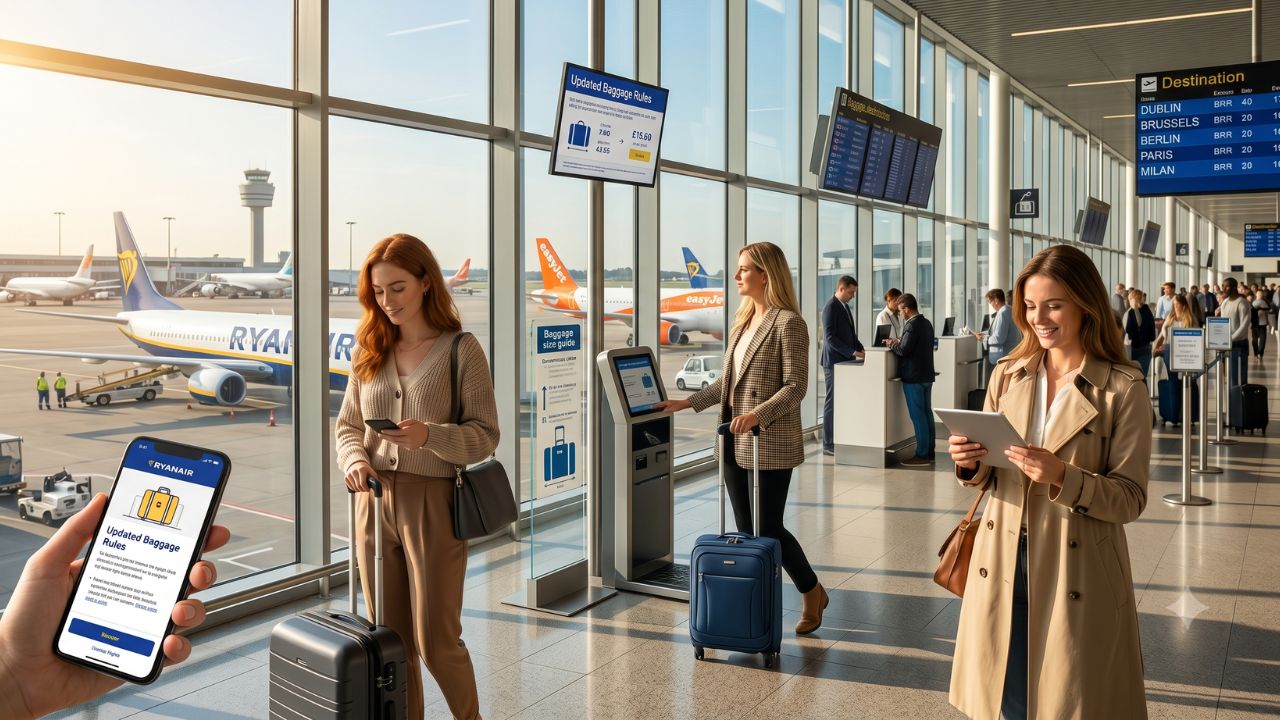
Image representing the intense strategic battle as global aviation authorities aggressively deploy massive pricing regulations to combat misleading ticket advertising, sparking severe operational friction across European budget carriers.
Breaking Airline News: Severe Travel Chaos Feared as European Union Launches Aggressive Baggage Pricing Overhaul to Dismantle Budget Carrier Profits
As paralyzing airport disruptions, highly constrained operational bandwidth, and massive waves of passenger congestion violently threaten the European aviation network, a completely different type of crisis is currently detonating across the continent. In a highly aggressive maneuver poised to severely disrupt the foundational economics of modern air travel, the European Union is finalizing a massive legislative overhaul of airline ticket pricing transparency. Centered within the heavily fortified bureaucratic corridors of Brussels, Belgium, this regulatory assault directly targets the ultra-low-cost business models championed by massive budget carriers like Ryanair, headquartered in Ireland. By forcefully destroying the traditional "unbundled" pricing mechanism, authorities are actively risking severe travel chaos at the digital booking level, fundamentally altering how millions of passengers across Germany, France, Italy, and Spain secure their flights.
In a harrowing display of regulatory intervention, the sheer magnitude of this policy shift completely rewrites the survival strategies of Europe's most aggressive airlines. For decades, the absolute financial bedrock of ultra-low-cost aviation relied on a highly effective psychological hook: enticing desperate travelers with exceptionally low baseline ticket prices, and subsequently extracting massive profits through auxiliary fees for baggage, seat selection, and priority boarding. This distinct mechanism is now being violently dismantled. The European Union has shifted its focus toward ruthlessly mandated upfront cost clarity, flipping the traditional booking process entirely on its head. Instead of seamlessly adding an overhead bag for an extra fee, furious passengers will now be presented with a shockingly high, all-inclusive initial price, severely suppressing impulse bookings and plunging the budget aviation sector into a terrifying era of structural instability.
Expanded Overview: The Massive Scale of the Regulatory Contagion
The terrifying crisis of overwhelming bureaucratic intervention currently gripping the global network brutally exposes the severe limitations of forcing standardized pricing on a highly fragmented industry. The core of this impending legal framework mandates that the absolute initial prices displayed to the public must automatically incorporate both a small personal item and a full-size overhead cabin bag. This strategic regulatory pivot aims to establish a highly rigid, apples-to-apples comparison framework across the massive European aviation market. However, by brutally enforcing transparent data from the very first digital search, regulators are actively destroying the incredibly successful single-digit ticket advertising campaigns that have historically drawn passengers away from traditional flag carriers in countries like the United Kingdom and France.
Section-Wise Breakdown: The Operational Realignment
The Origins of the Legislative Paralysis
The path toward this massive structural collapse began in earnest in 2025, when aggressive representatives within the European Parliament initiated a highly targeted push for uniform hand luggage dimensions. To eliminate the wildly confusing, patchwork rules enforced by competing airlines that frequently trigger terrifying gate-level travel chaos, regulators proposed strict standard measurements. It was heavily suggested that a standard personal item (such as a laptop sleeve or handbag) must be permitted without charge, strictly conforming to maximum dimensions of exactly 40x30x15 centimeters. Furthermore, the early draft sought to aggressively guarantee every single passenger the absolute right to bring one larger piece of cabin luggage weighing up to 7 kilograms, with total combined dimensions not exceeding 100 centimeters.
The Strategic Bureaucratic Battle
In June 2025, a pivotal and highly controversial milestone was reached when the transport committee of the European Parliament voted overwhelmingly in favor of this standardized baggage motion. However, to prevent immediate operational gridlock, complex tripartite negotiations were initiated between the European Parliament, the European Commission, and the Council of the EU. Over the subsequent year of vicious political warfare, a massive compromise was hammered out. Yielding a policy focused heavily on marketing transparency, the final agreement miraculously preserved the right of airlines to levy fees, but radically altered the psychological mechanics of the purchasing journey to eliminate "drip pricing."
Securing the Passenger Defense Shield
Under this newly brokered agreement, when a traveler searches for a flight within the European Union, the headline fare displayed must instantly reflect the massive cost of a ticket that automatically includes a full-size carry-on bag alongside the smaller personal item. If a traveler decides that an overhead bag is entirely unnecessary, they must actively navigate the checkout sequence to apply an "opt-out" discount to lower their baseline cost. Furthermore, this aggressive maneuver is being launched simultaneously alongside a comprehensive restructuring of the flight delay compensation scheme, demonstrating a terrifyingly interventionist approach by European regulators actively attempting to reshape the financial remediation provided during severe flight disruptions.
Aviation Strategy & Regulatory Defense Matrix
To fully comprehend the massive logistical and strategic fallout of this intercontinental legislative expansion, corporate travel managers and affected passengers must review the exact theoretical battlelines currently defining the industry. The following matrix provides a granular breakdown of the specific, officially verified perspectives driving this massive pricing disruption strategy.
| Perspective | Core Argument | Impact on Passenger |
|---|---|---|
| Regulatory Support | Prevents misleading headline fares and ensures upfront cost clarity. | Easier price comparison across airlines. |
| Industry Criticism | Infringes on free-market principles and restricts custom ticketing. | Potential complications for minimalist travelers. |
Passenger Impact: Surviving the Ticketing Nightmare
For the millions of domestic tourists and international commuters attempting to navigate the highly volatile European transit corridors, this massive pricing deployment represents a terrifying shift in booking psychology. The brutal reality of enduring complex opt-out mechanisms inflicts intense digital friction, completely destroying the ease of securing ultra-cheap weekend getaways. The disruption will cause immediate confusion for passengers who historically utilize alternative luggage strategies—such as flying with only a personal item while paying to check a massive suitcase into the cargo hold. For these specific minimalist consumers, navigating an all-inclusive advertised price, stripping away the carry-on cost, and then simultaneously adding a checked bag will make fare comparisons agonizingly cumbersome and highly prone to error.
Survival Guide for Transit Travelers
Travelers desperately preparing to navigate the new European booking systems must immediately execute the following survival protocols:
- Deploy Extreme Digital Vigilance: Bypassing the historic simplicity of budget booking is now required; passengers must relentlessly scrutinize the initial checkout screens to ensure they are actively applying the "opt-out discount" if they are not utilizing overhead bin space.
- Beware of Baseline Sticker Shock: Travelers must mentally prepare for significantly higher initial headline fares when browsing flights across Ireland, Belgium, and beyond; do not panic, as the true unbundled price can still be accessed through meticulous digital navigation.
- Utilize Third-Party Aggregators Cautiously: Because the exact administrative rules governing how these flights must be marketed are still being finalized in Brussels, passengers should cross-reference prices directly on official carrier websites (like Ryanair) to guarantee they are receiving the absolute most accurate cost breakdown.
Conclusion: A Strategic Retreat to Ensure Aviation Survival
As the European Union aggressively forces compliance across its massive aviation sector, this phenomenal pricing revolution represents a massive warning to global budget carriers. The aggressive regulatory maneuvering proves that capturing market dominance requires more than just rock-bottom advertising; it demands highly transparent, meticulously organized digital infrastructure. Everyday passengers attempting to navigate this highly unstable era of digital airport disruptions must embrace these new, highly regulated booking zones. By acting aggressively to understand the new opt-out mechanisms, travelers can successfully survive the intense sticker shock and continue to extract massive value from the European low-cost flight network.
Key Takeaways
- Massive Regulatory Assault: The European Union is finalizing a highly aggressive overhaul of airline ticket pricing transparency, directly threatening the ultra-low-cost business models of budget carriers.
- Unbundled Pricing Decimated: Authorities are forcing airlines to display an initial headline fare that automatically includes the cost of both a personal item and a full-size overhead cabin bag.
- Opt-Out Mechanisms Required: To secure a cheaper ticket, minimalist passengers must actively apply a discount during the booking sequence to forfeit their overhead carry-on allowance.
- Strict Dimension Standards: The legislation heavily references standardized dimensions, including a 40x30x15 cm personal item and a 7 kg limit (100 cm combined dimensions) for larger cabin luggage.
- Traveler Advisory: Passengers booking flights across Europe must execute extreme caution during the checkout process to successfully navigate the new opt-out discounts and secure the absolute lowest possible fare.
Related Travel Guides
Disclaimer
This article is for informational and educational purposes only. It does not constitute legal, financial, or professional advice. While we strive to provide accurate and up-to-date information, travel policies, regulations, and conditions change rapidly. Always verify information with official sources before making travel decisions. Nomad Lawyer makes no representations about the accuracy, reliability, completeness, or suitability of the information provided. Readers should consult qualified professionals for advice specific to their circumstances. The views expressed in this article are those of the author and do not necessarily reflect the views of Nomad Lawyer.
Kunal K Choudhary
Co-Founder & Contributor
A passionate traveller and tech enthusiast. Kunal contributes to the vision and growth of Nomad Lawyer, bringing fresh perspectives and driving the community forward.
Learn more about our team →