
European Tourism Crisis: $100 Billion Jet Fuel Surge Reshapes Travel as Strait of Hormuz Closure Triggers Massive Airfare Hikes and Hyper-Local Travel Shift in 2026
The Strait of Hormuz closure disrupts 20% of global oil flows, triggering $100 billion in additional airline fuel costs. European destinations face soaring airfares, reduced capacity, and a dramatic shift toward domestic and regional travel.

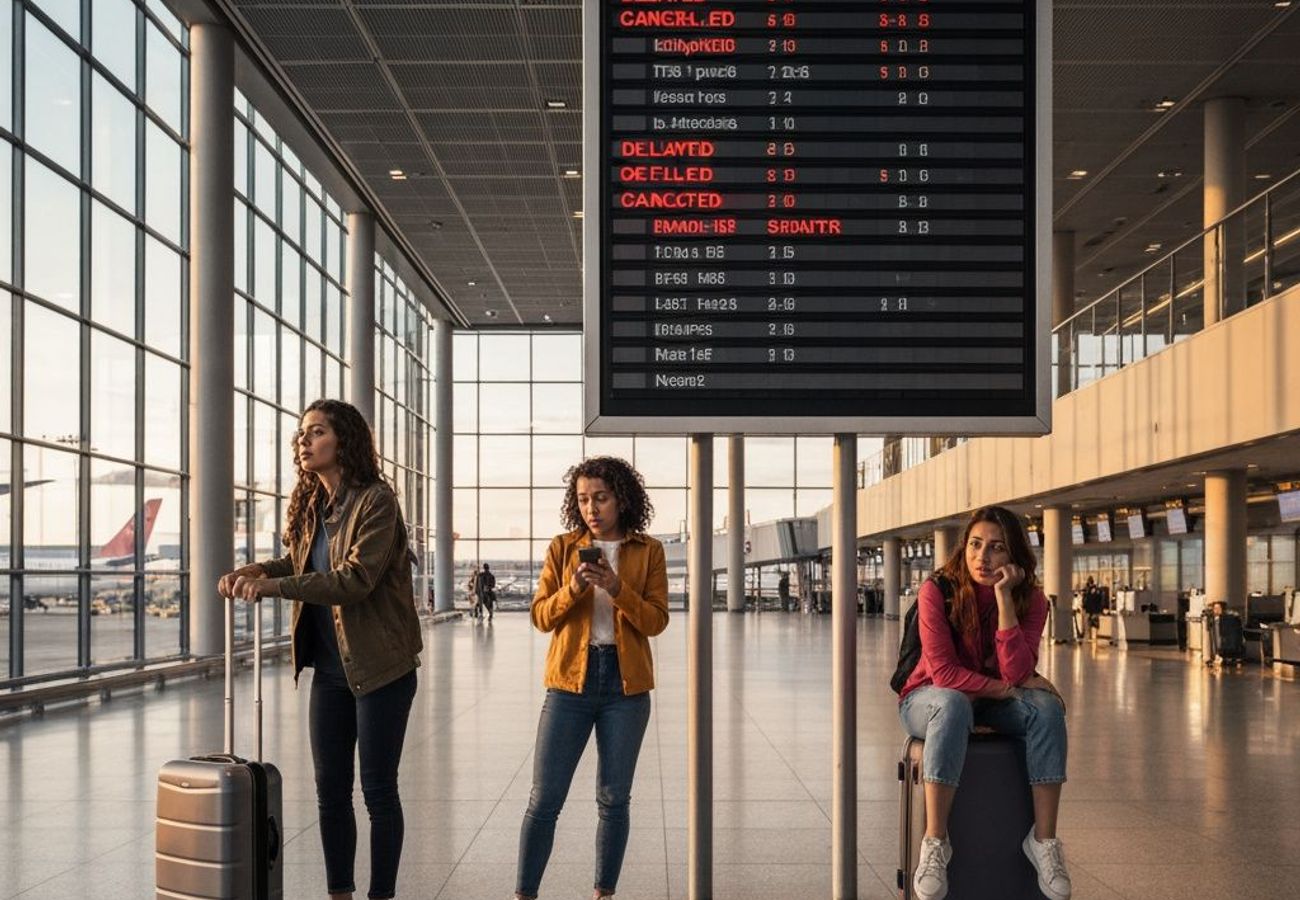
Image generated by AI
The Strait of Hormuz—a chokepoint carrying roughly 20% of global oil flows—has shut down. The consequences are rippling across Europe with devastating speed.
Airlines are now facing an estimated $100 billion surge in additional jet fuel costs. European airfares have already jumped by approximately 20% on average, with long-haul routes seeing increases up to 24%. And this is only the beginning.
Reddit: "My flight to London just went up £400 in two weeks. I'm driving instead." — r/travel
The IATA Bombshell: Half of Global Airline Profits Wiped Out
The International Air Transport Association (IATA) released sobering figures that sent shockwaves through the aviation industry. The organization estimates that global airlines will absorb more than $100 billion in additional fuel expenses directly attributable to the Strait of Hormuz crisis.
Here's what that means: roughly 50% of projected airline profits are now erased.
Unhedged carriers and regional airlines are facing catastrophic cash-flow pressure. They're cutting capacity on lower-yield routes, reintroducing fuel surcharges that travelers hoped were gone forever, and delaying fleet modernization programs. According to IATA's latest report, the margin compression is forcing carriers to make brutal operational choices: concentrate flights on major profitable hubs, abandon secondary airports, and push pricing power directly to passengers.
The math is brutal. When oil prices spike, airlines that locked in cheaper fuel contracts survive. Those that didn't? They're bleeding cash.
Europe's Fractured Tourism Picture: Winners and Losers
What's happening across Europe is not uniform collapse—it's strategic fragmentation.
Travelers faced with €400+ price hikes on transatlantic flights are making different calculations. Some are canceling long-haul trips entirely. Others are pivoting.
The Mediterranean Safe Haven
Spain, Portugal, Italy, and Greece are the unexpected beneficiaries. Security concerns tied to Middle East volatility, combined with rising fuel costs on long-haul routes, have redirected affluent European travelers toward the Western Mediterranean. Domestic Spanish travelers are choosing Costa del Sol beach breaks over international flights. Italian hoteliers are reporting stronger domestic bookings.
These destinations don't need long-haul aviation infrastructure to thrive. They win on proximity.
The Domestic Staycation Surge
Hyper-local tourism is no longer a niche trend—it's becoming the default consumer behavior.
UK travelers are abandoning Cancun bookings for Cornwall, Scotland, and the Lake District. French tourists are rediscovering Normandy. Germans are opting for car-based Alpine holidays instead of 12-hour flights to Asia. Rail travel through Western Europe is experiencing renewed interest.
When a flight to New York costs £1,200 instead of £600, the psychology shifts instantly. Road trips and train journeys suddenly look rational.
The Vulnerable Segments
Long-haul tourism operators, regional airlines, and secondary airports are facing genuine existential pressure. Tour operators specializing in Asian group packages, North American inbound travel, and Middle East leisure circuits are watching demand evaporate.
Major cities like London, Paris, and Amsterdam—which depend on high-volume international arrivals—are seeing weaker tour group bookings and shorter stay patterns.
The Strait of Hormuz Reroute: Supply Chain Chaos
The disruption at the Strait of Hormuz is forcing global energy markets to frantically adapt. Reuters reported that Middle East jet fuel flows to Europe have been rerouted through alternative supply channels: Saudi Red Sea ports, US refineries, and West African suppliers.
This rerouting adds time, logistics complexity, and cost.
Longer fuel supply chains mean:
- Delayed deliveries to European refineries
- Higher transportation premiums
- Reduced fuel inventory buffers at airports
- Supply uncertainty persisting through summer
Airlines are now carrying extra fuel on longer-rerouted international flights, which increases weight, reduces payload capacity, and compounds cost pressures further.
Which European Countries Face the Worst Exposure?
Monaco: The Luxury Economy Crunch
Monaco's high-net-worth tourism economy is uniquely vulnerable. The Principality doesn't rely on volume—it relies on elite arrivals from the Middle East, Asia, and North America traveling via private aviation or premium long-haul carriers.
When jet fuel doubles and private aviation fuel surcharges spike, ultra-luxury travelers reconsider discretionary trips. Port Hercules, fine dining, casinos, and luxury retail depend on premium mobility. Loss of high-value arrivals creates outsized economic damage for such a small economy.
United Kingdom: Aviation Dependency Crisis
The UK is dangerously exposed. As an island nation, it's entirely dependent on aviation connectivity. Heathrow, Gatwick, and Manchester serve as major hubs for transatlantic and Asian traffic—routes now facing severe fare pressures.
British travelers confronted with £800+ transatlantic fares are postponing trips. Inbound visitors from the US and Asia are delaying or reducing visit length.
The silver lining: domestic staycations in Wales, Scotland, and southern England are experiencing surge demand. Rail-linked European trips remain viable.
France: The Paris Problem
France enjoys geographic diversity that offers insulation. Parisian long-haul tourism will weaken, but domestic coastal travel—Normandy, Brittany, the Atlantic coast—is strengthening as French families opt for driving holidays instead of expensive flights.
However, Paris-based international tour operators are experiencing real revenue pressure.
Ireland, Spain, and Germany: Mixed Signals
Ireland faces similar aviation dependency challenges as the UK but gains from domestic demand substitution. Spain and Germany benefit from stronger domestic travel offsetting weak long-haul inbound segments. Spain, in particular, is experiencing genuine demand gains from travelers substituting Mediterranean trips for cancelled Asian or Middle East journeys.
The Booking Behavior Shift: Late, Local, and Cheaper
Consumer psychology has shifted noticeably:
Booking windows have compressed dramatically. Travelers are no longer committing to international flights 6-8 weeks in advance. They're waiting until 2-3 weeks before departure, hoping for last-minute discounts. This uncertainty makes capacity planning nearly impossible for airlines and hotels.
Price sensitivity has exploded. A £400 fare increase on a family trip to Florida is the difference between going and canceling. Airlines are discovering that demand at higher price points is far more elastic than they assumed.
Rail and drive-distance holidays are resurging. London-to-Amsterdam train trips, Eurail passes, and cross-Europe car journeys are gaining share against short-haul flights.
What Airlines Are Actually Doing
The industry response is predictable but brutal:
- Raising fares aggressively on fuel-sensitive routes
- Reintroducing fuel surcharges ($/£/€ per ticket)
- Cutting flights on unprofitable secondary routes
- Prioritizing short-haul and hub-to-hub services
- Delaying aircraft deliveries and fleet modernization
- Using alternative fuel supply routes where available
Regional carriers without strong fuel hedges are in survival mode.
The Summer 2026 Question
Europe's peak summer travel season is arriving amid maximum uncertainty. Airlines have already reduced capacity on many routes. Fares are elevated. Travelers are booking late and choosing cheaper domestic alternatives.
The tourism industry enters summer 2026 facing simultaneously depressed demand on long-haul routes and compressed margins on short-haul segments. Airports, hotels, and tour operators across Europe must adjust to fundamentally altered travel patterns—likely not temporarily, but structurally.
The Strait of Hormuz closure may eventually resolve. But the traveler behavior shift it's triggered is proving far more durable.
Europe's tourism crisis isn't a shortage of travelers—it's a reallocation of where they'll spend their money.
Related Travel Guides
Disclaimer
This article is for informational and educational purposes only. It does not constitute legal, financial, or professional advice. While we strive to provide accurate and up-to-date information, travel policies, regulations, and conditions change rapidly. Always verify information with official sources before making travel decisions. Nomad Lawyer makes no representations about the accuracy, reliability, completeness, or suitability of the information provided. Readers should consult qualified professionals for advice specific to their circumstances. The views expressed in this article are those of the author and do not necessarily reflect the views of Nomad Lawyer.
Preeti Gunjan
Contributor & Community Manager
A passionate traveller and community builder. Preeti helps grow the Nomad Lawyer community, fostering engagement and bringing the reader experience to life.
Learn more about our team →