
Massive Asian Flight Chaos: 4,743 Delays, 251 Cancellations Hit Singapore, Tokyo, Delhi, Hong Kong, Istanbul June 2026
Widespread operational disruptions across Asia stranded thousands as 4,743 flights delayed and 251 cancelled. China Eastern, IndiGo, Air China, Cathay Pacific, AirAsia hit hardest.

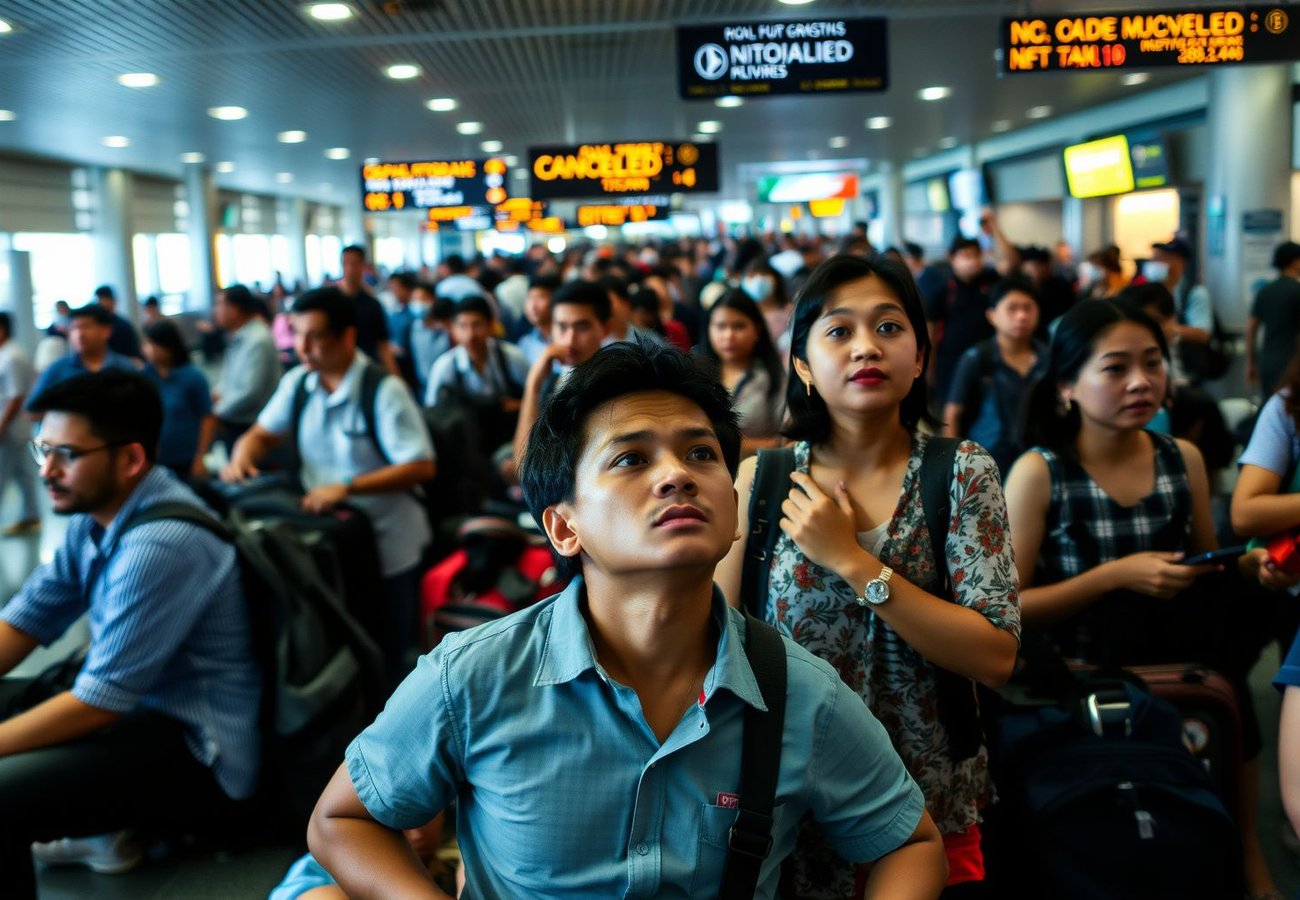
Image generated by AI
Thousands Stranded as Asia's Aviation System Grinds to Halt
4,743 flights delayed and 251 cancelled across nine countries today created a cascading travel nightmare for passengers across Asia's busiest airports. The disruptions rippled through Singapore, Japan, Hong Kong, Malaysia, China, India, Indonesia, Saudi Arabia, and Türkiye, leaving travelers scrambling for alternative routes and rebooking options.
This wasn't a localized hiccup—it was a network-wide operational failure that touched virtually every major carrier operating in the region.
The Numbers Tell the Story
China Eastern Airlines bore the brunt of today's chaos, recording 354 delays and 54 cancellations—making it the single most disrupted carrier. Close behind, IndiGo accumulated 322 delays and just 9 cancellations, while Air China reported 278 delays and 22 cancellations.
The scale is staggering. When you add in All Nippon Airways (128 delays, 1 cancellation), Air India (123 delays), Japan Airlines (102 delays), and China Express Airlines (80 delays, 34 cancellations), the operational strain becomes undeniable.
Reddit: "Just got stranded at Delhi airport. IndiGo just cancelled my flight with zero explanation. Been waiting 6 hours." — r/travel
Which Airports Became Ground Zero
Delhi's Indira Gandhi International Airport topped the disruption league with 502 delays and 10 cancellations. This is India's busiest airport—imagine 500+ delayed flights funneling through a single hub.
Beijing Daxing International Airport followed with 348 delays and 17 cancellations, while Guangzhou Baiyun reported 333 delays and 13 cancellations. Together, these three airports alone absorbed nearly 1,200 delayed flights.
The hits kept coming:
- Tokyo Haneda Airport: 322 delays, 4 cancellations
- Beijing Capital International Airport: 319 delays, 14 cancellations
- Shenzhen Bao'an International Airport: 307 delays, 16 cancellations
- Hangzhou Xiaoshan International Airport: 218 delays, 11 cancellations
- Kuala Lumpur International Airport: 196 delays, 2 cancellations
- Shanghai Pudong International Airport: 183 delays, 9 cancellations
- Singapore Changi Airport: 151 delays, 1 cancellation
- Mumbai's Chhatrapati Shivaji Maharaj International Airport: 151 delays, 8 cancellations
Jakarta's Soekarno-Hatta International Airport recorded the highest cancellation total with 22 cancelled flights, suggesting more severe operational issues than simple weather or minor delays.
Which Airlines Got Hit Hardest?
Beyond the top carriers, the disruptions extended to Pegasus Airlines (72 delays, 2 cancellations), Malindo Air (66 delays, 3 cancellations), Air India Express (61 delays), Cathay Pacific, Singapore Airlines, Scoot, Malaysia Airlines, AirAsia, Turkish Airlines, Saudia, Lion Air, Garuda Indonesia, Akasa Air, and SpiceJet.
The geographic spread reveals a coordinated problem. This wasn't isolated weather or mechanical issues—it was systemic.
What Actually Happened?
Neither the source reports nor official statements immediately clarified the root cause. Possibilities range from severe weather systems moving across Southeast and South Asia, to air traffic control congestion, to unexpected mechanical issues cascading through maintenance queues.
FlightRadar24 and other real-time tracking services showed significant traffic congestion around major Asian hubs during peak hours, suggesting the disruptions may have cascaded from morning delays into evening chaos.
What Passengers Should Do Right Now
Check airline notifications immediately. Your carrier has likely posted schedule updates and rebooking options online. Don't rely on airport announcements alone.
Confirm your flight status before heading to the airport. Use the IATA's official flight tracking resources or your airline's mobile app—not Google's sometimes-outdated listings.
Allow 3-4 hours of buffer time if you're still trying to get through an affected airport. Security lines will be longer as airlines rebook passengers on successive flights.
Review your airline's disruption policy. EU261 regulations don't apply uniformly outside Europe, but most major carriers offer rebooking, refunds, or hotel vouchers for cancellations. Demand clarity in writing.
Keep receipts for meals, hotels, transportation, and communication costs. You may file expense claims once operations normalize.
Stay glued to official channels—your airline's website, airport information displays, and authorized customer service lines. Ignore rumors and Twitter speculation.
The Broader Pattern
What's notable here isn't just the scale—it's the geographic span. Disruptions affecting Delhi, Mumbai, Beijing, Shanghai, Guangzhou, Tokyo, Singapore, Kuala Lumpur, Jakarta, Hong Kong, Istanbul, and Jeddah simultaneously suggest either a region-wide weather system or coordinated air traffic control issues.
This is precisely why travel lawyers recommend purchasing travel delay insurance for trips involving multiple Asian hubs. Standard airline compensation often falls short when disruptions cascade across multiple carriers and jurisdictions.
When Asia's aviation network goes down, thousands are left waiting—and airlines are left explaining.
Related Travel Guides
Albany Airport Western Australia $41M Upgrade Opens Freight Routes and Emergency Services in 2026
Rolls-Royce Trent 900 Engine So Advanced It Forced Complete Aircraft Redesign for Airbus A380
JetBlue's Premium Mint Strategy: How 24 Business Class Seats Finance Entire Transatlantic Flights
Disclaimer
This article is for informational and educational purposes only. It does not constitute legal, financial, or professional advice. While we strive to provide accurate and up-to-date information, travel policies, regulations, and conditions change rapidly. Always verify information with official sources before making travel decisions. Nomad Lawyer makes no representations about the accuracy, reliability, completeness, or suitability of the information provided. Readers should consult qualified professionals for advice specific to their circumstances. The views expressed in this article are those of the author and do not necessarily reflect the views of Nomad Lawyer.
Raushan Kumar
Founder & Lead Developer
Full-stack developer with 11+ years of experience and a passionate traveller. Raushan built Nomad Lawyer from the ground up with a vision to create the best travel and law experience on the web.
Learn more about our team →