
European Sleeper Links Eurostar Bookings to Open Rail Routes from London to Berlin, Prague, and Milan in 2026
A new integrated booking system launched in October 2026 simplifies flight-free travel from London to Central Europe and Italy by linking Eurostar services with European Sleeper's overnight network via Brussels.

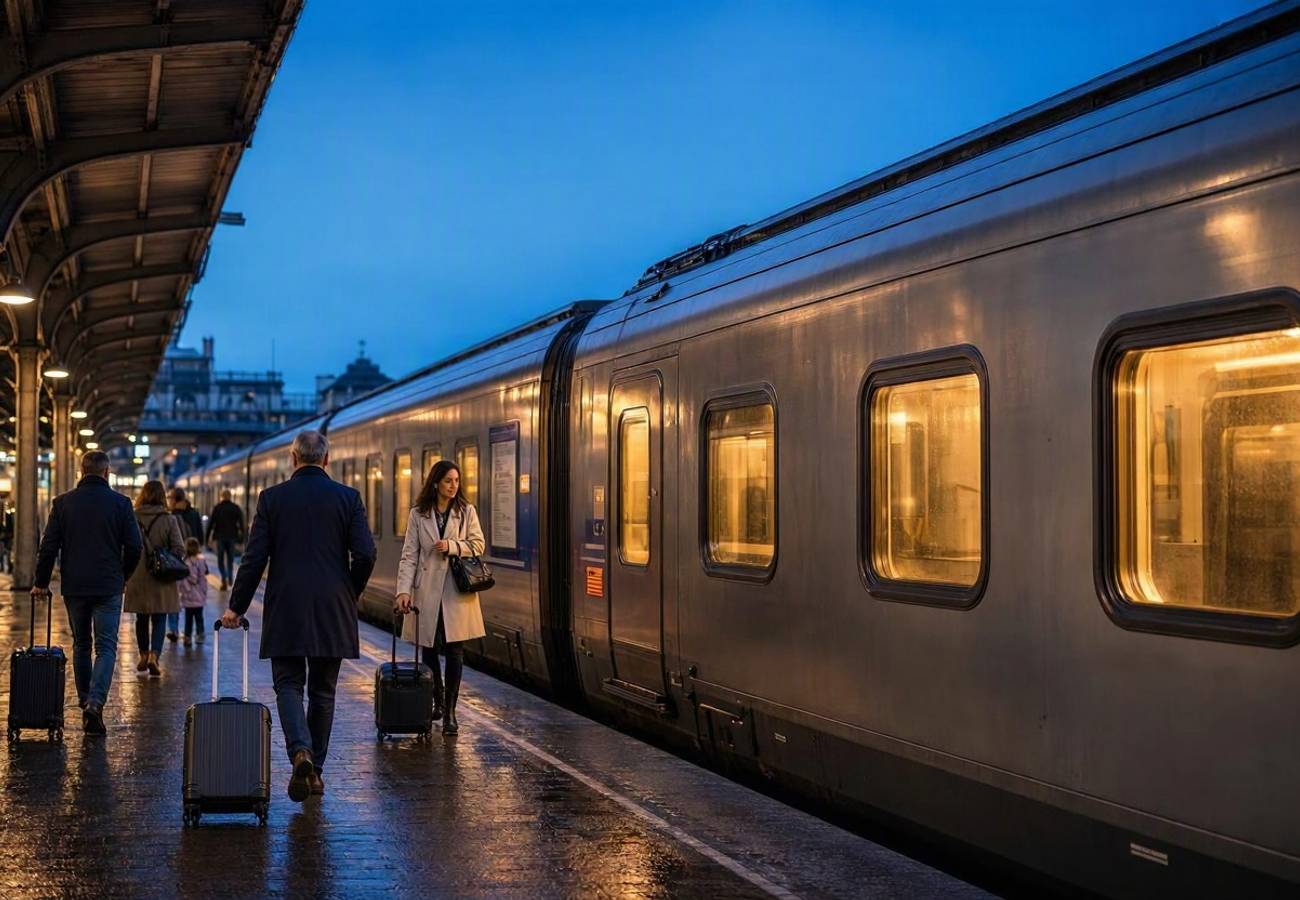
Image generated by AI
Ten daily departures from London to Brussels as of October 6, 2026, now serve as the primary artery for a new integrated booking system linking the UK to the heart of continental Europe. Launched in October 2026, this partnership between European Sleeper and Dutch ticketing specialist Choo-Choo streamlines the process of connecting Eurostar high-speed services with an expanding network of overnight trains. By utilizing Brussels-Midi as a strategic interchange, travelers can now plan cohesive rail itineraries from London St Pancras International to major hubs in Germany, Czechia, and Italy without the friction of navigating multiple disparate booking platforms.
The Brussels-Midi Strategic Interchange
The logistical bottleneck for long-distance European rail has rarely been the physical tracks, but rather the administrative fragmentation of cross-border ticketing. The new system addresses this by bridging the gap between the UK's primary international terminal and three major 2026 overnight corridors.
Under this model, passengers transit from London to Brussels-Midi, where they transfer to the European Sleeper network. To mitigate the risk of missed connections, the booking tool avoids "tight" transfers, instead prioritizing realistic windows that account for potential delays in the Channel Tunnel or Belgian rail congestion. This converts Brussels into a functional gateway for UK-based travelers seeking flight-free alternatives to Central and Southern Europe.
2026 Route Connectivity and Schedules
The expansion significantly alters the accessibility of several high-traffic tourism zones. The network is built around three primary corridors: Brussels-Prague, Brussels-Milan, and Paris-Berlin.
European Rail Connectivity Matrix 2026
| Destination | Primary Connection Path | Strategic Significance |
|---|---|---|
| Berlin | London $\rightarrow$ Brussels $\rightarrow$ European Sleeper | Major cultural hub and German capital |
| Prague | London $\rightarrow$ Brussels $\rightarrow$ Berlin $\rightarrow$ Dresden $\rightarrow$ Prague | Core overnight corridor into Czechia |
| Milan | London $\rightarrow$ Brussels $\rightarrow$ European Sleeper | Primary gateway to Northern Italy |
| Lake Como | London $\rightarrow$ Brussels $\rightarrow$ Como | Direct leisure access to Italian lakes |
| Dresden | London $\rightarrow$ Brussels $\rightarrow$ European Sleeper | Access to Saxony and Eastern Germany |
| Hamburg | Connecting Sleeper Network | Northern German industrial/tourism link |
| Amsterdam | Brussels-Prague Corridor | Core network stop for Dutch transit |
The Brussels-Prague line remains a cornerstone of the operation. On October 7, 2026, train ES453 departed Brussels-Midi at 18:06, stopping at Antwerp-Central, Roosendaal, Rotterdam, The Hague, Amsterdam, Amersfoort, and Deventer. This service reaches Berlin Gesundbrunnen at 06:05, Dresden at 08:32, and concludes in Prague at 10:54 the following morning.
Meanwhile, the Southern European expansion launched in September 2026. The Brussels-Milan service operates three times weekly in each direction. For instance, on October 7, train ES400 left Milano Porta Garibaldi at 15:45, calling at Como San Giovanni (16:57), Lugano (18:44), and Bellinzona (19:23) before arriving in Brussels-Midi at 11:42 the next day via Cologne (08:26).
Expert Analysis: The "Protected Ticket" Legal Gap
For the modern nomad or business traveler, the most critical detail of this announcement is not the connectivity, but the legal nature of the ticket. Despite the unified booking experience provided by Choo-Choo, this is not a single, protected through-ticket.
In aviation, a single PNR (Passenger Name Record) generally ensures that if a connecting flight is missed due to a delay by the first carrier, the airline is responsible for rebooking. In this rail arrangement, Eurostar and European Sleeper remain separate legal entities. If a delay on the London-Brussels leg causes a passenger to miss the sleeper train, there is no automatic guarantee of replacement transport.
For travelers booking these routes, the direct consequence is a higher reliance on the "buffer time" built into the booking tool. The pricing pressure this creates means that while the process of buying is now seamless, the risk remains with the passenger. This highlights a continuing gap in European rail integration compared to the standards set by the International Union of Railways (UIC), where true inter-operability and protected transfers remain elusive across different national and private operators.
Key Takeaways
- Unified Booking, Separate Risk: While you can book the entire journey in one flow, the Eurostar and European Sleeper portions are separate tickets; missed connections are not automatically guaranteed.
- Brussels as the Hub: Brussels-Midi is the mandatory interchange for all UK-originating sleeper journeys to Prague, Berlin, and Milan.
- Strategic Timing: The system deliberately avoids the fastest possible connections to provide a safety margin for travelers transitioning from the UK.
- Expanded Italian Access: New 2026 schedules provide direct overnight access to Lake Como and Milan, operating three times per week.
- Central European Corridor: The Brussels-Prague route serves as a multi-city option, with stops in the Netherlands and Germany.
FAQ: London-Europe Sleeper Rail 2026
Do I need a separate ticket for the Eurostar and the sleeper train? Yes. Although you can purchase them through one booking interface via Choo-Choo, they are issued as separate tickets. This means they are not linked as a single legal contract for transport.
What happens if my Eurostar train from London is delayed and I miss the sleeper? Because these are separate tickets, automatic rebooking is not guaranteed. You should rely on the generous transfer windows provided by the booking tool and check your specific ticket conditions regarding delays.
Which Italian destinations can I reach using this network? The primary gateway is Milan (Milano Porta Garibaldi), but the service also provides access to Lake Como (Como San Giovanni) and Swiss destinations like Lugano and Bellinzona.
How often do the sleeper trains run to Prague and Milan? The Brussels-Prague service typically departs Mondays, Wednesdays, and Fridays. The Brussels-Milan service operates three times per week, with departures on Mondays, Thursdays, and Saturdays.
The era of the flight-free European odyssey is returning, provided travelers respect the fine print of the transfer.
Related Travel Guides
Disclaimer
This article is for informational and educational purposes only. It does not constitute legal, financial, or professional advice. While we strive to provide accurate and up-to-date information, travel policies, regulations, and conditions change rapidly. Always verify information with official sources before making travel decisions. Nomad Lawyer makes no representations about the accuracy, reliability, completeness, or suitability of the information provided. Readers should consult qualified professionals for advice specific to their circumstances. The views expressed in this article are those of the author and do not necessarily reflect the views of Nomad Lawyer.
Naina Thakur
Contributor & Travel Specialist
Travel enthusiast and legal writer covering visa regulations, responsible tourism, and cultural journeys across global destinations.
Learn more about our team →