
European Rail Network Efficiency Set to Rise as Timetable Optimization Cuts Travel Times by 25%
New research reveals that strategic timetable coordination across 31,000 rail lines could reduce European travel times by an average of 25% without requiring new infrastructure.

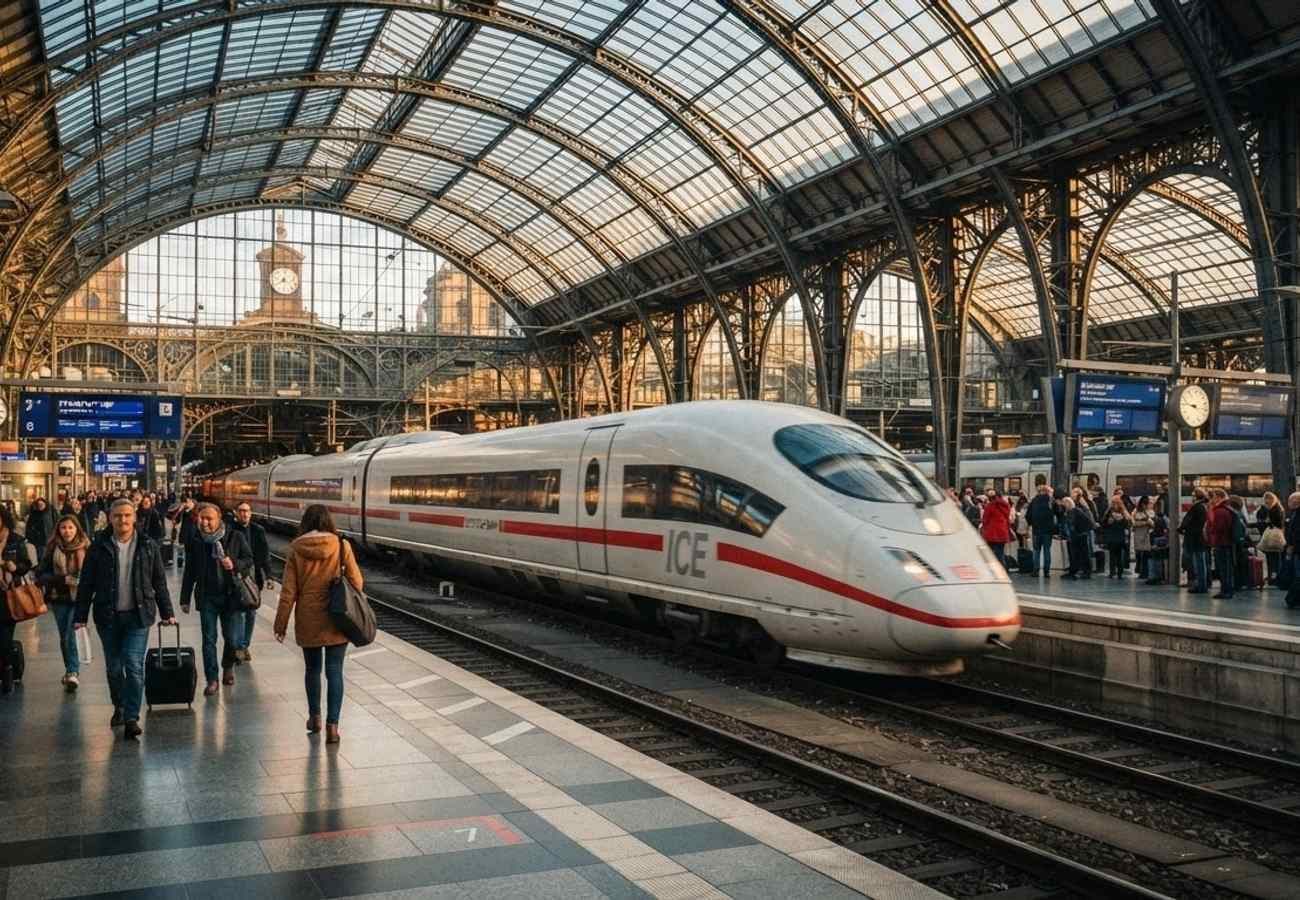
Image generated by AI
European rail travel is on the verge of a major efficiency breakthrough. New data indicates that optimizing schedules across the continent could slash average journey times by 25%, making trains a viable primary alternative to short-haul flights and driving.
Optimizing the Clock to Beat the Clock
The future of European mobility may not rely on the construction of faster trains or the expansion of high-speed tracks, but rather on the mathematical precision of the timetable. Recent research analyzing over 31,000 rail lines suggests that the primary bottleneck in continental travel is not vehicle speed, but the "dead time" spent waiting for connections.
While modern rolling stock can move passengers at incredible speeds, the overall journey duration is often inflated by poorly aligned transfers between regional, national, and international services. By synchronizing these arrival and departure windows, operators can unlock massive time savings without spending a single euro on new concrete or steel.
The 75% Efficiency Gap
Researchers have introduced a new metric called "travel-time efficiency" to quantify how much time is wasted in the current system. The findings reveal a stark reality: Europe’s rail network currently operates at approximately 75% efficiency.
This means that 25% of current travel time is essentially wasted due to suboptimal scheduling. Closing this gap does not require immediate, massive engineering projects. Instead, the path to efficiency involves:
- Tightening the alignment of departure and arrival times.
- Increasing the frequency of high-value transfer opportunities.
- Integrating disparate national networks into a singular, cohesive flow.
The Swiss Blueprint for Continental Success
Switzerland serves as the gold standard for this integrated approach. Rather than focusing solely on top-end speed, the Swiss system is engineered around the "hub" concept, where schedules are meticulously designed to ensure minimal waiting times between transfers.
This model proves that a network of moderately fast trains with perfect coordination is more effective than a network of ultra-fast trains with disjointed connections. Germany has already begun implementing similar coordinated service initiatives to improve connectivity across its national grid, aiming to link major tourist attractions with smaller, regional communities.
Impact on European Tourism and Regional Growth
The shift toward smarter scheduling is expected to trigger a surge in international tourism. Accessibility is a primary driver for destination choice; when rail travel becomes predictable and fast, travelers are more likely to book multi-city itineraries.
The anticipated benefits for the tourism sector include:
- Seamless Intercity Transit: Reduced friction when moving between major capitals.
- Airport Integration: Faster links between primary aviation hubs and tourist centers.
- Regional Dispersion: Increased visitor traffic to secondary cities that were previously avoided due to grueling transfer times.
- Sustainability Shifts: A stronger incentive for travelers to abandon short-haul flights in favor of green rail corridors.
Overcoming the Cross-Border Barrier
The primary obstacle to this "rail revolution" is geopolitical and operational. Because the European network is a patchwork of different national operators, each with its own scheduling rules and operational priorities, cross-border synchronization is complex.
To achieve the projected 25% time saving, increased diplomacy and technical cooperation between Central, Southern, and Northern Europe are essential. Aligning these systems would allow the rail network to compete directly with the convenience of aviation, offering a lower-carbon alternative that does not sacrifice the traveler's time.
Strategic Infrastructure vs. Scheduling
While high-speed lines and tunnels remain necessary for long-term growth, timetable optimization offers an immediate "win." Infrastructure projects take decades to plan and execute; scheduling updates can be implemented far more rapidly.
By combining physical upgrades with digital and operational optimization, Europe can create a transport network that meets the growing demand for sustainable, high-frequency travel. As the economy continues to stabilize and international vacationing rises, the ability to move people efficiently across borders will be a key economic driver for the continent.
Efficiency Metrics at a Glance
| Metric | Current Status | Optimized Potential | Impact |
|---|---|---|---|
| Network Efficiency | 75% | 100% | 25% reduction in travel time |
| Lines Analyzed | 31,000+ | 31,000+ | System-wide optimization |
| Primary Driver | Infrastructure/Speed | Timetable Coordination | Reduced waiting/transfer times |
| Key Model | Fragmented National | Swiss Integrated Model | Seamless hub-to-hub transit |
Key Takeaways
- Immediate Gains: A 25% average reduction in travel time is possible through better scheduling.
- Low Cost: Improvements can be made using existing tracks rather than expensive new construction.
- Tourism Boost: Better connectivity will encourage multi-destination trips and regional exploration.
- Environmental Win: Efficient rail makes sustainable travel more competitive against short-haul flights.
FAQ
Does this mean trains will actually move faster? No, the trains themselves won't necessarily increase their top speed. The "speed" comes from reducing the time spent sitting in stations waiting for connecting trains.
Which countries are leading this change? Switzerland is the primary example of success, with Germany currently implementing similar coordinated planning initiatives.
Will this affect ticket prices? The research focuses on time efficiency. While infrastructure projects are expensive, timetable optimization is an operational change that may not necessarily increase passenger fares.
The era of the "waiting game" in European rail travel is coming to an end.
Related Travel Guides
Disclaimer
This article is for informational and educational purposes only. It does not constitute legal, financial, or professional advice. While we strive to provide accurate and up-to-date information, travel policies, regulations, and conditions change rapidly. Always verify information with official sources before making travel decisions. Nomad Lawyer makes no representations about the accuracy, reliability, completeness, or suitability of the information provided. Readers should consult qualified professionals for advice specific to their circumstances. The views expressed in this article are those of the author and do not necessarily reflect the views of Nomad Lawyer.
Preeti Gunjan
Contributor & Community Manager
A passionate traveller and community builder. Preeti helps grow the Nomad Lawyer community, fostering engagement and bringing the reader experience to life.
Learn more about our team →