
European City Protests October 2026: Travel Disruptions in France, Belgium, Italy, and Portugal
Mass protests across major European hubs are causing significant transport diversions and safety risks for tourists in Paris, Brussels, Milan, and Lisbon.

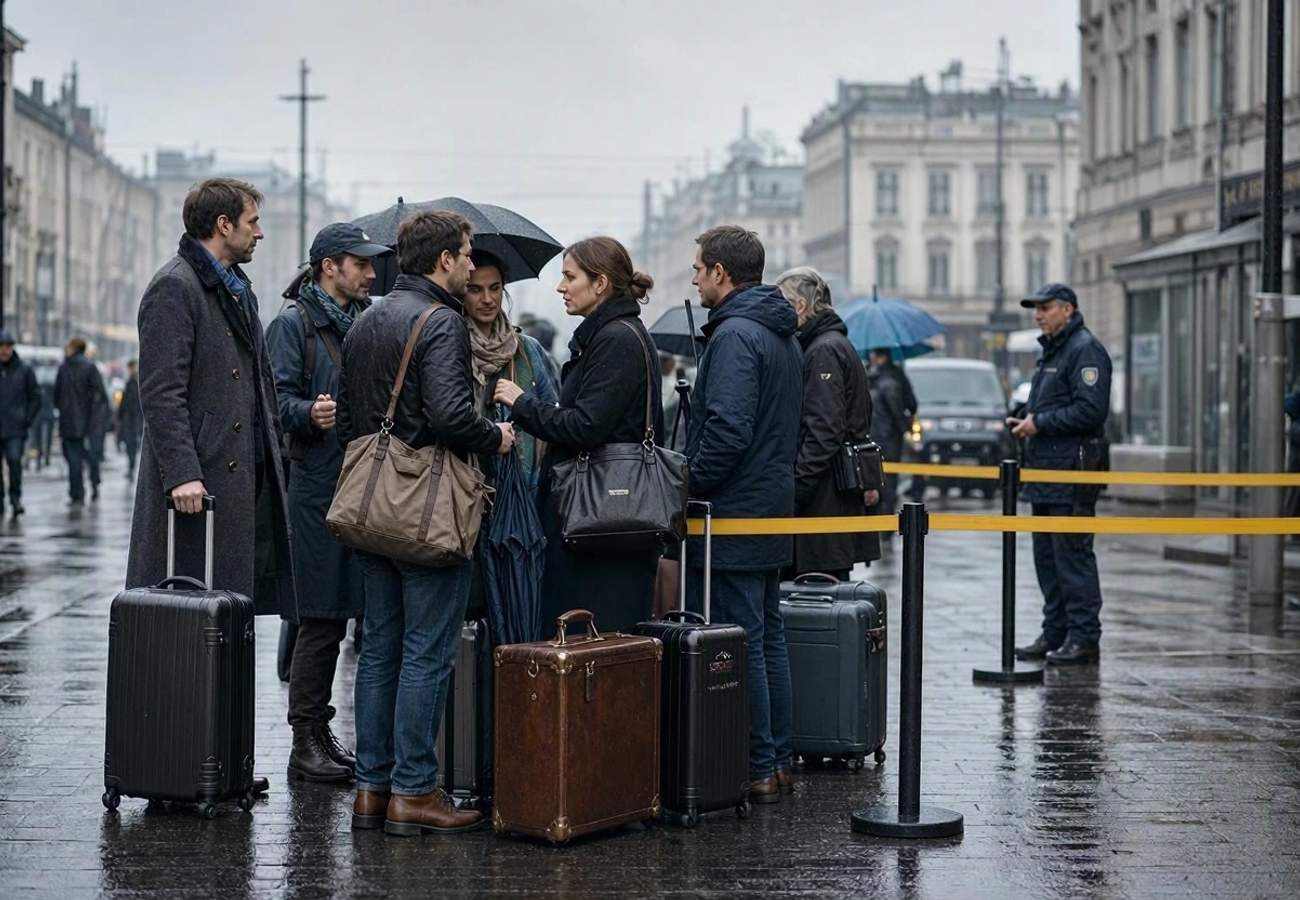
Image generated by AI
A family arriving in Paris on October 17 to begin their autumn school holiday break found their planned route to the city center blocked by security cordons and diverted buses. This scenario has become common across several European capitals as mass demonstrations against the cost of living trigger widespread urban instability.
Civil Unrest and Urban Disruption Across Europe
On Saturday, October 17, 2026, a wave of coordinated but independently motivated protests swept through France, Belgium, Italy, and Portugal. These demonstrations, driven by grievances over housing costs, stagnant wages, and deteriorating public services, have directly impacted the primary districts where international tourists congregate.
France witnessed the most intense activity, with the Interior Ministry estimating that more than 550,000 people took to the streets. The unrest escalated into violence in several hubs, resulting in approximately 1,200 arrests and injuries to 150 police officers. While the protests were not a unified European movement, the simultaneous timing has created a systemic challenge for regional transit and visitor safety.
The impact is not limited to the capital cities. In France, reported damage and instability extended to Marseille, Nice, Nantes, Bordeaux, Limoges, Lille, Toulouse, and Strasbourg. Notably, a historic town hall in Limoges suffered severe fire damage, and the tourist office in Lyon was targeted, signaling that even secondary destinations are currently high-risk zones.
Geographic Breakdown of Tourism Impacts
The nature of the disruption varies by country, ranging from official transport diversions to spontaneous safety risks in luxury shopping districts.
| Country | Primary Affected Cities | Primary Tourism Risk | Confirmed Impacts |
|---|---|---|---|
| France | Paris, Lyon, Marseille, Nice | Safety, Retail Access | Bus diversions (Route 87), property damage in Paris |
| Belgium | Brussels | Mobility, Visitor Confidence | Clashes and fires in city center; police crowd control |
| Italy | Milan, Bologna, Rome | Shopping districts, Station access | Damage near Bologna railway station; Piazza del Duomo unrest |
| Portugal | Lisbon, Porto, Coimbra | Urban mobility, Tram services | 18 bus/tram lines diverted (including 28E) |
Your Rights as a Passenger
When urban unrest leads to transport failures, passengers often find themselves stranded or unable to reach their destinations. Your legal protections depend on the type of transport and the nature of the disruption.
Public Transit and Local Transport
In cities like Lisbon and Paris, where municipal operators (such as Carris) have diverted routes, passengers generally do not have a right to monetary compensation for delays. However, you are entitled to the service you paid for. If a pre-paid tourist pass is rendered useless due to systemic shutdowns, you should request a pro-rata refund from the local transport authority.
Rail and Air Travel
While these protests have primarily affected city centers, any resulting delay to international rail or flight connections falls under specific frameworks. If a protest causes a rail strike or airport access failure:
- EU Rail Rights: Under EU regulations, passengers are entitled to assistance (meals, hotels) and potential refunds if delays exceed specific thresholds. Check the European Commission's rail passenger rights for detailed claims processes.
- Flight Disruptions: If protests lead to airport closures or staffing shortages, EU261/2004 governs your rights. You may be entitled to compensation unless the airline can prove "extraordinary circumstances." Note that general civil unrest is often categorized as such, but the airline must still provide "duty of care" (hotels and meals).
Hospitality and Bookings
If you cannot reach your hotel due to police cordons, the hotel is not legally required to refund you unless the property itself is inaccessible or closed. However, most travel insurance policies cover "civil commotion." Ensure you obtain a written statement from local authorities or a police report to support your insurance claim.
Rebooking Strategy and Alternatives
If you are currently in one of the affected cities or planning a trip for late October/November, adopt the following tactical approach:
- Avoid City Centers: Shift your itinerary to outer arrondissements or suburban districts. In Paris, avoid the central hubs during peak protest hours (typically mid-afternoon).
- Diversify Transport: Avoid relying on a single mode of transport. If the Lisbon 28E tram is diverted, use ride-sharing apps or walking tours, though be mindful of police checkpoints.
- Monitor Real-Time Data: Use FlightRadar24 to track airport arrivals and check official municipal Twitter/X feeds for the most current road closure maps.
- Plan for November: Be aware that further mobilizations are scheduled. Specifically, Portugal's trade unions have announced another major action for November 24, 2026, linked to the parliamentary budget.
FAQ: European Protests 2026
Am I entitled to compensation for a diverted bus or tram? Generally, no. Local municipal transport diversions due to protests are considered operational adjustments. You are entitled to reach your destination via an alternative route, but not to financial compensation.
Can I get a refund for a hotel if I can't reach it due to protests? Only if the hotel is physically inaccessible or closed. Otherwise, this is a matter for your travel insurance under "civil unrest" or "trip interruption" clauses.
Are airports in France, Italy, or Portugal closed? No. As of October 18, 2026, there are no widespread international flight cancellations or airport closures. The disruption is localized to urban centers and public transit.
What should I do if my tour is cancelled due to safety concerns? Request a full refund from the tour operator. Under EU consumer law, if a service cannot be provided for safety reasons, the provider must offer a refund or a rescheduled date.
Stay vigilant, document every disruption, and prioritize safety over sightseeing.
Related Travel Guides
Disclaimer
This article is for informational and educational purposes only. It does not constitute legal, financial, or professional advice. While we strive to provide accurate and up-to-date information, travel policies, regulations, and conditions change rapidly. Always verify information with official sources before making travel decisions. Nomad Lawyer makes no representations about the accuracy, reliability, completeness, or suitability of the information provided. Readers should consult qualified professionals for advice specific to their circumstances. The views expressed in this article are those of the author and do not necessarily reflect the views of Nomad Lawyer.
Preeti Gunjan
Contributor & Community Manager
A passionate traveller and community builder. Preeti helps grow the Nomad Lawyer community, fostering engagement and bringing the reader experience to life.
Learn more about our team →