
Belgium Joins Portugal, France, and Italy in Sweeping Tourism Curbs to Reclaim Urban Housing Affordability
Belgium, Portugal, France, and Italy enact synchronized statutory curbs on short-term holiday rentals to combat real estate inflation and restore residential housing stock.

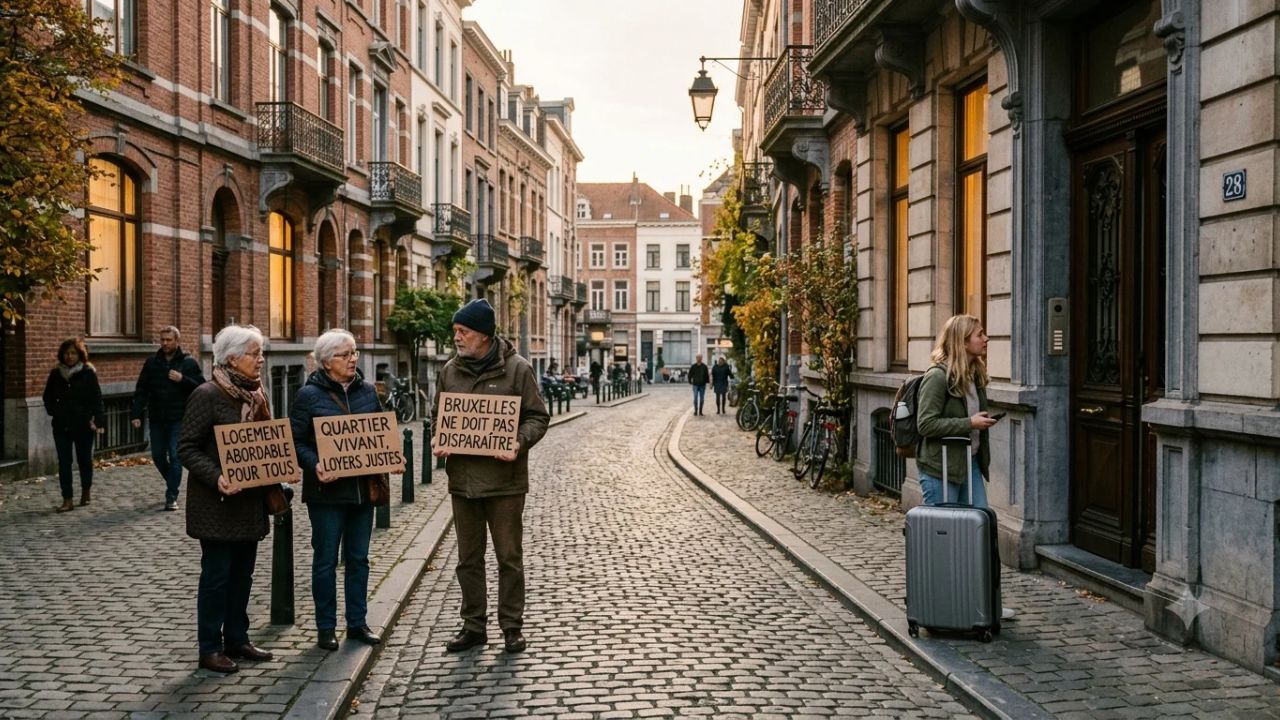
Faced with intensifying civil strikes, student blockades, and severe real estate inflation that has pushed rental costs beyond the reach of local workforces, national and municipal governments across Western Europe have launched an unprecedented statutory offensive against short-term holiday rentals. Spearheaded by comprehensive legislative interventions in Belgium alongside established crackdowns in Portugal, France, and Italy, urban authorities are dismantling decades of laissez-faire tourist accommodation policies. By deploying centralized digital registration databases, freezing new rental authorizations, establishing strict annual occupancy caps, and levying deterrent fiscal penalties, European regulators are actively prioritizing residential stability over unchecked visitor expansion.
The synchronized policy shift reflects a fundamental reassessment of tourism economics across European capitals. While peer-to-peer accommodation platforms were once heralded as engines of decentralized economic growth, the unfettered conversion of residential flats into tourist apartments has hollowed out historic town centers, exacerbated student accommodation deficits, and inflated lease rates by double digits. From university campuses in Brussels and Ghent to residential neighborhoods in Lisbon, Paris, and Rome, regional administrations are asserting statutory control to protect local workers, healthcare personnel, and families from displacement.
Comparative Policy Matrix: Regulatory Interventions Across Key European Nations
The structural confrontation between visitor accommodation and local tenant security has produced targeted statutory mechanisms across Western Europe. Each jurisdiction has engineered legal frameworks designed to address specific vulnerabilities within its domestic housing supply.
The table below outlines the primary housing frictions, statutory measures, affected metropolitan zones, and enforcement penalties active across the four nations:
| Sovereign Nation | Primary Housing & Tourism Friction | Key Statutory Mechanism Enacted | Targeted Municipal Hubs | Statutory Enforcement & Penalties |
|---|---|---|---|---|
| Belgium | Student housing deficits, rising tuition fees, capital transit blockades | Mandatory municipal registration, commercial fire/safety permits, zoned quotas | Brussels, Ghent, Liège | Heavy administrative fines, immediate listing take-down mandates |
| Portugal | 70%–80% wage-to-rent consumption, speculative foreign real estate buys | Nationwide freeze on new AL permits, zero-tax long-term conversion relief | Lisbon, Porto, coastal municipalities | License cancellations, mandatory tax audits on unlisted holiday units |
| France | Secondary school blockades, energy inflation, real-wage erosion | Strict 120-day annual primary residence cap, mandatory commercial square-meter offset | Paris, Limoges, Saint-Denis, Lens | Fines up to €50,000 per unlawful residential unit conversion |
| Italy | General strikes, student encampments, depleted public worker housing | Mandatory National Identification Codes (CIN), higher multi-property taxes (26%) | Milan, Florence, Rome, Bologna, Venice | Platform listing blacklists, heavy fiscal non-compliance sanctions |
Belgium: Halting Campus Displacement and EU Quarter Speculation in Brussels and Ghent
In Belgium, social friction reached an inflection point when massive student-led demonstrations disrupted transit corridors across Brussels and Liège. Protesters rallied against compounding financial pressures, where annual university tuition fees reaching up to €1,194 coincided with a structural deficit of affordable studio apartments. In districts adjacent to university campuses and European Union institutional quarters, the rapid monetization of residential apartments as corporate and leisure holiday rentals systematically eliminated entry-level housing supply.
To arrest this contraction, municipal authorities in Brussels and Ghent introduced sweeping regulatory requirements:
- Mandatory Municipal Registration Portals: Property owners in Brussels and Ghent cannot advertise accommodation on third-party booking platforms without publishing a certified municipal registration number directly on the listing page.
- Commercial Building and Fire Safety Audits: To eliminate casual apartment conversions, residential landlords must obtain commercial building compliance certificates, urban planning permits, and stringent fire safety clearances before applying for host credentials.
- Academic District Quota Zones: Local district councils have enacted zoning bylaws that cap short-term guest accommodations at a fixed percentage of total neighborhood housing stock, insulating student quarters from holiday rental concentration.
Enforcement agencies carry legal authority to issue immediate administrative fines and compel online aggregators to purge unverified property listings within forty-eight hours of notification.
Southern European Controls: Portugal’s Alojamento Local Freeze and Italy’s National CIN Regime
Portugal and Italy represent the Mediterranean front of Europe's urban housing crisis, where post-pandemic travel rebounds collided directly with domestic wage stagnation.
In Portugal, where average monthly apartment leases in Lisbon and Porto consumed between 70 and 80 percent of entry-level domestic salaries, the General Confederation of the Portuguese Workers (CGTP) organized prolonged public encampments and street demonstrations. The Portuguese government responded with structural reforms designed to curb speculative real estate acquisitions:
- Suspension of New Alojamento Local Licenses: Statutory legislation imposed a nationwide moratorium on new short-term rental permits across all high-density urban parishes and over-saturated coastal tourism strips.
- Tax Exemption for Long-Term Conversions: To induce property owners to return housing stock to residents, the state established zero-rate income tax exemptions for landlords transitioning holiday units into multi-year residential leases.
- Wage-Indexed Rent Ceilings: Emergency legislation capped annual residential lease adjustments to national wage indexation metrics rather than speculative market indexes, while barring institutional investment vehicles from snapping up residential apartment buildings.
In Italy, escalating unrest organized by the Italian General Confederation of Labour (CGIL) and national student unions in Milan’s Piazza Duomo, Rome, Turin, and Bologna catalyzed nationwide statutory intervention:
- Mandatory Codice Identificativo Nazionale (CIN): The Ministry of Tourism deployed a centralized database assigning a unique national identification code to every compliant tourist accommodation. Digital reservation platforms face statutory fines if they display any property without an active, validated CIN.
- Escalated Multi-Property Rental Taxes: To deter corporate operators masquerading as home-sharers, flat tax rates applied to short-term rental earnings were raised from 21 percent to 26 percent for landlords operating two or more holiday apartments.
- UNESCO Historic Center Bans: Municipal administrations in Venice and Florence utilized expanded legislative authority to enact outright bans on new holiday rental registrations across historic central districts.
France: The 120-Day Threshold and Aggressive Commercial Offsetting Mandates
France has deployed some of the continent's most stringent financial and operational deterrents against short-term holiday rentals. Nationwide worker mobilizations led by the CGT gathered up to 800,000 marchers across Paris, Saint-Denis, and Limoges, protesting compound living costs, public service cuts, and residential unaffordability. Over 200 secondary schools were barricaded by student groups demanding structural housing relief.
French lawmakers and city governments have established rigid statutory guardrails to protect urban centers:
- Rigid 120-Day Annual Primary Residence Limit: Primary residences can be rented to visitors for a maximum of 120 calendar days per year. Any property offered beyond this ceiling is automatically reclassified as a commercial enterprise requiring formal municipal change-of-use authorization.
- Commercial Offsetting Obligations: In Paris and major metropolitan agglomerations, landlords seeking commercial holiday rental conversion must execute offsetting purchases (compensation). The owner must acquire an equivalent or double area of commercial real estate within the same sector and convert that commercial space into permanent, long-term residential apartments.
- Heavy Financial Penalties: French judicial authorities actively enforce penalties reaching up to €50,000 per unauthorized apartment against landlords operating illegal tourist lets, backed by dedicated municipal task forces inspecting residential complexes.
- Tourist Surtax Allocation: Surcharges levied on nightly visitor accommodation taxes are channeled into regional affordable housing construction programs and local civic transit systems.
Economic Ramifications: Rebalancing Resident Welfare and High-Yield Tourism
The widespread implementation of holiday rental curbs across Western Europe signals the end of unconstrained growth in urban tourism. For more than a decade, city leaders treated visitor numbers as an unalloyed economic benefit, measuring success purely by passenger arrivals, hotel occupancy rates, and direct visitor expenditure. However, the external costs—infrastructure strain, public transit saturation, neighborhood depopulation, and soaring living costs—have forced a deliberate shift toward managed, high-yield tourism.
Restricting short-term rentals directly shields essential public workers from long commutes. When nurses, teachers, transport drivers, and service personnel are priced out of city centers, municipal productivity deteriorates. By returning thousands of apartments to long-term residential rental pools, these regulations aim to stabilize baseline cost-of-living indicators and preserve the demographic vitality of European capitals.
For travelers, these regulatory shifts will alter accommodation pricing and availability. With thousands of non-compliant holiday apartments removed from digital platforms across Brussels, Lisbon, Paris, and Rome, visitors must anticipate higher nightly rates for remaining certified rentals and licensed hotels. Travel planners and corporate travelers must verify municipal registration badges, confirm host CIN credentials, and reserve accommodation well in advance during peak European seasonal windows.
Key Takeaways
- Coordinated European Tourism Curbs: Belgium, Portugal, France, and Italy are enforcing synchronized statutory measures to curb holiday rentals and restore residential affordability.
- Belgium Mandates Municipal Verification: Brussels and Ghent have established unified registration systems, commercial fire inspections, and district-level caps near academic hubs to safeguard student housing.
- Portugal Freezes Alojamento Local: Authorities placed a nationwide moratorium on new holiday rental permits in urban centers while offering complete tax exemptions for long-term residential leases.
- Italy Implements Mandatory CIN System: Italian regulators launched the Codice Identificativo Nazionale, levying strict fines on platforms listing uncertified units and raising multi-property rental taxes to 26 percent.
- France Enforces Commercial Offsetting: French municipalities enforce a 120-day annual cap on primary homes, backed by €50,000 fines and mandatory commercial-to-residential space replacement rules.
FAQ: European Tourism Restrictions and Housing Affordability
Why are Belgium, Portugal, France, and Italy restricting tourist holiday rentals?
Governments are curbing short-term rentals to stop the rapid depletion of long-term housing stock, reduce double-digit rental price inflation, and address civil protests led by local workers and students priced out of major cities.
What are the new rental rules for holiday properties in Belgium?
In Brussels and Ghent, landlords must register properties with local councils, secure commercial fire and safety permits, display their official registration number on booking sites, and adhere to strict zoned quotas near universities.
What is Italy’s National Identification Code (CIN) requirement?
Italy requires every short-term holiday rental to possess a validated National Identification Code (Codice Identificativo Nazionale). Online platforms cannot legally list units without displaying this verified code.
How does France penalize illegal short-term holiday rentals?
France limits primary home rentals to 120 days annually. Landlords who convert residences into full-time holiday rentals without purchasing equal commercial space to convert back into housing face court fines up to €50,000 per unit.
Can tourists still book holiday apartments in Lisbon and Porto?
Yes, but new rental licenses are frozen. Travelers can only book existing, licensed Alojamento Local units, which face heightened scrutiny and reduced inventory across central districts.
By enforcing strict statutory limits on short-term rentals, European nations are establishing a new equilibrium between sustainable visitor economies and the fundamental housing rights of their citizens.
Related Travel Guides
- Amsterdam Tightens Holiday Rental Limits and Hotel Caps in 2026 as Netherlands Inbound Tourism Surpasses 23 Million
- Poland Enacts Tourist Tax Reform: Municipalities Authorized to Levy Overnight Fees Across Kraków and Key Cultural Hubs by January 2027
- Southern European Capitals Dismantle Digital Nomad Perks and Golden Visas Amid Short-Term Rental Crackdowns and Housing Inflation
Disclaimer
This article is for informational and educational purposes only. It does not constitute legal, financial, or professional advice. While we strive to provide accurate and up-to-date information, travel policies, regulations, and conditions change rapidly. Always verify information with official sources before making travel decisions. Nomad Lawyer makes no representations about the accuracy, reliability, completeness, or suitability of the information provided. Readers should consult qualified professionals for advice specific to their circumstances. The views expressed in this article are those of the author and do not necessarily reflect the views of Nomad Lawyer.
Raushan Kumar
Founder & Lead Developer
Full-stack developer with 11+ years of experience and a passionate traveller. Raushan built Nomad Lawyer from the ground up with a vision to create the best travel and law experience on the web.
Learn more about our team →