Paris, Madrid, and London Anchor European City Breaks as Early 2027 Bookings Reveal Shifting Urban Travel Patterns


PARIS / MADRID — European urban tourism is undergoing an operational realignment as forward booking intelligence for early 2027, collated by online travel distribution giant eDreams ODIGEO alongside official accommodation telemetry from Eurostat, demonstrates sustained consumer commitment to short-duration international city breaks across Western and Southern Europe.
Even as travelers explore emerging secondary destinations and long-haul intercontinental routes, established urban centers—anchored by Paris, Madrid, Barcelona, London, and Palma de Mallorca—continue to capture the largest share of forward air and hotel bookings. Driven by dense low-cost aviation networks, cultural event calendars, and high-speed rail integration, the European short break has evolved from a seasonal luxury into a year-round staple of international leisure consumption.
This booking momentum reflects deeper structural changes across the continent's travel economy. Travelers are increasingly taking multiple short trips rather than a single annual summer vacation, prioritizing destinations with reliable direct flight connectivity and walkability. At the same time, regional source markets are demonstrating distinct preferences, ranging from German holidaymakers combining Mediterranean city stays with long-haul winter escapes in Southeast Asia, to British travelers condensing their urban getaways into rapid 48-hour itineraries.
The 2027 Urban Break Horizon: eDreams ODIGEO and Eurostat Findings
The strategic baseline for current European travel planning is established by eDreams ODIGEO's annual travel study, which tracks search and transactional booking telemetry across millions of European consumers, cross-referenced with official lodging data from the European Union's statistical office, Eurostat.
During the full year 2026, eDreams ODIGEO's comprehensive booking ledger revealed that Spain and France dominated Europe’s premier travel selections. Barcelona secured the premier position as the continent's most-booked destination, followed closely by Madrid in second place, Paris in third, Palma de Mallorca in fourth, and London in fifth. Early forward booking activity for the first quarter of 2027 indicates that these established capitals and coastal metropolitan hubs have preserved their commercial appeal, providing European airlines and hospitality operators with strong revenue visibility ahead of the spring travel season.
          EUROPE'S PREMIER BOOKING DESTINATIONS (eDREAMS ODIGEO 2026)

  Rank    Destination            Country         Primary Appeal
  -----------------------------------------------------------------------------
   01     Barcelona              Spain           Coastal urban culture & dining
   02     Madrid                 Spain           Museums, gastronomy & nightlife
   03     Paris                  France          Heritage, luxury retail & arts
   04     Palma de Mallorca      Spain           Mediterranean leisure & climate
   05     London                 United Kingdom  Theatre, shopping & connectivity
These forward indicators are substantiated by concrete lodging performance metrics across the European Union. According to Eurostat’s official tourist accommodation monitor, commercial lodging establishments across the 27 EU member states recorded approximately 1.321 billion overnight stays during the first half of 2026. This figure represents an expansion of 1.7 percent compared to the corresponding six-month period in 2025.
A deeper examination of the Eurostat dataset reveals that international cross-border tourism expanded at nearly triple the pace of domestic travel. While overnight stays by domestic travelers grew by 0.9 percent, international non-resident visitor nights surged by 2.5 percent year-on-year. Non-resident international travelers accounted for 48.9 percent of all overnight stays recorded across the European Union, illustrating the vital role of cross-border mobility in sustaining urban hospitality revenues.
| Eurostat Tourism Lodging Metric | First Half of 2026 Result | Year-on-Year Growth Rate |
|---|---|---|
| Total EU Tourist Accommodation Nights | 1.321 billion | +1.7% |
| International Non-Resident Nights | 645.9 million | +2.5% |
| Domestic Resident Nights | 675.1 million | +0.9% |
| Non-Resident Share of Lodging Volume | 48.9% | +0.4 percentage points |
| Short-Term Platform Nights (Q2 2026) | 258.8 million | +5.3% |
The Digital Rental Economy: Eurostat Short-Term Platform Analysis
A critical component powering Europe’s city-break resilience is the continued expansion of digital apartment and vacation home bookings. Official Eurostat data monitoring reservations made via the four leading digital platforms—Airbnb, Booking.com, Expedia Group, and Tripadvisor—reveals that travelers spent 258.8 million guest nights in online-booked short-term rental accommodation across the European Union during the second quarter of 2026 alone.
This represents a 5.3 percent year-on-year increase, adding 13.1 million guest nights compared to the second quarter of 2025. When evaluated against the second quarter of 2024, the volume of platform-booked guest nights expanded by an impressive 23.9 percent. This steady upward trajectory confirms that international holidaymakers are increasingly bypassing traditional full-service hotels in favor of self-catering apartments situated within residential urban quarters, seeking greater price flexibility, private kitchen facilities, and immersion in local neighborhoods.
Regional distribution data from the first quarter of 2026 demonstrates that this digital accommodation demand is heavily concentrated across specific sunbelt and mountain zones:
- Canary Islands (Canarias, Spain): Recorded 8.8 million platform-booked guest nights, driven by sustained winter-sun demand from the United Kingdom, Germany, and the Nordic nations.
- Rhône-Alpes (France): Matched the Canary Islands with 8.8 million guest nights, powered by winter ski holidays, alpine wellness retreats, and Lyon’s thriving urban gastronomic scene.
- Andalusia (Andalucía, Spain): Captured 8.3 million guest nights, supported by intense cultural exploration across Seville, Granada, Córdoba, and the Costa del Sol.
This reliance on short-term rentals underscores the changing operational profile of the modern European city break. Urban tourists are utilizing digital marketplaces to secure neighborhood-level accommodation, allowing secondary districts outside historic city centers to benefit from direct visitor spending in local bakeries, independent coffee shops, and family-owned trattorias.
       EUROSTAT SHORT-TERM DIGITAL PLATFORM GUEST NIGHTS (EU-27)

  Q2 2024: [ 208.9 Million Nights ]
  Q2 2025: [ 245.7 Million Nights ] (+17.6% vs 2024)
  Q2 2026: [ 258.8 Million Nights ] (+5.3% vs 2025 / +23.9% vs 2024)

  Top Q1 2026 Regional Hotspots:
  - Canarias, Spain:     8.8 Million Nights
  - Rhône-Alpes, France:  8.8 Million Nights
  - Andalucía, Spain:    8.3 Million Nights
Outbound Source-Market Profiles: Divergent Consumer Choices
While Paris, Madrid, Barcelona, and London command universal recognition, a granular analysis of national booking data highlights striking differences in how individual European source markets plan their travel itineraries.
France: North African Corridors and Iberian Urban Escapes
French outbound travel patterns captured by eDreams ODIGEO reflect a distinctive blend of short-haul European city exploration and established historical ties with North Africa. In the full-year 2026 rankings, Marrakech emerged as the single most-booked international destination for French holidaymakers, outpacing all European rivals. The Moroccan cultural capital’s abundance of direct flight links from Paris-Orly, Lyon, Marseille, and Nantes, coupled with year-round temperate weather and accessible boutique riads, makes it an unrivaled winter-sun sanctuary for French travelers.
Behind Marrakech, Iberian destinations secured dominant positions among French vacationers, with Barcelona ranking second, Lisbon third, Porto fourth, and Palma de Mallorca fifth. The presence of both Lisbon and Porto among the top four highlights Portugal’s standing as an affordable, culturally rich escape for French consumers.
Further demonstrating the North African travel corridor, Djerba in Tunisia claimed the sixth spot. Madrid ranked seventh, followed by Rome in eighth, Istanbul in ninth, and Nice in tenth. The inclusion of Nice highlights the resilience of domestic short breaks, where French residents utilize high-speed TGV rail links to access the Mediterranean coastline outside the traditional July-August holiday window.
         FRENCH OUTBOUND TRAVEL PREFERENCES (eDREAMS ODIGEO 2026)

  Rank   Destination         Country        Strategic Travel Segment
  ---------------------------------------------------------------------------
   01    Marrakech           Morocco        Short-haul exotic winter sun
   02    Barcelona           Spain          High-speed rail & air leisure
   03    Lisbon              Portugal       Atlantic coastal culture & dining
   04    Porto               Portugal       Wine heritage & northern city break
   05    Palma de Mallorca   Spain          Balearic flight accessibility
   06    Djerba              Tunisia        North African beach resort package
   07    Madrid              Spain          Central Iberian arts & architecture
   08    Rome                Italy          Classical history & gastronomy
   09    Istanbul            Türkiye        Transcontinental cultural bridge
   10    Nice                France         Domestic Riviera rail corridor
Spain: Domestic Tourism Strength and Traditional Capital Allure
Spain’s booking data illustrates the formidable scale of domestic tourism within the Iberian Peninsula. In 2026, Madrid ranked as the number one booked destination for Spanish consumers, while Barcelona held third place, Palma de Mallorca fifth, Tenerife sixth, Málaga eighth, Seville ninth, and Gran Canaria tenth. In total, seven of the top ten destinations selected by Spanish holidaymakers were located within national borders.
This domestic concentration demonstrates that Spanish consumers frequently choose short weekend trips to explore regional autonomous communities, supported by extensive high-speed rail competition between Renfe, Iryo, and Ouigo on trunk corridors linking Madrid with Barcelona, Valencia, Seville, and Málaga.
When Spanish travelers ventured abroad, their choices were concentrated on Europe's premier cultural capitals. Paris secured second place overall—ranking ahead of Barcelona—underlining the enduring fascination Spanish travelers maintain for the French capital. Rome claimed fourth position, while London captured seventh place. For 2027, Spanish city break demand remains heavily anchored around these core European metropolitan centers, characterized by short-lead-time bookings and weekend-aligned flight schedules.
Italy: Paris and Madrid Spearhead 2027 Inbound Intent
Italian booking data provides one of the clearest early signals for 2027 holiday planning. Forward transaction records reveal that Paris ranks as the number one international choice for Italian travelers entering early 2027, followed by Madrid in second place, London in third, and Barcelona in fourth.
This demonstrates a notable shift from Italy’s earlier 2026 booking selections, where Barcelona held the top spot, followed by Tirana in Albania and Paris in third. The dramatic resurgence of Madrid and London in Italian forward planning highlights a renewed appetite for large-scale European cultural capitals that offer extensive shopping, internationally acclaimed theater productions, and major museum exhibitions.
        ITALIAN EARLY 2027 FORWARD BOOKINGS (eDREAMS ODIGEO)

  Rank   Destination         Country        Travel Archetype
  ---------------------------------------------------------------------------
   01    Paris               France         Iconic cultural weekend break
   02    Madrid              Spain          Iberian urban lifestyle & arts
   03    London              United Kingdom Shopping, West End & global transit
   04    Barcelona           Spain          Catalan architecture & dining
   05    Sharm el-Sheikh     Egypt          Red Sea marine resort package
   06    Amsterdam           Netherlands    Canal heritage & museum quarter
   07    New York City       United States  Transatlantic flagship holiday
   08    Budapest            Hungary        Central European thermal heritage
   09    Rome                Italy          Domestic capital transit & culture
   10    Valencia            Spain          Mediterranean gastronomy & design
Beyond the four leading European hubs, Italian travelers demonstrated interest in diverse leisure experiences. Sharm el-Sheikh in Egypt secured fifth place, appealing to scuba divers and winter-sun seekers desiring warm temperatures within a four-hour flight envelope. Amsterdam ranked sixth, New York City seventh, Budapest eighth, Rome ninth, and Valencia tenth. The presence of Valencia and Budapest reflects the growing popularity of mid-sized European cities that provide high-quality urban experiences at competitive price points compared to primary capitals.
Germany: Long-Haul Escapes Mixed with Balearic Staples
German outbound travel trends showcase a distinct pattern that separates consumer choices between classic European short breaks and long-distance intercontinental holidays. During 2026, Palma de Mallorca and Barcelona held the top two positions among German travelers, reflecting Germany's deep affinity for Spanish coastal and urban destinations. Istanbul, London, Vienna, and Madrid also featured prominently.
However, early 2027 booking data reveals a notable development: Bangkok, Thailand, has claimed the number one ranking among German travelers. Following Thailand’s post-pandemic visa relaxations and expanded airline capacity across carriers like Thai Airways, Lufthansa, and Gulf hub airlines, German holidaymakers are booking long-duration winter escapes to Southeast Asia to escape northern Europe's cold winter weather.
Despite Bangkok’s ascent, European destinations continue to represent eight of Germany’s top ten selections for early 2027. Palma de Mallorca retained second place, followed by London in third, Barcelona in fourth, and Gran Canaria in fifth. Rome secured sixth place, Vienna seventh, Tenerife eighth, Athens ninth, and Lisbon tenth.
This balance illustrates how German consumers structure their annual holiday portfolios: allocating substantial capital toward a major long-haul winter journey to destinations like Thailand, while simultaneously reserving multiple three-day weekend breaks across Spain, Britain, Austria, and Greece throughout the spring and autumn months.
        GERMAN EARLY 2027 FORWARD BOOKINGS (eDREAMS ODIGEO)

  Rank   Destination         Country        Operational Category
  ---------------------------------------------------------------------------
   01    Bangkok             Thailand       Long-haul tropical winter respite
   02    Palma de Mallorca   Spain          High-frequency Mediterranean hub
   03    London              United Kingdom Short-haul financial & cultural trip
   04    Barcelona           Spain          Urban coastal recreation
   05    Gran Canaria        Spain          Atlantic sub-tropical winter sun
   06    Rome                Italy          Historic urban exploration
   07    Vienna              Austria        Central European rail connectivity
   08    Tenerife            Spain          Canary Islands volcanic leisure
   09    Athens              Greece         Ancient Mediterranean heritage
   10    Lisbon              Portugal       Atlantic coastal gastronomy
Portugal: Cultural Bridges to France, Spain, and Switzerland
Portuguese booking records for 2026 highlight the deep geographic and cultural ties connecting Portugal with Central and Western Europe. Paris secured first place among Portuguese travelers, followed by Barcelona in second and Madrid in third. Rome held fourth position, while London ranked sixth and Amsterdam seventh.
A distinctive feature of the Portuguese market is the prominence of Swiss destinations. Geneva ranked ninth, and Zurich ranked tenth in the nationwide booking index. This demand is heavily driven by Portugal’s sizable diaspora residing across the Swiss cantons, resulting in substantial family-reunification and leisure travel throughout the year, supported by frequent scheduled flights operated by TAP Air Portugal, Swiss International Air Lines, and easyJet.
Domestic island travel also maintained visibility within Portuguese travel planning. Funchal on Madeira Island claimed fifth place, and Ponta Delgada in the Azores achieved eighth position. These Atlantic autonomous regions offer Portuguese mainland residents dramatic volcanic landscapes, sub-tropical hiking trails, and thermal springs without requiring international currency exchange or passport controls.
United Kingdom: The 48-Hour Micro-Break Phenomenon
The United Kingdom market provides a compelling case study in the rapid acceleration of the short-duration urban break. In eDreams ODIGEO's hotel booking analysis, Barcelona, Amsterdam, and Paris emerged as the three leading international destinations selected by British travelers.
The most notable metric uncovered in the British dataset centers on trip duration. According to the report, 68 percent of all short hotel stays booked by UK consumers lasted just one or two days. Rather than taking extended five- to seven-day city breaks, British travelers are utilizing Friday-evening departures and Sunday-night returns to maximize their annual leave allowances.
This behavior is facilitated by the United Kingdom’s exceptionally competitive low-cost aviation market. Airlines such as easyJet, Ryanair, Jet2, and British Airways operate high-frequency shuttle operations linking London Gatwick, London Stansted, Manchester, Birmingham, and Edinburgh directly to major European capitals, allowing travelers to reach their hotels within three hours of departure.
Simultaneously, the UK domestic short-break sector experienced extraordinary expansion. Within the eDreams hotel booking comparative study, Manchester recorded an astonishing 112 percent increase in hotel bookings, while Belfast registered a 56 percent surge.
Manchester’s growth is fueled by its celebrated live music scene, Premier League football fixtures at Old Trafford and the Etihad Stadium, and an expanding culinary and cultural quarter centered around Ancoats and the Northern Quarter. Belfast’s growth reflects its emergence as a premier cultural destination, propelled by the Titanic Belfast exhibition, historical walking tours, and easy access to the dramatic coastal landscapes of Northern Ireland.
       UNITED KINGDOM SHORT-BREAK BEHAVIORAL PROFILE (2026/2027)

  Trip Duration Split:
  - 1 to 2 Days:   [ 68% of All Booked Urban Stays ]
  - 3+ Days:       [ 32% of Extended City Breaks ]

  Top International Hotel Targets:
  1. Barcelona, Spain   (Direct beach-city packaging)
  2. Amsterdam, Netherlands (Short rail/flight transit from London)
  3. Paris, France      (Eurostar high-speed rail & short flights)

  Surging UK Domestic Hotel Growth:
  * Manchester:  +112% Booking Increase (Sports, music & arts)
  * Belfast:     +56% Booking Increase (Heritage & coastal access)
The Rise of Secondary Hubs: Cagliari, Dublin, and Tirana
While Europe's marquee capitals continue to command the highest absolute booking volumes, the eDreams ODIGEO study reveals that the fastest percentage growth rates are occurring across secondary and emerging urban destinations. Discerning travelers, seeking to escape high hotel rates and crowded streets in primary hubs, are increasingly turning toward alternative regional capitals.
Leading this growth wave in the 2026 report was Cagliari, the capital of Italy’s island region of Sardinia, which registered a 78 percent surge in hotel bookings. Cagliari combines an authentic medieval hilltop citadel (Il Castello) with direct access to the expansive Poetto beach and lagoons inhabited by wild pink flamingos, offering holidaymakers an accessible Mediterranean island break without the extreme prices of the Costa Smeralda.
Dublin, Ireland, followed closely with a 76 percent expansion in hotel bookings. Ireland’s capital has solidified its reputation as an accessible weekend getaway for European travelers, benefiting from expanded transatlantic connectivity through Dublin Airport (DUB) and high-density European links operated by home carrier Ryanair and Aer Lingus. Official Eurostat data validates this momentum: during the second quarter of 2026, tourist accommodation nights across Ireland expanded by 5.7 percent year-on-year.
The third standout growth market was Tirana, the capital of Albania, which posted a 74 percent increase in hotel bookings. Tirana’s growth is one of the most remarkable tourism success stories in contemporary Europe. Once isolated, the Albanian capital has transformed itself into a dynamic hub characterized by pastel-painted Ottoman and Italian-era architecture, thriving café culture around Skanderbeg Square, and exceptional culinary value.
Tirana ranked second among all destinations booked by Italian travelers in 2026, driven by low-cost air links across the Adriatic Sea operated by Wizz Air and Ryanair. Eurostat lodging data confirms this regional surge, with Albania recording an 8.4 percent year-on-year increase in total accommodation nights during the second quarter of 2026, marking one of the fastest growth rates anywhere in southern Europe.
| Emerging Destination | Country | eDreams Hotel Booking Growth | Eurostat Q2 Lodging Growth | Key Consumer Drivers |
|---|---|---|---|---|
| Cagliari | Italy (Sardinia) | +78% | National: +1.9% | Medieval heritage, urban beach access, lower costs |
| Dublin | Ireland | +76% | +5.7% | Literary culture, historic pubs, transatlantic hub |
| Tirana | Albania | +74% | +8.4% | Exceptional dining value, Adriatic air connectivity |
Central and Southern European Performance: Netherlands, Austria, and Greece
The resilience of European city breaks is further demonstrated by lodging data across Central Europe and the eastern Mediterranean basin. In the second quarter of 2026, Eurostat recorded significant accommodation activity across several key member states:
- Greece: Recorded 46.8 million overnight stays during the second quarter of 2026, representing a 1.7 percent increase compared to the previous year. While island resorts in the Cyclades and Dodecanese accounted for substantial leisure volumes, Athens experienced sustained city-break demand from German, British, and French travelers drawn to the Acropolis and the revitalized historic districts of Plaka and Koukaki.
- The Netherlands: Registered 42.9 million overnight stays in the second quarter of 2026, reflecting a slight 1.2 percent year-on-year contraction. This modest decline corresponds directly with Amsterdam’s aggressive municipal policies aimed at managing tourism volume, including limits on river cruise dockings, restrictions on new hotel developments, and targeted campaigns discouraging disruptive stag-party tourism. Despite these municipal cooling measures, Amsterdam remains one of the top five international hotel destinations for British, Portuguese, and Italian travelers.
- Austria: Logged 26.9 million overnight stays during the second quarter, marking a 0.4 percent increase. Vienna remains an essential anchor in European cultural tourism, benefiting from high-speed ÖBB Nightjet sleeper rail services linking the Austrian capital with Paris, Brussels, Hamburg, and Rome. Vienna appeared prominently across German booking records for both 2026 and early 2027, highlighting the appeal of its imperial palaces, classical concert halls, and traditional coffee house culture.
       CENTRAL & SOUTHERN EUROPEAN LODGING BENCHMARKS (EUROSTAT Q2 2026)

  Greece:       [ 46.8 Million Nights ] (+1.7% YoY) -> Athens urban cultural strength
  Netherlands:  [ 42.9 Million Nights ] (-1.2% YoY) -> Amsterdam capacity regulations
  Austria:      [ 26.9 Million Nights ] (+0.4% YoY) -> Vienna Nightjet rail expansion
The Long-Haul Counterweight: Southern Hemisphere and Transpacific Growth
While European city breaks represent the high-frequency bedrock of travel booking activity, the eDreams ODIGEO analysis highlights an intriguing counter-trend: European consumers are pairing their short-duration domestic and continental breaks with ambitious long-haul journeys to the Southern Hemisphere and Asia.
The booking platform's data identified extraordinary percentage growth for destinations across South Africa and Australia during 2026:
- Durban (South Africa): Recorded an 80 percent increase in bookings, leading all destinations evaluated in the global growth index. Travelers are drawn to Durban’s warm Indian Ocean beaches, rich Zulu and Indian cultural heritage, and proximity to KwaZulu-Natal wildlife reserves.
- Melbourne (Australia): Achieved a 57 percent increase in booking volume, cementing its position as a preferred cultural and sporting destination for European long-haul travelers.
- Cape Town (South Africa): Registered a 55 percent booking expansion, supported by favorable seasonal time zones (avoiding severe jet lag for European travelers), world-class wine valleys in Stellenbosch, and iconic Table Mountain excursions.
- Johannesburg (South Africa): Posted a 50 percent increase in bookings, functioning as both a dynamic urban financial hub and the primary aviation gateway for Kruger National Park safari expeditions.
- Sydney (Australia): Rounded out the top five growth destinations with a 48 percent increase, driven by sustained transpacific and Kangaroo Route flight capacity restoration.
Beyond South Africa and Australia, forward search data for 2027 highlights strong European interest in iconic global destinations including Tokyo, Japan, Orlando and New York in the United States, and Cancún on Mexico’s Caribbean coastline.
This bifurcated consumer behavior reveals that European holidaymakers are managing two distinct travel budgets: an accessible, frequent budget dedicated to two-day European city breaks in destinations like Paris, Madrid, or Manchester, and a high-investment savings pool reserved for transformative long-distance holidays every eighteen to twenty-four months.
       TOP LONG-HAUL PERCENTAGE GROWTH DESTINATIONS (eDREAMS ODIGEO 2026)

  1. Durban, South Africa:       [ +80% Growth ] -> Indian Ocean leisure & safari access
  2. Melbourne, Australia:      [ +57% Growth ] -> Arts, gastronomy & sports events
  3. Cape Town, South Africa:    [ +55% Growth ] -> Table Mountain, wineries & zero jet lag
  4. Johannesburg, South Africa: [ +50% Growth ] -> National gateway & cultural tours
  5. Sydney, Australia:         [ +48% Growth ] -> Iconic harbor sights & transpacific links
Strategic Implications for Aviation, Hospitality, and Destination Managers
The ongoing surge in European city breaks carries profound operational and economic implications across the continent's travel value chain:
Commercial Airlines and Regional Airports
The concentration of booking demand in Paris, Madrid, Barcelona, and London reinforces the commercial primacy of Europe’s primary hub airports, including Paris Charles de Gaulle (CDG), Madrid-Barajas (MAD), London Heathrow (LHR), and Barcelona-El Prat (BCN). However, the high-frequency nature of the 48-hour micro-break presents unique operational challenges.
Airlines must optimize aircraft scheduling to accommodate intense Friday afternoon and Sunday evening departure banks. In addition, carriers operating short-haul point-to-point routes, such as Ryanair, easyJet, and Vueling, are capitalizing on travelers flying exclusively with under-seat personal bags, creating substantial ancillary revenue opportunities through priority boarding and seat selection fees.
The rapid growth of secondary destinations like Tirana and Cagliari also provides regional airports with opportunities to negotiate long-term base agreements with low-cost carriers, expanding year-round route networks.
Hotels and Short-Term Lodging Operators
With 68 percent of British short breaks lasting only one or two days, European urban hotels face elevated operational turnover. Rapid guest rotation increases housekeeping labor requirements and check-in desk friction. In response, hotel chains across Paris, Madrid, and London are accelerating the deployment of mobile digital keys, automated self-service lobby kiosks, and daytime luggage storage partnerships.
To capture high-yield travelers, urban properties are tailoring packages around cultural exhibitions, culinary tastings, and late Sunday checkouts. Meanwhile, the steady expansion of short-term rental platforms—which generated 258.8 million guest nights in the second quarter of 2026—demonstrates that self-catering accommodations will continue to challenge traditional hotel room pricing power, compelling municipal authorities to refine local housing regulations.
Destination Management and Local Carrying Capacity
For municipal tourism boards, the persistent popularity of city breaks requires a shift from pure visitor acquisition toward active dispersal management. As demonstrated by Amsterdam's controlled -1.2 percent lodging correction and Seville's deployment of smart pedestrian sensors, European cities must balance the substantial economic benefits of short-stay tourism with local neighborhood liveability.
By actively promoting secondary cultural quarters, incentivizing public transit usage, and partnering with international travel platforms to market shoulder-season visits, destinations can ensure that the economic windfall from European city breaks supports local businesses without overwhelming the historic infrastructure that makes these urban centers famous worldwide.
Related Travel Guides
- Spain Sustainable Tourism Accord: Seville, Benidorm, Calvià, and Lloret de Mar Partner with British Travel Industry
- Netherlands Integrates Real-Time Station Lift Disruption Updates Across National Rail Network
- Four Seasons Joins WTTC Executive Committee as 50 Corporate Leaders Expand Global Tourism Economy
- Mexico Unveils México Invita Mobile Platform Connecting Travelers Across 290 Regional Routes
This article is for informational purposes. Flight routes, passenger regulations, visa rules, and transit advisories are subject to change by airlines and aviation authorities. Readers are advised to verify schedules and travel documentation with relevant carriers and border agencies before departure.
Related Stories

UK Noise Pollution Rankings 2026: Salford Loudest City While Scotland's Perth and Kinross Emerges as Ultimate Peaceful Travel Retreat
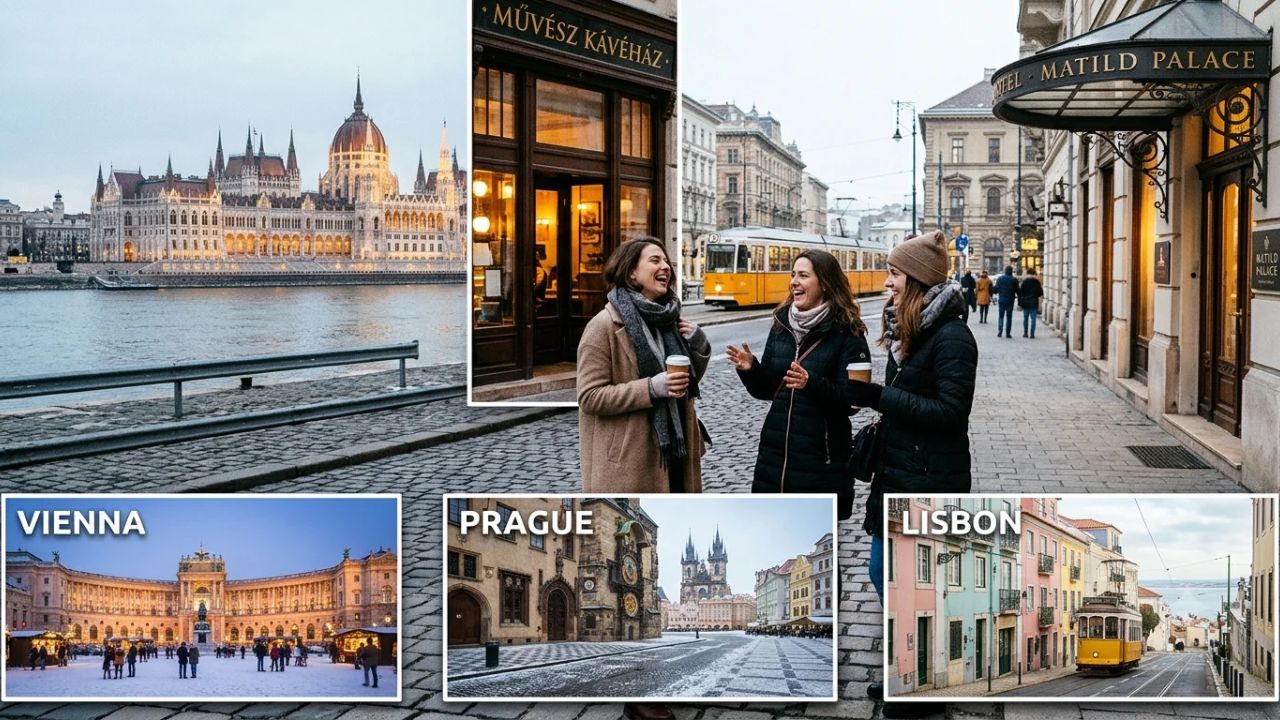
Budapest Challenges Vienna, Prague, and Lisbon for Winter Hotel Value: Comparing Accommodation Taxes and City Break Costs for 2027